Navigating urban environments demands efficiency, convenience, and reliability. For many city dwellers, the bicycle remains one of the most sustainable and practical modes of daily transportation. But with evolving technology, the choice isn’t as simple as it once was. The rise of foldable electric bikes has introduced a compelling alternative to the classic commuter bike. Each option brings distinct advantages and trade-offs in terms of space, speed, maintenance, and lifestyle integration. Understanding these differences can help you make a smarter, more personalized decision for your urban commute.
Portability and Storage: Urban Space Is at a Premium
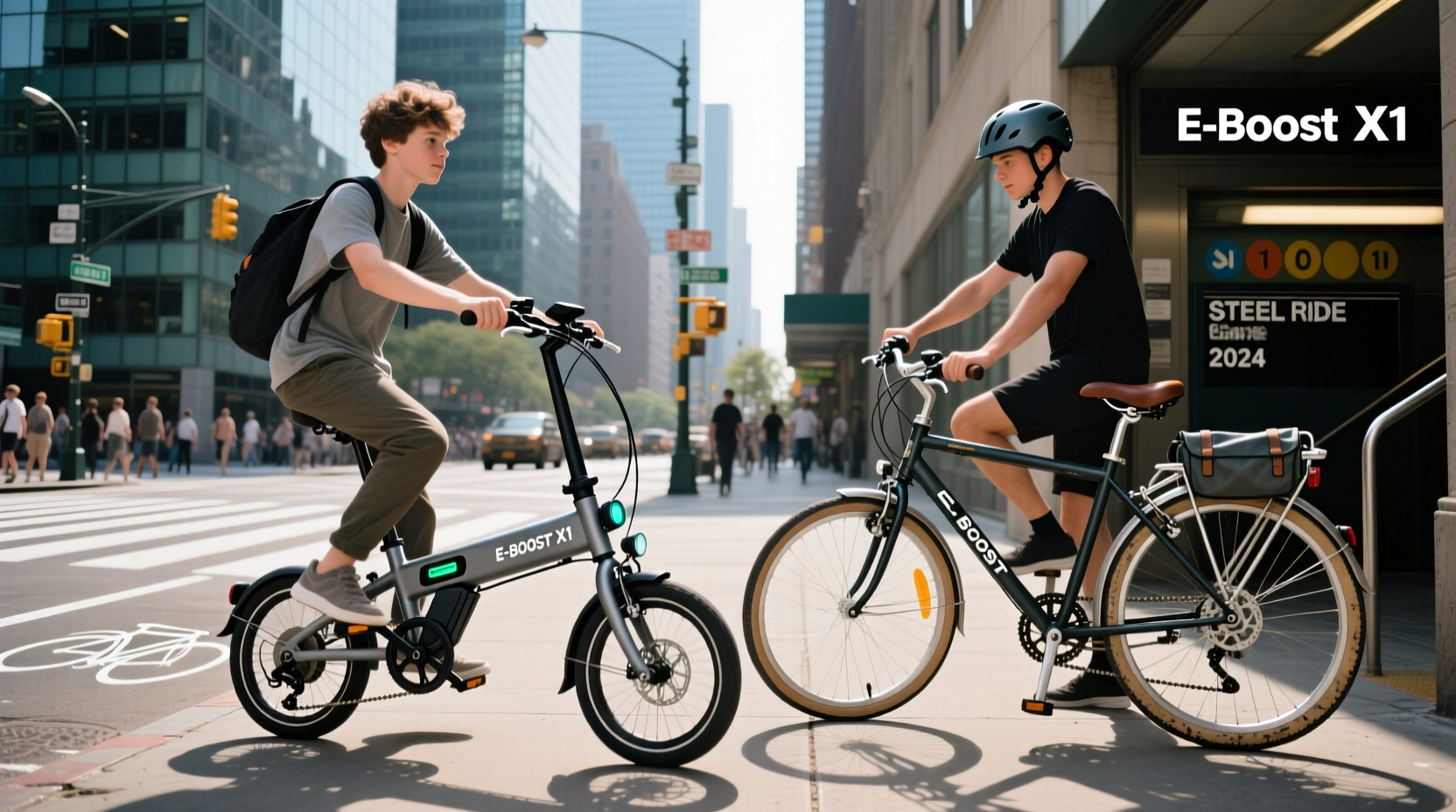
In cities where apartments are compact and public transit is part of the daily routine, how easily a bike fits into your life matters more than raw performance. Foldable e-bikes shine in this category. Designed for compactness, most models fold down to the size of a large suitcase, making them easy to store under a desk, in a closet, or even behind a door. This flexibility is invaluable for those living in studios or shared housing without dedicated storage.
Traditional commuter bikes, while often lighter in weight, require significantly more space. Even wall-mounted racks or ceiling hoists demand installation effort and permanent space allocation. If your building lacks secure bike storage or you rely on subways and buses during parts of your journey, lugging around a full-sized bike becomes impractical.
Tip: Measure your entryway, elevator, and storage area before purchasing any bike—especially a foldable model—to ensure it fits when folded and unfolded.Foldable e-bikes also integrate seamlessly with multi-modal commutes. You can ride to the train station, fold the bike, carry it onboard, and repeat at the other end. Most weigh between 35–50 lbs (16–23 kg), manageable for short carries. Traditional bikes, even lightweight ones, are rarely allowed on crowded transit systems and almost never fit in standard elevators when carried.
Ride Quality and Performance Comparison
While portability favors foldable e-bikes, performance often leans toward traditional commuter bikes. Conventional models typically feature larger wheels (700c), which roll over potholes and curbs more smoothly than the smaller 16”–20” wheels common on folding bikes. Larger wheels maintain momentum better and offer a more stable, comfortable ride—especially on uneven pavement.
Foldable e-bikes compensate with pedal-assist motors and batteries. Most offer 250W–500W rear or mid-drive systems that provide substantial assistance up hills and against headwinds. Riders can maintain speeds of 15–20 mph (24–32 km/h) with minimal effort, reducing fatigue and sweat—key for work commutes. However, the small wheel size can result in a bumpier ride, particularly on cobblestone streets or cracked sidewalks.
Battery range is another critical factor. Many foldable e-bikes offer 30–60 miles (50–100 km) per charge depending on assist level and terrain. In contrast, traditional bikes rely solely on human power—but require no charging and have zero range anxiety. For predictable, flat routes under 10 miles, a non-electric commuter bike may be faster overall when accounting for charging time and battery degradation over years.
“E-bikes are revolutionizing urban mobility by removing physical barriers to cycling. But they’re not always the best tool for every rider.” — Dr. Lena Torres, Urban Mobility Researcher, MIT Transportation Lab
Cost and Long-Term Value Analysis
Price is a decisive factor. A quality traditional commuter bike ranges from $400 to $1,200, depending on components and brand. These bikes are mechanically simple, meaning repairs are generally inexpensive and widely supported at local shops. Tires, chains, brakes, and cables are standard sizes, readily available, and affordable.
Foldable e-bikes, on the other hand, start around $1,200 and can exceed $3,000 for premium models with advanced features like integrated lights, GPS locks, or app connectivity. While the motor and battery add value, they also introduce complexity. Replacement batteries alone can cost $300–$600 after 3–5 years, and specialized mechanics may be needed for diagnostics.
Maintenance frequency differs too. E-bikes place additional stress on drivetrains due to motor torque, leading to faster chain and cassette wear. Brake pads also degrade quicker given the higher average speeds and heavier frame. Traditional bikes, especially those with internal hub gears and belt drives, can go thousands of miles with minimal servicing.
However, consider long-term savings. An e-bike can replace short car trips or ride-share expenses. Over two years, the fuel, parking, and insurance savings could offset the higher initial cost—especially if used daily across hilly or sprawling urban areas.
Security and Theft Risk in High-Density Areas
Theft is a major concern in cities. Traditional bikes, particularly basic steel-framed models, are less attractive to thieves due to lower resale value. Yet they’re still vulnerable, especially if left unattended in high-traffic zones.
Foldable e-bikes present a paradox: their desirability increases theft risk. Sleek designs, brand recognition (e.g., Brompton Electric, Tern Vektron), and high price tags make them targets. However, their biggest advantage here is the ability to bring them indoors. Unlike traditional bikes, which often must stay in racks or basements, foldable e-bikes can be stored inside offices, apartments, or cafes—dramatically reducing exposure.
Still, never assume safety by proximity. Use a sturdy U-lock or folding lock even when storing indoors temporarily. GPS trackers embedded in some models can aid recovery but don’t prevent theft.
| Feature | Foldable E-Bike | Traditional Commuter Bike |
|---|---|---|
| Average Weight | 35–50 lbs (16–23 kg) | 20–30 lbs (9–14 kg) |
| Top Assisted Speed | 20 mph (32 km/h) | Depends on rider (avg 12–15 mph) |
| Folding Capability | Yes – compact footprint | No – requires full storage space |
| Range per Charge | 30–60 miles (50–100 km) | N/A (human-powered) |
| Upfront Cost | $1,200–$3,000+ | $400–$1,200 |
| Maintenance Complexity | High (motor, battery, electronics) | Low to moderate |
| Transit Compatibility | Excellent (can be carried) | Limited (size, policies) |
Real-World Example: Two Commuters, Two Choices
Sophia lives in downtown San Francisco and works in a tech office six miles uphill from her apartment. Her route includes steep inclines and heavy traffic. She chose a foldable e-bike because she takes BART (Bay Area Rapid Transit) during peak hours. She rides the last mile from the station, folds the bike, and walks it onto the train. At work, she stores it under her desk. The pedal assist makes the morning climb manageable without arriving sweaty. On weekends, she packs it into her car trunk for spontaneous trips.
Meanwhile, David commutes in Chicago along the lakefront trail—a flat, well-maintained path just 4.5 miles each way. He prefers his steel-framed commuter bike with fenders, rack, and internal gears. It weighs 26 lbs, costs $750, and has required only one tune-up in 18 months. He locks it outside his office using a heavy-duty chain. No charging, no software updates, no motor issues. For him, simplicity wins.
Their stories highlight a crucial truth: the best bike depends not on specs alone, but on how it aligns with your environment, habits, and priorities.
Choosing What’s Right for Your Lifestyle: A Practical Checklist
Use this checklist to evaluate which bike suits your needs:
- ✅ Do you live in a small apartment or shared space?
- ✅ Is your commute longer than 5 miles or includes hills?
- ✅ Do you frequently use public transportation as part of your trip?
- ✅ Can you afford an upfront investment of $1,200+?
- ✅ Are you willing to charge the battery regularly and perform more frequent maintenance?
- ✅ Do you prefer low-tech reliability and minimal ongoing costs?
- ✅ Is your route mostly flat and bike-friendly?
- ✅ Can you securely store a full-sized bike at home and work?
If you answered “yes” to the first four, a foldable e-bike is likely the better fit. If the latter four resonate more, a traditional commuter bike may serve you better.
Frequently Asked Questions
Can I ride a foldable e-bike without electrical assistance?
Yes, all foldable e-bikes can be pedaled like regular bikes even when the battery is dead. However, they are significantly heavier than traditional bikes, so riding unassisted feels sluggish, especially uphill.
Are foldable e-bikes slower than regular commuter bikes?
Not necessarily. Most e-bikes reach 20 mph with motor assist, which is faster than the average cyclist’s sustained pace. However, top speed isn't everything—ride comfort, handling, and stability matter more over time.
Do traditional bikes hold their value better?
Generally, yes. Well-maintained steel or titanium frames retain value for years. E-bikes depreciate faster due to battery lifespan (typically 500–1,000 charge cycles). After 3–5 years, reduced range affects resale appeal.
Final Considerations Before You Decide
The debate between foldable e-bikes and traditional commuter bikes isn’t about which is objectively superior—it’s about alignment with your daily reality. Technology offers new freedoms, but not always greater satisfaction. A foldable e-bike grants unprecedented flexibility for mixed-mode travel, reduces physical strain, and turns long commutes into effortless journeys. Yet it comes with strings attached: cost, complexity, and dependency on electricity.
A traditional bike, by contrast, offers purity of purpose. It’s mechanical, predictable, and deeply connected to the act of cycling itself. There’s a quiet joy in powering yourself forward, feeling the rhythm of the pedals, and knowing your machine will run with little more than air in the tires and oil on the chain.
Ask yourself: what kind of commute do you want? One optimized for speed and convenience, or one rooted in simplicity and self-reliance? Your answer will guide you more reliably than any spec sheet.
💬 Have you made the switch from a traditional bike to a foldable e-bike—or vice versa? Share your experience and help others navigate this growing urban dilemma.








