In the heart of modern cities, where space is tight, traffic is relentless, and parking is a luxury, cycling has become one of the most efficient ways to navigate urban environments. Among the growing number of options, two types of bicycles stand out: foldable bikes and standard commuter bikes. Both promise convenience and eco-friendly transportation, but they serve different needs, lifestyles, and priorities. Choosing between them isn’t just about preference—it’s about understanding how each fits into the realities of city life.
The decision often comes down to trade-offs: Is it worth sacrificing ride quality for portability? Can a compact frame handle daily commutes as reliably as a full-sized model? This article breaks down the key differences, real-world usability, and long-term value of foldable versus standard commuter bikes in an urban context.
Space Efficiency and Storage: The Urban Reality Check
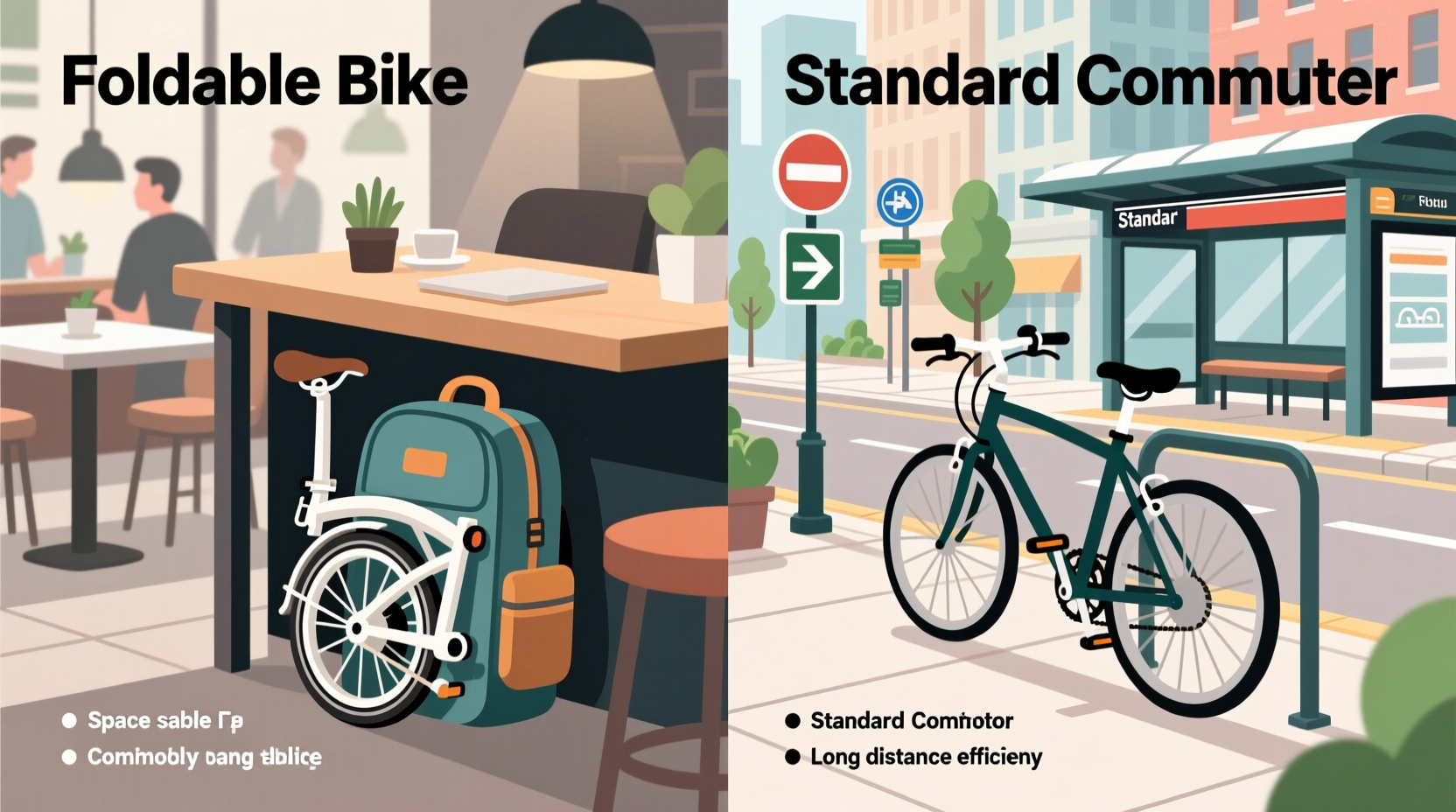
For city dwellers, square footage equals currency. Apartments are smaller, offices lack bike racks, and public transit demands flexibility. In this environment, storage becomes a decisive factor.
Foldable bikes are engineered with compactness in mind. Most models collapse into a package roughly the size of a large suitcase—some even fit under a desk or in a closet. This makes them ideal for micro-apartments, shared workspaces, or homes without dedicated storage areas. Their ability to transition from transport to stowed item in under 30 seconds gives riders unmatched spatial freedom.
Standard commuter bikes, on the other hand, require secure, fixed storage. Even lightweight models take up significant floor or wall space. If you live on the fifth floor of a building without elevator access—or your office lacks indoor bike parking—hauling a full-sized bike daily becomes impractical.
Tip: Measure your available storage space before buying any bike. A foldable may seem convenient, but if it doesn’t actually fit where you need it to, the benefit disappears.Yet, folding mechanisms introduce complexity. Hinges, latches, and locking systems add weight and potential failure points. Over time, repeated folding can wear joints and affect frame rigidity. While modern designs have improved durability, they still can't match the structural integrity of a single-piece frame found on standard commuters.
Ride Quality and Performance Comparison
When it comes to actual riding experience, standard commuter bikes hold a clear advantage. Larger wheels (typically 26” or 700c) roll over potholes, curbs, and uneven pavement more smoothly. They maintain momentum better, accelerate efficiently, and offer greater stability at higher speeds—critical when sharing roads with vehicles.
Foldable bikes usually feature smaller wheels (16” to 20”), which sacrifice some comfort and efficiency. Small wheels have less inertia, meaning they slow down faster and require more effort to keep moving. They also transmit more road vibration to the rider, making longer rides tiring. However, many newer models now include suspension forks, ergonomic saddles, and advanced gearing systems that significantly improve comfort.
Handling differs too. Foldables often have shorter wheelbases and tighter geometry, which increases maneuverability in dense traffic but reduces high-speed stability. Some riders report a “twitchy” feel, especially when descending or riding in crosswinds. Commuter bikes, built for endurance and predictability, inspire more confidence during rush hour or rainy conditions.
“Ride quality directly impacts how consistently people choose to cycle. A bumpy, inefficient ride—even if convenient—can deter regular use.” — Dr. Lena Patel, Urban Mobility Researcher at MIT Transportation Lab
Portability and Multi-Modal Transit Integration
One of the strongest arguments for foldable bikes lies in their compatibility with public transportation. In cities like London, Tokyo, or New York, combining cycling with trains, subways, or buses is often faster than relying on a single mode. Foldable bikes shine here—they’re permitted on most transit systems during peak hours, unlike full-sized bicycles, which may be banned or restricted.
Imagine this scenario: You ride five blocks to the subway, fold your bike, carry it onto the train, then unfold and ride another ten minutes to your office. No waiting for bike racks, no detours to avoid stair-only stations, and no exposure to theft while waiting. For professionals with unpredictable schedules or variable drop-off points, this flexibility is invaluable.
Standard commuter bikes demand alternative strategies. Riders often resort to \"bike-and-ride\" stations near transit hubs, but these aren’t always available or secure. Locking up outside increases risk of theft—a serious concern in high-density areas. According to a 2023 study by the National Urban Cycling Alliance, nearly 40% of stolen bikes were taken from outdoor racks within 500 feet of public transit stops.
Tip: Always use a high-quality U-lock or folding lock with your commuter bike—even at monitored racks. Cable locks alone offer minimal protection.Mini Case Study: Maria’s Daily Commute in Chicago
Maria works in downtown Chicago and lives in a walk-up apartment across the river. Her office is a 12-minute walk from the nearest L station, but the final stretch includes poorly lit sidewalks and unreliable crosswalks. Initially, she bought a hybrid commuter bike and rode the entire way—until her third flat tire in six weeks due to debris on the path.
She switched to a mid-range foldable bike with puncture-resistant tires and began combining cycling with the Brown Line. Now, she rides seven minutes to the station, folds her bike, boards the train, and completes the last leg once off. Total commute time dropped by eight minutes, maintenance issues decreased, and she no longer worries about bike theft overnight.
While the ride feels slightly less smooth than her old hybrid, the gains in reliability and safety made the trade-off worthwhile.
Cost, Maintenance, and Long-Term Value
At first glance, foldable bikes often appear more expensive. Entry-level models start around $600, with premium versions exceeding $1,500. Standard commuter bikes, meanwhile, range from $400 for basic models to $1,200 for high-end builds with disc brakes and internal gear hubs.
However, price alone doesn’t tell the full story. Foldables typically use specialized components—smaller wheels, proprietary folding mechanisms, reinforced frames—which can be harder and costlier to replace. Finding compatible replacement parts may require ordering online or visiting niche shops. Commuter bikes, by contrast, rely on standardized parts widely available at local bike stores.
Maintenance frequency also varies. Folding bikes undergo mechanical stress every time they’re collapsed or unfolded. Pivot points need periodic lubrication; hinge bolts must be checked regularly to prevent loosening. Neglecting this upkeep can lead to creaking, misalignment, or even sudden collapse during use.
Commuter bikes are simpler mechanically. With fewer moving parts beyond drivetrain and brakes, they’re easier to service and generally more durable over time. Many last a decade or more with routine care. That longevity translates to lower cost-per-use, especially for daily riders.
| Feature | Foldable Bike | Standard Commuter Bike |
|---|---|---|
| Average Price Range | $600–$1,800 | $400–$1,200 |
| Storage Footprint | Small (under desk/closet) | Large (garage/wall mount) |
| Wheel Size | 16”–20” | 26”–700c |
| Ride Comfort | Moderate (vibrations amplified) | High (smooth rolling) |
| Public Transit Friendly | Yes (allowed on most systems) | Limited (peak hour restrictions) |
| Part Availability | Specialized (may require shipping) | Widely Available |
| Durability (Long-Term Use) | Good (with proper maintenance) | Excellent |
Which One Should You Choose?
The answer depends on your lifestyle, commute pattern, and priorities. Consider the following checklist to guide your decision:
✅ Checklist: Choose a Foldable Bike If…
- You live in a studio or small apartment with no garage or balcony.
- Your workplace doesn’t allow bike parking indoors.
- You frequently combine biking with trains, buses, or ferries.
- You travel often and want to bring your bike on planes or trains.
- Theft risk is high in your neighborhood or transit area.
- You value convenience over top-tier ride performance.
✅ Checklist: Choose a Standard Commuter Bike If…
- You ride daily over distances longer than 5 miles.
- Your route includes rough roads, hills, or high-speed corridors.
- You have secure storage at home and work.
- You prefer lower maintenance and easier repairs.
- You plan to keep the bike for many years.
- You prioritize speed, comfort, and long-term value.
Step-by-Step Guide: How to Test Your Fit
- Map your typical week: Note all trips involving transit, variable destinations, or carrying loads.
- Measure your storage space: Ensure both folded and unfolded dimensions fit comfortably.
- Test ride both types: Visit a local shop and try models side by side. Pay attention to seat height, steering feel, and ease of folding.
- Simulate your commute: Ride a foldable through a mock transit journey—fold, carry, unfold, repeat.
- Calculate total cost of ownership: Include purchase price, expected maintenance, and potential replacement parts.
- Ask about warranties: Foldable hinge mechanisms should be covered for at least two years.
Frequently Asked Questions
Can foldable bikes handle winter commuting?
Yes, but with caveats. Salt and slush can accumulate in folding joints, accelerating corrosion. After wet rides, wipe down the frame thoroughly and lubricate pivot points monthly during winter months. Models with fenders, disc brakes, and sealed bearings perform best in adverse conditions.
Are foldable bikes slower than standard bikes?
Slightly, due to smaller wheels and less aerodynamic frames. On flat terrain, the difference averages 1–2 mph for similar rider effort. However, in stop-and-go city traffic, acceleration and agility often matter more than top speed.
Do folding bikes break easily?
Not if properly maintained. Reputable brands like Brompton, Tern, and Dahon design their hinges to withstand thousands of folds. Regular inspections and tightening of critical bolts prevent most failures. Avoid dropping the bike when folded, as impact can damage locking mechanisms.
Conclusion: Matching the Bike to Your City Life
There is no universal winner in the foldable vs. standard commuter debate. Each excels in different scenarios, serving distinct urban realities. A foldable bike isn’t inherently “better”—but for someone juggling limited space, mixed transit modes, and security concerns, it might be the only practical option. Conversely, a standard commuter bike won’t suit everyone, but for those prioritizing ride quality, efficiency, and durability, it remains the gold standard.
The best choice aligns not with trends, but with your actual behavior: Where do you go? How do you store things? What stresses you during your commute? Answering these honestly will lead you to the right tool for the job.
🚀 Ready to make your move? Visit a local bike shop this week and test both types in person. Bring your backpack, simulate your route, and see which one truly fits your life. Share your experience in the comments—we’d love to hear what works for you.








