
Delayed onset muscle soreness (DOMS) is a familiar companion to anyone who trains consistently. Whether you're a weekend warrior or an elite athlete, the stiffness and discomfort that follow intense exercise can hinder performance and motivation. Two of the most widely used recovery tools—foam rolling and stretching—are often recommended, but confusion remains about which one actually speeds up muscle recovery more effectively. While both have merit, understanding their distinct mechanisms, benefits, and ideal applications can help you make smarter decisions about your recovery routine.
This article breaks down the science behind foam rolling and stretching, compares their effects on muscle recovery, and provides practical guidance on how and when to use each method for optimal results.
How Muscle Soreness Develops After Exercise
Muscle soreness typically sets in 12 to 48 hours after unaccustomed or high-intensity exercise, especially activities involving eccentric contractions—like downhill running or lowering weights. This delayed soreness, known as DOMS, results from micro-tears in muscle fibers and the subsequent inflammatory response. While this process is part of normal adaptation and strength gains, excessive soreness can impair mobility, reduce workout quality, and increase injury risk.
The goal of recovery techniques like foam rolling and stretching isn’t just to feel better—it’s to enhance blood flow, reduce muscle tension, support tissue repair, and restore range of motion. However, these two methods achieve those outcomes through different physiological pathways.
Foam Rolling: Mechanisms and Benefits
Foam rolling, also known as self-myofascial release (SMR), involves applying pressure to soft tissues using a cylindrical foam roller. It targets not only muscles but also fascia—the connective tissue surrounding muscles, organs, and joints. The mechanical pressure helps break up adhesions, improve circulation, and modulate nervous system activity.
Research shows that foam rolling can:
- Reduce perceived muscle soreness within 24–72 hours post-exercise
- Increase short-term flexibility and joint range of motion
- Enhance blood flow and lymphatic drainage
- Decrease muscle stiffness and tone
- Improve neuromuscular efficiency
A 2015 study published in the *Journal of Athletic Training* found that participants who foam rolled after intense leg workouts reported significantly less soreness and retained more strength over the next three days compared to a control group. The effects were most pronounced when rolling was performed immediately post-exercise and repeated every 24 hours.
“Foam rolling appears to accelerate recovery by reducing neural sensitivity and improving interstitial fluid dynamics in fatigued muscles.” — Dr. Jason Karp, Exercise Physiologist and Author
When Foam Rolling Works Best
Foam rolling is particularly effective:
- Within 30 minutes after a workout
- On large muscle groups like quads, hamstrings, calves, and glutes
- For individuals experiencing tightness or localized trigger points
- As a pre-activation tool before dynamic stretching or movement
Stretching: Types and Recovery Impact
Stretching refers to elongating muscles to improve flexibility and reduce tension. There are two primary types relevant to recovery: static stretching and dynamic stretching.
Static stretching involves holding a muscle in a lengthened position for 15–60 seconds. It's commonly performed post-workout and is effective for improving long-term flexibility. However, research has shown mixed results regarding its ability to reduce DOMS.
A meta-analysis in the *British Journal of Sports Medicine* concluded that static stretching reduces soreness by less than 2% on average—clinically insignificant. While it may provide temporary relief, it doesn't appear to meaningfully speed up muscle recovery.
Dynamic stretching, involving controlled movements through a range of motion, is more beneficial pre-workout but plays a limited role in post-exercise recovery.
Despite its limitations in reducing soreness, stretching still offers value:
- Improves long-term flexibility and joint health
- Helps maintain muscle balance and posture
- Can promote relaxation and parasympathetic activation after training
Why Stretching Falls Short for Immediate Recovery
While stretching elongates muscles, it does little to address the underlying inflammation, fluid buildup, or neuromuscular inhibition associated with DOMS. Unlike foam rolling, it doesn’t generate significant mechanical pressure or stimulate blood flow in the same way. In fact, aggressively stretching already damaged muscle fibers may exacerbate microtrauma and delay healing.
Direct Comparison: Foam Rolling vs Stretching for Recovery Speed
To determine which method recovers sore muscles faster, several factors must be considered: time to symptom relief, restoration of strength and function, and physiological impact.
| Factor | Foam Rolling | Stretching |
|---|---|---|
| Reduction in soreness (24–72 hrs) | Significant (up to 30–50% reduction) | Minimal (< 5%) |
| Improvement in range of motion | Immediate and lasting 2–4 hours | Immediate, but shorter duration |
| Impact on muscle strength recovery | Positive—preserves strength output | Limited effect |
| Blood flow enhancement | High—mechanical pumping action | Moderate—passive increase |
| Best timing for use | Post-workout, morning after, pre-next session | Post-workout, bedtime for relaxation |
| Risk of overuse injury | Low if done properly | Moderate if done aggressively post-DOMS |
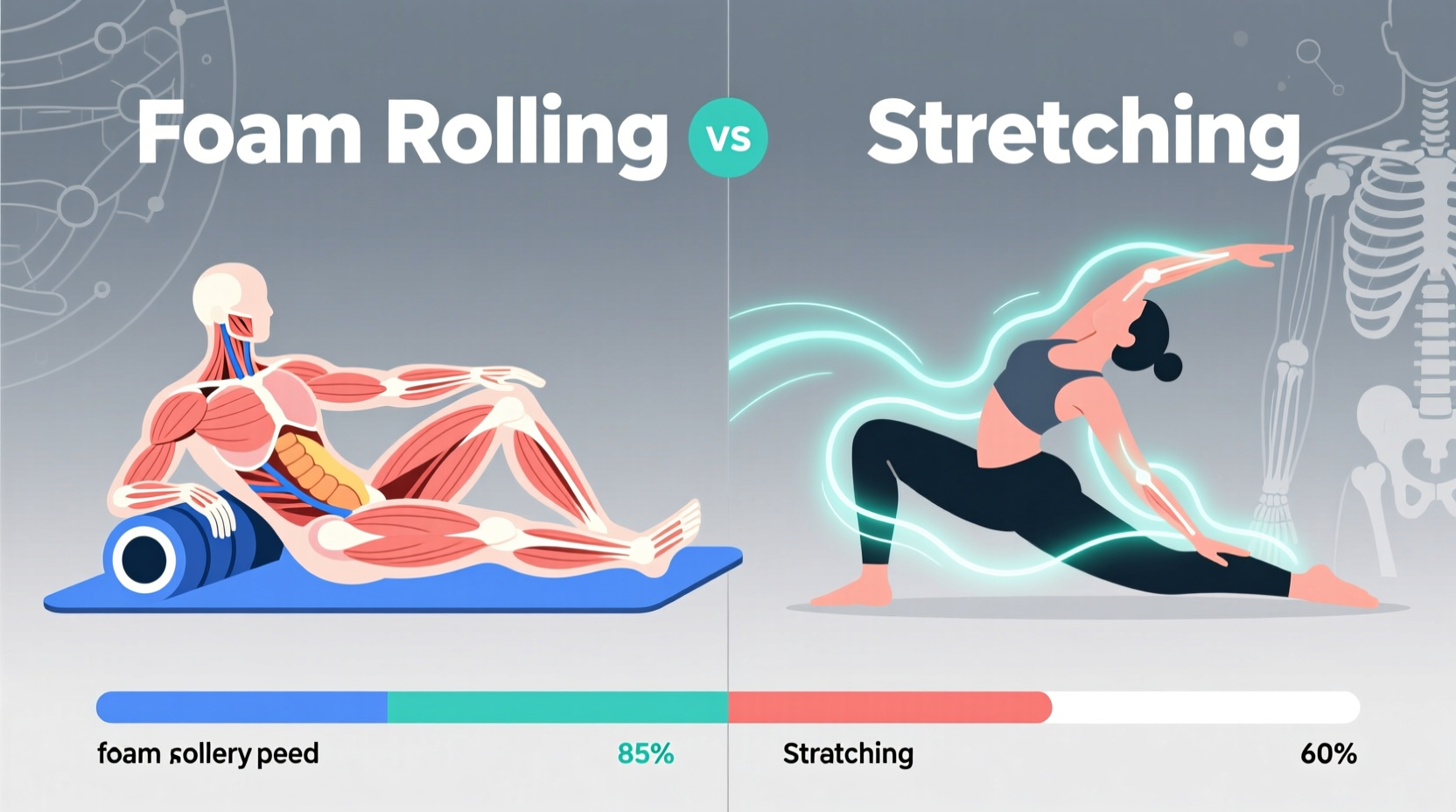
The data clearly favors foam rolling as the superior modality for accelerating recovery from muscle soreness. Its ability to influence both mechanical and neurological components of muscle tightness gives it an edge over passive stretching.
Combining Both Strategically: A Real-World Example
Consider Sarah, a recreational runner preparing for her first half-marathon. After a long 10-mile run on hilly terrain, she feels tightness in her calves and quads, with early signs of DOMS setting in. Here’s how she uses both foam rolling and stretching—but in the right order and context:
- Immediately post-run: She spends 10 minutes foam rolling her major lower-body muscle groups—quads, IT bands, hamstrings, and calves—using slow, deliberate passes.
- 30 minutes later: Once her muscles are warm and pliable, she performs light static stretches for each group, holding each for 30 seconds. This helps reinforce the improved range of motion achieved through rolling.
- Next morning: She repeats the foam rolling routine to counteract overnight stiffness, then does gentle yoga-style stretching to promote relaxation and mobility.
By day two, Sarah experiences minimal soreness and maintains full training capacity—unlike previous cycles where skipping recovery led to three days of limping.
This approach reflects current best practices: use foam rolling to actively recover and reduce soreness, then use stretching to consolidate flexibility gains.
Step-by-Step Guide to Optimize Post-Workout Recovery
Follow this sequence to maximize muscle recovery after intense training:
- Cool Down (5–10 min): Walk or cycle lightly to gradually lower heart rate and initiate waste product clearance.
- Foam Roll (10–15 min): Target major working muscles. Spend 1–2 minutes per muscle group. Use moderate pressure—discomfort should be tolerable (4–7/10).
- Hydrate and Refuel: Consume water and a protein-carbohydrate snack within 45 minutes to support repair.
- Light Static Stretching (5–10 min): Focus on areas that feel tight. Avoid forcing stretches; aim for mild tension.
- Recover Overnight: Prioritize sleep (7–9 hours) and consider contrast showers or compression garments if available.
- Next-Day Maintenance: Repeat foam rolling in the morning or before the next workout to prevent stiffness accumulation.
Frequently Asked Questions
Can I stretch instead of foam rolling?
You can, but stretching alone won’t provide the same level of soreness relief. Stretching improves flexibility but lacks the mechanical and circulatory benefits of foam rolling. For faster recovery, prioritize foam rolling and use stretching as a complementary practice.
Is foam rolling safe every day?
Yes, daily foam rolling is generally safe for healthy individuals, especially on large muscle groups. Avoid rolling directly over joints, bones, or acute injuries. If pain increases or persists beyond 24 hours, reduce frequency or consult a professional.
Should I foam roll before or after stretching?
Always foam roll before stretching. Releasing tight fascia and muscle knots first allows for more effective and safer stretching. Think of rolling as “prepping” the tissue so that stretching can work optimally without compensatory strain.
Expert Recommendations and Final Insights
Leading sports medicine professionals increasingly advocate for foam rolling as a cornerstone of active recovery. Unlike passive modalities, it empowers individuals to take control of their muscle health with minimal equipment and time investment.
“The evidence supports foam rolling as one of the most accessible and effective tools for reducing DOMS and maintaining performance across consecutive training sessions.” — Dr. Karen Jacobs, Clinical Professor of Physical Therapy, Boston University
That said, neither foam rolling nor stretching replaces foundational recovery pillars: sleep, nutrition, hydration, and appropriate training progression. They are enhancers—not substitutes—for good recovery habits.
Action Plan Checklist
Use this checklist after your next intense workout:
- ✅ Cool down with light aerobic activity
- ✅ Foam roll major muscle groups (1–2 min each)
- ✅ Hydrate and consume a recovery snack
- ✅ Perform light static stretches
- ✅ Sleep at least 7 hours
- ✅ Re-roll any stiff areas the next morning
Conclusion: Choose Smart, Not Just Routine
When it comes to recovering sore muscles faster, foam rolling outperforms stretching based on scientific evidence and real-world effectiveness. It directly addresses the physiological causes of DOMS by enhancing circulation, reducing muscle density, and modulating pain signals. Stretching, while valuable for flexibility and relaxation, plays a secondary role in acute recovery.
The smart approach isn’t choosing one over the other—it’s using them strategically. Make foam rolling your go-to tool for post-workout recovery, and integrate stretching to maintain mobility and support long-term musculoskeletal health.
🚀 Ready to reduce soreness and train harder, more consistently? Start incorporating foam rolling into your recovery today—your muscles will thank you by the next workout.








