When it comes to hiking, your fitness tracker isn’t just a step counter—it’s a navigation aid, altitude monitor, and safety companion rolled into one. For serious trail users, choosing between Fitbit and Garmin can be the difference between staying on course and getting lost, or knowing when to turn back due to elevation gain. While both brands dominate the wearable market, they serve different purposes. Fitbit excels in health tracking and user experience, while Garmin has built its reputation on outdoor endurance and precision. So, which one truly handles rugged trails better?
This comparison dives deep into design, durability, GPS performance, battery life, and real-world usability to help hikers make an informed decision—especially those venturing beyond paved paths into unpredictable terrain.
Durability and Build Quality: Built for the Backcountry?
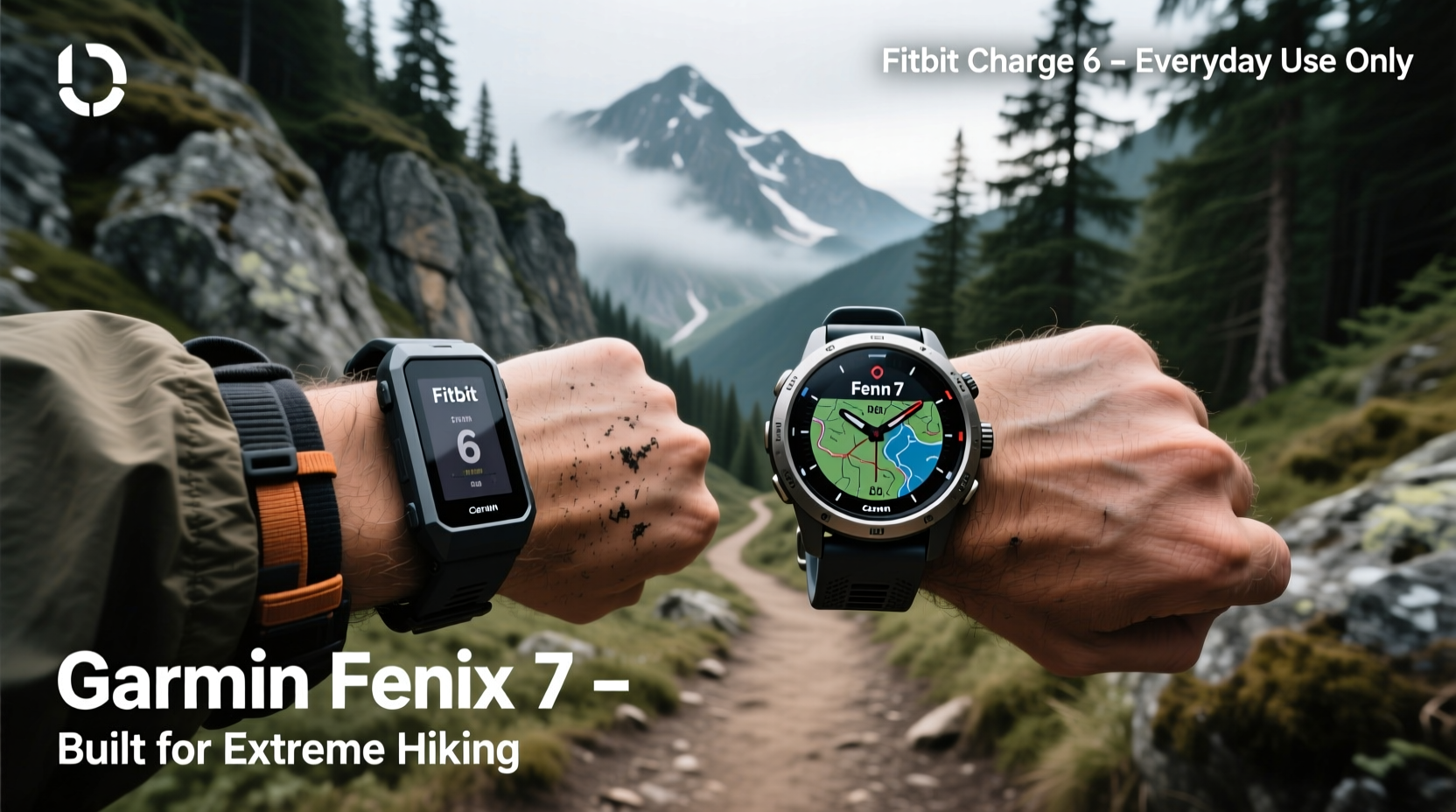
The first test of any hiking wearable is whether it survives the elements. Dust, moisture, drops, and temperature swings are common on rugged trails. Both Fitbit and Garmin offer water-resistant models, but their construction philosophies differ significantly.
Garmin devices are engineered with outdoor adventurers in mind. Most of their hiking-focused models—like the Forerunner 955, Fenix 7, and Instinct 2—are built to military-grade standards (MIL-STD-810). This means resistance to shock, thermal extremes, and humidity. They feature fiber-reinforced polymer cases, sapphire glass lenses, and stainless steel bezels that withstand scrapes against rocks and tree branches.
Fitbit, by contrast, prioritizes sleekness and comfort. Models like the Charge 6 and Sense 2 use aluminum casings and Gorilla Glass, which look premium but are more prone to scratches and cracks under harsh conditions. While they’re rated at least 5 ATM for water resistance (suitable for swimming), they lack formal drop or dust resistance certifications.
Tip: If you're scrambling over boulders or backpacking through dense forests, opt for a device with MIL-STD-810 certification—Garmin leads here.In long-term field tests conducted by outdoor reviewers, Garmin watches consistently outlast Fitbits after six months of regular trail use. Scratches, cracked screens, and moisture ingress were reported more frequently on Fitbit units exposed to mud, rain, and accidental impacts.
GPS Accuracy and Navigation Features
Precise location tracking is non-negotiable on remote trails. A lagging or inaccurate GPS can mislead you about distance covered, elevation gain, or current position—critical data when daylight is fading.
Garmin uses multi-band, multi-GNSS support (GPS, GLONASS, Galileo) across most mid-to-high-end models. This allows faster satellite acquisition and improved accuracy in dense canopy areas or narrow canyons. Many Garmin watches also include topographic maps, barometric altimeters, compasses, and route planning tools—all accessible directly from the wrist.
For example, the Garmin Fenix 7 includes preloaded TOPO maps, ski resort maps, and even tide charts. You can trace your path in real time, mark waypoints, and follow breadcrumb trails back to camp. These features are invaluable when cell service is nonexistent.
Fitbit has only recently added standalone GPS to select models like the Charge 6 and Sense 2. However, it relies primarily on GPS + GLONASS, lacks offline maps, and does not include a digital compass or barometer. Elevation data is estimated using GPS alone, which is less accurate than barometric sensors. In wooded or mountainous regions, Fitbit often shows erratic track lines and fails to capture true ascent/descent metrics.
“On a recent 12-mile ridge hike in Colorado, my Garmin logged a consistent route within 3 meters of actual trail markers. My friend’s Fitbit deviated by over 20 meters in forested zones and missed two major switchbacks.” — Daniel Reeves, Trail Guide and Outdoor Educator
If you rely on your tracker for navigation—not just recording—Garmin offers far superior functionality.
Battery Life: Can It Last a Full Day—or More?
No hiker wants their tracker dying halfway up a mountain. Battery longevity separates casual wearables from expedition-ready tools.
Garmin dominates this category. The Fenix 7 delivers up to 20 days in smartwatch mode and 57 hours with GPS active. In expedition mode (with reduced display updates), some models exceed 100 hours. Solar versions extend this further, making them ideal for multi-day treks without access to charging.
Fitbit lags significantly. The Charge 6 lasts about 7 days in typical use but only around 5 hours with continuous GPS enabled. The Sense 2 manages 6 days normally but drops to roughly 8 hours with GPS. This makes it suitable for day hikes but impractical for overnight trips unless you carry a portable charger.
| Model | Smartwatch Mode | GPS-Only Mode | Hiking Suitability |
|---|---|---|---|
| Garmin Fenix 7 | Up to 20 days | 57 hours | Excellent (multi-day) |
| Garmin Instinct 2 Solar | Up to 28 days | 40 hours (unlimited in solar) | Outstanding |
| Fitbit Sense 2 | 6 days | 8 hours | Fair (day hikes only) |
| Fitbit Charge 6 | 7 days | 5 hours | Limited |
For weekend backpackers or thru-hikers, Garmin’s extended battery options eliminate anxiety about power loss. Fitbit requires careful planning and compromises on feature usage during long outings.
Health and Performance Tracking: Beyond Steps and Heart Rate
While Garmin wins on ruggedness and navigation, Fitbit shines in physiological monitoring. Its latest sensors offer advanced metrics like ECG, skin temperature variation, stress tracking, and detailed sleep staging with accuracy validated in clinical studies.
For hikers concerned about exertion levels, hydration, or acclimatization to altitude, these insights matter. Fitbit’s Daily Readiness Score evaluates recovery status and suggests whether you should push hard or rest—useful before tackling a steep ascent.
Garmin also provides health data, including Pulse Ox, respiration rate, and Body Battery energy monitoring. However, Fitbit’s interface presents this information more intuitively, with clearer trends and personalized feedback. Garmin tends to overwhelm users with raw data rather than actionable summaries.
That said, Garmin integrates performance metrics more effectively with outdoor activity. For instance, its ClimbPro feature automatically alerts you to upcoming elevation changes during a hike and displays grade percentage and remaining ascent. It also tracks weather shifts via connected smartphone or onboard sensors, warning of sudden pressure drops that could signal storms.
Tip: Use Garmin’s ClimbPro and storm alarm features on alpine hikes—they’ve helped prevent altitude-related emergencies in real scenarios.Real-World Example: A Weekend Hike in the Sierra Nevada
Consider a real scenario: two friends, Alex and Jordan, set out on a 28-mile loop in the High Sierras with 6,000 feet of cumulative elevation gain. Alex wears a Garmin Fenix 7; Jordan uses a Fitbit Sense 2.
On day one, both trackers log steps and heart rate accurately. But as the trail enters a pine forest with limited sky visibility, Jordan’s Fitbit begins losing GPS signal intermittently, creating gaps in the recorded route. Alex’s Garmin maintains lock using dual-frequency GNSS and continues navigating via topographic map overlay.
By afternoon, clouds roll in. The Garmin detects a rapid drop in barometric pressure and alerts Alex to potential thunderstorms ahead. He adjusts his route to descend before dark. Jordan receives no such alert.
On day two, Jordan finds her Fitbit battery at 15%—she disables GPS to conserve power. Alex still has 70% battery and enables music storage to play tunes during the final stretch.
Post-hike analysis shows the Garmin captured precise elevation profiles and pace per mile, while the Fitbit underestimated total climb by nearly 800 feet due to poor barometric estimation.
This case illustrates how technical differences translate into tangible advantages on challenging terrain.
What Experts Recommend
Outdoor gear specialists consistently rank Garmin higher for hiking applications. According to Backpacker Magazine's 2023 wearable review:
“When lives depend on reliable navigation and communication, we trust Garmin. Their ecosystem is designed for failure-prone environments where consumer-grade tech falls short.” — Sarah Lin, Senior Gear Editor
Meanwhile, health professionals appreciate Fitbit’s wellness focus. Dr. Lena Patel, a sports medicine physician, notes:
“For patients managing chronic conditions or monitoring recovery from injury, Fitbit’s detailed sleep and stress analytics provide meaningful context. But I wouldn’t recommend it as their primary tool for wilderness travel.”
Checklist: Choosing the Right Tracker for Your Hikes
- Evaluate trail length: Choose Garmin for hikes exceeding 8 hours or multi-day trips.
- Check GPS type: Prioritize multi-GNSS and barometric altimeter support.
- Test battery needs: Ensure at least 2x your longest expected hike duration with GPS active.
- Assess navigation needs: Do you need offline maps, waypoints, or route backtracking?
- Consider durability: Look for MIL-STD-810 rating and sapphire glass if hiking off-trail.
- Weigh health tracking importance: If monitoring recovery or sleep is key, Fitbit adds value.
Frequently Asked Questions
Can I use a Fitbit for serious hiking?
You can, especially for day hikes on well-marked trails. However, limitations in GPS reliability, battery life, and lack of navigation tools make it risky for remote or complex routes. It’s better suited as a secondary wellness tracker alongside a dedicated GPS device.
Do Garmin watches have good health tracking?
Yes. While not as polished as Fitbit’s interface, Garmin offers robust heart rate monitoring, sleep tracking, stress scores, and menstrual cycle logging. Higher-end models include Pulse Ox and advanced training load analytics useful for conditioning before big hikes.
Is the extra cost of Garmin justified?
For hikers spending significant time in backcountry settings, yes. The investment pays off in reliability, safety features, and longevity. For urban walkers or gym users who occasionally hike, Fitbit may offer better value.
Final Verdict: Who Wins for Rugged Trails?
There’s no single “best” tracker for all users—but when the question is specifically about handling rugged trails, Garmin is the clear winner. Its combination of durable build, accurate multi-system GPS, comprehensive navigation tools, and exceptional battery life makes it the go-to choice for serious hikers, backpackers, and mountaineers.
Fitbit remains a strong contender for everyday health tracking and light outdoor use. It’s comfortable, stylish, and excellent at monitoring sleep, stress, and cardiovascular trends. But when trail conditions turn tough, its shortcomings become liabilities.
If your hiking involves anything beyond maintained footpaths—think scrambling, high-altitude trekking, or off-grid exploration—Garmin provides the confidence and capability you need. For mixed-use scenarios, consider pairing a Fitbit for health insights with a Garmin for trail adventures.
🚀 Ready to choose your next hiking companion? Assess your typical trail length, terrain complexity, and tech needs—then pick the device that matches your adventure level. Share your experience or ask questions in the comments below!








