For left-handed archers, selecting the right compound bow isn’t just about preference—it’s about precision, comfort, and long-term performance. Too often, left-handed shooters are forced into compromises due to limited options or poor information. But it doesn’t have to be that way. With the right knowledge, finding a high-performing, well-fitted compound bow tailored to your dominant eye and hand becomes straightforward. This guide cuts through the noise, focusing on what truly matters: draw length compatibility, let-off efficiency, axle-to-axle balance, and brand support for southpaw archers.
Understanding Left-Handed Compound Bows: What Sets Them Apart
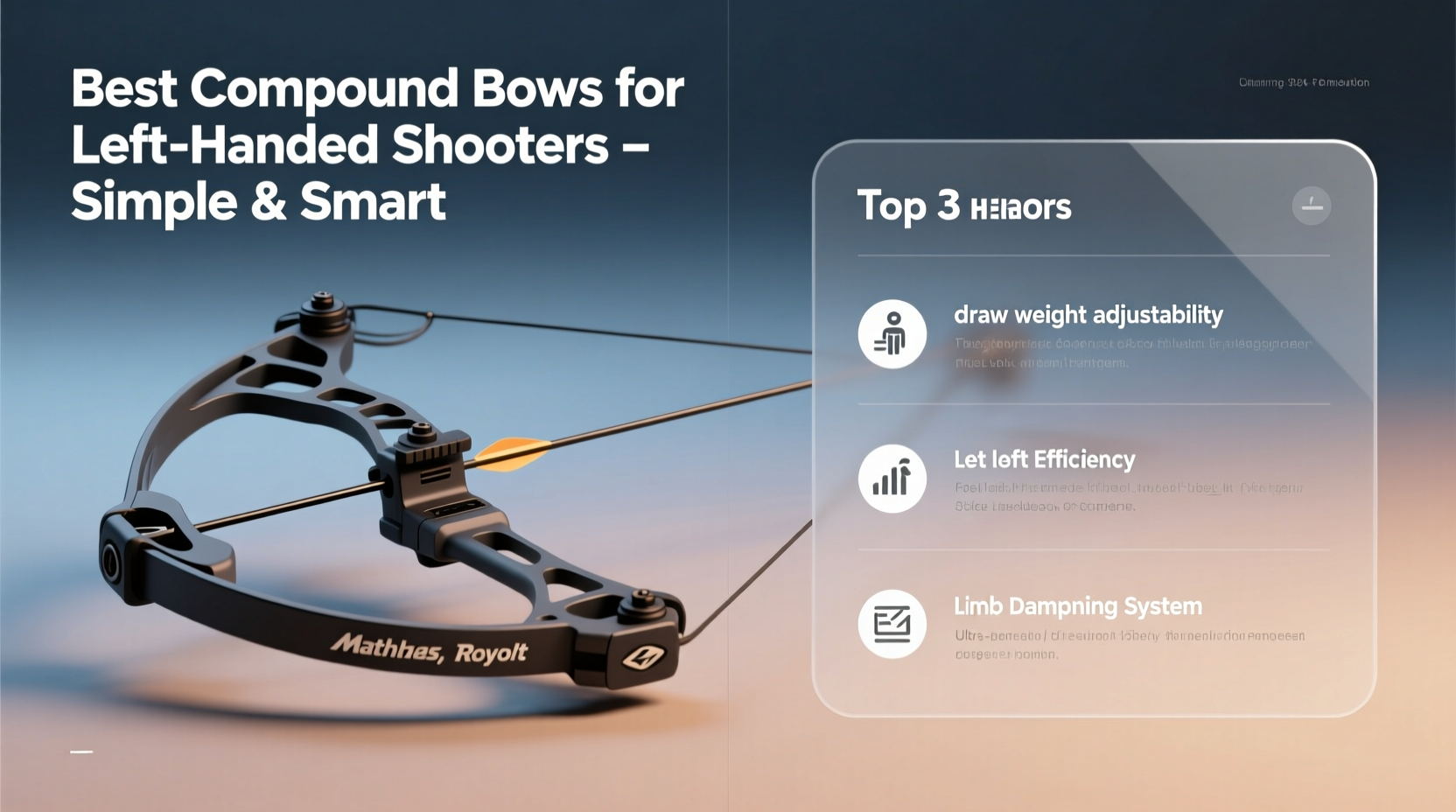
A left-handed compound bow is designed for shooters who draw the string with their right hand while anchoring with their left eye. The riser—the central frame of the bow—is mirrored so that the grip sits comfortably in the left hand, and the arrow shelf positions the arrow to the right side of the riser. This configuration ensures proper alignment with the shooter’s dominant eye and natural stance.
It's crucial to understand that compound bows are not ambidextrous. Unlike recurve bows, which can sometimes be adjusted for either hand, compound bows are manufactured as either left- or right-handed models. Choosing the wrong orientation leads to awkward shooting form, reduced accuracy, and increased risk of injury over time.
Tip: Always confirm the bow’s handedness before purchasing—many retailers list this detail in small print.Key Features to Prioritize When Selecting a Bow
Not all compound bows are created equal, especially when it comes to left-handed availability. Focus on these five essential elements to ensure you’re investing in a model that supports both performance and longevity.
- Draw Length Adjustability: A bow must match your physical dimensions. Most adult shooters require a draw length between 26” and 30”. Look for models offering at least a 4-inch adjustment range.
- Let-Off Percentage: This refers to how much weight is reduced at full draw. An 80% let-off means an 80-pound peak draw feels like 16 pounds when held. Higher let-off improves aiming stability.
- Axle-to-Axle Measurement: Shorter bows (under 30”) are more maneuverable in tight spaces like tree stands; longer ones (over 32”) offer greater stability and forgiveness.
- Brace Height: A shorter brace height increases speed but reduces forgiveness. For beginners, a brace height of 6.5” or higher is recommended.
- Left-Hand Model Availability: Some brands produce fewer left-hand variants. Check inventory reliability and warranty service accessibility before buying.
Top 5 Left-Hand Compound Bows Compared
| Model | Peak Draw Weight (lbs) | Adjustable Draw Range | Let-Off (%) | Axle-to-Axle (in) | Ideal For |
|---|---|---|---|---|---|
| Hoyt Alpha Max 31 LH | 70 | 25.5\" – 31\" | 90% | 31 | Hunters & Target Shooters |
| Mathews Traverse Super Lite LH | 70 | 25\" – 30\" | 80% | 30.75 | Backcountry Hunting |
| Parker Edge Pro LH | 70 | 25\" – 30\" | 75% | 32 | Beginners & Youth |
| Bowtech Realm SR6 LH | 80 | 25.5\" – 31.5\" | 90% | 30 | High-Performance Archery |
| Prime MTH LH | 70 | 25\" – 30\" | 85% | 31.5 | All-Around Use |
The Hoyt Alpha Max 31 consistently earns praise for its smooth draw cycle and exceptional adjustability, making it one of the most accessible high-end options for left-handed shooters. Meanwhile, Parker offers budget-friendly entry points without sacrificing critical ergonomics.
Step-by-Step Guide to Choosing Your Ideal Bow
Finding the perfect left-handed compound bow involves more than browsing online listings. Follow this six-step process to make a confident, informed decision.
- Determine Your Draw Length: Stand with arms outstretched against a wall. Measure fingertip to fingertip in inches, subtract 15, then divide by 2. That’s your approximate draw length.
- Set a Realistic Budget: Quality left-hand compound bows start around $600 and go up to $1,400+. Include accessories (sights, rest, quiver) in your total cost estimate.
- Narrow by Intended Use: Are you hunting deer from a blind? Shooting targets weekly? Choose a compact, lightweight model for mobility or a balanced target bow for consistency.
- Verify Left-Hand Stock Availability: Call local pro shops or check distributor websites. Some high-demand models sell out quickly in southpaw configurations.
- Test Before You Buy: Visit an archery range that allows demo sessions. Nothing replaces real-world feel under draw tension.
- Review Warranty & Support: Brands like Hoyt and Mathews offer extended warranties and active customer service networks—critical if you live in a rural area.
“Too many left-handed archers settle for ill-fitting gear because they assume options are limited. The truth is, once you know what specs matter, excellent choices are within reach.” — Jason Reed, Master Bow Technician, National Archery Training Center
Common Pitfalls and How to Avoid Them
Even experienced archers make mistakes when upgrading equipment. These missteps are especially costly for left-handed shooters, where replacement parts and service may take longer to source.
- Ignoring Draw Stop Tuning: Factory-set stops may not align with your anchor point. Custom tuning ensures repeatable accuracy.
- Overlooking Noise Dampening: Cam silencers and limb dampeners reduce vibration—essential for hunting wary game.
- Buying Based on Speed Alone: IBO speeds (e.g., 350 fps) are measured under ideal lab conditions. Real-world performance depends on shooter consistency, not manufacturer claims.
- Skipping Professional Setup: A certified bow technician can adjust tiller, cam sync, and nocking points far better than DIY methods.
Real-World Example: Sarah’s First Big Game Bow
Sarah, a wildlife biologist in Montana, had been shooting right-handed bows incorrectly for years, compensating for poor alignment. When she finally switched to a dedicated left-handed setup, her groupings tightened dramatically. She chose the Mathews Traverse Super Lite after testing three models at a regional archery expo. Its light weight (3.9 lbs) made it ideal for hiking into alpine zones, and the 80% let-off allowed her to hold steady on long waits. Last fall, she successfully harvested her first elk using that bow—proof that the right tool makes all the difference.
Frequently Asked Questions
Can I convert a right-handed compound bow to left-handed?
No. The riser design, limb alignment, and cable routing are asymmetrical and cannot be reversed. Attempting modifications voids warranties and creates safety hazards.
Are left-handed compound bows more expensive?
Generally, no. Pricing is typically identical across handedness. However, lower production volumes mean fewer discounts and slower restocking during peak seasons.
Do I need different arrows for a left-handed bow?
No. Arrow spine requirements depend on draw weight, length, and shooting style—not bow orientation. However, fletching orientation (right or left helical) may affect clearance depending on your rest system.
Final Checklist Before Purchase
- ✅ Confirmed correct handedness (left-hand model)
- ✅ Verified draw length matches my measurement
- ✅ Checked local dealer for demo availability
- ✅ Included cost of essential accessories (release aid, sight, arrow rest)
- ✅ Reviewed warranty terms and service center proximity
- ✅ Scheduled post-purchase tuning appointment
Take Smart Aim: Your Next Step Starts Now
Finding the best compound bow as a left-handed shooter doesn’t require compromise—it requires clarity. By focusing on fit, function, and reputable brands that support southpaw athletes, you gain access to tools that elevate your skill rather than limit it. Whether you're stepping into bowhunting for the first time or upgrading from an outdated model, remember: precision begins with preparation. Visit a certified archery shop, test available left-hand models, and trust data over hype. The right bow isn’t just waiting—it’s ready to perform the moment you claim it.
💬 Have experience with a standout left-handed compound bow? Share your story in the comments and help fellow shooters make smarter choices.








