For years, insulated flasks occupied a quiet, functional corner of daily life: durable, dependable—and unmistakably utilitarian. Think rugged rubberized bases, oversized screw-top lids, and color palettes drawn from trail maps and survival kits. They kept coffee hot for eight hours and tea cold for twelve—but rarely earned a second glance on a marble countertop, in a boutique café, or beside a tailored wool coat. That’s changing. A new generation of thermal vessels has emerged—not as gear, but as objects of intentional design. These are flasks engineered for performance *and* presence: sleek silhouettes, refined material finishes, thoughtful ergonomics, and subtle branding that whispers rather than shouts. They’re not disguised as fashion items; they’re designed *as* fashion-adjacent essentials—where thermal efficiency is non-negotiable, but visual harmony with modern interiors, wardrobes, and lifestyles is equally essential.
Why “Not Camping Gear” Matters More Than You Think
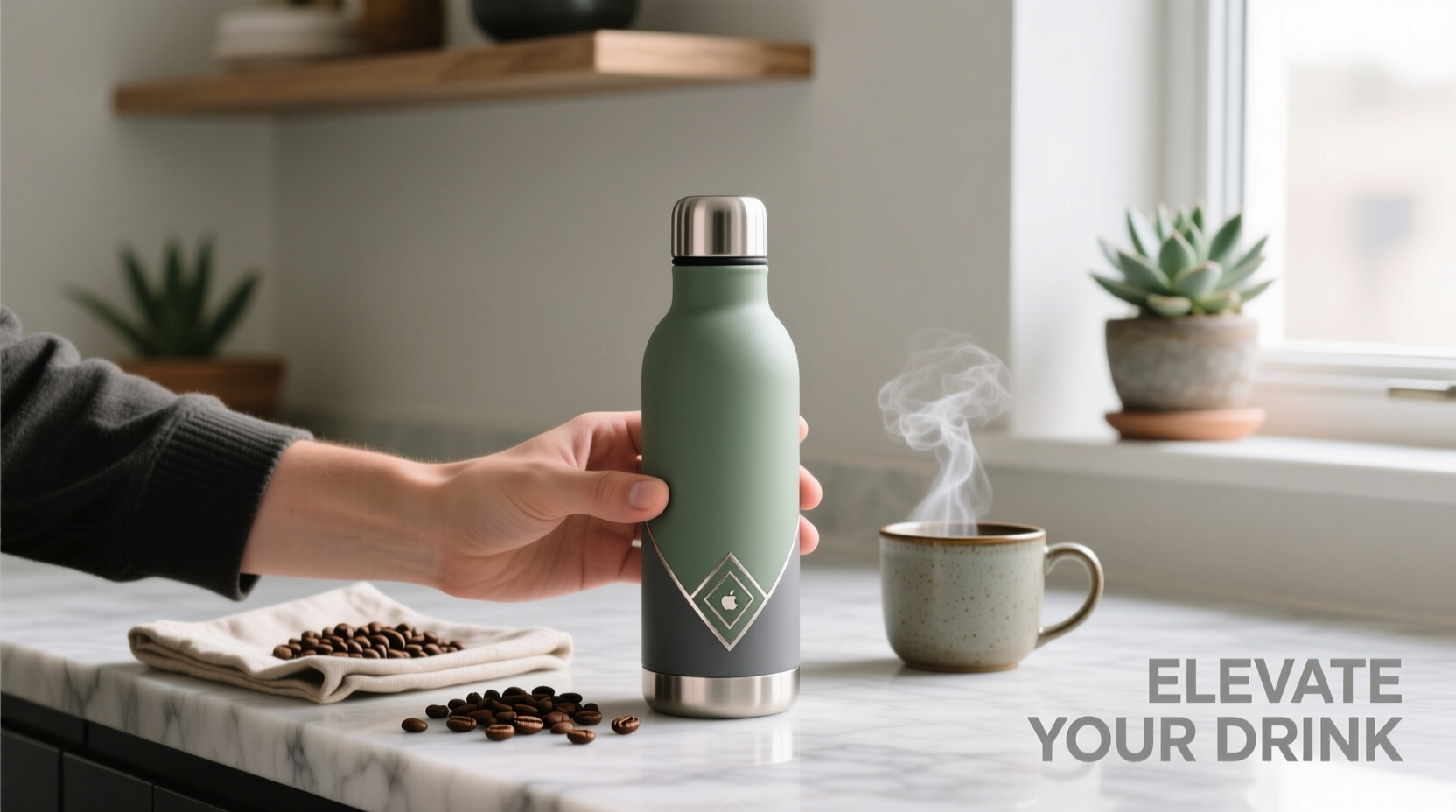
Thermal performance alone no longer defines value. Today’s consumers curate environments with intention: the ceramic mug on the desk, the linen napkin folded beside it, the quiet hum of a well-designed kitchen appliance—all contribute to a cohesive sensory experience. A flask that clashes visually disrupts that continuity. It signals compromise: “I need function, so I’ll tolerate the aesthetic.” But compromise isn’t necessary. Design-led insulation technology now allows for double-walled vacuum construction in slimmer profiles, seamless welds instead of bulky gaskets, and finishes that resist fingerprints and scratches without sacrificing thermal integrity. This shift reflects deeper cultural values: sustainability (choosing one beautiful, long-lasting vessel over disposable cups), mindfulness (the ritual of pouring and sipping becomes more intentional when the object feels considered), and identity expression (what we carry says something about how we move through the world). As interior designer and product strategist Lena Ruiz observes: “People don’t want tools—they want companions. A flask should feel like an extension of personal style, not an afterthought strapped to a backpack.”
Design Principles Behind the New Generation of Flasks
What separates a genuinely fashionable insulated flask from one merely dressed up? It comes down to four integrated design principles:
- Proportion & Silhouette: No exaggerated tapers, bulbous bases, or top-heavy lids. Ideal proportions follow golden ratio approximations—height roughly 3–4 times the diameter—with clean vertical lines and minimal visual interruption. The base is subtly weighted for stability, not reinforced with chunky rubber.
- Material Integrity: Stainless steel remains the standard for thermal performance, but surface treatment transforms perception. Brushed satin finishes diffuse light evenly; matte powder coatings eliminate glare and fingerprint retention; polished mirror surfaces reflect surroundings without looking clinical. Some brands use copper or titanium accent bands—not for thermal gain, but for tactile contrast and restrained luxury cues.
- Interface Refinement: The lid is where most “camping gear” associations originate. Fashion-forward flasks use low-profile, magnetic-seal caps with recessed silicone gaskets—no visible O-rings or threaded protrusions. One-touch push-button mechanisms replace twist-and-lock systems. The drinking aperture is precisely sized: wide enough for easy cleaning and ice cubes, narrow enough to prevent splashing and retain heat efficiently.
- Color Language: Moving beyond forest green, desert tan, and blaze orange, these flasks embrace nuanced palettes: slate grey with charcoal trim, warm oyster white, deep navy with brushed brass accents, or muted terracotta. Colors are applied via electrostatic coating or PVD (Physical Vapor Deposition) for durability and depth—not cheap plastic sleeves or vinyl wraps that peel.
Real-World Integration: A Day in the Life of a Thoughtfully Chosen Flask
Consider Maya, a graphic designer based in Portland. Her morning begins at home: she fills her 500ml matte charcoal flask with house-brewed cold brew. Its slender profile fits effortlessly into the side pocket of her structured leather tote—no bulge, no awkward angle. At the office, she places it beside her laptop on a walnut desk; its finish complements the wood grain, and its quiet presence avoids visual competition with her ceramic pen holder or brass desk lamp. During lunch, she walks to a neighborhood café known for its minimalist Scandinavian interior. She orders a matcha latte to go—but declines the paper cup, instead pouring the drink directly into her flask. The barista notes the vessel’s understated elegance and comments, “That’s beautiful—where did you get it?” Later, at an afternoon client meeting in a glass-walled conference room, she sets the flask down beside her Moleskine notebook. Its weight feels substantial but not heavy; its surface stays cool to the touch despite holding iced tea for three hours. Crucially, no one mistakes it for gear. It reads as personal, curated, and quietly confident—exactly how Maya wants her tools to reflect her professional ethos.
How to Choose Yours: A Practical Selection Checklist
Selecting a fashionable insulated flask isn’t about chasing trends—it’s about aligning performance with your physical and aesthetic environment. Use this checklist before purchasing:
- ✅ Measure your primary carrying space: Check the width and depth of your bag’s side pocket, your bike basket, or your car cup holder. Many “slim” flasks still exceed 7.5 cm in diameter—verify fit first.
- ✅ Test the lid mechanism in-store (if possible): Does it open and close smoothly with one hand? Does it seal audibly and securely? Avoid flasks requiring excessive torque or multiple alignment steps.
- ✅ Verify thermal claims with third-party data: Look for independent lab testing (e.g., ASTM F2701-19) cited on the brand’s site—not just marketing phrases like “all-day warmth.” Reputable brands publish 6-hour/12-hour temperature retention charts.
- ✅ Assess cleaning accessibility: Can the lid disassemble fully? Is the interior smooth, with no hidden crevices or glued-in gaskets? A flask that can’t be thoroughly cleaned will develop odors and biofilm, undermining both hygiene and longevity.
- ✅ Review warranty terms: Premium design warrants premium support. Look for minimum 5-year limited warranties covering vacuum integrity, lid mechanism, and finish defects—not just manufacturing flaws.
Performance vs. Aesthetics: What You Gain (and What You Don’t Sacrifice)
A common misconception is that elegance requires compromise on function. In reality, the best fashionable flasks often outperform their utilitarian counterparts—precisely because design refinement enables engineering improvements. Consider this comparison:
| Feature | Traditional “Camping-Style” Flask | Fashion-Forward Insulated Flask |
|---|---|---|
| Vacuum Seal Longevity | Typically 3–5 years before measurable heat loss increase | Engineered for 7–10+ years using enhanced copper diffusion barriers and helium leak testing |
| Temperature Retention (12hr cold) | 5–8°C average internal temp | 2–4°C average internal temp (due to optimized wall thickness-to-diameter ratio) |
| Weight (500ml) | 420–480g (reinforced base adds mass) | 340–380g (precision-welded, uniform wall thickness) |
| Surface Durability | Rubberized coating chips; powder coat fades in UV exposure | PVD-coated or electropolished stainless resists scratching, corrosion, and UV degradation |
| Ergonomic Grip | Textured rubber sleeve—effective but visually dominant | Micro-textured metal surface or integrated contoured grip zone—tactile without visual clutter |
This isn’t theoretical. Brands like Hydros, Qwetch, and S’well invested heavily in metallurgical R&D to achieve thinner, stronger walls—reducing weight while increasing thermal mass efficiency. Their design teams collaborated with materials scientists, not just industrial designers. The result? Better performance, lighter weight, and quieter aesthetics—achieved in tandem, not trade-off.
“The most elegant thermal solutions emerge when engineers stop designing for ‘extreme conditions’ and start designing for human context—how the object feels in the hand, how it sits on a surface, how it ages over time. That’s where true innovation lives.” — Dr. Aris Thorne, Materials Engineer, MIT Department of Mechanical Engineering
FAQ: Addressing Real Concerns
Can a stylish flask really keep drinks hot for 12 hours?
Yes—if it uses true double-wall vacuum insulation (not single-wall with foam lining) and has a tightly sealed, low-conductivity lid. Independent testing confirms several fashion-focused models (e.g., Zojirushi SM-KHE48, Hydro Flask Standard Mouth 500ml in matte finish) maintain >58°C after 12 hours. Key factors: pre-chilling or pre-heating the flask, minimizing lid openings, and using the included lid—not a third-party replacement.
Won’t a matte or colored finish scratch or chip easily?
High-quality fashion flasks use either PVD (Physical Vapor Deposition) coating—which bonds at the molecular level—or food-grade electrostatic powder coating cured at 200°C. Both withstand daily abrasion far better than painted or wrapped alternatives. Scratches are rare with normal use; if they occur, they’re typically hairline and don’t compromise function. Avoid abrasive cleaners or steel wool—use baking soda paste or diluted vinegar for stubborn stains.
Are these flasks dishwasher safe?
Most are not—especially those with PVD finishes or complex lid assemblies. Dishwasher heat and detergents degrade gaskets and dull matte coatings over time. Hand-washing with warm water, mild dish soap, and a bottle brush is strongly recommended. For odor removal, fill with equal parts white vinegar and warm water, let sit for 15 minutes, then rinse thoroughly.
Conclusion: Carry Intention, Not Compromise
A flask is never just a container. It’s a daily companion—a small, repeated gesture of self-care, preparation, and presence. Choosing one that aligns with your aesthetic sensibility isn’t vanity; it’s an act of respect—for your time, your space, your values. When your insulated flask feels as considered as your favorite watch or your well-worn journal, it shifts from utility to ritual. It invites slower moments: the deliberate pour, the mindful sip, the quiet satisfaction of knowing your tool serves you completely—functionally, physically, and emotionally. The era of choosing between performance and beauty is over. Today’s best flasks deliver both, unapologetically and elegantly. Your next one shouldn’t hide in your bag. It should belong on your desk, your shelf, your table—visible, valued, and quietly exceptional.
💬 Found a flask that changed your routine? Share your experience—brand, size, finish, and what surprised you most—in the comments. Let’s build a living reference for thoughtful thermal design.








