
Linebacker is often considered the most demanding and pivotal position in American football. Tasked with stopping the run, covering tight ends, pressuring quarterbacks, and serving as defensive leaders, elite linebackers have defined eras, anchored championship defenses, and left legacies that transcend statistics. From bone-jarring hits to game-changing interceptions, the greatest NFL linebackers combined athleticism, intelligence, and relentless will. This article examines the most influential figures at the position, their defining moments, and how they reshaped the way defense is played.
The Evolution of the Linebacker Position
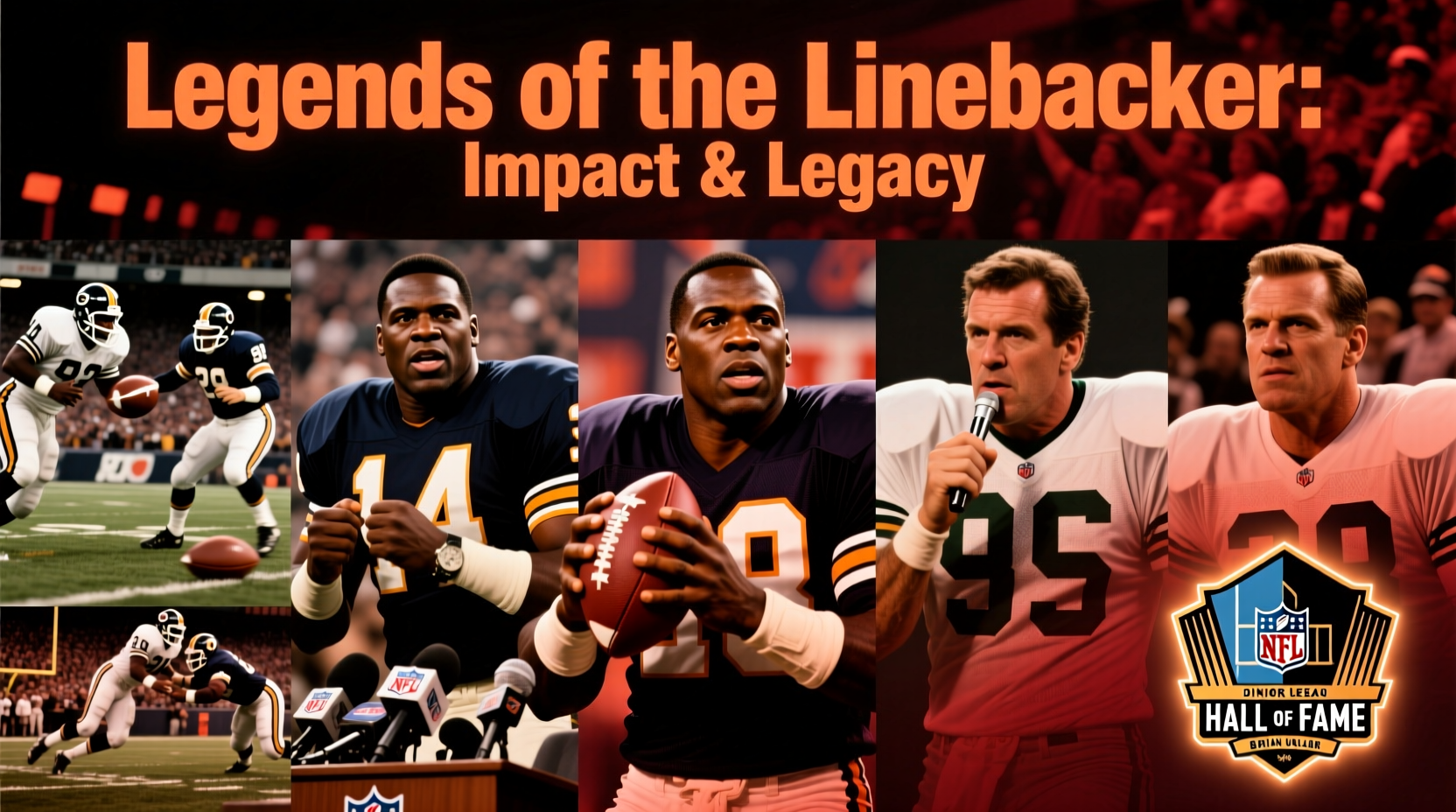
In the early decades of the NFL, the linebacker role was less specialized. Players were expected to be generalists—tackling runners, dropping into coverage, and occasionally blitzing. But as offensive schemes evolved, so did the linebacker’s responsibilities. The 1970s saw the rise of dominant 3-4 and 4-3 defenses, creating demand for players who could dominate in multiple phases of the game.
Coaches began seeking athletes who could read offenses like chess masters while possessing the physical tools to overpower blockers or chase down running backs. The result was a golden era of linebacker excellence, where names like Jack Lambert, Lawrence Taylor, and Dick Butkus became synonymous with defensive ferocity.
Modern linebackers are even more versatile. Today’s top performers must cover slot receivers, rush the passer on third down, and serve as communication hubs between the secondary and front seven. This evolution makes comparing across generations complex—but certain legends stand above the rest.
Legends of the Gridiron: Top 5 NFL Linebackers of All Time
While debates about \"greatest ever\" are subjective, several linebackers consistently rise to the top based on accolades, dominance, longevity, and cultural impact.
- Lawrence Taylor (New York Giants, 1981–1993) – Revolutionized the outside linebacker role with his speed, power, and unrelenting pressure. Taylor wasn’t just a pass rusher; he redefined what was possible from a linebacker.
- Ray Lewis (Baltimore Ravens, 1996–2012) – A two-time Defensive Player of the Year and Super Bowl MVP, Lewis was the heartbeat of one of the greatest defenses in NFL history.
- Jack Lambert (Pittsburgh Steelers, 1974–1984) – The enforcer of the Steel Curtain, known for his intimidation, toughness, and leadership during Pittsburgh’s dynasty years.
- Mike Singletary (Chicago Bears, 1981–1992) – A fierce middle linebacker whose intensity set the tone for the legendary 1985 Bears defense.
- Junior Seau (San Diego Chargers, Miami Dolphins, New England Patriots, 1990–2009) – A 12-time Pro Bowler whose passion and consistency made him a symbol of durability and excellence.
Lawrence Taylor: The Game Changer
Larry Legend didn’t just dominate—he changed the rules. Before Taylor, offensive coordinators didn’t routinely double-team linebackers. After Taylor, teams installed slide protections and used tight ends or running backs to chip him on nearly every play.
His peak came in the mid-1980s, culminating in a 1986 season where he recorded 20.5 sacks—a number almost unheard of for a linebacker—and won both the NFL MVP and Defensive Player of the Year awards. He was the first defensive player to win MVP since 1971.
“Lawrence Taylor forced offenses to innovate. He was the reason the ‘chip block’ became standard practice.” — Tony Dungy, Hall of Fame CoachTip: When studying great linebackers, focus not just on stats but on how they altered offensive game planning—their strategic impact.
Impact Beyond the Field: Leadership and Culture
The best linebackers are more than athletes—they’re leaders. Their ability to call audibles, rally teammates, and maintain discipline under pressure often determines a defense’s success.
Ray Lewis, for example, was renowned for his pre-game speeches and spiritual intensity. His performance in Super Bowl XXXV, where he led the Ravens to a record-setting 34–7 victory over the Giants, included three passes defended and constant disruption in the backfield. That game epitomized how a single player could elevate an entire unit.
Similarly, Mike Singletary’s leadership helped define the Chicago Bears' identity. Known for his “football rage,” he once famously stared down quarterback Jim McMahon during warmups, declaring, “I’m going to get you.” He delivered, sacking McMahon five times that day.
Defensive Legacy Comparison
| Player | Years Active | Pro Bowls | All-Pro Selections | Championships | Key Impact |
|---|---|---|---|---|---|
| Lawrence Taylor | 1981–1993 | 10 | 8 (6 First-Team) | 2 Super Bowls | Redefining pass rush from LB |
| Ray Lewis | 1996–2012 | 13 | 7 (5 First-Team) | 2 Super Bowls | Defensive leader & motivator |
| Jack Lambert | 1974–1984 | 9 | 6 (5 First-Team) | 4 Super Bowls | Tone-setter for Steel Curtain |
| Mike Singletary | 1981–1992 | 10 | 8 (5 First-Team) | 1 Super Bowl | Unmatched intensity & IQ |
| Junior Seau | 1990–2009 | 12 | 5 (3 First-Team) | 0 | Durability & emotional fire |
How These Legends Influenced Modern Defense
The blueprint for today’s hybrid linebacker can be traced directly to these icons. Taylor’s ability to rush the passer paved the way for players like Von Miller and Khalil Mack. Lewis’s sideline-to-sideline range and leadership inspired Bobby Wagner and Fred Warner. Seau’s versatility across multiple defensive fronts is mirrored in stars like T.J. Watt and Roquan Smith.
Moreover, the cultural expectation that a linebacker must be the “quarterback of the defense” stems from players like Singletary and Lambert, who called plays, adjusted formations, and held teammates accountable.
Mini Case Study: Ray Lewis and the 2000 Ravens Defense
The 2000 Baltimore Ravens allowed just 165 total points during the regular season—an average of 10.3 per game, the lowest in the modern era. Ray Lewis was the catalyst. With 135 tackles, 4 sacks, and 5 forced fumbles, he controlled the middle of the field like a conductor.
In the playoffs, the Ravens shut out the Titans and defeated the Raiders and Giants by wide margins. In Super Bowl XXXV, Lewis dominated despite not recording a sack or interception. His presence disrupted timing routes, deterred runs up the middle, and allowed safeties to play more aggressively.
This season demonstrated that a great linebacker doesn’t need gaudy stats to change games—he needs impact, awareness, and command.
Frequently Asked Questions
Who is considered the most dominant defensive player in NFL history?
While opinions vary, Lawrence Taylor is frequently cited as the most dominant defensive player ever. His combination of speed, strength, and game-wrecking ability forced permanent changes in offensive line strategy.
Why do some great linebackers not have high sack or interception totals?
Many elite linebackers prioritize run defense, gap control, and coverage support over chasing stats. Players like Jack Lambert and Dick Butkus excelled in areas rarely reflected in box scores—leadership, intimidation, and consistent tackling.
Can a linebacker still win Defensive Player of the Year today?
Absolutely. Recent winners like Luke Kuechly, Bobby Wagner, and T.J. Watt prove that linebackers remain central to elite defenses. However, edge rushers often receive more attention due to higher sack numbers.
Actionable Checklist: Traits of Legendary Linebackers
To understand what separates good from legendary, consider this checklist when evaluating linebackers—past or present:
- ✅ Consistent tackling efficiency (low missed tackle rate)
- ✅ Ability to defend both run and pass effectively
- ✅ Leadership and communication on the field
- ✅ High football IQ and adaptability to schemes
- ✅ Longevity and sustained performance over 10+ seasons
- ✅ Influence on team culture and defensive identity
- ✅ Clutch performances in playoff or high-pressure games
Final Thoughts: The Enduring Legacy of Greatness
The best NFL linebackers are more than athletes—they are symbols of resilience, intelligence, and passion. Their legacies endure not only in record books and highlight reels but in the way the game is coached and played today. From Taylor’s terror off the edge to Lewis’s fiery leadership, these players redefined what it means to be a defensive force.
Their impact extends beyond wins and awards. They inspired generations of young players to wear #57, #55, or #50 with pride. They taught coaches that defense can win championships—and that one relentless player can shift the momentum of a season.
💬 Which linebacker’s legacy resonates most with you? Share your thoughts, debate the rankings, or honor a personal favorite in the comments. Let’s keep the conversation about football greatness alive.








