
For serious pool players, the difference between a good shot and a great one often comes down to equipment refinement. Among the most impactful upgrades a player can make is switching to a low deflection (low-deflection or LD) shaft. These shafts are engineered to reduce cue ball squirt—the sideways deviation that occurs when applying english—giving players more predictable feedback and tighter shot control. Whether you're refining your stroke or aiming for tournament-level consistency, understanding and selecting the right low-deflection shaft can transform your game.
Understanding Cue Ball Deflection and Why It Matters
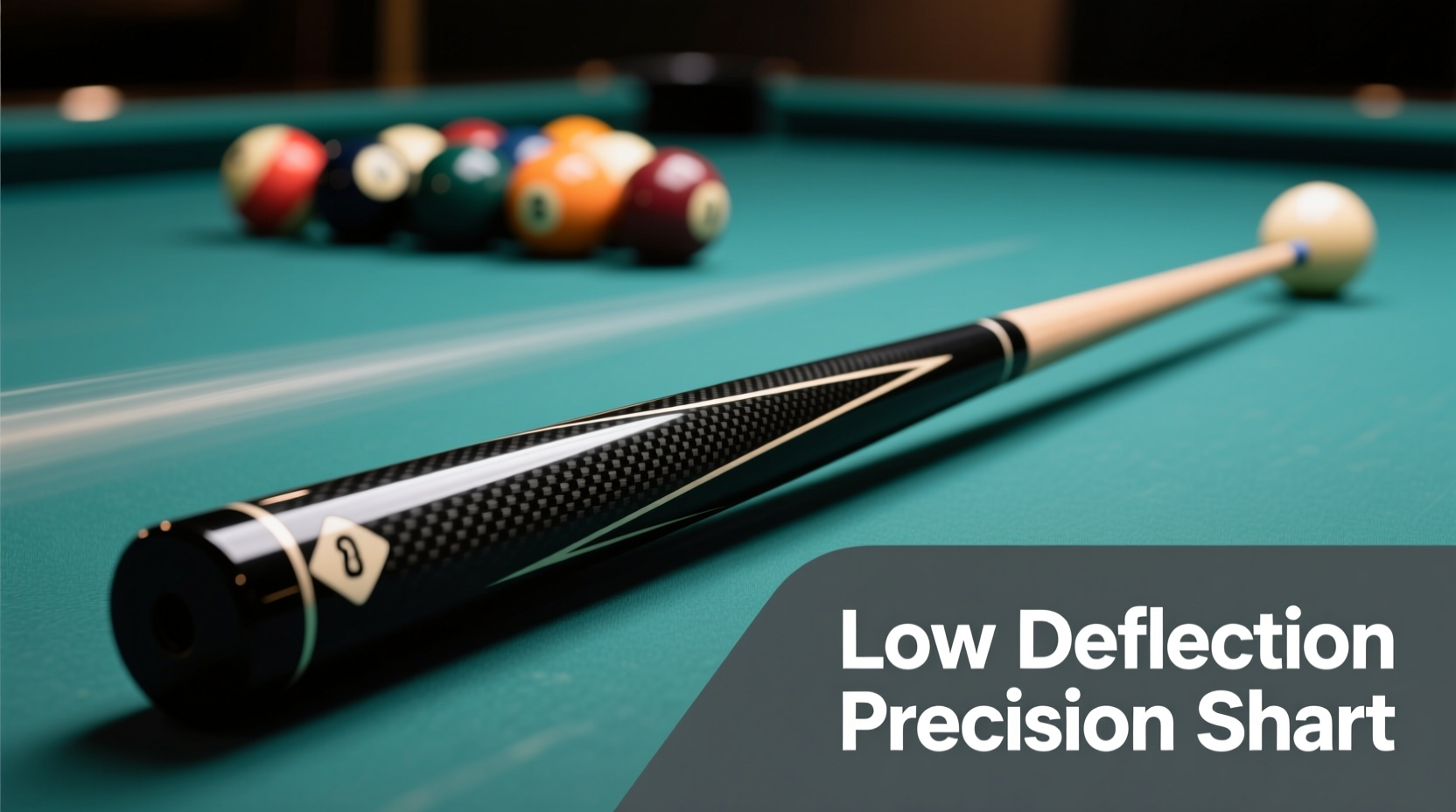
When you strike the cue ball off-center to apply side spin (english), the cue tip pushes the ball in a slightly different direction than intended. This phenomenon, known as \"squirt\" or \"cue ball deflection,\" forces players to compensate by adjusting their aim—especially on cut shots with heavy spin. The amount of deflection depends on several factors: shaft stiffness, tip offset, cue weight distribution, and bridge length.
Traditional shafts, especially those made from solid maple, tend to deflect more due to their mass and rigidity near the tip. In contrast, low-deflection shafts use advanced materials and taper designs to shift mass toward the butt end, reducing front-end weight and minimizing lateral push during off-center hits.
“Reducing deflection isn’t about power—it’s about predictability. A consistent shaft lets you focus on strategy, not compensation.” — Mark Wilson, Master Cue Technician & Instructor
Top Low Deflection Shafts: Performance Comparison
The market offers several high-performance low-deflection shafts, each tailored to different playing styles and preferences. Below is a comparison of leading models based on key performance metrics:
| Shaft Model | Material/Construction | Average Deflection (mm) | Tip Diameter | Best For |
|---|---|---|---|---|
| Mueller Phenom | Carbon fiber composite | 0.8 | 12.75 mm | Tournament players seeking minimal adjustment |
| Predator Victory IV | Maple with carbon fiber ferrule | 1.1 | 12.5 mm | Balanced feel with modern tech integration |
| OB I-Shaft Pro | Laminated maple strips | 1.3 | 12.4 mm | Players preferring wood feel with reduced deflection |
| Tiger Shaft (by Predator) | Carbon fiber core with maple overlay | 0.9 | 12.7 mm | Durability and extreme consistency under pressure |
| Cuetec Revo 12.4 | Full carbon fiber | 0.7 | 12.4 mm | Maximum precision; requires adaptation period |
The Cuetec Revo series consistently ranks among the lowest in measurable deflection, thanks to its full carbon fiber construction and symmetrical design. However, some players report an initial adjustment phase due to its unique feedback and lack of traditional wood vibration.
Tip: When testing a new LD shaft, spend at least 10–15 hours practicing basic english shots before judging performance. Muscle memory needs time to recalibrate.How to Choose the Right Low-Deflection Shaft for Your Game
Selecting a low-deflection shaft isn't just about picking the model with the lowest numbers. It's about matching technology to your stroke, experience level, and play frequency.
- Beginner to Intermediate Players: Start with a hybrid like the Predator Victory IV. It offers noticeable deflection reduction while maintaining a familiar wooden shaft feel.
- Advanced Players: Consider the Cuetec Revo or Mueller Phenom if you rely heavily on precise english and long-term consistency.
- Tactile Feedback Preference: If you value feedback through the cue ball contact, a laminated wood-based shaft like the OB I-Shaft may suit you better than a fully synthetic option.
- Budget Consideration: While LD shafts range from $150 to over $400, investing in one can extend the life and performance of your favorite cue via a simple swap.
Real-World Example: Competitive Adaptation
Consider the case of Dana Reyes, a semi-professional player from Austin who struggled with consistency on bank shots using draw and inside english. After switching from a standard maple shaft to a Cuetec Revo 12.4, she noticed immediate improvement in cue ball path prediction. Over three months, her successful bank shot rate increased by 22%, and she reported greater confidence in tight pocket games. “I used to aim two tips left when cutting right with left-hand spin,” she said. “Now I barely adjust. That mental clarity changed everything.”
Step-by-Step Guide to Testing and Adapting to a Low-Deflection Shaft
Switching to a low-deflection shaft requires deliberate practice. Follow this timeline to ensure a smooth transition:
- Week 1: Baseline Assessment
Use your current shaft to perform a series of controlled tests: hit center-ball, then apply ½ tip left and right english at various distances. Record how much the cue ball deviates from the aimed line. - Week 2: Install New Shaft
Attach the LD shaft to your cue (or use a dedicated LD cue). Repeat the same drill without changing your stance or grip. Note the reduced need for aim correction. - Week 3: Focus on Bridge Stability
Practice open bridge shots with medium english. Observe how the cue tracks straighter and how the cue ball responds more directly to input. - Week 4: Apply in Game Scenarios
Play practice racks focusing on position play requiring english. Use only small offsets (¼ to ½ tip) initially to build trust in the shaft’s response. - Ongoing: Refine Aim System
Adjust your personal aiming method—whether it’s pivot systems like aim-and-pivot or center-to-edge—to align with the new deflection profile.
“The real benefit of LD shafts shows up in pressure situations. When fatigue sets in, consistency becomes king.” — Lena Cho, APA National Champion
Common Myths About Low-Deflection Shafts
Despite widespread adoption among professionals, misconceptions persist:
- Myth: LD shafts make you lazy.
Reality: They reduce variables, allowing players to develop cleaner strokes and more accurate feedback loops. - Myth: You don’t need to learn squirt compensation anymore.
Reality: Understanding squirt is still essential, especially when switching cues or playing with older shafts. - Myth: All LD shafts feel the same.
Reality: Carbon fiber, laminated wood, and hybrid constructions offer vastly different tactile experiences.
Frequently Asked Questions
Do low-deflection shafts improve accuracy?
Yes, but indirectly. They reduce unintended cue ball movement caused by english, making your aim more reliable. Accuracy improves because what you intend is more closely matched by what happens on the table.
Can I install a low-deflection shaft on any cue?
Most LD shafts are designed as drop-in replacements for standard 13/16” pin systems. However, always verify compatibility with your cue’s joint type, weight, and balance point. Some cues may require counterbalancing after installation.
Are low-deflection shafts worth the cost?
For frequent players, yes. If you regularly apply english, play in leagues, or want tighter positional control, the investment pays off in fewer miscues, better pattern runs, and faster skill progression.
Essential Checklist Before Buying a Low-Deflection Shaft
- ✅ Confirm joint compatibility with your current cue
- ✅ Determine preferred tip size (12.4mm vs. 12.75mm affects feel and spin potential)
- ✅ Decide between full carbon fiber or wood-composite construction
- ✅ Test the shaft in person if possible—or rent before buying
- ✅ Budget for re-chalking habits (some LD shafts require specific chalk types)
- ✅ Plan a 4-week adaptation schedule to avoid premature judgment
Final Thoughts: Precision Through Innovation
Low-deflection shafts represent one of the most significant advancements in cue technology over the past two decades. They don’t replace skill—they amplify it. By minimizing unpredictable variables, these shafts allow players to develop a deeper understanding of spin, speed, and geometry. Whether you’re breaking out of an intermediate plateau or preparing for competitive play, upgrading to a quality LD shaft could be the catalyst for sharper, more confident performance.
💬 Ready to refine your cue control? Try a low-deflection shaft in your next practice session and track how your position play evolves. Share your experience or ask questions in the comments below—let’s grow the knowledge together.








