Swimming is a high-intensity, full-body workout that demands precision, consistency, and tracking. Unlike land-based activities, water presents unique challenges for wearable technology. A reliable waterproof digital watch isn’t just a convenience—it’s a performance tool. Whether you're training for triathlons, improving lap times, or simply tracking your weekly swim routine, the right watch can elevate your results. But not all “water-resistant” watches are built for the pool. Choosing the wrong model could mean inaccurate data, premature failure, or even safety risks.
This guide cuts through marketing claims to deliver practical, evidence-based advice on selecting a digital watch that performs under pressure—literally. From understanding water resistance ratings to evaluating stroke detection accuracy, we’ll cover what truly matters when making your decision.
Understanding Water Resistance: Beyond the Hype
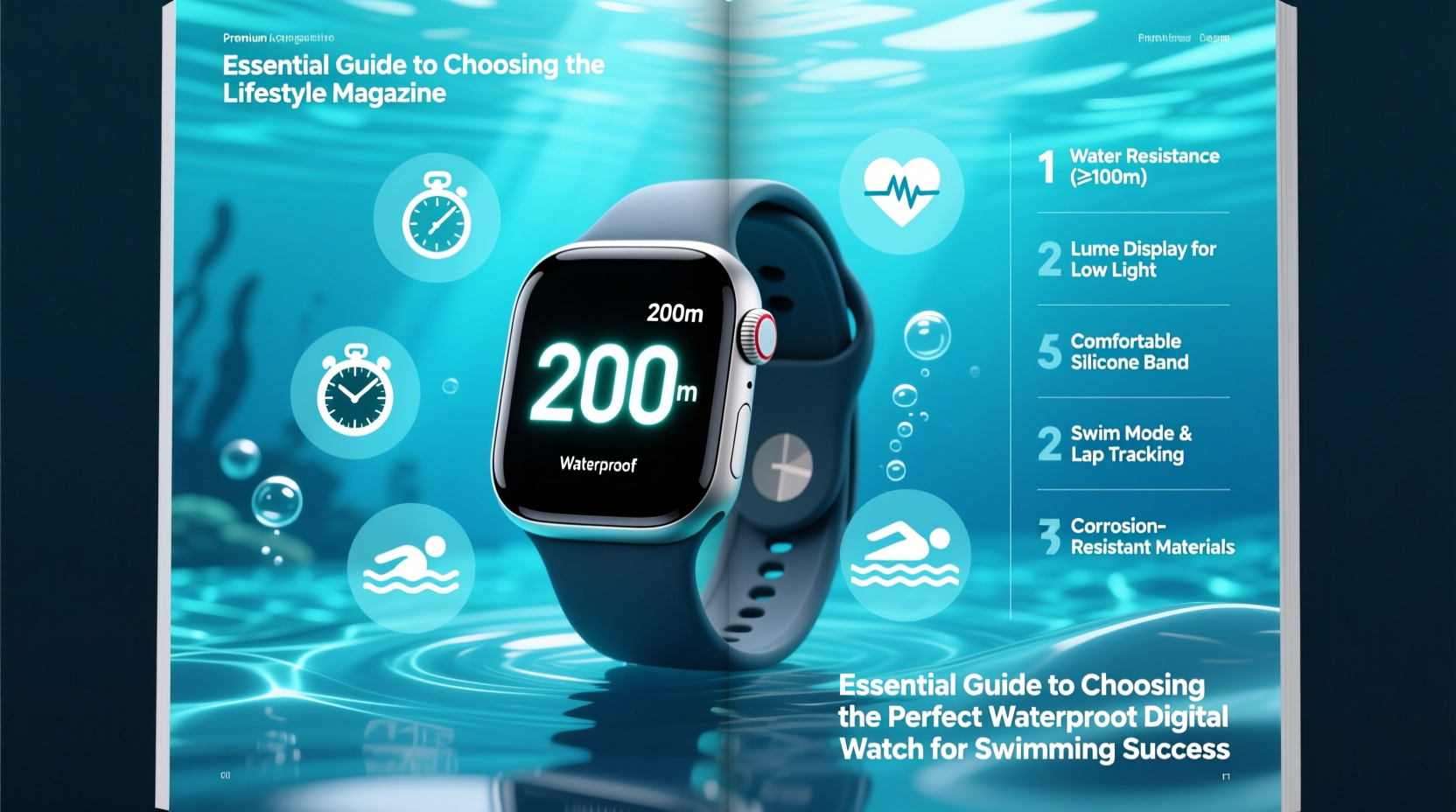
The term “waterproof” is often misused in consumer electronics. No digital watch is completely impervious to water over time. Instead, manufacturers use standardized ATM (atmospheres) or meter ratings to indicate pressure tolerance. These numbers don’t reflect depth alone—they relate to static pressure during testing.
| Rating | Meaning | Suitable For |
|---|---|---|
| 3 ATM / 30 meters | Resists splashes and rain | Not for swimming |
| 5 ATM / 50 meters | Withstands shallow swimming | Leisure pool sessions |
| 10 ATM / 100 meters | Handles dynamic pressure from strokes | Training, open water, diving |
| 20 ATM+ / 200 meters | Extreme underwater durability | Professional swimmers, divers |
For serious swimming, aim for at least 10 ATM. This ensures the watch can endure repeated immersion, rapid movements, and chlorine exposure without seal degradation. Watches rated below 5 ATM may survive occasional dunking but fail under consistent swim training conditions.
Tip: Always rinse your watch with fresh water after swimming in chlorinated or saltwater pools to prevent corrosion and seal deterioration.Key Features That Make a Difference
A high water resistance rating is only the foundation. The real value lies in features tailored to swim-specific metrics. General fitness trackers often lack the sensors and algorithms needed for accurate aquatic performance analysis.
- Lap counting automation: Automatically detects turnarounds using motion sensors, eliminating manual input mid-swim.
- Stroke recognition: Identifies freestyle, breaststroke, backstroke, and butterfly with varying degrees of accuracy.
- SWOLF score: Combines stroke count and time per length into a single efficiency metric.
- Pool length calibration: Allows input of pool size (25m, 50m, 25yd) for precise distance tracking.
- Open water mode: Uses GPS (when surfaced) to map outdoor swims, though signal limitations exist underwater.
Look for models with dedicated swim modes that auto-pause between sets and sync seamlessly with training apps like Strava, TrainingPeaks, or Garmin Connect. Battery life should support extended sessions—ideally 7+ days in smartwatch mode and 20+ hours in continuous GPS use.
“Accurate lap detection isn’t just about convenience—it’s critical for pacing strategy and progress tracking.” — Dr. Lena Torres, Sports Biomechanics Researcher, University of Edinburgh
Step-by-Step Guide to Selecting Your Ideal Watch
Choosing the best watch requires more than comparing specs. Follow this sequence to make an informed decision aligned with your goals.
- Define your swim environment: Will you primarily swim in pools, open water, or both? Pool swimmers benefit most from precise lap tracking; open water athletes need GPS integration.
- Determine required water resistance: Recreational swimmers should opt for 10 ATM minimum. Competitive or open-water swimmers should consider 20 ATM for added durability.
- Evaluate sensor capabilities: Check if the watch supports automatic stroke detection and SWOLF scoring. Read verified user reviews focusing on accuracy in real-world conditions.
- Assess compatibility: Ensure the watch syncs with your preferred training platform and smartphone OS (iOS/Android).
- Test comfort and fit: A snug silicone strap prevents slippage during strokes. Avoid metal bands—they’re prone to corrosion and discomfort when wet.
- Review battery and charging: Frequent charging interrupts training flow. Prioritize models with long battery life and magnetic USB docks that resist moisture ingress.
- Compare post-purchase support: Check warranty terms, software update frequency, and customer service responsiveness.
Real Example: From Frustration to Breakthrough
Mark R., a masters swimmer in Chicago, initially used a popular smartwatch labeled \"water-resistant\" for his daily 1.5K pool workouts. After three months, the screen fogged internally, and lap counts became erratic. He switched to a 10 ATM-rated swim-specific model with optical heart rate monitoring and automatic turn detection. Within weeks, he noticed inconsistencies in his pacing were revealed by accurate split times. Using SWOLF data, he adjusted his stroke technique and shaved 45 seconds off his 100-meter time in six weeks. The investment paid off not just in hardware longevity, but measurable performance gains.
Tip: Enable \"pool swim\" mode before entering the water—some watches default to general exercise tracking, which lacks swim-specific analytics.Comparison Table: Top Contenders Reviewed
| Model | Water Resistance | Key Swim Features | Battery Life | Price Range |
|---|---|---|---|---|
| Garmin Swim 2 | 5 ATM | Lap counting, stroke ID, SWOLF, interval timer | 7 days | $180–$220 |
| Apple Watch Ultra 2 | 10 ATM | Depth sensor, low-light visibility, GPS for open water | 36 hours (swim mode) | $799 |
| Casio GBA-800 | 20 ATM | Stopwatch, countdown timer, backlight, shock-resistant | 2 years (battery) | $120 |
| Polar Vantage V3 | 10 ATM | Advanced recovery insights, stroke analysis, training load balance | 7 days (smart mode) | $550 |
The Casio GBA-800 stands out for durability and cost-effectiveness, while the Apple Watch Ultra 2 offers premium integration for tech-heavy users. The Garmin Swim 2 remains a favorite among competitive swimmers for its focused feature set.
Frequently Asked Questions
Can I wear my smartwatch in a hot tub?
No. High temperatures weaken seals and accelerate internal condensation. Even watches rated for 100 meters should avoid prolonged exposure to hot water above 40°C (104°F).
Why does my watch lose accuracy in open water?
Underwater, GPS signals are blocked. Most watches estimate distance using accelerometer data until resurfacing. For better accuracy, calibrate arm stroke length manually and ensure firmware is up to date.
Do I need heart rate monitoring for swimming?
Optical HR sensors struggle underwater due to light refraction and movement. Chest straps with ANT+ or Bluetooth transmission offer superior accuracy for those monitoring intensity zones.
Final Checklist Before Buying
- ✅ Minimum 10 ATM water resistance
- ✅ Automatic lap and stroke detection
- ✅ Compatibility with your smartphone and training apps
- ✅ Long battery life (minimum 5 days in normal use)
- ✅ Comfortable, non-corrosive band material
- ✅ Clear display readable underwater
- ✅ Manufacturer reputation for swim-focused reliability
Take the Plunge with Confidence
Selecting the right waterproof digital watch transforms swimming from guesswork into a data-driven discipline. It’s not about owning the most expensive gadget—it’s about finding a reliable partner that tracks your effort accurately, withstands the rigors of training, and provides insights that lead to improvement. Whether you're refining technique, chasing personal records, or building endurance, the right watch becomes an extension of your focus in the water.
💬 Ready to upgrade your swim game? Share your favorite watch model or ask questions in the comments—let’s build a community of smarter swimmers together.








