In dense urban environments where traffic congestion is a daily reality, choosing the right mode of transportation can significantly impact your commute time, physical well-being, and overall quality of life. Two increasingly popular options—electric scooters and bicycles—are reshaping how people move through cities. Both offer eco-friendly, cost-effective alternatives to cars and public transit, but they differ in critical ways when it comes to speed, safety, and practicality. Understanding these differences helps commuters make informed decisions based on their lifestyle, route conditions, and personal priorities.
Speed: How Fast Can You Really Go?
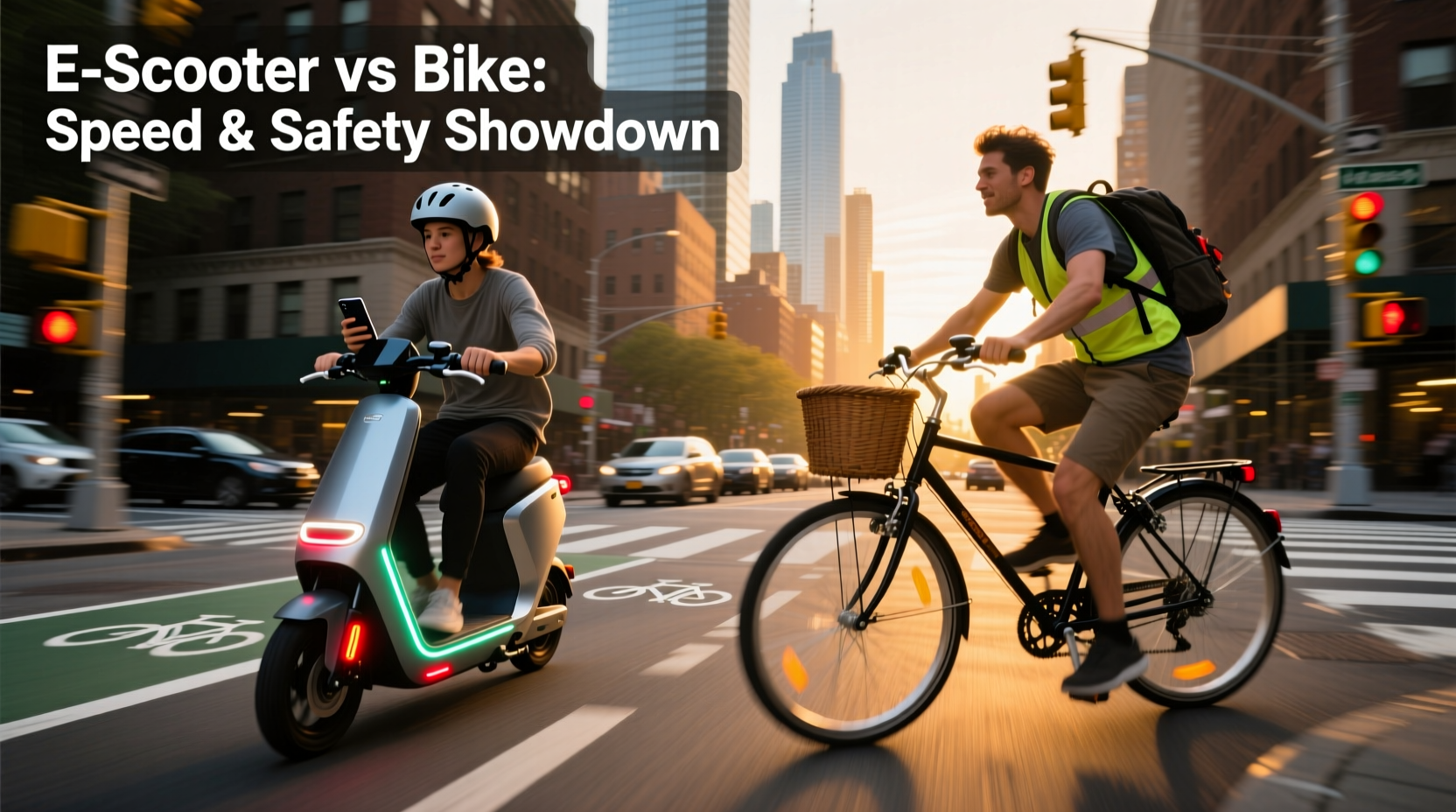
When evaluating electric scooters and bikes for city commuting, speed is often a top consideration. The average commuter wants to reach their destination efficiently without unnecessary delays. However, real-world performance depends not only on maximum speed but also on acceleration, terrain, and legal restrictions.
Most mid-range electric scooters have a top speed between 15 and 20 mph (24–32 km/h). High-performance models can exceed 25 mph (40 km/h), but such speeds are often restricted by local laws in urban areas. Acceleration is typically quick due to direct motor engagement, making e-scooters ideal for stop-and-go city traffic.
Bicycles, particularly e-bikes, vary more widely. Class 1 and Class 2 e-bikes provide pedal assist up to 20 mph (32 km/h), while Class 3 models can reach 28 mph (45 km/h) with pedal assist. Traditional pedal bikes rely entirely on rider effort, averaging 10–14 mph (16–22 km/h) for most urban riders. While e-bikes may match or slightly surpass e-scooter speeds, their advantage lies in sustained output over longer distances.
Tip: For short commutes under 3 miles, electric scooters often deliver faster door-to-door times due to quicker start-up and easier parking.Safety: Navigating Urban Hazards
Safety remains one of the most pressing concerns for urban commuters. Both e-scooters and bikes face risks from vehicle traffic, road debris, poor lighting, and distracted drivers—but the nature of those risks differs.
E-scooters are lower to the ground, with smaller wheels that struggle on uneven pavement, potholes, or wet surfaces. This increases the likelihood of losing balance or tipping over. Their compact design offers no protection in collisions, and many models lack advanced braking systems. Riders are also less visible to motorists, especially at night.
Bicycles, particularly traditional or e-bikes with larger frames and wheels, generally offer better stability and control. They're more visible on the road, and most come equipped with stronger brakes, lights, and reflective elements. Cyclists also tend to occupy bike lanes more confidently, reducing interaction with fast-moving vehicles.
“Urban micromobility safety hinges on infrastructure as much as vehicle choice. Without protected lanes, even the safest scooter or bike puts riders at risk.” — Dr. Lena Torres, Urban Transportation Researcher, MIT Mobility Lab
Common Safety Challenges by Mode
| Factor | Electric Scooter | Bicycle |
|---|---|---|
| Road Stability | Moderate (small wheels) | High (larger tires, balanced frame) |
| Braking Power | Varies (often disc or electronic) | Generally strong (mechanical/disc) |
| Night Visibility | Low to moderate (minimal built-in lights) | High (standard front/rear lights) |
| Collision Protection | None | None, but higher visibility reduces risk |
| Parking Security | Poor (easily stolen if not locked) | Moderate (bulkier, harder to carry away) |
Infrastructure & Legal Considerations
The usability of both e-scooters and bikes depends heavily on local regulations and available infrastructure. Cities vary widely in how they treat micromobility devices.
In many U.S. and European cities, e-scooters are classified as “personal mobility devices” and are subject to specific rules: speed limits (often capped at 15 mph), mandatory helmet use, and restrictions on sidewalk riding. Some municipalities limit where scooters can be ridden or parked, especially shared dockless models.
Bicycles enjoy broader acceptance and better infrastructure support. Most cities have designated bike lanes, bike racks, and integration with public transit. E-bikes are usually treated similarly to conventional bikes, though higher-speed Class 3 models may face additional requirements like license plates or age restrictions.
Commute reliability also depends on route planning. A smooth bike lane network allows cyclists to maintain consistent speeds safely. In contrast, e-scooter riders often navigate sidewalks or mixed-traffic zones, increasing conflict with pedestrians and vehicles.
Mini Case Study: Commuting in Portland, OR
Jamal, a software developer in Portland, tested both an electric scooter and his old hybrid bike for his 4.2-mile commute downtown. Over two weeks, he tracked travel time, comfort, and stress levels.
Using the e-scooter, his average trip was 18 minutes—slightly faster than the bike’s 22 minutes. However, he reported frequent near-misses with cars turning right across his path, discomfort from vibrations on cracked pavement, and anxiety about securing the scooter at work. On the bike, despite slower acceleration, he felt more in control, used protected bike lanes for 70% of the route, and arrived less fatigued. He ultimately switched back to the e-bike full-time, citing predictability and safety as deciding factors.
Cost, Maintenance, and Longevity
While initial purchase price matters, long-term ownership costs—including maintenance, repairs, and lifespan—are equally important.
- E-Scooters: Entry-level models start around $300, with premium versions exceeding $1,000. Battery replacement ($100–$200) is typically needed every 2–3 years. Tires, brakes, and motors require periodic servicing. Due to lightweight construction, durability is limited—many consumer scooters last 2–4 years with regular use.
- Bicycles: Quality e-bikes range from $1,200 to $3,000+, though basic models start lower. Maintenance includes chain lubrication, brake pad changes, and tire replacements—all standard and widely supported. With proper care, a bicycle frame can last a decade or more. Even e-bike batteries (priced $300–$600) outlast scooter equivalents due to better engineering and cooling systems.
Additionally, insurance and theft protection should be considered. E-scooters are more portable and thus more vulnerable to theft. Bikes can be secured more effectively with heavy-duty locks and registration services.
Tip: Register your e-scooter or bike with local authorities and use GPS trackers to improve recovery chances if stolen.Step-by-Step Guide: Choosing the Right Option for Your Commute
Follow this decision-making process to determine whether an electric scooter or bike better suits your needs:
- Map Your Route: Use Google Maps or Strava to analyze distance, elevation, and existing bike/scooter infrastructure.
- Check Local Laws: Confirm speed limits, helmet requirements, and where each vehicle type is permitted.
- Assess Road Conditions: Are there potholes, gravel, or steep hills? Larger-wheeled bikes handle rough terrain better.
- Consider Storage: Do you have secure indoor storage at home and work? Scooters need protection from weather and theft.
- Test Ride Both: Rent or borrow models to compare comfort, handling, and ease of use.
- Calculate Total Cost: Include purchase price, expected maintenance, insurance, and accessories (helmet, lock, lights).
- Decide Based on Priority: Speed and portability favor scooters; safety, comfort, and longevity favor bikes.
Expert Insight: What Urban Planners Recommend
“As cities invest in protected bike lanes and low-speed zones, the safety gap between scooters and bikes will narrow. But until then, we advise new riders to start with e-bikes—they offer a smoother learning curve and better crash survivability.” — City Mobility Task Force, Copenhagen Urban Development Report, 2023
Frequently Asked Questions
Are electric scooters safer than bicycles?
No, bicycles—especially e-bikes—are generally safer due to greater stability, better braking systems, and higher visibility. E-scooters’ small size and lower ride height increase vulnerability in traffic.
Which is faster for short city trips?
For trips under 3 miles, electric scooters often win in door-to-door time because they accelerate quickly and are easier to park. However, on routes with bike lanes, e-bikes can maintain more consistent speeds.
Can I use either option in the rain?
Both can be used in light rain, but caution is essential. E-scooters are more prone to hydroplaning and electrical issues. Always check manufacturer ratings for water resistance (IP rating). Bikes with fenders and puncture-resistant tires perform better in wet conditions.
Final Recommendation: Balancing Speed and Safety
The choice between an electric scooter and a bicycle isn’t about which is universally better—it’s about which aligns best with your commute, environment, and priorities.
If you value speed, portability, and minimal storage space—and your route is short, flat, and relatively smooth—an electric scooter could be the ideal solution. Just be prepared to invest in safety gear, learn defensive riding techniques, and accept higher maintenance demands.
If you prioritize safety, comfort, and long-term value—especially on commutes over 3 miles or in variable weather—a bicycle, particularly an e-bike, is likely the smarter investment. It integrates better with urban infrastructure, offers superior control, and provides health benefits through light exercise.
Checklist: Before You Buy
- ✅ Measure your typical commute distance and elevation change
- ✅ Research local laws on speed, helmets, and where to ride
- ✅ Test ride both scooter and bike models
- ✅ Evaluate storage options at home and work
- ✅ Budget for accessories: helmet, lock, lights, rain cover
- ✅ Check warranty and service availability
- ✅ Consider second-hand or rental options first
Ultimately, the best urban commute balances efficiency with peace of mind. As cities continue evolving to support sustainable transit, both e-scooters and bikes will play vital roles. But for now, if safety and reliability are non-negotiable, the bicycle—particularly the e-bike—remains the more dependable companion for daily city travel.
🚀 Ready to upgrade your commute? Try a weekend test ride on both an e-scooter and an e-bike. Share your experience in the comments and help others find their perfect urban ride!








