
As cities grow denser and traffic congestion worsens, micro-mobility options like electric bikes and electric scooters have surged in popularity. Both promise efficient, eco-friendly travel over short urban distances. But when it comes to safety��especially in unpredictable city environments—how do they truly compare? For daily commuters weighing convenience against risk, understanding the nuances of stability, control, visibility, and infrastructure compatibility is essential. This article breaks down the key safety factors between e-bikes and e-scooters to help you make an informed decision for your daily commute.
Stability and Physical Control
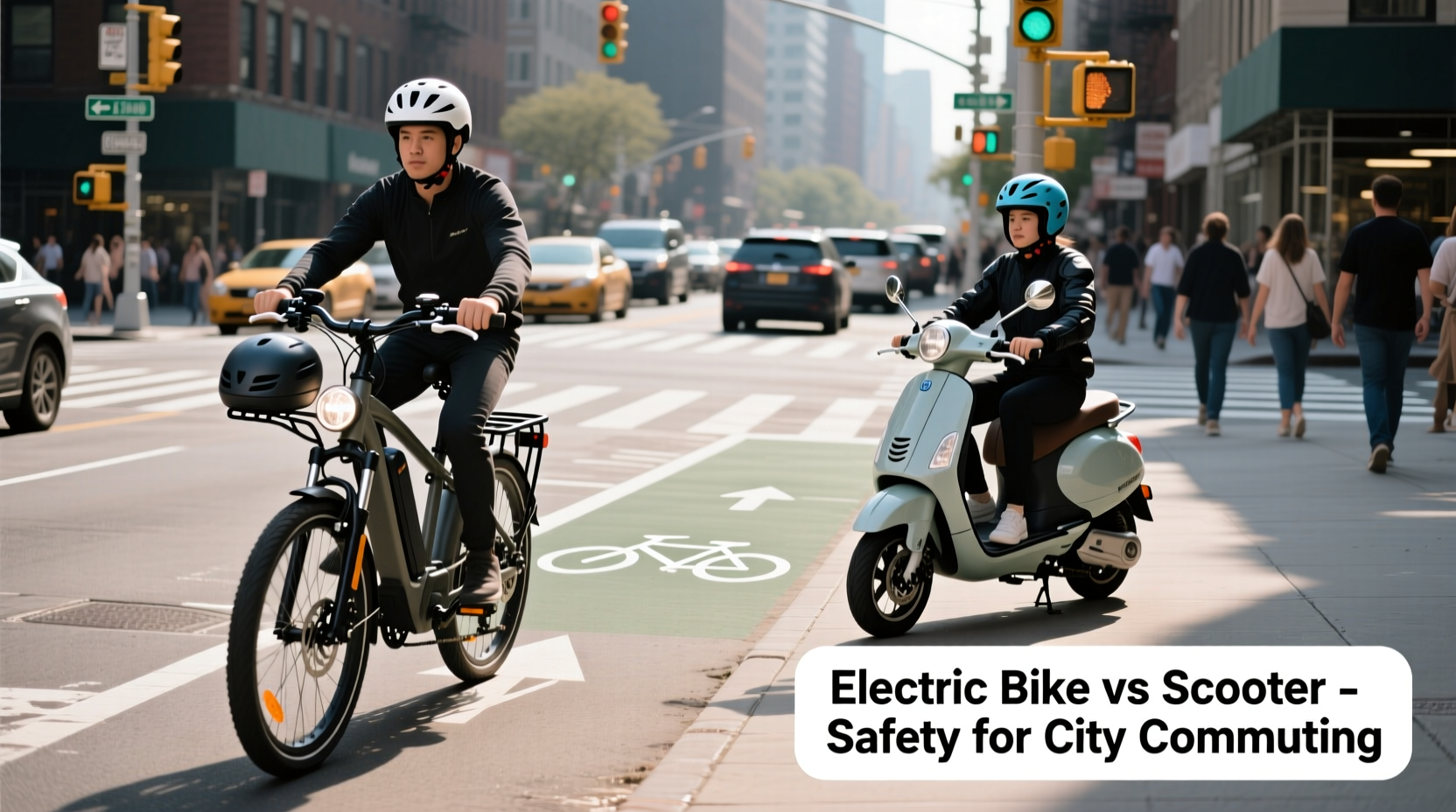
One of the most significant differences between electric bikes and scooters lies in their physical design and how that affects rider stability. E-bikes resemble traditional bicycles with two wheels, a frame, pedals, and a seated riding position. This familiar geometry offers better weight distribution and balance, particularly at low speeds or when stopping.
E-scooters, on the other hand, typically feature a narrow deck, handlebars, and a standing posture. While compact and portable, this stance reduces the rider’s center of gravity and limits dynamic balance correction. Sudden turns, uneven pavement, or abrupt stops can lead to loss of control—especially for less experienced riders.
A 2022 study by the National Highway Traffic Safety Administration (NHTSA) found that e-scooter riders were 30% more likely to suffer balance-related injuries than e-bike users during low-speed maneuvers. The seated position of e-bikes allows for greater core engagement and smoother handling in stop-and-go traffic, a common condition in urban settings.
Tip: If you're new to micro-mobility, start with an e-bike to build confidence in handling and road awareness before transitioning to a scooter.Braking Performance and Stopping Distance
Effective braking is critical in city environments where pedestrians, vehicles, and obstacles appear suddenly. Most e-bikes are equipped with dual mechanical or hydraulic disc brakes—similar to those on high-end mountain bikes. These offer strong, reliable stopping power even in wet conditions.
Many e-scooters rely on a combination of electronic regenerative braking and rear drum or disc brakes, with some models using only foot brakes. This hybrid system often results in longer stopping distances. According to independent testing by Consumer Reports, the average e-scooter requires 17 feet to stop from 15 mph on dry pavement, while an e-bike averages just 12 feet under the same conditions.
The difference becomes more pronounced in adverse weather. Wet roads reduce traction, and e-scooter riders—who stand upright—have less body weight over the front wheel, increasing the risk of front-wheel skidding during hard braking.
“Braking efficiency isn’t just about technology—it’s also about rider positioning. On an e-bike, you can shift your weight back during emergency stops, giving you a crucial advantage.” — Dr. Lena Patel, Urban Mobility Safety Researcher, MIT Transportation Lab
Visibility and Predictability in Traffic
Safety in cities depends heavily on being seen—and understood—by drivers, cyclists, and pedestrians. E-bikes, due to their resemblance to traditional bicycles, are generally perceived as predictable by other road users. They occupy bike lanes naturally and follow cycling traffic patterns, making their movements easier to anticipate.
E-scooters present a different challenge. Their sudden appearance, silent operation, and varied usage (sidewalks vs. roads) create confusion. A 2023 report from the Insurance Institute for Highway Safety (IIHS) noted that drivers misjudged the speed and trajectory of e-scooters 42% more often than e-bikes in urban intersections.
Additionally, e-scooter riders often lack clear right-of-way rules. In cities where scooters are banned from sidewalks but bike lanes are crowded, riders weave unpredictably between zones, increasing collision risk. E-bikes, especially pedal-assist models, integrate more seamlessly into existing cycling infrastructure.
Key Visibility Factors Compared
| Factor | E-Bike | E-Scooter |
|---|---|---|
| Rider Position | Seated, lower profile | Standing, higher visibility but less stable |
| Lights & Reflectors | Standard on most models | Often minimal or optional |
| Traffic Integration | High – follows bike norms | Low – inconsistent lane use |
| Noise Level | Moderate (chain, motor hum) | Nearly silent |
Infrastructure Compatibility and Road Conditions
Urban infrastructure was not designed for micro-mobility devices, but some adapt better than others. E-bikes perform well on dedicated bike lanes, paved roads, and even gravel paths. Their larger tires (typically 26”–29”) absorb bumps and potholes more effectively than the small 8”–10” wheels on most e-scooters.
Small wheels magnify the impact of cracks, curbs, and debris. A pothole that causes a minor jolt on an e-bike can destabilize an e-scooter rider completely. In cities like New York and Chicago, where road maintenance varies widely across neighborhoods, this becomes a serious safety concern.
Moreover, e-bikes allow riders to maintain momentum through rough patches thanks to pedal assistance. E-scooter riders must rely solely on motor power and balance, leaving them vulnerable when traction is lost.
Another consideration is storage and parking. E-bikes are often heavier and less portable, but they’re more likely to be locked securely to bike racks. E-scooters, while easy to carry indoors, are frequently left unsecured or leaned against signs—increasing theft risk and encouraging hasty, distracted rides.
Mini Case Study: Commuting in Seattle
Consider Maria, a software developer commuting 4 miles from Capitol Hill to downtown Seattle. Her route includes steep hills, streetcar tracks, and shared bike lanes. Initially, she used a shared e-scooter service. Within three weeks, she experienced two near-falls—one on rain-slicked tracks, another when a car door opened unexpectedly. After switching to a personal e-bike with wider tires and hydraulic brakes, her commute became significantly smoother. She reported feeling more in control, especially on descents, and appreciated the ability to signal turns with hand gestures that other road users recognized.
Maria’s experience reflects a broader trend: riders who prioritize safety over portability often transition from scooters to e-bikes after a few months of urban use.
Safety Gear and Rider Behavior
No vehicle is safe without responsible use. Helmets, lights, and reflective clothing significantly reduce injury risk for both e-bike and e-scooter riders. However, adoption rates vary.
A 2021 survey by the Governors Highway Safety Association found that only 28% of e-scooter riders wore helmets, compared to 54% of e-bike riders. The perception of e-scooters as “short-trip toys” rather than serious transportation contributes to lax safety habits.
Speed also plays a role. While both devices typically max out around 15–20 mph, e-scooter riders are more likely to operate at top speed in pedestrian-heavy zones. E-bike riders, especially those using Class 1 pedal-assist models (limited to 20 mph), tend to match traffic flow more naturally.
Tip: Always wear a certified helmet, use front and rear lights, and avoid using headphones while riding—regardless of your device.Checklist: Safer City Commuting Practices
- ✅ Wear a properly fitted helmet on every ride
- ✅ Use designated bike lanes whenever available
- ✅ Install bright front and rear lights
- ✅ Avoid sidewalk riding unless legally permitted and necessary
- ✅ Practice emergency braking in a safe area
- ✅ Stay predictable—use hand signals and avoid sudden swerves
- ✅ Check tire pressure and brake function weekly
Regulatory Landscape and Accident Data
Local laws shape how safely these devices can be used. Many cities impose speed limits, age restrictions, and helmet mandates—especially for e-scooters. However, enforcement remains inconsistent.
Hospital data from Los Angeles shows a 68% increase in e-scooter-related ER visits between 2018 and 2022, while e-bike injuries rose at a much slower rate despite growing popularity. Researchers attribute this disparity to the higher fall rate among scooter riders and frequent head injuries due to lack of helmet use.
In contrast, countries like the Netherlands and Germany, where e-bikes are integrated into national cycling policy, report lower injury rates per mile traveled. This suggests that infrastructure investment and cultural acceptance play a major role in safety outcomes.
Frequently Asked Questions
Are e-bikes legal in bike lanes?
Yes, in most U.S. cities and European countries, e-bikes classified as Class 1 or Class 2 (with speeds up to 20 mph) are permitted in bike lanes. Always check local regulations, as rules may vary by municipality.
Do e-scooters require a license or registration?
In many places, no—but this is changing. Cities like Austin and Washington D.C. require user registration for shared scooters, and some states mandate liability insurance for private ownership. Always verify current rules in your area.
Which is safer in the rain?
E-bikes are generally safer in wet conditions due to better traction, more effective brakes, and a seated riding position that improves weight distribution. E-scooters become slippery and harder to control on wet surfaces, especially when braking.
Conclusion: Making the Safer Choice
When comparing electric bikes and scooters for city commuting, the evidence points clearly toward e-bikes as the safer option. Superior stability, shorter stopping distances, better integration with existing infrastructure, and higher compliance with safety practices all contribute to a lower risk profile. While e-scooters offer unmatched portability and convenience for short trips, their design limitations and higher accident rates make them less ideal for daily, high-mileage urban commutes.
Safety doesn’t depend solely on the vehicle—it’s shaped by rider behavior, gear, and awareness. Regardless of your choice, adopting best practices like wearing helmets, using lights, and respecting traffic rules dramatically improves your odds of arriving safely.
🚀 Ready to make your commute safer? Test ride both an e-bike and an e-scooter in your neighborhood. Pay attention to how each feels at stops, turns, and over rough pavement. Your comfort and confidence matter—choose the option that lets you ride with control and peace of mind.








