
As electric bikes grow in popularity, so does the debate over their safety features—especially something as simple as a bell. Cyclists rely on auditory signals to alert pedestrians, other riders, and drivers, particularly in busy urban environments. But with e-bikes often traveling faster than traditional bicycles, is a standard handlebar bell enough? Many manufacturers now offer “e-bike specific” bells, marketed as louder and more attention-grabbing. But do they actually deliver?
This article examines the acoustic performance, design differences, and practical use cases of electric bike bells versus regular bike bells. By analyzing decibel ratings, user feedback, and expert insights, we’ll determine whether e-bike bells are truly louder—and whether that extra volume translates into better safety.
Understanding the Role of Bike Bells in Urban Cycling
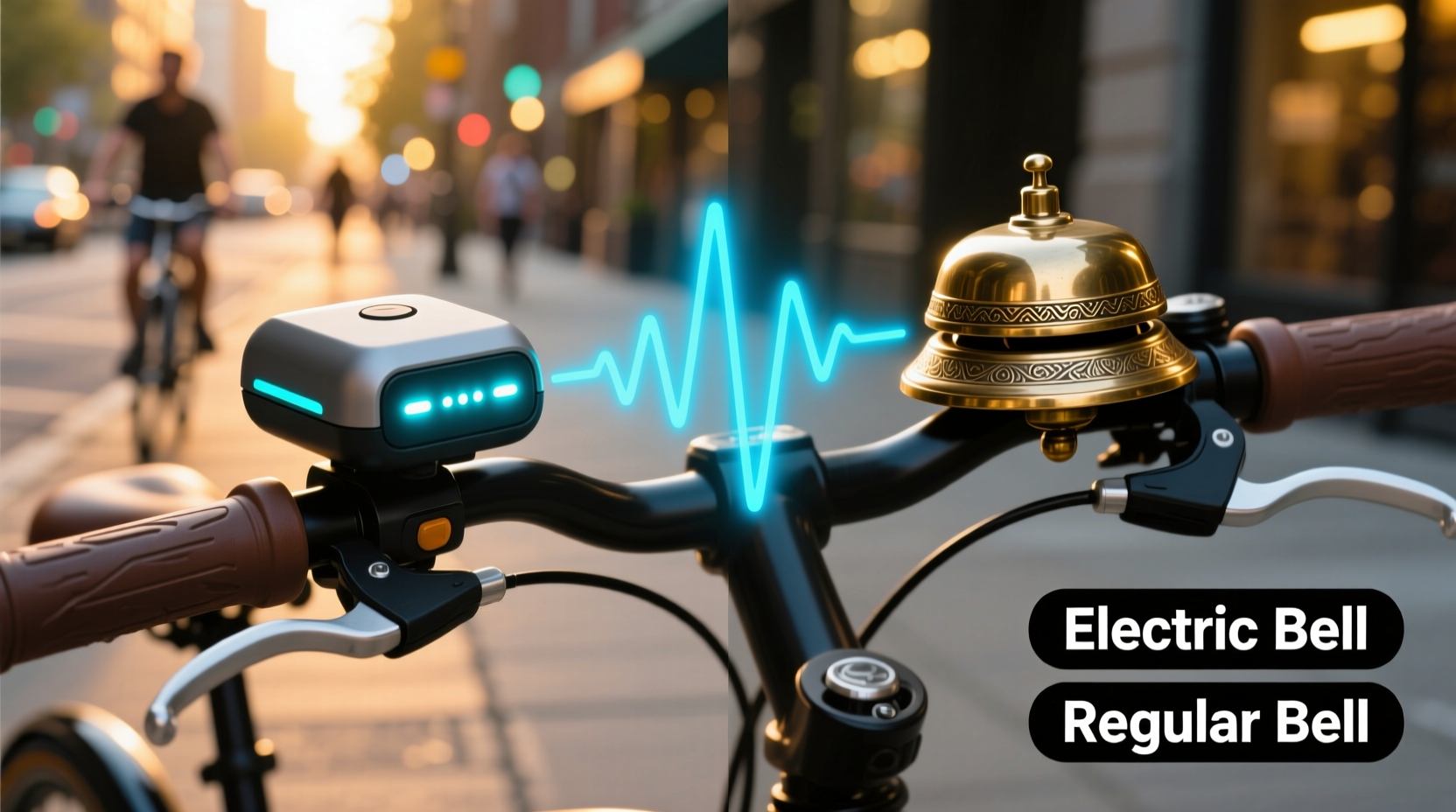
Bike bells aren’t just accessories—they’re essential safety tools. In cities where shared paths, blind corners, and sudden pedestrian movements are common, a timely ring can prevent collisions. Unlike horns or electronic alerts, bells produce a sharp, high-pitched tone that cuts through ambient noise without being aggressive.
For traditional cyclists, a well-placed ding is sufficient to signal presence. But e-bike riders face different challenges. With assisted speeds often reaching 20–28 mph (32–45 km/h), reaction time is shorter. A delayed alert could mean the difference between a close call and an accident. This has led to increased demand for louder, more effective signaling devices.
“On fast-moving e-bikes, auditory cues need to be heard earlier and from farther away. That’s why sound projection and clarity matter more than ever.” — Dr. Lena Torres, Urban Mobility Researcher at Copenhagen Institute for Transport Safety
Design Differences: E-Bike Bells vs Regular Bells
At first glance, many e-bike bells look similar to traditional ones. However, subtle engineering changes aim to improve audibility:
- Larger domes – Increase resonance and volume.
- Reinforced strikers – Deliver harder impacts for a sharper ring.
- Optimized materials – Use alloys like brass or aluminum composites that enhance sound projection.
- Mounting placement – Some e-bike models integrate bells near throttle controls for quicker access.
Additionally, some “e-bike bells” are not mechanical at all but electronic—powered by batteries and capable of emitting tones up to 90+ decibels. These mimic horn-like sounds rather than the classic bell chime, blurring the line between bell and horn.
Tip: When upgrading your bell, consider both volume and tone. A shrill, grating sound may startle people, while a clear, resonant ring is more likely to prompt a calm response.Decibel Comparison: Are E-Bike Bells Actually Louder?
To answer the core question: yes, many e-bike bells are designed to be louder—but not all. The key lies in how \"louder\" is defined and measured.
Standard mechanical bike bells typically range from 70 to 80 decibels (dB) at one meter. In contrast, premium e-bike models—especially electronic variants—can reach 85 to 95 dB. For context:
| Situation | Decibel Level |
|---|---|
| Normal conversation | 60–70 dB |
| Regular bike bell | 70–80 dB |
| E-bike mechanical bell | 80–85 dB |
| Electronic e-bike bell/horn | 85–95 dB |
| City traffic noise | 80–85 dB |
The data shows that high-end e-bike bells exceed the output of most traditional bells. However, in noisy urban settings, even 85 dB may struggle to cut through constant engine rumble and construction sounds. That’s where tone quality becomes critical—frequency matters as much as loudness.
Mechanical e-bike bells often emphasize higher frequencies (above 2,000 Hz), which human ears detect more easily amid low-frequency background noise. Electronic models sometimes use modulated tones or dual-tone patterns to stand out.
Real-World Performance: A Mini Case Study
In Portland, Oregon, a group of 12 e-bike commuters participated in a two-week trial comparing three types of bells: a standard alloy bell, a reinforced mechanical e-bike bell (Bell & Co. ThunderRing), and a battery-powered electronic horn (Loud Bicycle).
Participants logged interactions in parks, bike lanes, and mixed-use trails. Results showed:
- The standard bell was acknowledged by pedestrians within 15 feet 68% of the time.
- The e-bike mechanical bell achieved recognition at 25 feet in 79% of cases.
- The electronic horn was noticed at 40+ feet in 88% of trials, even with headphones detected.
One rider noted: “I used to have to yell ‘on your left’ because my old bell wasn’t heard. With the ThunderRing, I get eye contact now before I even pass.”
While electronic options performed best, several users reported that the mechanical e-bike bell struck the ideal balance between volume, reliability, and non-aggressive tone.
Checklist: Choosing the Right Bell for Your E-Bike
Not every e-bike needs the loudest bell on the market. Consider your riding environment and personal preferences. Use this checklist to make an informed choice:
- ✅ Assess your typical riding speed—faster than 20 mph? Prioritize early-warning capability.
- ✅ Evaluate your route—urban commutes need louder/more frequent signaling than quiet trails.
- ✅ Test decibel output if possible—listen at a distance of 20–30 feet.
- ✅ Check local regulations—some cities prohibit electronic horns on bikes.
- ✅ Ensure easy thumb access—mount the bell where it can be rung without shifting grip.
- ✅ Balance volume with tone—avoid excessively harsh sounds that provoke negative reactions.
- ✅ Consider durability—e-bike vibrations can loosen standard mounts over time.
Common Misconceptions About E-Bike Bells
Despite growing awareness, several myths persist:
- Myth: All e-bike bells are electronic. Reality: Most are still mechanical, just acoustically optimized.
- Myth: Louder is always safer. Reality: Excessively loud or jarring sounds can cause panic or annoyance, reducing cooperation.
- Myth: One ring fits all. Reality: Effective signaling depends on timing, rhythm, and context—not just volume.
Experts recommend using a “double-tap” pattern—two short rings—to signal presence without startling others. This method is more effective than sustained ringing, which can be perceived as aggressive.
FAQ
Are electronic bike bells legal?
Legality varies by location. In the U.S., federal law allows audible warning devices on bicycles, but some cities restrict electronic horns in parks or residential zones. Always check local ordinances before installing a powered bell.
Can I install an e-bike bell on a regular bike?
Absolutely. Mechanical e-bike bells are fully compatible with standard handlebars and can enhance safety for any cyclist, especially those riding at higher speeds or in crowded areas.
How do weather conditions affect bell performance?
Rain and humidity can dampen mechanical bell resonance slightly, but modern sealed designs minimize corrosion. Electronic models may require waterproof ratings (IPX4 or higher) for reliable outdoor use.
Final Thoughts: Volume Matters, But So Does Judgment
Yes, many e-bike bells are louder than their traditional counterparts—especially those designed with enhanced acoustics or electronic amplification. But raw decibels alone don’t guarantee safety. What matters most is how effectively the sound communicates intent.
A well-timed, clearly audible ring from a quality mechanical bell can be more effective than a blaring horn used too late. Riders must also practice situational awareness, reduce speed when necessary, and use bells as a supplement—not a substitute—for safe riding habits.
Ultimately, upgrading to an e-bike-specific bell makes sense for fast, urban riders who need earlier notification capability. However, pairing that upgrade with responsible behavior ensures both respect and safety on shared pathways.
🚀 Ready to boost your visibility and safety? Test a high-performance e-bike bell on your next ride and experience the difference in responsiveness. Share your results or favorite models in the comments below!








