There’s little worse than falling in love with a pair of shoes only to find they pinch your toes, squeeze your arches, or rub against your heels. While professional stretching services exist, not everyone has the time or budget to visit a cobbler. Fortunately, there’s a practical, accessible solution most people already have at home: the hairdryer. When used correctly, a hairdryer can help loosen stiff materials like leather, suede, and synthetic fabrics, allowing shoes to conform more comfortably to your feet. This method combines heat and moisture to temporarily soften fibers, making them pliable enough to stretch while you wear them.
The technique is especially useful for new shoes that haven’t yet broken in or for styles that run slightly small. With patience and care, you can achieve a better fit without damaging the structure or appearance of your footwear.
How Heat Helps Loosen Shoe Materials
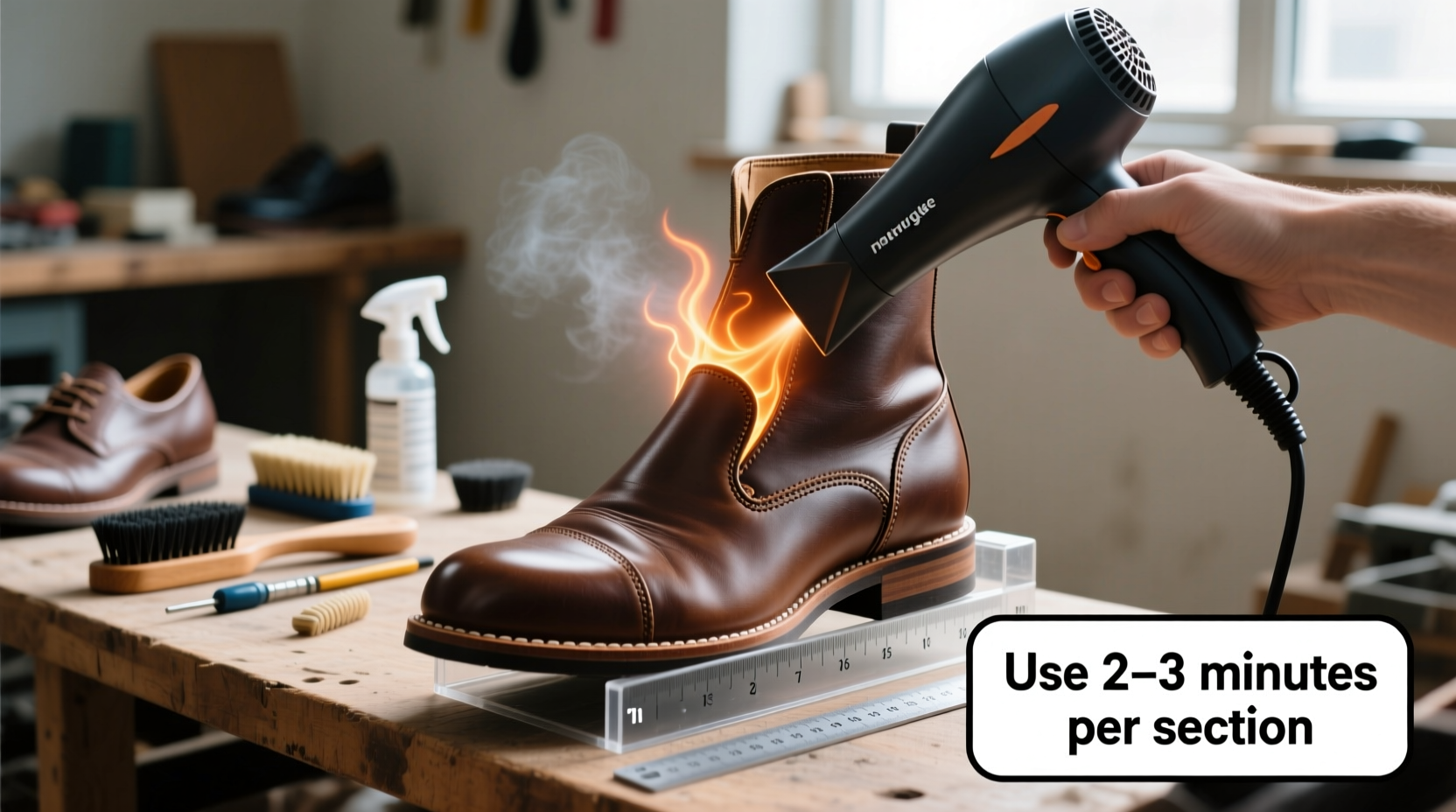
Shoe materials such as genuine leather, faux leather, and certain textiles respond well to heat because it relaxes the internal fibers. When heated, these materials expand slightly and become more malleable. Applying controlled heat from a hairdryer softens the shoe upper, allowing it to stretch when pressure is applied—typically by wearing the shoes with thick socks during the process.
It's important to note that not all materials react the same way. Genuine leather stretches best under heat and retains its shape once cooled. Suede can also be stretched but requires extra caution to avoid scorching or water spotting. Synthetic materials may soften temporarily but are less likely to hold permanent changes. Avoid using this method on vinyl or heavily glued components, which can warp or delaminate under high heat.
“Applying gentle, consistent heat while the shoe is worn allows it to mold precisely to the foot’s contours—this is how many high-end shoemakers do initial fittings.” — Daniel Reyes, Footwear Craft Specialist
Step-by-Step Guide: Stretching Shoes with a Hairdryer
This proven method involves applying heat while wearing the shoes with thick socks, encouraging the material to stretch where you need it most. Follow these steps carefully to maximize results and minimize damage.
- Prepare your shoes: Remove the insoles if possible to allow better airflow and more room for expansion.
- Wear thick socks: Put on one or two pairs of heavy wool or cotton socks to create outward pressure inside the shoe.
- Heat the tight areas: Set your hairdryer to medium-high heat (not maximum) and hold it 4–6 inches away from the shoe. Focus on the areas causing discomfort—typically the toe box, sides, or heel counter—for about 30–60 seconds per spot.
- Put on the shoes immediately: While the material is still warm and pliable, slip into the shoes and walk around for 10–15 minutes. Flex your feet, wiggle your toes, and apply pressure to encourage stretching.
- Cool down in place: Keep the shoes on until they cool completely. As the material cools, it will retain the new, slightly expanded shape.
- Repeat if necessary: For stubborn tightness, repeat the process over 2–3 days, focusing on problem zones each time.
Do’s and Don’ts of Using a Hairdryer on Shoes
To prevent irreversible damage, follow these guidelines when applying heat to your footwear.
| Do’s | Don’ts |
|---|---|
| Use medium heat and keep the dryer moving to avoid hot spots | Hold the dryer in one place for too long—can cause scorching |
| Test on a small, hidden area first (like the heel lining) | Use on delicate fabrics like silk linings or glued soles |
| Combine with thick socks for targeted stretching | Apply excessive moisture that could weaken adhesives |
| Allow shoes to cool fully while worn for lasting results | Use near open flames or extremely high temperatures |
| Condition leather afterward to restore moisture | Expect dramatic size increases—one half-size is typical |
Real Example: Breaking In Work Oxfords
James, a project manager in Chicago, bought a sleek pair of oxford dress shoes for client meetings. Despite being his usual size, they pinched across the ball of his foot after just 20 minutes of walking. Rather than returning them, he decided to try the hairdryer method. He wore two pairs of thick socks, heated the forefoot area for about 45 seconds per shoe, then walked around his apartment for 12 minutes, focusing on bending his toes. He repeated the process two more times over the next week. By the end, the shoes felt noticeably more flexible and no longer caused pain during full-day wear. “It wasn’t magic,” he said, “but it made a real difference. They now feel custom-fit.”
Alternative Methods to Complement Heat Stretching
While the hairdryer technique is effective on its own, combining it with other safe stretching strategies can improve outcomes, especially for particularly stiff shoes.
- Freezer Method: Fill sealed plastic bags with water, place them inside the shoes, and freeze overnight. As water expands into ice, it gently pushes outward, stretching tight areas.
- Shoe Stretcher: Use a wooden or plastic shoe stretcher with adjustable width. Apply rubbing alcohol or stretching spray to targeted zones before inserting the device.
- Wear with Heat Packs: Some people use chemical foot warmers inside their shoes while walking—this maintains warmth longer than ambient air, enhancing pliability.
- Professional Spray: Leather-specific stretching sprays contain solvents that soften fibers. Use sparingly in combination with heat for faster results.
Frequently Asked Questions
Can I use a hairdryer on suede shoes?
Yes, but with caution. Use low to medium heat and keep the dryer at least 6 inches away. Never saturate suede—lightly mist the inside with water instead of soaking. After stretching, brush the surface with a suede comb to restore texture.
How much can shoes stretch using this method?
Typically, you can gain up to half a shoe size, especially in width. Lengthwise stretching is limited. Results depend on material thickness, construction, and consistency of application.
Is it safe to use a hairdryer on synthetic or mesh shoes?
Synthetics can soften temporarily but often revert to their original shape. Mesh may distort or melt under high heat. Stick to low settings and test first. Avoid using this method on performance sneakers with technical bonding.
Final Checklist for Safe and Effective Stretching
- Preparation:
-
☐ Remove insoles
☐ Choose thick socks
☐ Identify tight zones - During Process:
-
☐ Use medium heat setting
☐ Keep dryer moving in circular motions
☐ Apply light moisture if needed
☐ Wear shoes for 10–15 minutes post-heating - Aftercare:
-
☐ Cool shoes while worn
☐ Condition leather if applicable
☐ Store properly to maintain new shape
Take Control of Your Comfort
You don’t need expensive tools or professional help to make uncomfortable shoes wearable. With a common household item like a hairdryer and a few simple techniques, you can reshape your footwear for a personalized fit. The key is patience, consistency, and respect for the material’s limits. Whether it’s a favorite pair of boots, elegant heels, or snug loafers, proper stretching preserves both comfort and longevity.
💬 Have you successfully stretched your shoes with a hairdryer? Share your experience, tips, or questions in the comments—your insight could help others find relief from tight footwear!








