Knit dresses are a wardrobe favorite for their comfort, drape, and versatility. However, their very structure—made from interlocking loops of yarn—makes them vulnerable to stretching over time. Unlike structured woven garments, knits rely on fiber elasticity and tension to hold their shape. Without proper care, a favorite dress can lose its silhouette after just a few wears. The good news is that with mindful handling, correct storage, and consistent maintenance, you can significantly extend the life and shape retention of your knit dresses.
Understanding Why Knit Dresses Stretch
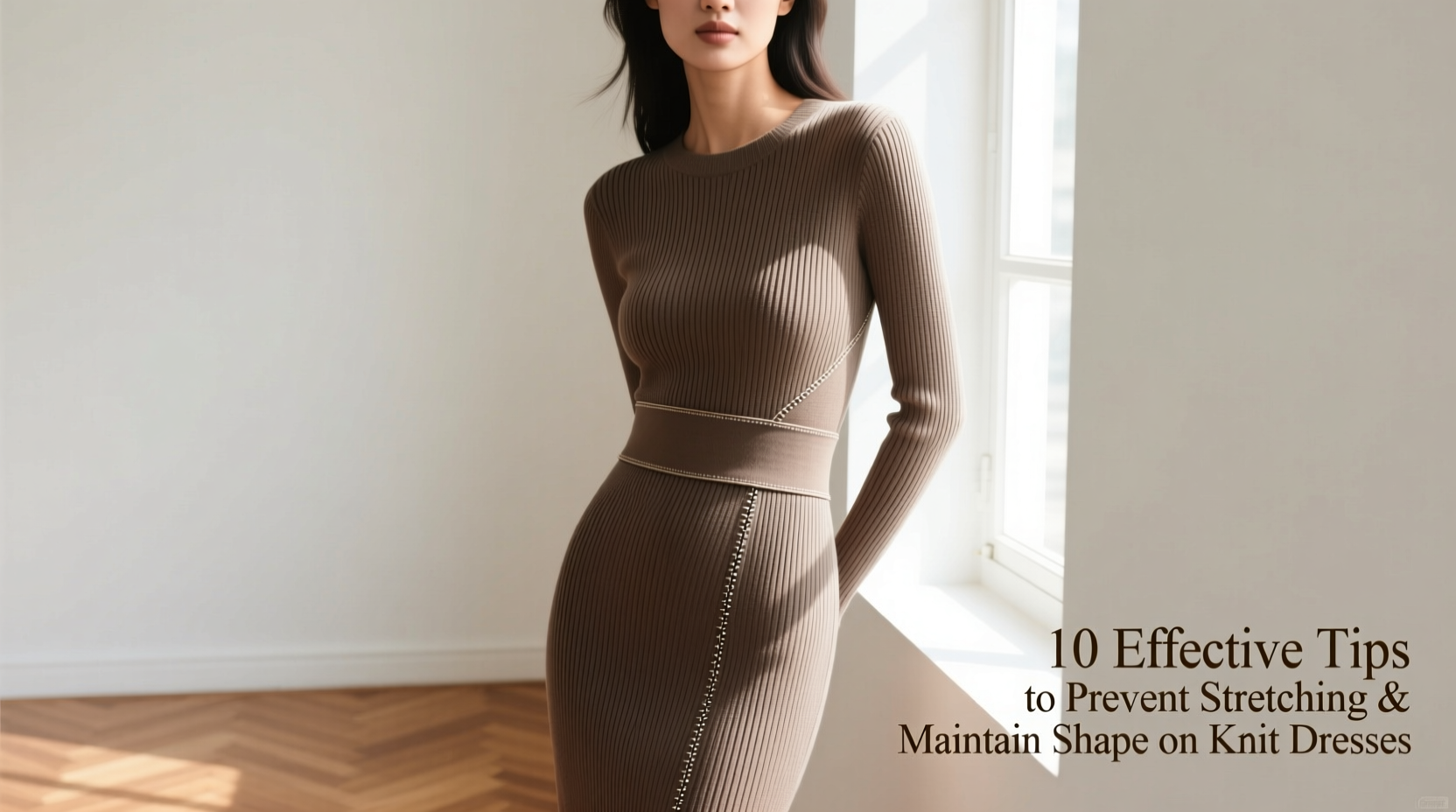
Knit fabrics stretch because of their construction. Each loop in the fabric is connected to the next, allowing flexibility and movement. This makes knits ideal for form-fitting styles but also susceptible to deformation under stress. Factors like gravity, moisture, improper washing, and incorrect drying all contribute to unwanted elongation. Natural fibers like cotton and wool may relax when wet, while synthetic blends might retain misshapen forms if dried incorrectly.
Repeated wearing without rest periods between uses prevents the fibers from rebounding. Over time, this leads to sagging at the shoulders, hips, and hemline. Understanding these mechanisms allows for targeted prevention strategies.
Tip: Rotate your knit dresses to allow fibers time to recover between wears—this simple habit reduces long-term stretching.Washing Techniques That Preserve Shape
How you wash your knit dress plays a crucial role in maintaining its integrity. Agitation in washing machines, especially on high-speed cycles, pulls at delicate loops and encourages distortion. Hand washing remains the gold standard for knitwear care.
Use lukewarm water and a gentle detergent formulated for delicates or wool. Submerge the garment and gently press it down, avoiding wringing or twisting. Let it soak for 5–10 minutes, then drain and refill with clean water to rinse thoroughly. Always support the weight of the dress when lifting it from water—wet knits are heavier and more prone to stretching.
“Never hang a wet knit dress. The weight of absorbed water alone can stretch it out of shape permanently.” — Lena Patel, Textile Conservator at The Garment Archive
Step-by-Step Guide: Safe Hand Washing Process
- Fill a clean basin with lukewarm water (under 30°C / 86°F).
- Add a small amount of mild detergent and mix gently.
- Submerge the dress and press down lightly; let soak for 5–10 minutes.
- Rinse twice in cool, clean water until suds disappear.
- Press water out by pressing the garment against the side of the basin—do not wring.
- Lay flat on a dry towel, roll up to absorb excess moisture, then unroll.
- Reshape and lay flat to dry on a mesh rack or fresh dry towel, away from sunlight.
Drying Methods That Prevent Distortion
Air drying flat is non-negotiable for preserving the shape of knit dresses. Hanging—even on padded hangers—puts vertical strain on shoulder seams and causes the body of the dress to elongate due to gravity. Laying flat ensures even weight distribution and helps the garment retain its original dimensions.
Use a breathable surface like a drying rack or a clean, dry towel. Avoid radiators, direct heat, or outdoor lines, as excessive heat can degrade elastic fibers and cause shrinkage or warping. If using a towel, change it halfway through drying if it becomes damp, to speed up the process and prevent musty odors.
Tip: Reshape the neckline, sleeves, and hemline every time you lay the dress out to dry—it reinforces the intended silhouette.Storage Solutions for Long-Term Shape Retention
Storing knit dresses properly is just as important as how you wash and dry them. Folding is almost always better than hanging. When hung, the shoulders bear the entire weight of the garment, leading to stretched armholes and drooping necklines over time.
Fold neatly and store in a drawer or on a shelf. Place tissue paper between folds to reduce friction and creasing. For chunkier knits, rolling instead of folding can minimize pressure points. Avoid overcrowding drawers, which compresses fibers and distorts shape.
| Storage Method | Best For | Why It Works |
|---|---|---|
| Folded on shelf | All lightweight to medium knits | Distributes weight evenly; prevents shoulder strain |
| Rolling in drawer | Thicker knits, travel storage | Reduces compression marks; saves space |
| Cotton garment bag (folded inside) | Delicate or seasonal pieces | Protects from dust and moths without trapping moisture |
| Hanging (only if necessary) | Structured knit dresses with lining | Use padded hangers only; limit duration |
Real-Life Example: Recovering a Stretched Dress
Sophie, a freelance designer in Portland, noticed her favorite navy merino knit dress had lost its shape after frequent winter wear. The shoulders were sagging, and the hem had dropped nearly two inches. She avoided wearing it, assuming it was beyond repair. After consulting a local textile care specialist, she followed a restoration routine: hand-washed the dress in cold water with wool-specific detergent, reshaped it meticulously on a flat drying mat, and stored it folded with acid-free tissue. Within two weeks, the dress regained much of its original fit. By rotating her knitwear and adopting preventive habits, she extended the life of several similar garments.
Essential Care Checklist for Knit Dresses
- ✔️ Wash by hand using cool water and gentle detergent
- ✔️ Never wring or twist the fabric when wet
- ✔️ Always dry flat on a clean, absorbent surface
- ✔️ Reshape seams, neckline, and hem after each wash
- ✔️ Fold instead of hang for long-term storage
- ✔️ Rotate wears to allow fiber recovery
- ✔️ Store in a cool, dry place away from direct sunlight
- ✔️ Use breathable garment bags for off-season storage
Frequently Asked Questions
Can I machine wash my knit dress if I use a delicates cycle?
While some modern knit blends claim to be machine washable, the risk of stretching remains high. Even on a delicates cycle, tumbling and spin motions can distort the garment’s shape. Hand washing is still the safest method. If you must machine wash, place the dress in a mesh laundry bag, use cold water, and select the lowest spin speed—but expect reduced longevity compared to hand care.
What should I do if my knit dress has already stretched?
Mild stretching can often be reversed. Try rewashing the garment and reshaping it carefully during drying. For natural fibers like wool, a technique called \"blocking\" can help: after washing, pin the dress to its original measurements on a foam board and let it dry completely. This resets the fibers. Severe stretching, especially in synthetic blends, may be irreversible.
Are certain knit types less prone to stretching?
Yes. Dresses with ribbed knits (like 1x1 or 2x2 ribbing) tend to have better shape memory due to their tighter structure. Garments blended with spandex or elastane (typically 2–5%) offer improved recovery. Look for terms like “shape-retaining” or “recovery-enhanced” on labels. However, even these require proper care to maintain performance over time.
Final Thoughts: Make Care a Habit, Not a Chore
Maintaining the shape of your knit dresses doesn’t require expensive products or professional services. It starts with awareness—recognizing that knits are dynamic fabrics that respond to how they’re treated. Small, consistent actions like folding instead of hanging, drying flat, and rotating your wardrobe make a measurable difference over time. Think of garment care as an extension of personal style: a well-kept dress reflects not just taste, but respect for craftsmanship and sustainability.
💬 Have a knit dress that’s stood the test of time? Share your care routine in the comments—your tip could help someone save their favorite piece!








