Finding the ideal pair of boots is a triumph—until they pinch, rub, or restrict movement. Ill-fitting boots don’t just cause discomfort; they can lead to blisters, foot fatigue, and long-term foot issues. While sizing charts provide guidance, leather, suede, and synthetic materials often conform differently to individual foot shapes. The good news: many women’s boots can be stretched effectively at home or with professional help. With the right methods, you can transform snug footwear into a custom-like fit that feels as good as it looks.
Why Boots Need Stretching—and When It Works Best
Boots, especially those made from natural materials like leather and suede, have inherent flexibility. Over time, these materials respond to heat, moisture, and pressure by expanding slightly. However, not all boots are equally receptive to stretching. Full-grain leather responds best, while patent leather and rigid synthetics offer minimal give. Understanding your boot’s material is the first step in choosing an appropriate stretching method.
Stretching is most effective when the fit issue is minor—half a size too tight or narrow across the instep or toes. If the boots are significantly undersized or constructed with little stretch potential, no technique will fully correct the problem. In such cases, resizing or exchanging may be more practical.
“Most quality leather boots are designed to mold to the foot over time. A proper stretch enhances comfort without compromising structure.” — Daniel Ruiz, Footwear Artisan & Cobbler
Step-by-Step Guide: Safe and Effective Home Stretching Methods
Several proven techniques allow you to stretch boots safely at home. These methods rely on controlled expansion through moisture, cold, or mechanical pressure. Always test any method on a small area first, especially with delicate finishes.
1. The Newspaper & Water Method (Ideal for Leather)
- Dampen several sheets of newspaper—moist but not dripping wet.
- Crumple the paper and pack it tightly into the toe box and instep.
- Wear the boots around the house for 1–2 hours while the paper dries.
- As the paper dries, it expands, gently pushing the material outward.
- Repeat 2–3 times for incremental improvement.
2. The Freezer Technique (Great for Synthetic & Tight Toe Boxes)
- Fill two resealable plastic bags with water, leaving room for expansion.
- Place one bag inside each boot, positioning them where stretching is needed.
- Stand the boots upright in the freezer overnight.
- As the water freezes, it expands, applying outward pressure.
- Remove, let thaw, then check fit. Repeat if necessary.
3. Wear with Thick Socks (Gradual, Natural Stretch)
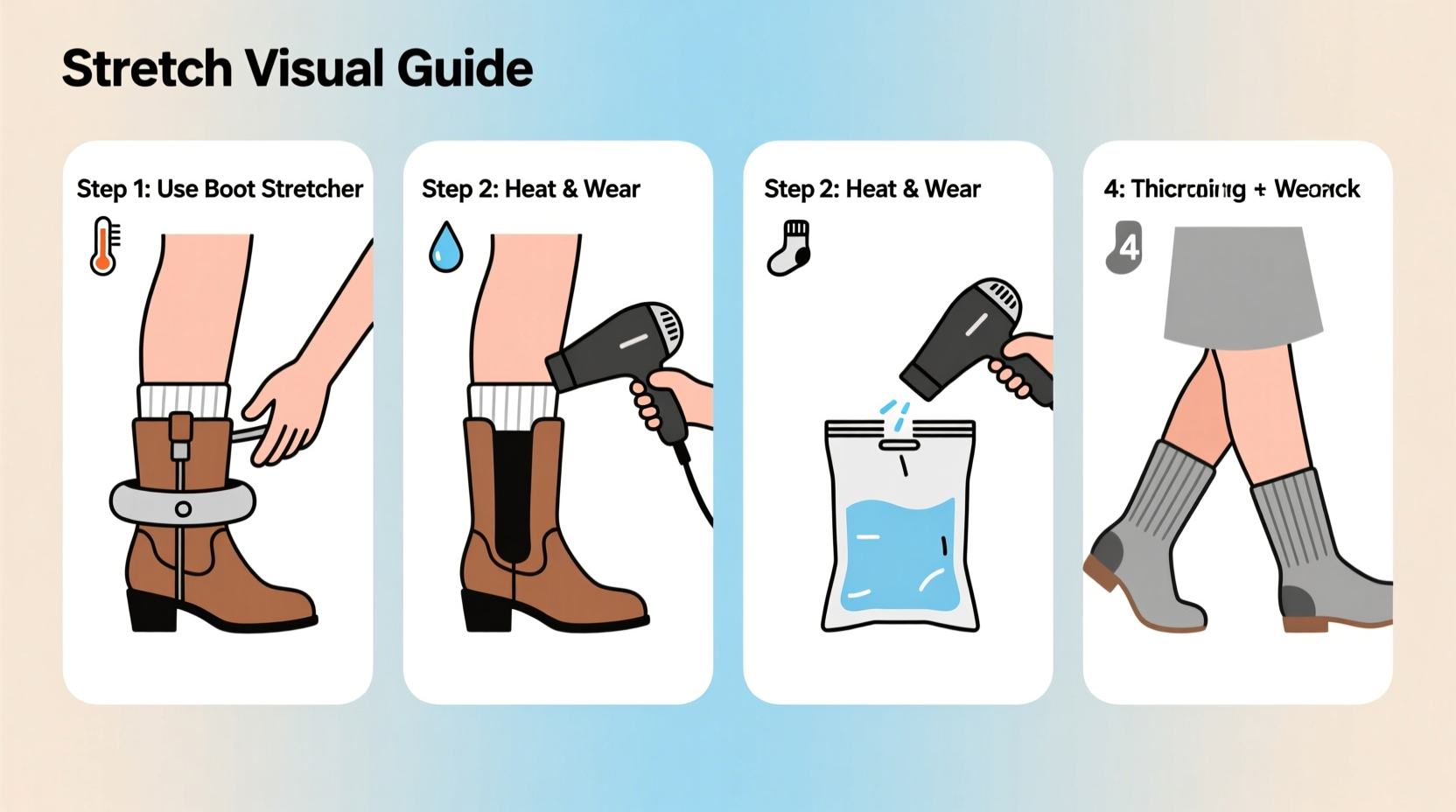
Put on thick wool or layered socks and wear the boots indoors for increasing intervals—start with 30 minutes, work up to 2–3 hours. Walk normally to encourage natural flexing. This method slowly molds the boot to your foot’s contours and works best over 3–5 days.
4. Use a Boot Stretcher (Precision Control)
A wooden or adjustable boot stretcher mimics foot shape and allows targeted expansion. Insert the stretcher, turn the knob to widen or lengthen slightly, and leave it in place for 24–48 hours. For added effect, apply a leather stretching spray before insertion.
Professional Solutions and When to Consider Them
While home remedies work for mild tightness, persistent pressure points or complex fits may require professional intervention. Cobblers have industrial-grade tools and expertise to stretch boots evenly and safely.
- Heat-and-Stretch Machines: Apply warm air while mechanically expanding the boot interior. Ideal for stubborn leather or wide-foot adjustments.
- Shoe Stretching Sprays: Professionals use concentrated solutions that soften fibers temporarily, allowing deeper expansion.
- Half-Size or Width Adjustments: Some services specialize in widening boots by 1/4 to 1/2 size, particularly helpful for high arches or bunions.
Costs vary by region and complexity, typically ranging from $25 to $60 per pair. Given the investment in quality footwear, professional stretching is often worth it for long-term wearability.
Do’s and Don’ts of Boot Stretching
| Do’s | Don’ts |
|---|---|
| Test moisture methods on a hidden area first | Soak boots completely—this warps leather and weakens glue |
| Use stretching sprays formulated for your material | Apply heat excessively—can crack or shrink leather |
| Stretch gradually over several sessions | Rush the process—over-stretching causes sagging or misshaping |
| Condition leather after stretching to restore oils | Wear stretched boots immediately on long outings—break them in slowly |
| Store boots with shoe trees to maintain new shape | Ignore manufacturer care labels—some materials are non-stretchable |
Real Example: From Painful to Perfect Fit
Sophia, a nurse from Portland, bought a pair of stylish ankle boots for her winter rotation. Though they fit well in the store, prolonged standing caused severe pressure across her instep. After just two shifts, she had developed blisters. Instead of returning them, she tried the thick sock method combined with a leather conditioner and a wooden boot stretcher. Over five days, she increased wear time and adjusted the stretcher incrementally. By the end of the week, the boots accommodated her foot swell during long shifts. “They still look sharp,” she said, “but now they feel like they were made for me.”
Checklist: How to Stretch Your Boots Safely and Successfully
- ✅ Identify the boot material (leather, suede, synthetic)
- ✅ Assess whether the fit issue is stretchable (not more than half a size too small)
- ✅ Choose a method based on material and severity of tightness
- ✅ Test moisture or spray on an inconspicuous area
- ✅ Apply stretching techniques gradually—don’t force expansion
- ✅ Condition leather afterward to prevent drying or cracking
- ✅ Use shoe trees or stuff with tissue to maintain new shape
- ✅ Break in the boots slowly after stretching
- ✅ Consult a cobbler if home methods fail or damage is likely
FAQ
Can I stretch suede boots the same way as leather?
Yes, but with caution. Suede absorbs moisture quickly and can stain or stiffen if over-wetted. Use a specialized suede stretching spray and avoid soaking. The freezer method works well here, as it limits direct water contact.
How long does it take to stretch boots effectively?
Most methods require 2–5 days of consistent effort. Mechanical stretchers may show results in 24 hours, while gradual wear takes longer but produces a more natural fit. Patience prevents damage.
Will stretching ruin the appearance or structure of my boots?
Not if done correctly. Proper stretching targets specific areas without distorting seams or soles. Avoid aggressive pulling or excessive moisture. When in doubt, opt for professional help to preserve craftsmanship.
Conclusion: Comfort Shouldn’t Come at the Cost of Style
Well-fitted boots shouldn’t mean sacrificing aesthetics for function. With careful application of home techniques or expert assistance, you can achieve a personalized fit that supports all-day comfort. Whether you're breaking in winter boots, correcting narrow shafts, or easing toe box pressure, the right approach makes all the difference. Don’t let tight footwear sideline your favorite pairs—stretch them wisely, care for them properly, and enjoy both style and stride.
💬 Have a stretching success story or a tough boot fit challenge? Share your experience below and help others find the perfect fit!








