
Starting a fitness journey from home is one of the most accessible ways to build healthier habits—especially for beginners. Without the intimidation of a gym or the need for expensive equipment, you can begin building strength, stamina, and confidence right where you are. But motivation often fades when progress feels slow or routines become monotonous. The key isn’t just starting—it’s staying consistent. With the right approach, you can create a sustainable workout habit that evolves with your goals.
Start Small: Build a Foundation Without Burnout
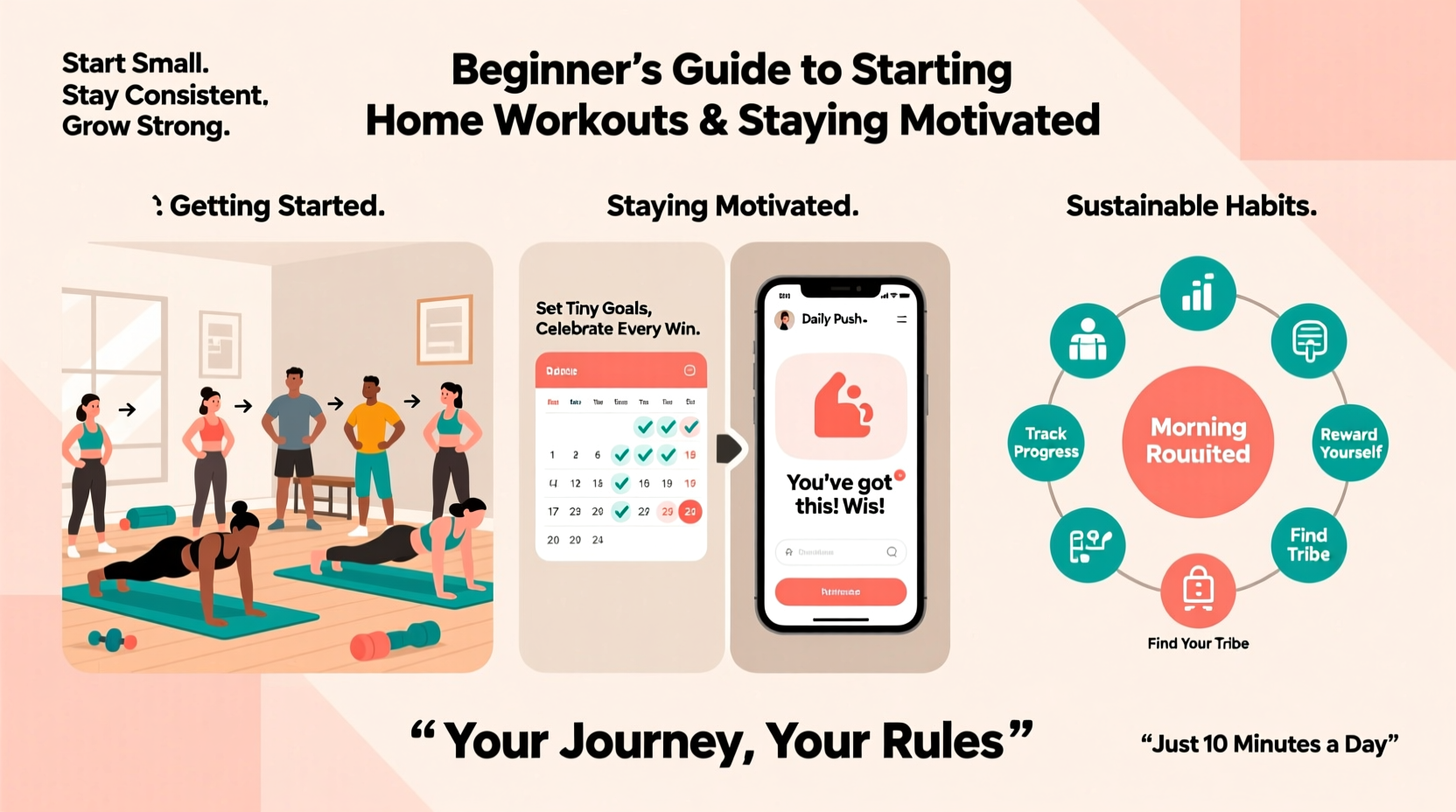
Many beginners make the mistake of launching into intense workouts five days a week, only to quit within two weeks due to soreness, fatigue, or frustration. Sustainable change begins with manageable actions. Instead of aiming for 60-minute sessions, start with 15 to 20 minutes three times a week. Focus on mastering basic movements like bodyweight squats, wall push-ups, and standing marches before progressing to more complex exercises.
Consistency builds confidence. When you complete even a short workout, you reinforce the identity of someone who exercises. Over time, this psychological shift becomes more powerful than any single physical result.
Tip: Begin each session with a 3-minute warm-up (jog in place, arm circles, torso twists) to prepare your body and mind.Create a Realistic Weekly Routine
A structured plan removes guesswork and reduces decision fatigue. Below is a beginner-friendly weekly schedule designed to balance activity and recovery:
| Day | Type of Workout | Duration | Focus Area |
|---|---|---|---|
| Monday | Full Body (Bodyweight) | 20 min | Strength & Coordination |
| Tuesday | Walking or Light Cardio | 15–20 min | Endurance |
| Wednesday | Rest or Stretching | 10 min | Recovery |
| Thursday | Lower Body + Core | 20 min | Legs & Stability |
| Friday | Upper Body + Mobility | 18 min | Arms & Posture |
| Saturday | Active Recovery (Yoga or Walk) | 20 min | Mind-Body Connection |
| Sunday | Rest | - | Full Recovery |
This rhythm allows muscles to recover while maintaining momentum. As your endurance improves, gradually increase duration or intensity—but never eliminate rest days.
Design Your Space and Remove Barriers
Your environment shapes your behavior. If your workout gear is buried in a closet or your space is cluttered, you're less likely to act. Dedicate a small corner—just enough room to lay down a mat—for daily use. Keep essentials visible: resistance bands, water bottle, towel, and workout clothes laid out the night before.
Reduce friction by preparing in advance. Charge your phone, queue up a playlist or video, and set a recurring calendar reminder. These small cues make it easier to follow through when motivation dips.
“Environment is the invisible hand that guides behavior. Make the right actions the easiest ones.” — James Clear, author of *Atomic Habits*
Stay Motivated with Measurable Progress
Motivation wanes when results aren’t visible. Track your progress not just by how you look, but by what you can do. Use a simple journal or app to record:
- Workouts completed
- Exercises performed and reps achieved
- How you felt during and after (energy level, mood)
- Clothing fit or posture improvements
For example, if you could only do five modified push-ups in week one and ten by week four, that’s real progress—even if the scale hasn’t changed.
Mini Case Study: Maria’s 8-Week Transformation
Maria, a 34-year-old office worker, started working out at home after feeling overwhelmed by gym culture. She began with 15-minute YouTube videos three times a week, focusing on low-impact strength training. She tracked her workouts in a notebook and celebrated every completed week with a non-food reward—like a long bath or new podcast subscription.
By week six, she added a second weekly session and noticed she could climb stairs without getting winded. At eight weeks, she completed her first full set of knee push-ups and felt stronger mentally as well. “I didn’t lose 20 pounds,” she said, “but I gained something better: belief that I can stick with something hard.”
Essential Mindset Shifts for Long-Term Success
The biggest obstacle isn’t lack of time or energy—it’s self-talk. Replace thoughts like “I should work out” with “I get to move my body today.” View exercise not as punishment for eating, but as a gift of vitality.
Here’s a checklist to reinforce a positive, sustainable mindset:
Checklist: Mental Fitness Habits- Practice self-compassion after missed workouts
- Focus on how movement makes you feel, not just how it changes your appearance
- Use affirmations: “I am building strength every day”
- Surround yourself with encouraging content (follow positive fitness accounts)
- Remind yourself why you started when motivation fades
Common Pitfalls and How to Avoid Them
Even with good intentions, beginners often fall into traps that derail consistency. A clear understanding of these challenges helps you plan ahead.
| Pitfall | Do This Instead |
|---|---|
| Trying too many programs at once | Stick to one routine for at least 4 weeks |
| Waiting to feel “ready” | Start now, even if it’s just 5 minutes |
| Comparing yourself to others online | Measure progress against your past self |
| Skipping warm-ups and cool-downs | Include 3–5 minutes of both to prevent injury |
| Expecting fast results | Focus on habits, not outcomes |
FAQ
Do I need equipment to work out at home?
No. Bodyweight exercises like squats, lunges, planks, and push-ups are highly effective for building strength. If you want to add variety later, resistance bands or a pair of light dumbbells are affordable and space-efficient upgrades.
What if I miss a workout?
Mistakes are part of the process. Missing one session doesn’t erase your progress. The important thing is to return without guilt. Ask yourself: “What can I do tomorrow to get back on track?” rather than dwelling on what you missed.
How do I know if I’m doing the exercises correctly?
Use mirrors to check your form or record yourself with your phone. Follow reputable trainers on YouTube or apps who explain proper technique. When in doubt, prioritize control over speed or reps—quality matters more than quantity.
Conclusion: Start Where You Are, Not Where You Think You Should Be
Beginning a home workout routine isn’t about perfection—it’s about showing up. Every minute you spend moving is a step toward greater health, resilience, and self-trust. The most effective strategy is the one you can stick with, not the one that looks impressive online. Build slowly, celebrate small wins, and let consistency do the heavy lifting.
🚀 Ready to begin? Choose one workout from this guide, schedule it for tomorrow, and commit to just 15 minutes. That single action is the foundation of lasting change.








