Snapchat’s “My Eyes Only” feature offers a private vault within the app for storing sensitive photos and videos. While it provides a layer of protection, its security depends heavily on user habits. Many people enable the feature but fail to implement proper safeguards—putting personal memories or confidential material at risk. Understanding how to securely lock, reliably access, and responsibly manage this space is essential in today’s digital landscape.
This guide outlines practical, expert-backed methods to maximize both the security and usability of your My Eyes Only content without compromising peace of mind.
Understanding How My Eyes Only Works
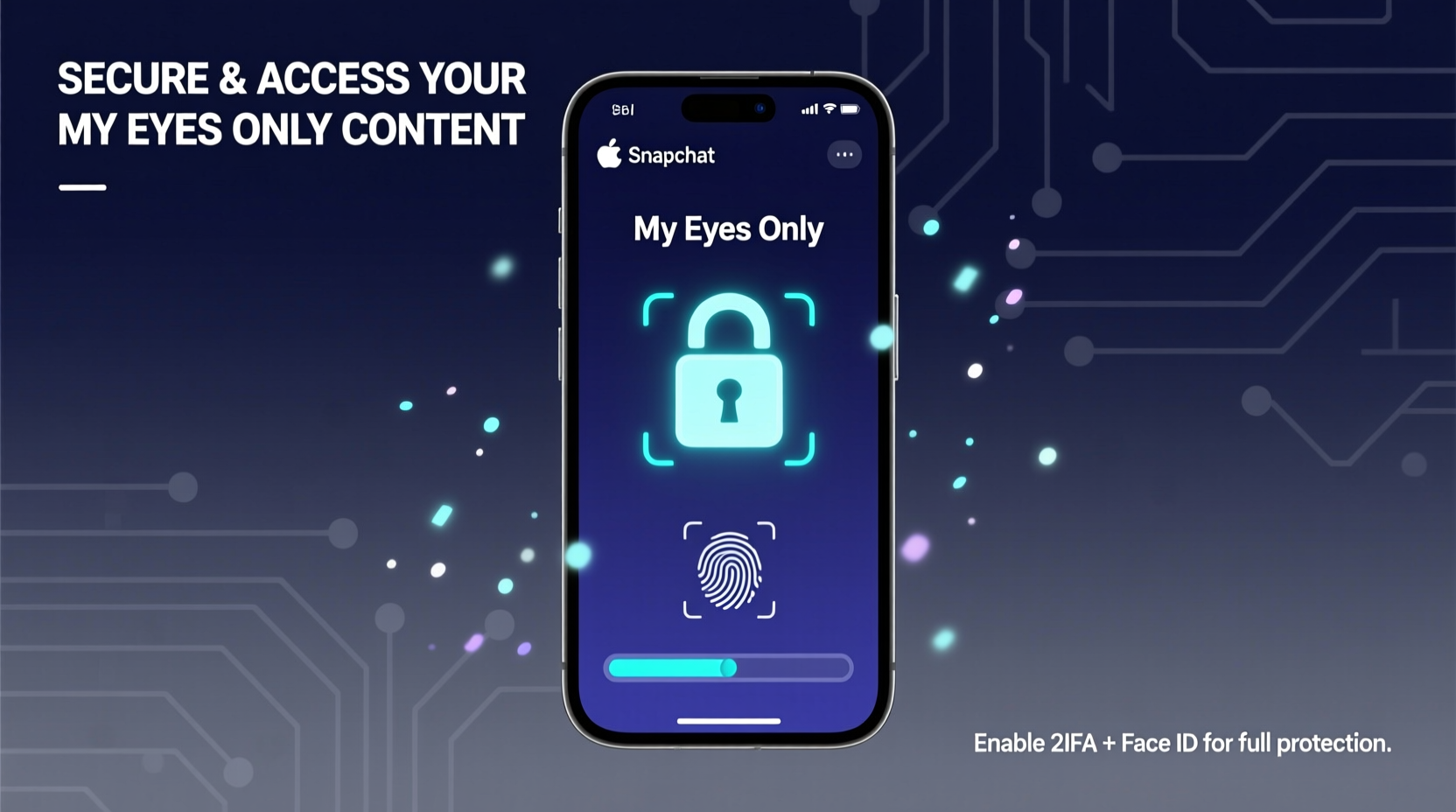
My Eyes Only is part of Snapchat Memories, designed as an encrypted section where users can store snaps they don’t want others to see. When you move a snap into this folder, it becomes hidden behind a four-digit passcode you set. Unlike biometric locks (Face ID or fingerprint), Snapchat relies solely on that numeric PIN, which means its strength hinges entirely on your choices.
The content isn't stored in the cloud; it remains on your device unless backed up manually. If you forget your passcode, Snapchat cannot recover it—there's no reset option through customer support. This design prioritizes privacy over convenience, placing responsibility squarely on the user.
“Snapchat’s My Eyes Only uses local encryption tied to your passcode. Lose the code, lose access—there’s no backdoor.” — Lena Torres, Mobile Security Analyst at Digital Shield Labs
Step-by-Step: Setting Up and Securing Your Vault
Setting up My Eyes Only correctly from the start minimizes future risks. Follow this sequence to ensure maximum protection:
- Open Snapchat and swipe up to access Memories.
- Navigate to the “Custom Stories” tab, then tap “My Eyes Only.”
- Tap “Lock” to create a new passcode (four digits).
- Confirm the code and add a hint (avoid obvious clues like birthdays).
- Select snaps to move by long-pressing them, then choose “Move to My Eyes Only.”
- Verify the transfer was successful by checking the locked section.
Best Practices for Long-Term Access and Security
Many users lock their content away only to struggle with access months later. The following strategies balance strong security with realistic usability.
Use a Secure Passcode Without Relying on Memory Alone
While remembering your PIN is ideal, human memory is fallible. Instead of writing it down in plain text, consider using a trusted password manager to store it. Apps like Bitwarden, 1Password, or Apple’s iCloud Keychain allow encrypted storage accessible only via your master password.
Enable Two-Layer Device Protection
Your phone’s overall security directly affects My Eyes Only. Even if your Snapchat PIN is strong, someone with physical access to an unlocked device can potentially exploit vulnerabilities. Ensure your phone has:
- A strong alphanumeric passcode or biometrics (Touch ID/Face ID)
- Auto-lock enabled after 30–60 seconds of inactivity
- Find My Device (Android) or Find My iPhone activated
Avoid Common Passcode Mistakes
Using predictable combinations undermines the entire purpose of encryption. Review the following table to identify risky behaviors.
| Do’s | Don’ts |
|---|---|
| Use random 4-digit codes (e.g., 7391) | Use sequences like 1234 or 0000 |
| Store the code in a password manager | Write it on a sticky note near your phone |
| Change the code periodically if shared devices are used | Reuse your SIM card PIN or ATM code |
| Test access every few weeks | Assume you’ll remember it years later |
Recovering Access When You Forget the Passcode
If you’ve forgotten your My Eyes Only passcode, options are extremely limited—but not entirely nonexistent.
Snapchat does not offer account recovery for this feature. However, if you previously exported or backed up content before locking it, those copies may still exist in your device gallery or cloud storage (if enabled). Otherwise, the data remains permanently inaccessible.
In rare cases, restoring from an old device backup (via iTunes for iOS or Google Drive for Android) might retrieve the vault—with the original passcode intact. But this only works if:
- The backup was created while the vault was accessible
- You remember the passcode used at the time of backup
- You’re restoring to a device logged into the same Snapchat account
Mini Case Study: Recovering Lost Personal Content
Jamal, a college student, used My Eyes Only to store personal journal-style video logs over six months. After switching phones and forgetting his passcode, he lost access. He attempted multiple guesses, triggering no lockout (Snapchat allows unlimited attempts), but none succeeded.
He checked his Google Photos backup and discovered that automatic backup had been disabled during a previous OS update. His only copy existed within the locked vault. With no recovery path, the content was irretrievable.
Lesson learned: Jamal now uses a password manager to store all sensitive codes and exports encrypted ZIP files of important personal media monthly to a private cloud folder.
Essential Checklist for Ongoing Protection
To maintain consistent control over your My Eyes Only content, follow this actionable checklist:
- ✅ Set a strong, non-obvious 4-digit PIN
- ✅ Store the PIN in a secure password manager
- ✅ Test access to the vault every 30 days
- ✅ Disable screenshots in settings (if possible via device restrictions)
- ✅ Avoid using My Eyes Only for legally sensitive or irreplaceable content
- ✅ Back up critical content externally in encrypted form
- ✅ Never share your Snapchat login or device with untrusted individuals
Frequently Asked Questions
Can Snapchat reset my My Eyes Only passcode?
No. Due to end-to-end encryption principles, Snapchat has no access to your passcode or the contents of your vault. There is no recovery mechanism if you forget it.
Is My Eyes Only content backed up to the cloud?
No. All content in My Eyes Only stays locally on your device unless manually exported. It will not sync across devices or appear in Snapchat Cloud or third-party backups unless explicitly saved outside the vault.
Can someone hack into My Eyes Only?
Direct hacking of the encrypted vault is highly unlikely due to local encryption. However, risks increase if your phone is compromised—through spyware, unauthorized access, or weak device security. Protect your phone first.
Conclusion: Take Control Before It’s Too Late
Your My Eyes Only folder should be a fortress, not a forgotten tomb. The very feature meant to protect your privacy can become a source of frustration—or worse, permanent data loss—if not managed proactively. Strong passcodes, smart backups, and disciplined digital hygiene turn this tool into a reliable asset.
Security isn’t just about locking things away—it’s about ensuring you can get back in when you need to. Revisit your settings today, verify your access, and safeguard your passcode wisely. Your future self will thank you.
💬 Have a strategy for managing your private digital content? Share your approach or lessons learned in the comments—your insight could help others avoid common pitfalls.