Running in air-cushioned sports shoes delivers superior comfort and impact absorption, but frequent use exposes them to sweat, dirt, road grime, and odor-causing bacteria. Over time, these elements degrade materials, compromise cushioning performance, and shorten the shoe’s lifespan. A proper deep cleaning routine isn’t just about appearance—it preserves structural integrity, ensures hygiene, and maintains optimal responsiveness. Unlike standard sneakers, air-cushioned models require careful handling to protect sensitive internal components like pressurized air units and multi-layer midsoles. This guide outlines scientifically sound and field-tested methods to deep clean your performance footwear without damaging their advanced engineering.
Why Deep Cleaning Matters for Air-Cushioned Shoes
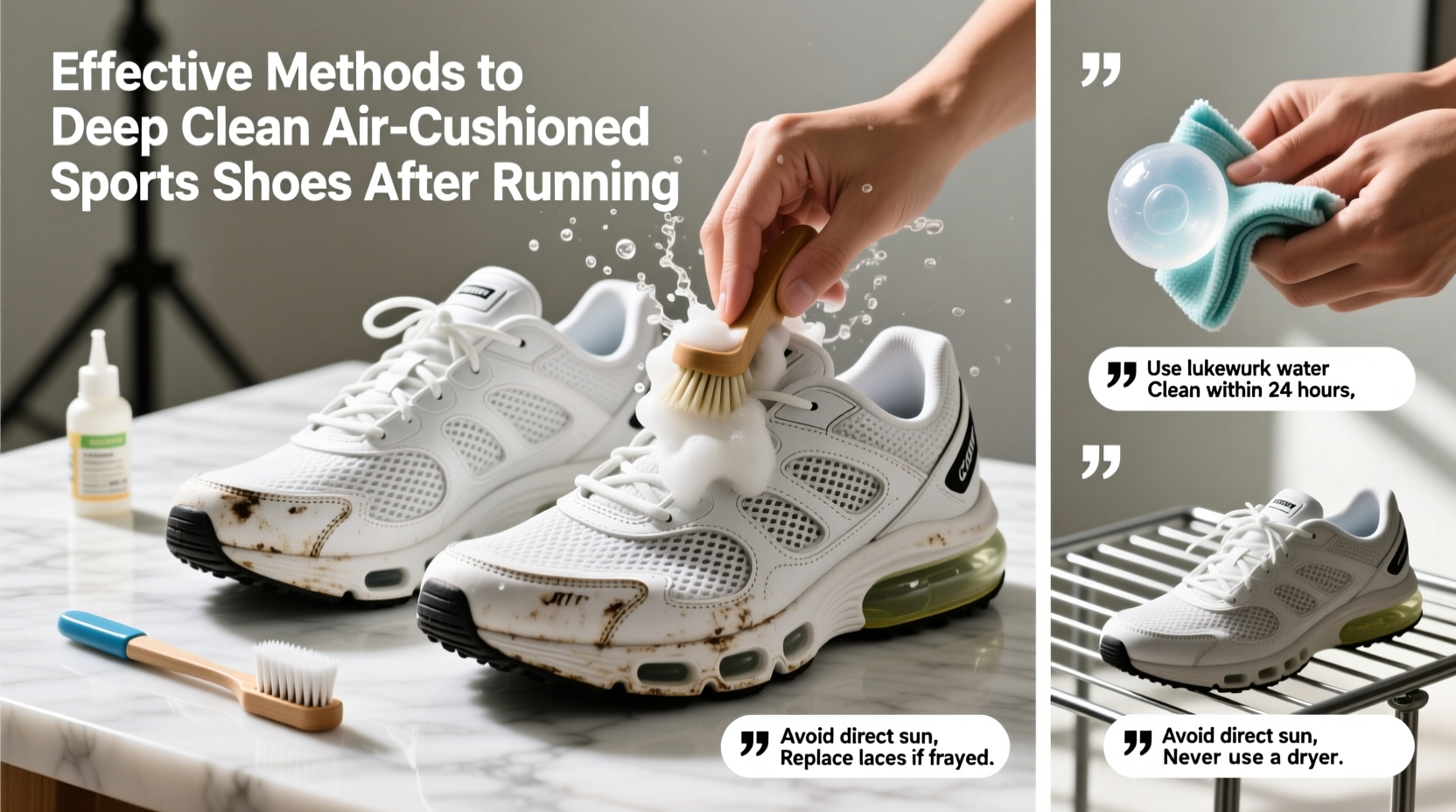
Air-cushioned shoes, such as those with Nike Air, Adidas Boost with encapsulated air cells, or Asics GEL systems, rely on sealed chambers to deliver responsive cushioning. When debris, moisture, or microbial growth infiltrate these zones, they can compromise breathability, lead to material breakdown, or even cause air leakage over time. Sweat is particularly corrosive due to its salt and acidic content, which degrades adhesives and foam layers. External pollutants like mud, asphalt residue, and urban dust clog mesh uppers, reducing airflow and increasing odor retention.
Regular surface wiping isn’t enough. Deep cleaning removes embedded contaminants, restores ventilation, and prevents long-term damage. It also improves fit and comfort by eliminating stiffened fabric and insole compaction caused by repeated exposure to moisture.
“Performance footwear is an investment. Treating it like ordinary casual shoes leads to premature wear. Deep cleaning every 4–6 weeks can extend a runner’s shoe life by up to 30%.” — Dr. Lena Torres, Sports Podiatrist & Footwear Biomechanics Researcher
Step-by-Step Guide to Safely Deep Clean Air-Cushioned Running Shoes
Cleaning high-tech athletic shoes requires precision. Follow this detailed process to avoid warping, delamination, or damaging air units.
- Remove laces and insoles: Take out the laces and pull the insoles gently. These components can be cleaned separately and often harbor the most bacteria and odor.
- Dry brush exterior: Use a soft-bristle brush (like an old toothbrush) to remove loose dirt from the upper, midsole, and outsole. Focus on grooves in the tread and mesh panels.
- Prepare a pH-balanced cleaning solution: Mix one cup of lukewarm water with one tablespoon of mild detergent (e.g., Woolite or dish soap without bleach or degreasers). Avoid harsh chemicals that can break down adhesives.
- Clean the upper and midsole: Dip a microfiber cloth into the solution, wring it out well, and gently wipe the shoe’s surface. For mesh areas, use light circular motions. Never soak the shoe.
- Treat stubborn stains: For scuff marks on rubber midsoles, use a paste of baking soda and water (2:1 ratio). Apply with a toothbrush, scrub lightly, then wipe clean.
- Wash laces and insoles: Soak laces in soapy water for 15 minutes. Hand wash insoles with the same solution, then rinse and air dry flat—never machine wash or tumble dry.
- Rinse and dry: Dampen a clean cloth with plain water and wipe off any soap residue. Stuff shoes with crumpled paper towels to maintain shape and absorb moisture. Dry at room temperature, away from direct heat or sunlight.
Do’s and Don’ts: Maintaining Air Cushion Integrity
| Do’s | Don’ts |
|---|---|
| Use lukewarm water and gentle cleaners | Use bleach, ammonia, or alcohol-based cleaners |
| Allow shoes to air dry naturally | Place near radiators, heaters, or in direct sun |
| Clean every 3–4 weeks for regular runners | Wait until shoes visibly degrade before cleaning |
| Rotate between two pairs to reduce moisture buildup | Run daily in the same pair without rest days |
| Store in a ventilated area, away from humidity | Keep in plastic bags or damp closets |
Real Runner’s Experience: How Cleaning Improved Performance
Mark R., a marathon trainer from Portland, noticed his Nike Air Zoom Pegasus felt sluggish after 100 miles. “They still looked okay, but my knees started bothering me on longer runs,” he said. After consulting a running coach, he learned that compacted midsoles and clogged mesh were restricting natural flex and breathability. He followed a deep cleaning protocol similar to the one above—removing insoles, brushing carefully, and hand-wiping with a mild solution. After drying for 36 hours, he reported, “The difference was immediate. The bounce came back, and my recovery time improved. I now clean them religiously every month.”
This case illustrates how maintenance directly affects biomechanical efficiency. Even subtle degradation in cushioning response can alter gait patterns and increase injury risk.
Odor Control and Long-Term Care Tips
Post-run odor is common due to bacterial growth in warm, moist environments. While cleaning eliminates existing microbes, prevention is key to long-term freshness.
- Always remove insoles after running and let them air out separately.
- Use moisture-wicking socks made of merino wool or synthetic blends.
- Insert cedar shoe inserts or silica gel packets when storing to absorb residual moisture.
- Spritz the interior with a vinegar-water solution (1:1 ratio) once a week to neutralize odors—vinegar kills bacteria without harming materials.
- Avoid wearing the same pair two days in a row; allow at least 24 hours of rest between uses.
Frequently Asked Questions
Can I use a washing machine to clean air-cushioned running shoes?
No. Washing machines subject shoes to excessive agitation and water saturation, which can crack air units, separate glued layers, and warp midsoles. Always opt for hand cleaning using a damp cloth and mild solution.
How do I know if the air cushion is damaged during cleaning?
If you notice a sudden loss of bounce, visible bulging or collapsing in the heel or forefoot, or hear a faint hissing sound, the air bladder may be compromised. Proper cleaning should never cause this—if it occurs, it likely indicates pre-existing wear or prior impact damage.
Is it safe to use disinfectant wipes on the shoe interior?
Only if they are alcohol-free and designed for fabrics. Standard disinfectant wipes contain solvents that degrade foam padding and insole adhesives. Instead, clean removable insoles with soapy water and use UV shoe sanitizers or baking soda sprinkles for disinfection.
Conclusion: Make Deep Cleaning Part of Your Running Routine
Your air-cushioned running shoes are engineered for peak performance, but only if maintained properly. Just as you condition your body with stretching and recovery, your footwear deserves the same level of care. Incorporating a thorough deep clean every few weeks protects not only the look and smell of your shoes but also their functional lifespan and support. By following these proven methods, you preserve the technology that protects your joints, enhances your stride, and keeps you moving mile after mile.
💬 Have a favorite cleaning hack for performance shoes? Share your experience in the comments and help fellow runners keep their gear in top form!








