
King mackerel—often called \"kingfish\"—are powerful, fast-swimming predators that dominate offshore waters along the Atlantic coast and Gulf of Mexico. Targeting them is a favorite among seasoned saltwater anglers, but success isn’t guaranteed just because you’re in their territory. When conditions turn challenging—choppy seas, high boat traffic, or water temperatures outside their prime range—your lure selection can make the difference between a full cooler and an empty rod.
The key to consistent king mackerel catches lies not only in knowing where they roam but in choosing lures that trigger strikes even when fish are lethargic or pressured. This guide breaks down the most effective lures, how to use them under difficult conditions, and what top guides rely on when the bite slows.
Understanding King Mackerel Behavior in Tough Conditions
King mackerel thrive in clear, warm waters between 68°F and 78°F, typically near structure such as reefs, wrecks, or current lines. But during transitional seasons or after cold fronts, their behavior changes dramatically. They may dive deeper, school more tightly, or become less aggressive toward fast-moving prey.
In tough conditions—such as post-frontal winds, murky water, or heavy fishing pressure—kings often rely more on vibration and flash than scent or erratic movement. That’s why lures with strong hydrodynamic action and reflective finishes outperform others when fish are hesitant.
“On slow days, I don’t change my location—I change my presentation. A lure with intense vibration will draw reaction strikes even from inactive kings.” — Captain Ray Delgado, 25-year Gulf Coast charter captainTip: In low-visibility conditions, increase lure size slightly and opt for models with rattles or weighted heads to enhance sound and depth control.
Top 5 Lure Types for King Mackerel
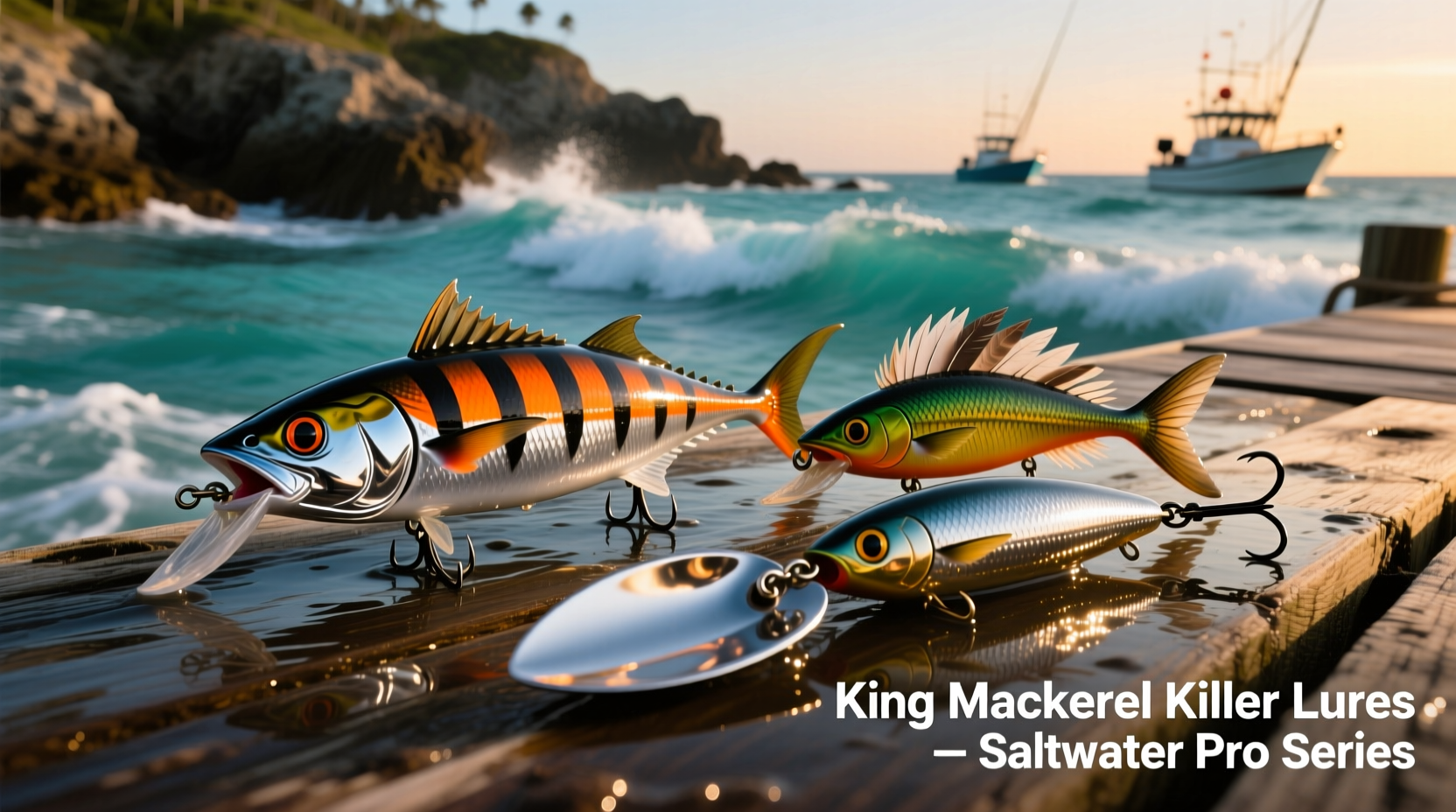
Not all lures are created equal when it comes to fooling large, wary kingfish. The following five types have been time-tested across diverse environments and consistently deliver results—even when other options fail.
- Feather Jigs – Lightweight, flashy, and built to mimic fleeing baitfish. Their pulsating motion in the water creates lifelike vibrations that attract kings from distance.
- Silver Spoon Lures – Classic metal lures that wobble aggressively on retrieve. Ideal for trolling or casting near surface schools.
- Plastic Swimbaits on Heavy Heads – Durable soft plastics rigged on lead or tungsten jig heads offer deep-diving capability and realistic profile.
- Trolling Plugs (Diving Minnows) – Hard-bodied lures designed for pulling behind a moving boat. Create splash, noise, and depth-specific action.
- Chugger-style Topwaters – Used primarily at dawn or dusk, these noisy surface lures provoke explosive strikes from aggressive kings.
Why Feathers Dominate in High-Pressure Zones
Feather jigs remain the go-to choice for many offshore specialists, especially in areas with frequent angling activity. Their slim profile avoids spooking cautious fish, while the combination of marabou feathers and chrome blades produces a shimmering trail that imitates injured threadfin herring or cigar minnows.
Brands like Clarkspoon, Hopkins Silver Spoon, and Nomad Design Chug’n Slug are commonly seen on center consoles from Florida to Texas. However, custom feather rigs—hand-tied with dyed turkey quills and stainless hooks—are increasingly popular due to their durability and natural motion.
Lure Comparison: Performance Across Conditions
| Lure Type | Best Depth Range | Retrieve Style | Pros | Cons |
|---|---|---|---|---|
| Feather Jig (3-oz) | 20–60 ft | Jigging or slow troll | Highly attractive, durable, works deep | Requires leader protection |
| Silver Spoon | Surface–30 ft | Trolled at 5–7 knots | Flashy, proven track record | Narrow wobble; less effective slow |
| Swimbait (7” on 1.5 oz head) | 30–80 ft | Bounce retrieve | Realistic profile, good for deep drop-offs | Slower deployment, higher snag risk |
| Diving Plug (e.g., Williamson) | 10–50 ft | Trolled at 6–8 knots | Creates commotion, covers wide area | Pricier, prone to chipping |
| Topwater Chugger | Surface only | Walking or popping retrieve | Triggers visual strikes, exciting action | Only effective in calm conditions |
Step-by-Step: Rigging and Presenting for Maximum Effect
To maximize your chances with any of these lures, follow this proven sequence used by tournament captains:
- Select appropriate line and leader: Use 30–50 lb braided main line with a 60–80 lb fluorocarbon leader. Kings have sharp teeth and will cut through monofilament quickly.
- Match lure weight to depth: For depths over 40 feet, use heavier jigs (3–5 oz). Lighter spoons (1.5–2.5 oz) work well in shallower zones or when trolling.
- Deploy with controlled speed: Troll between 5 and 7 knots. Too fast, and the lure loses action; too slow, and it sinks out of the strike zone.
- Vary retrieval pattern: If using vertical jigging, incorporate 2–3 quick jerks followed by a 3-second pause. This mimics a wounded baitfish.
- Watch for bird activity: Frigate birds diving or terns hovering often signal surface-feeding kings. Switch to topwaters or shallow trolled spoons immediately.
Mini Case Study: Turning a Slow Morning into a Limit Catch
Last October off Sarasota, FL, Captain Lena Torres faced a frustrating start. Despite being in a known kingfish hotspot, her crew hadn’t had a single bite by 9:30 AM. Water clarity was reduced due to recent rains, and surface temps were down nearly 5°F from the week prior.
Instead of continuing with standard trolling plugs, she switched to 4-ounce blue-and-silver feather jigs fished behind the boat at idle speed. Within minutes, one of her rods doubled over. Over the next two hours, they landed six kings averaging 18 pounds—all on the same setup.
The difference? Feather jigs maintained action at ultra-slow speeds and produced enough vibration to attract fish in stained water. “Sometimes the best move isn’t faster—it’s quieter and deeper,” Torres said later.
Frequently Asked Questions
What color lures work best for king mackerel?
Chrome with blue or pink accents dominates most reports. In dirty water, switch to high-contrast combinations like chartreuse-and-white or black-over-red. Avoid bright fluorescent colors in clear water, as they can appear unnatural.
Do I need a wire leader?
No—but you do need abrasion-resistant fluorocarbon. While kings don’t have the same tooth structure as barracuda, their gill plates and jaw edges are sharp enough to fray standard mono or fluoro below 50 lb test. A 60–80 lb fluorocarbon leader with a double uni knot connection is ideal.
Can I use artificial lures exclusively instead of live bait?
Absolutely. Many guides now prefer lures for their consistency and ease of deployment. While live bait draws initial attention, artificial lures allow for broader coverage and repeated presentations without resupply. Top pros report up to 70% of their kingfish caught on artificials during peak season.
Final Checklist Before You Launch
- ✅ Pack at least three lure types: feather jig, diving plug, and spoon
- ✅ Pre-rig multiple leaders with 60–80 lb fluorocarbon
- ✅ Confirm trolling motor and main engine speeds for optimal lure action
- ✅ Bring needle-nose pliers and dehooker for safe release
- ✅ Check local regulations—some areas restrict certain lure types or require circle hooks
Conclusion: Master Your Presentation, Not Just Your Gear
Having the right king mackerel lure matters—but knowing how and when to use it matters more. In tough saltwater conditions, subtle adjustments in speed, depth, and retrieval technique often unlock bites that seem impossible. Whether you're battling wind-whipped waves or navigating a heavily fished reef, trust in proven lures like feather jigs and silver spoons, backed by smart rigging and adaptive tactics.
💬 Have a favorite king mackerel lure that never fails? Share your go-to setup in the comments and help fellow anglers improve their offshore game.








