Many cannabis users report that edibles produce a significantly stronger and longer-lasting high compared to smoking. This isn’t just anecdotal—there’s well-documented science behind it. The difference lies not in the amount of THC consumed, but in how the body processes it. When cannabis is ingested orally versus inhaled, two distinct metabolic pathways are activated, leading to different psychoactive experiences. Understanding this distinction helps explain why edibles can feel so much more intense—and sometimes overwhelming—for even experienced users.
The Metabolic Difference: How Your Body Processes THC
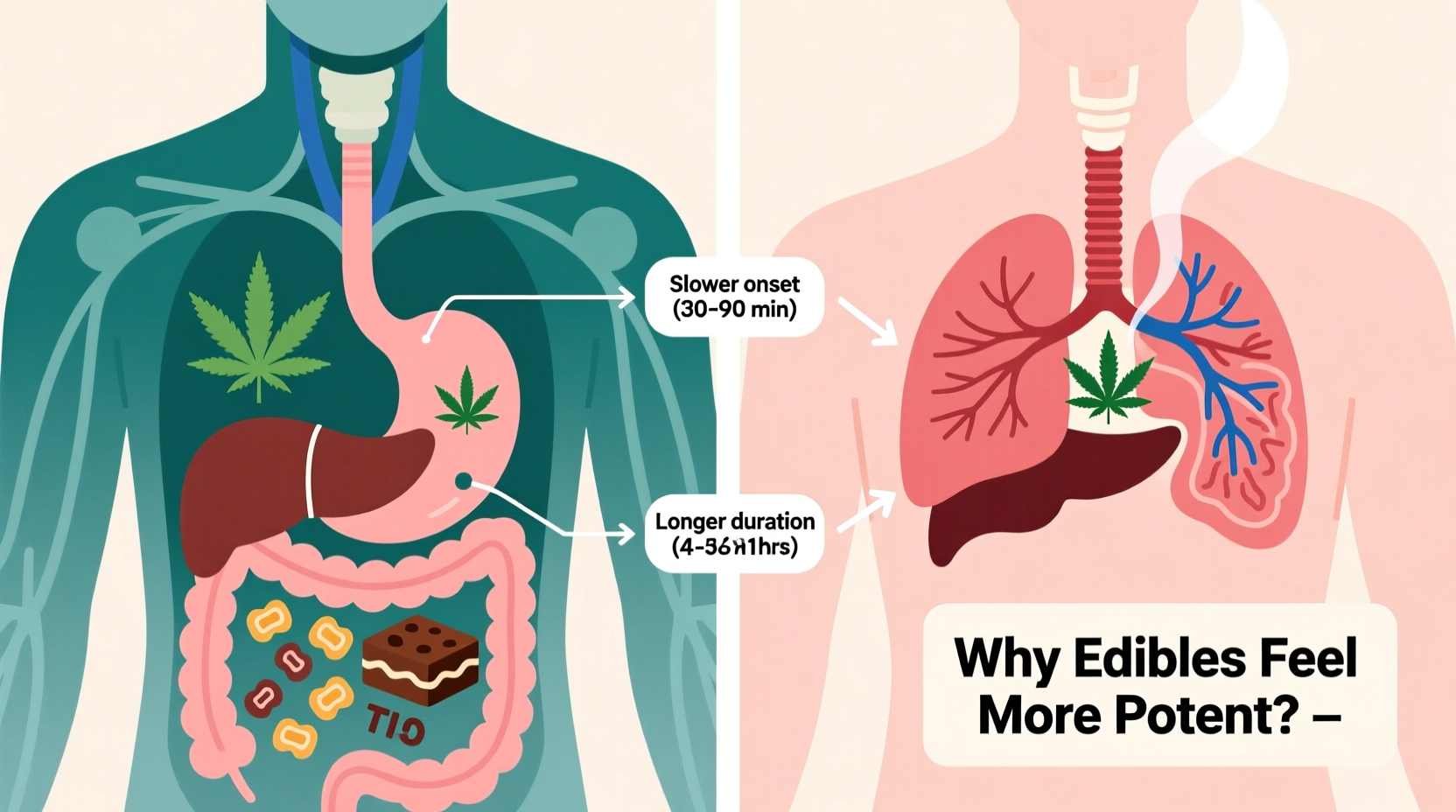
When you smoke or vape cannabis, THC (tetrahydrocannabinol) enters your lungs and rapidly diffuses into the bloodstream. From there, it travels directly to the brain, producing effects within seconds to minutes. This direct route means peak blood concentrations occur quickly, usually within 3–10 minutes, and the high tends to peak and fade relatively fast—typically lasting 1 to 3 hours.
In contrast, when you consume an edible, THC must first pass through the digestive system and then the liver before entering general circulation. In the liver, an enzyme called CYP2C9 converts delta-9-THC into 11-hydroxy-THC—a metabolite that crosses the blood-brain barrier more efficiently and is significantly more psychoactive. This transformation is key to why edibles often feel more potent.
“11-hydroxy-THC is more lipophilic and penetrates the central nervous system faster than its parent compound. That’s why people report a deeper, more sedative, and sometimes hallucinogenic experience with edibles.” — Dr. Monica Johnson, Clinical Pharmacologist and Cannabis Researcher
Onset Time and Dosing Challenges
One of the most common pitfalls with edibles is misjudging the delay in onset. While smoked cannabis produces effects almost immediately, edibles can take anywhere from 30 minutes to 2 hours to kick in—sometimes longer depending on stomach contents, metabolism, and individual physiology.
This delay leads many users to consume additional doses prematurely, thinking the first one “didn’t work.” By the time the full effects manifest, they’ve unintentionally taken several times the intended dose, resulting in an unexpectedly intense high.
Tip: Always start with a low dose (2.5–5 mg THC) and wait at least 90 minutes before considering more. Patience prevents overconsumption.Duration and Intensity Comparison
The extended duration of an edible high is another factor contributing to its perceived potency. Smoked THC typically wears off in a few hours, allowing users to return to baseline function relatively quickly. Edibles, however, can produce effects lasting 6 to 10 hours—or even longer in sensitive individuals.
Beyond duration, the quality of the high differs. Users often describe the edible experience as more physical, introspective, and immersive. Some liken it to a “body high” with strong cerebral components, while smoking tends to produce a more alert, head-focused buzz.
| Factor | Smoking/Vaping | Edibles |
|---|---|---|
| Onset Time | Seconds to 10 minutes | 30 minutes – 2 hours |
| Peak Effects | 10–30 minutes | 2–3 hours |
| Total Duration | 1–3 hours | 6–10+ hours |
| Primary THC Form | Delta-9-THC | 11-Hydroxy-THC (after liver conversion) |
| Potency Perception | Moderate, controllable | Stronger, more intense |
| Dose Control | Immediate feedback | Delayed, higher risk of overconsumption |
Individual Variability and Risk Factors
Not everyone experiences edibles the same way. Genetic variations in liver enzymes, gut microbiome composition, fasting state, and prior cannabis use all influence how a person responds. For example, someone with a slower CYP2C9 enzyme activity may metabolize THC more gradually, prolonging effects. Conversely, those with faster metabolism might feel effects sooner but also clear them quicker.
First-time users or those with low tolerance are especially vulnerable to adverse reactions from edibles. Symptoms like anxiety, paranoia, dizziness, or nausea are more commonly reported with oral consumption due to the delayed onset and higher psychoactive metabolite production.
Mini Case Study: A Night to Remember (for the wrong reasons)
Mark, a regular weekend smoker, attended a friend’s party where he tried a single THC gummy labeled as 10 mg. Having smoked joints with much higher total THC before, he assumed it would be mild. After 45 minutes with no effect, he ate half of a second gummy. Another 30 minutes passed—still nothing. He began to relax, then suddenly, within minutes, felt his heart race, vision blur, and a wave of disorientation hit him. He became extremely anxious, confused, and had to lie down for hours. The combined dose was only 15 mg, but due to delayed absorption and conversion to 11-hydroxy-THC, the impact was equivalent to several times that in inhaled form. It took nearly 8 hours before he felt normal again.
This scenario is far from rare. Emergency room visits related to edible overconsumption have risen sharply in legal markets—not because edibles are inherently dangerous, but because users underestimate their delayed potency.
How to Use Edibles Safely and Effectively
To avoid uncomfortable experiences, it’s essential to approach edibles with a different mindset than smoking. Precision, patience, and preparation are critical.
- Start Low, Go Slow: Begin with 2.5 to 5 mg of THC, especially if you're inexperienced or returning after a break.
- Wait Fully: Allow at least 90 minutes before re-dosing. Set a timer to avoid impulsive decisions.
- Track Your Dose: Keep a journal noting product type, dose, onset time, effects, and duration.
- Avoid Alcohol: Combining alcohol with edibles increases absorption speed and unpredictability.
- Have CBD on Hand: Cannabidiol can mitigate THC-induced anxiety. Consider keeping a tincture or capsule nearby.
Frequently Asked Questions
Why do edibles hit harder than smoking, even with the same THC amount?
Because of the liver’s conversion of delta-9-THC into 11-hydroxy-THC, which is more psychoactive and better at crossing into the brain. This metabolite produces a stronger, more pervasive high despite identical initial THC levels.
Can I build a tolerance to edibles differently than to smoking?
Yes. Regular edible use may lead to faster development of tolerance due to consistent exposure to high levels of 11-hydroxy-THC. Taking tolerance breaks and rotating consumption methods can help manage this.
Are certain types of edibles more potent than others?
Metabolically, no—but formulation matters. Fat-soluble THC (e.g., in coconut oil-based products) absorbs more efficiently. Nanoemulsified edibles act faster due to increased bioavailability, which can alter onset and intensity.
Conclusion: Respecting the Power of Edibles
The perception that edibles are more potent than smoking is rooted in biology, not myth. From liver metabolism to delayed onset and prolonged effects, every aspect of edible consumption demands greater caution and awareness. This doesn’t mean edibles are unsafe—they’re simply different. Used wisely, they offer long-lasting relief for chronic pain, insomnia, and anxiety. But without proper dosing discipline, they can lead to distressing experiences.
Whether you're new to cannabis or a seasoned user exploring alternative methods, treating edibles with respect—starting low, waiting patiently, and understanding your body’s response—is the key to a safe and enjoyable experience.
🚀 Ready to make smarter choices with cannabis? Share this guide with a friend who’s curious about edibles—or learning the hard way. Knowledge is the best dose control.








