
Urban commuters today have more options than ever when it comes to eco-friendly, last-mile transportation. Electric bikes (e-bikes) and electric scooters (e-scooters) have surged in popularity, offering fast, efficient, and often enjoyable alternatives to cars and public transit. But when choosing between the two for daily city travel, key considerations like safety and portability can significantly influence your decision. Understanding how these two modes differ in stability, visibility, maneuverability, and ease of transport will help you pick the right fit for your lifestyle.
Safety: Stability, Visibility, and Control
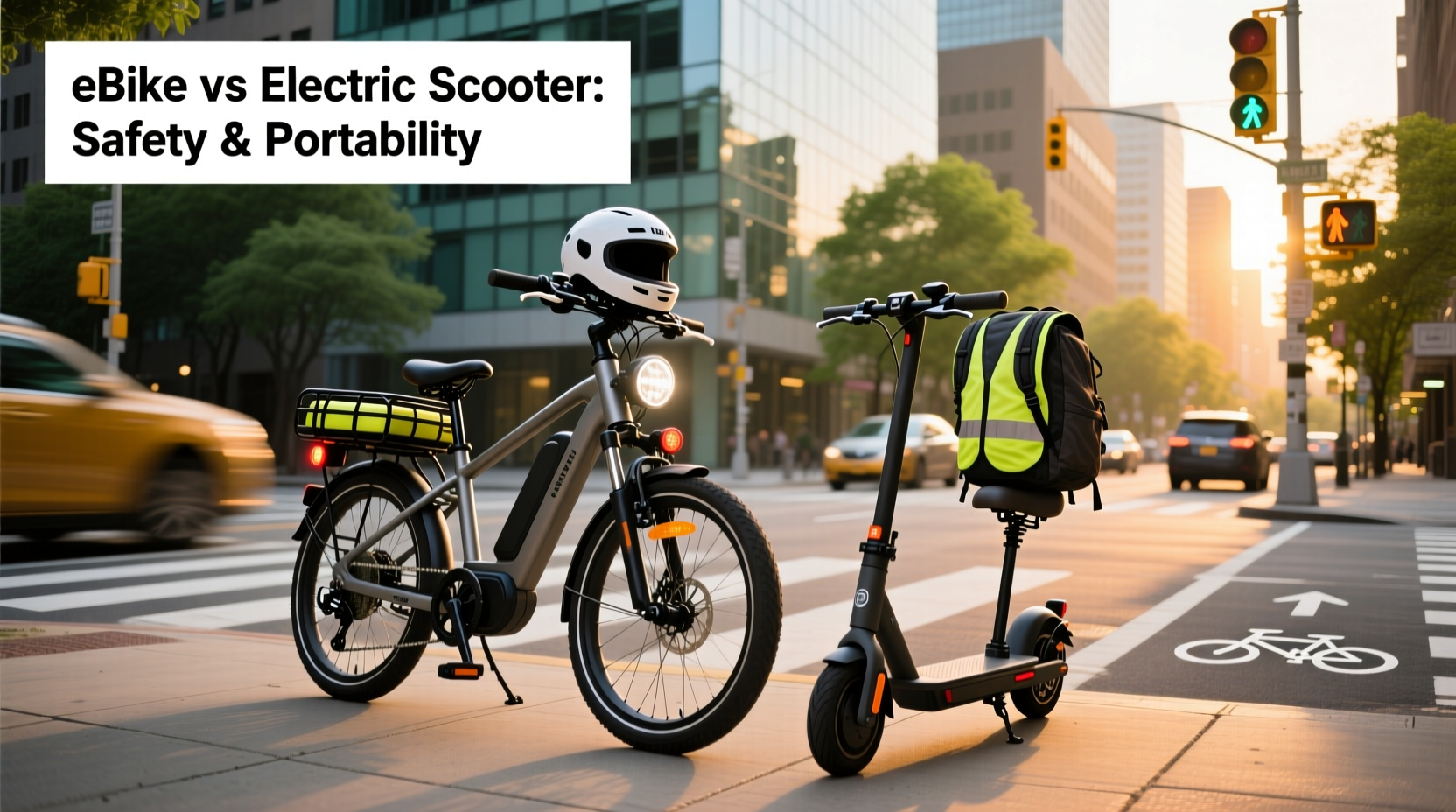
Safety is a top priority for any commuter, especially in dense urban environments with mixed traffic, pedestrians, and unpredictable road conditions. While both e-bikes and e-scooters are generally safe when used responsibly, they differ fundamentally in design, which affects rider confidence and accident risk.
E-bikes resemble traditional bicycles but come equipped with electric motors that assist pedaling. Their larger frame, two hand brakes, wider tires, and lower center of gravity contribute to greater stability at higher speeds. This makes them better suited for longer distances, uneven pavement, and inclement weather. Because e-bike riders sit upright and maintain a posture similar to regular cycling, they’re typically more visible to drivers and less likely to lose balance during sudden stops.
In contrast, e-scooters are compact, stand-up vehicles with small wheels and a narrow deck. They rely on handlebar controls and a single braking system—often a combination of electronic and foot brake. While convenient, this setup can lead to instability, especially at speeds above 15 mph or on rough surfaces. A 2022 study by the National Highway Traffic Safety Administration (NHTSA) found that e-scooter riders were nearly twice as likely to suffer falls due to surface irregularities compared to e-bike users.
Tip: Always wear a helmet—even if not legally required. Studies show head injuries account for over 60% of serious e-mobility incidents.“E-bikes offer a more predictable ride profile because they integrate human input with motor assistance. This hybrid control reduces the risk of abrupt acceleration or loss of traction.” — Dr. Lena Torres, Urban Mobility Researcher at MIT
Crash Risk and Urban Infrastructure
Cities designed primarily for cars often lack adequate infrastructure for micro-mobility. Narrow bike lanes, potholes, and sidewalk riding restrictions create challenges for both e-bike and e-scooter users. However, e-bikes are generally permitted in bike lanes and on roads, aligning them with existing cycling regulations. E-scooters, particularly rental models, are sometimes restricted from certain zones or required to be ridden on sidewalks in areas without dedicated paths—increasing conflict with pedestrians.
A real-world example from Portland, Oregon, illustrates this issue. In 2021, the city’s transportation bureau reported that while e-scooter trips made up only 18% of shared micromobility usage, they accounted for 43% of injury-related incidents. Many of these stemmed from sidewalk riding, poor lighting, and rider inexperience.
Portability: Storage, Transport, and Maneuverability
For city dwellers living in apartments or using public transit, portability is a critical factor. How easy is it to carry, store, or fold your vehicle? Can you take it on the subway or stow it under your desk?
E-scooters excel in this area. Most models weigh between 25–35 lbs and feature quick-fold mechanisms, making them highly portable. Folded scooters can be carried into offices, stored in closets, or brought onto buses and trains. Brands like Xiaomi and Segway produce lightweight models under 28 lbs, ideal for commuters who need flexibility.
E-bikes, on the other hand, are heavier—typically ranging from 45 to 70 lbs—and rarely foldable unless specifically designed as a folding e-bike. Even then, their bulk makes them harder to manage indoors. Unless you have access to secure bike storage or a private garage, bringing an e-bike inside may not be practical. Charging is another consideration; e-bikes usually require longer charge times (4–6 hours) and fixed outlets, whereas many e-scooters have removable batteries that can be charged indoors.
Real Example: Commuting in New York City
Take Maria, a marketing professional living in Brooklyn who commutes to Midtown Manhattan. Her apartment has no elevator, and her office lacks bike storage. She initially bought an e-bike for its comfort and range but quickly realized she couldn’t carry the 55-lb bike up five flights daily. After switching to a 27-lb folding e-scooter, she regained convenience—riding to the subway, folding it mid-platform, and carrying it onto the train. Though she now rides fewer miles, her overall commute became more manageable.
Comparative Overview: Key Differences at a Glance
| Feature | E-Bike | E-Scooter |
|---|---|---|
| Weight | 45–70 lbs | 25–35 lbs |
| Foldable | Rare (except folding models) | Most models fold quickly |
| Battery Removable | Sometimes | Often |
| Top Speed | 20–28 mph (Class 3) | 15–20 mph |
| Riding Position | Sitting, pedal-assist | Standing, throttle-based |
| Stability on Rough Roads | High (larger wheels, suspension) | Moderate to Low (small wheels) |
| Storage Space Needed | Large (like a bicycle) | Compact when folded |
| Legal Riding Zones | Bike lanes, roads | Varies—some cities ban sidewalk use |
Choosing Based on Your Commute Profile
The best choice depends on your specific routine, environment, and priorities. Consider the following factors before deciding:
- Commute distance: E-bikes are better for trips over 3 miles, where sustained speed and reduced fatigue matter.
- Terrain: Hilly cities favor e-bikes with pedal-assist climbing power.
- Transit integration: If you rely on subways or buses, a foldable e-scooter offers unmatched portability.
- Weather: E-bikes handle rain and wind better due to weight and tire size.
- Indoor access: No storage? An e-scooter can go under your desk.
Step-by-Step: How to Decide Between an E-Bike and E-Scooter
- Map your route: Note road quality, elevation changes, and bike lane availability.
- Check local laws: Are e-scooters allowed on sidewalks? Do e-bikes need registration?
- Assess storage: Can you securely park your device at home and work?
- Calculate total time: Include time spent locking, unfolding, or carrying your vehicle.
- Budget for accessories: Helmets, lights, locks, and fenders add cost and affect usability.
- Test ride both: Visit a local dealer or use a rental service to compare comfort and control.
Expert Recommendations and Long-Term Use
Industry experts emphasize that long-term satisfaction with micro-mobility devices hinges on matching the tool to the task. “Too many people buy based on trends rather than practicality,” says Raj Patel, co-founder of UrbanRide Labs, a mobility consultancy. “An e-scooter isn’t inherently worse than an e-bike—it’s about context.”
Patel notes that e-bike owners tend to use their vehicles more consistently over time. “We see higher retention rates with e-bikes because they integrate better into active lifestyles. People use them for errands, weekend rides, and fitness—not just commuting.”
That said, e-scooters have a role in multimodal transit. For those combining walking, transit, and short rides, a lightweight scooter eliminates the “last 500 meters” problem without requiring significant physical effort.
Common Pitfalls to Avoid
- Underestimating charging logistics: Leaving your battery dead mid-commute disrupts your day.
- Ignoring tire type: Pneumatic (air-filled) tires absorb shocks better than solid rubber, improving safety on cracked pavement.
- Overlooking maintenance: Brake pads, tire pressure, and chain lubrication affect both safety and longevity.
- Assuming all cities are scooter-friendly: Regulations change frequently—check local ordinances before purchasing.
FAQ: Common Questions Answered
Which is safer in heavy traffic: e-bike or e-scooter?
E-bikes are generally safer in mixed traffic due to their size, visibility, and braking power. Their seated position allows for better situational awareness, and most models come with front and rear lights as standard. E-scooters, being lower and narrower, can be harder for drivers to see, increasing collision risk at intersections.
Can I bring an e-scooter on public transit?
In most major cities, yes—folded e-scooters are allowed on subways, buses, and commuter rails, similar to bicycles during off-peak hours. However, some transit agencies impose size or weight limits, so check local rules. E-bikes are often treated like full-sized bikes and may face restrictions during rush hours.
Are e-bikes worth the extra cost and weight?
If your commute exceeds 3 miles, involves hills, or you prefer a more engaging ride, yes. E-bikes offer greater range (often 40+ miles per charge), superior comfort, and better resale value. The investment pays off in reliability and versatility, especially if you plan to use the vehicle beyond commuting.
Final Checklist Before You Buy
- ✅ Assess your commute length and terrain
- Determine whether speed, range, or portability matters most.
- ✅ Verify local regulations
- Know where you’re allowed to ride and whether licensing or insurance is required.
- ✅ Evaluate storage options
- Can you lock it securely? Is indoor storage feasible?
- ✅ Prioritize safety features
- Look for dual brakes, bright lights, reflectors, and responsive throttles or pedal sensors.
- ✅ Budget for essentials
- Include cost of helmet, lock, bell, and potential repairs.
- ✅ Try before you commit
- Rent or test ride both types to feel the difference in balance and control.
Conclusion: Make the Choice That Fits Your Life
There’s no universal answer to whether an e-bike or e-scooter is better for city commuting. Each excels in different scenarios. If safety, stability, and longer rides are your priorities, an e-bike is likely the superior choice. But if portability, compact storage, and seamless integration with public transit define your needs, an e-scooter may be the smarter pick.
The most effective urban transportation solution isn’t the fastest or trendiest—it’s the one you’ll actually use, day after day, without hassle or risk. By weighing safety against portability and aligning your choice with your real-world routine, you can make a decision that enhances your commute, reduces stress, and supports a greener city future.
💬 Have experience with both? Share your story in the comments. Your insights could help someone else choose wisely.








