The vacuum cleaner market has evolved dramatically over the past decade. Once dominated by upright models like the iconic Dyson Ball series, homes are now increasingly filled with sleek cordless stick vacuums—many of them also from Dyson. The shift raises an important question: Are people really ditching the Dyson Ball in favor of cordless convenience? And if so, is it a justified trade-off?
This isn’t just about design trends. It’s about functionality, cleaning efficiency, lifestyle compatibility, and long-term value. To understand this transition, we need to examine both types of vacuums not just as products, but as tools that fit into modern living.
Understanding the Dyson Ball Legacy
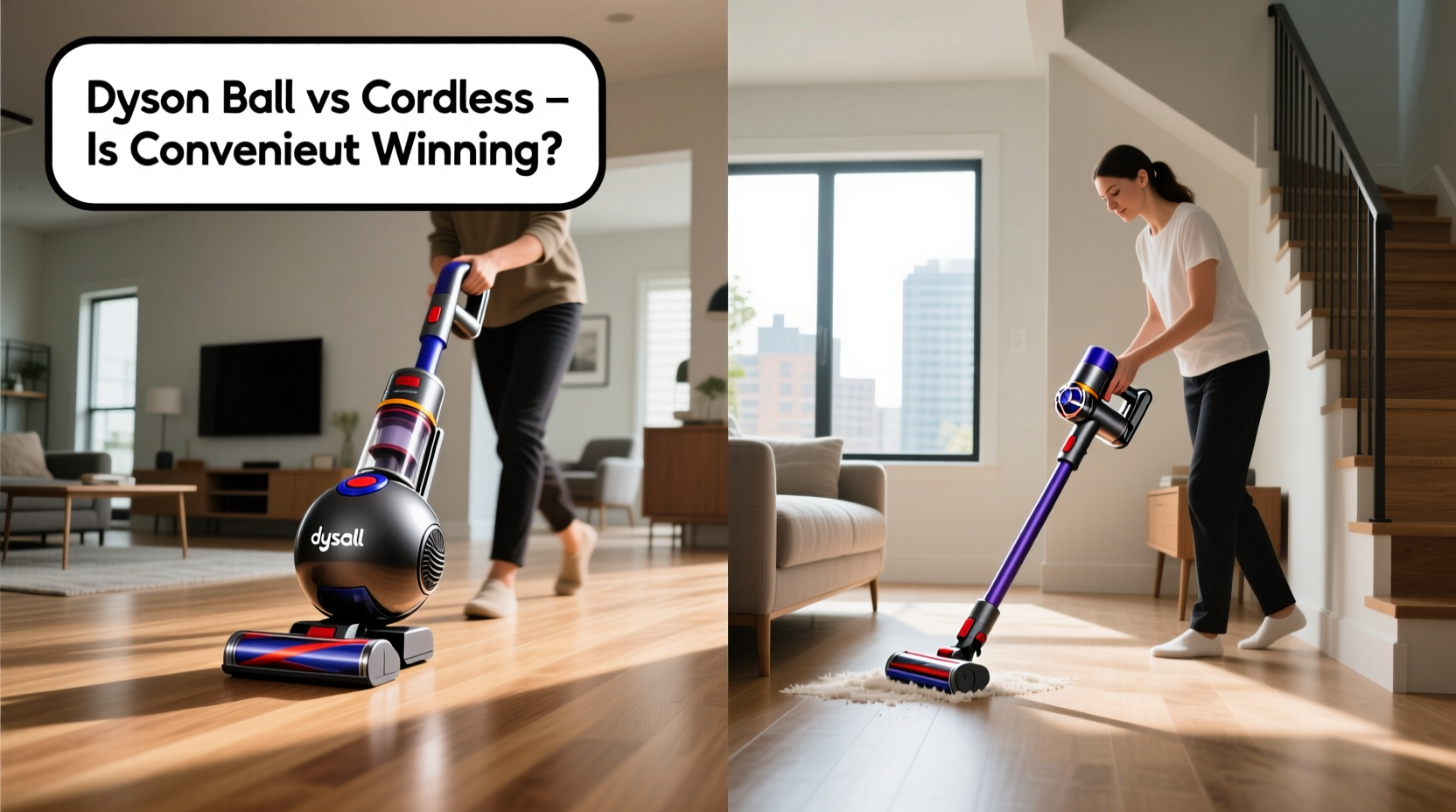
The Dyson Ball series revolutionized upright vacuuming when it launched. Its unique spherical design allowed for unmatched maneuverability around furniture and tight corners. Combined with powerful suction, HEPA filtration, and bagless technology, the Dyson Ball quickly became a staple in households with carpets and pet owners alike.
Models like the Dyson Ball Animal 2 and Multi Floor 2 offered deep-cleaning capabilities across multiple surfaces. They were especially effective on high-pile carpets, where sustained suction and motorized brush rolls made a tangible difference in removing embedded dust and allergens.
But they came with notable drawbacks: weight (often over 15 lbs), cord management issues, noise levels, and storage bulk. For many users, these factors began to outweigh the performance benefits—especially as cordless alternatives improved.
The Rise of Cordless: Why Convenience Wins
Cordless vacuums entered the market as lightweight, quick-clean solutions—ideal for hard floors and small messes. But Dyson’s V-series changed the game. With models like the V11 Absolute and V15 Detect, Dyson brought high-end cyclonic suction, advanced filtration, and laser dust detection to cordless platforms.
Suddenly, cordless wasn’t just “good enough.” It was competitive—and in many cases, preferred. Key advantages include:
- Instant accessibility: No plugging in; grab and go.
- Lightweight design: Typically under 7 lbs, reducing strain.
- Multi-surface versatility: Easily switch between floor, stairs, furniture, and ceilings.
- Easy storage: Wall-mounted charging saves space.
- Quick cleanups: Ideal for daily maintenance without setup time.
For urban apartments, smaller homes, or those prioritizing speed and simplicity, cordless became the default. A 2023 consumer survey by *HomeTech Insights* found that **68% of new vacuum buyers chose cordless models**, with Dyson leading the premium segment.
Tip: Use your cordless vacuum for daily touch-ups and reserve deeper cleans for weekly sessions to maximize battery life.Performance Face-Off: Where Each Excels
Convenience doesn’t mean compromise—but it does come with trade-offs. Let’s break down how Dyson Ball and cordless models compare across key categories.
| Feature | Dyson Ball (e.g., Ball Multi Floor 2) | Dyson Cordless (e.g., V15 Detect) |
|---|---|---|
| Suction Power (AW) | ~200 Air Watts (continuous) | Up to 240 Air Watts (boost mode) |
| Battery/Runtime | Unlimited (corded) | Up to 60 mins (standard mode), ~12 mins (boost) |
| Weight | 15–18 lbs | 5.5–7 lbs |
| Floor Type Strength | Excellent on carpets | Strong on hard floors, good on low/mid-pile carpets |
| Maneuverability | Good (ball design) | Excellent (swivel steering, handheld mode) |
| Maintenance & Storage | Bulkier; requires outlet access | Wall-mountable; self-charging |
| Price Range | $300–$400 | $500–$800 |
The data shows a clear pattern: cordless wins in agility and ease of use, while the Ball maintains an edge in sustained cleaning power and runtime. However, for most average households, the cordless model's peak performance is sufficient for everyday needs.
“The psychology of cleaning has shifted. People don’t want to ‘do the vacuuming’—they want to ‘keep things clean.’ Cordless fits that mindset perfectly.” — Dr. Lena Patel, Consumer Behavior Researcher at Urban Living Lab
Real-World Shift: A Mini Case Study
Take Sarah Thompson, a marketing manager in Chicago living in a two-bedroom condo with hardwood floors and a shag rug in the living room. She owned a Dyson Ball Animal 2 for seven years. “It cleaned well,” she says, “but I only used it every two weeks because dragging it out felt like a chore.”
Last year, she upgraded to a Dyson V12 Detect Slim. “I use it almost every day now. It takes two minutes to wipe the kitchen floor after dinner. I even clean the couch while watching TV. It’s not replacing deep cleans, but it prevents messes from building up.”
Her experience reflects a broader trend: **frequency of use increases when friction decreases**. Cordless vacuums aren’t always more powerful, but their integration into daily routines makes homes cleaner overall.
When the Dyson Ball Still Makes Sense
Despite the momentum behind cordless, the Dyson Ball remains relevant—for specific users. Consider sticking with or choosing a Ball model if:
- You have large carpeted areas (over 1,500 sq ft).
- You own pets that shed heavily and require frequent deep carpet cleaning.
- You experience allergies and rely on consistent, whole-home vacuuming.
- You prefer one tool for all floors without switching attachments or recharging.
In these scenarios, the uninterrupted power and larger bin capacity of the Ball model reduce the number of passes and emptying cycles. For allergy sufferers, continuous HEPA filtration during extended sessions can make a measurable difference in air quality.
Step-by-Step: How to Decide Which Vacuum Fits Your Life
- Assess your home layout: Measure square footage and note primary flooring types.
- Evaluate cleaning frequency: Do you do weekly deep cleans or daily spot checks?
- Identify pain points: Is storage, weight, or cord hassle your biggest issue?
- Test usage patterns: Try borrowing both types or renting short-term.
- Consider secondary needs: Do you need to clean stairs, car interiors, or ceiling fans regularly?
- Budget for long-term ownership: Factor in battery replacement (every 2–3 years) for cordless.
FAQ: Common Questions About Dyson Ball vs Cordless
Can a cordless Dyson replace a Dyson Ball entirely?
For small to medium homes with mostly hard floors, yes. For larger homes with thick carpets, a cordless may require multiple charges and struggle with deeply embedded debris. Many users keep both: cordless for daily use, Ball for weekly deep cleans.
Do cordless vacuums lose suction over time?
All vacuums lose some suction if filters are clogged or bins are full. Dyson cordless models use digital motors that maintain strong suction until the battery depletes. Regular maintenance—washing filters monthly and clearing blockages—preserves performance.
Is the Dyson Ball discontinued?
No, Dyson still sells Ball models globally, though marketing focus has clearly shifted toward cordless. The Ball series remains part of their lineup, particularly in markets where carpeted homes dominate.
Checklist: Choosing Your Next Dyson Vacuum
- ☐ Determine primary floor type (carpet vs. hard floor)
- ☐ Measure total area to be cleaned
- ☐ Assess physical ability (can you lift 15+ lbs?)
- ☐ Decide on budget (cordless often costs more upfront)
- ☐ Consider storage space and charging access
- ☐ Prioritize features: runtime, suction, attachments, noise
- ☐ Test models in-store or via trial if possible
Conclusion: It’s Not Just About Ditching—It’s About Evolving
People aren’t simply abandoning the Dyson Ball for cordless vacuums—they’re adapting their cleaning habits to match modern lifestyles. The shift reflects a broader movement toward tools that integrate seamlessly into daily life rather than disrupt it.
The Dyson Ball remains a powerhouse for deep-cleaning tasks, especially in carpet-heavy homes. But the cordless revolution has redefined what “effective cleaning” means: not just power, but consistency, accessibility, and usability.
Rather than viewing this as an either/or choice, many households are finding value in a hybrid approach. Use cordless for daily upkeep and rapid response. Keep the Ball (or invest in one) for thorough monthly cleans. This balanced strategy maximizes both convenience and performance.
💬 What’s your vacuum preference—and why? Share your experience with Dyson Ball or cordless models. Your insights could help others make smarter choices for their homes.








