When the weather turns unpredictable and moisture becomes inevitable—whether from rain, snowmelt, or morning dew—the performance of your sleeping bag under damp conditions can mean the difference between a restful night and a shivering ordeal. One of the most debated topics among outdoor enthusiasts is whether down or synthetic insulation performs better when wet. While both materials have their strengths, understanding how they react to moisture is essential for making an informed decision based on your environment, trip duration, and risk tolerance.
The core issue lies in insulation physics: trapped air provides warmth, and any material that loses loft or clumps when damp will lose its ability to retain heat. Down feathers excel in dry, cold environments, offering unmatched warmth-to-weight ratios. Synthetic fibers, while heavier and bulkier, are engineered to resist moisture absorption and maintain insulating properties even when wet. But which truly keeps you warmer when damp? The answer isn't always straightforward—and depends on multiple variables beyond just material type.
How Insulation Works: The Science Behind Warmth
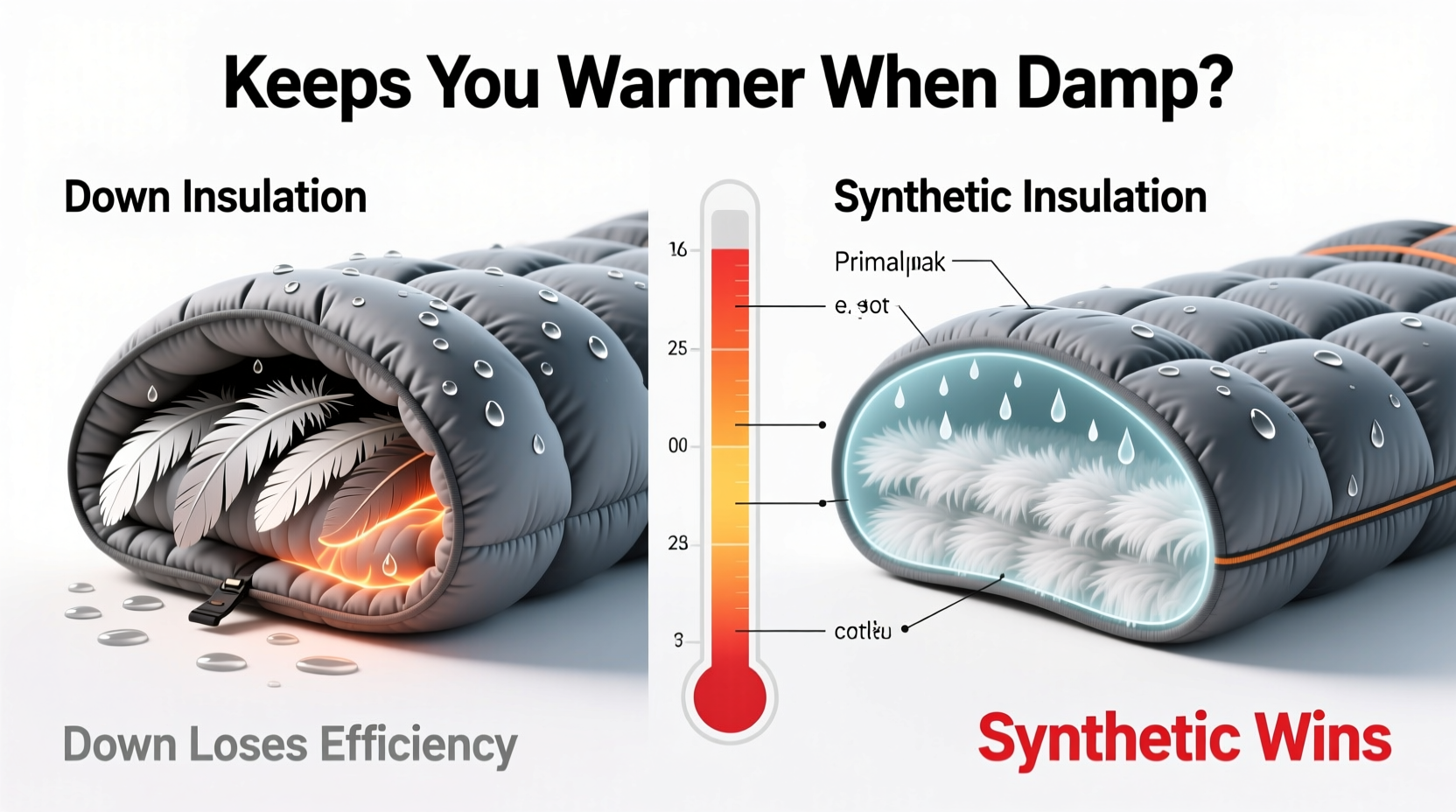
All sleeping bags rely on insulation to trap body heat by minimizing convective and conductive heat loss. The effectiveness of insulation depends on two primary factors: loft (the fluffiness of the material) and the ability to retain still air. When insulation gets compressed or damp, it collapses, reducing loft and allowing cold air to circulate.
Down insulation consists of clusters of fine plumage from ducks or geese. These clusters create thousands of tiny air pockets that efficiently trap heat. In ideal conditions—dry and uncompressed—down offers superior thermal efficiency per ounce compared to any synthetic alternative.
Synthetic insulation, typically made from polyester fibers, mimics this structure using spun filaments arranged into webs or continuous strands. Modern synthetics like PrimaLoft, Thermolite, and Coreloft are designed to replicate down’s loft while resisting moisture absorption.
The critical divergence occurs when water enters the equation. Water conducts heat away from the body 25 times faster than air. Wet insulation not only loses loft but also increases conductive heat loss through the damp fibers themselves.
Tip: Always use a waterproof bivy sack or liner in high-moisture environments, regardless of insulation type.Down in Damp Conditions: Strengths and Vulnerabilities
Down is hydrophobic to some degree—especially treated \"water-resistant\" down—but its natural protein-based structure attracts moisture. Once down absorbs water, the individual plumes stick together, collapsing the air pockets that provide warmth. This process is known as \"clumping,\" and it drastically reduces thermal performance.
A study conducted by the U.S. Army Research Institute of Environmental Medicine found that wet down can lose up to 90% of its insulating value. Even partial dampness—such as humidity inside a tent or condensation from breath—can degrade performance over time. Cold, damp conditions amplify this effect because there's less ambient heat to facilitate drying.
That said, modern advancements have improved down’s resilience. Treated down, such as Nikwax Hydrophobic Down or DownTek, features molecular coatings that repel water and delay absorption. These treatments allow down to shed light moisture and dry faster, extending usability in marginal conditions. However, repeated washing and abrasion diminish the coating over time, so long-term protection requires careful maintenance.
“Even hydrophobic down isn’t waterproof. It buys you time in damp conditions, but it won’t save you if your bag gets soaked.” — Dr. Glen Porzak, Outdoor Gear Materials Scientist
Synthetic Insulation: Engineered for Moisture Resistance
Synthetic insulation does not absorb water the way down does. Polyester fibers are inherently hydrophobic—they resist moisture at the molecular level. Even when exposed to prolonged dampness, synthetic fill retains much of its loft and continues to trap air effectively.
In side-by-side tests conducted by outdoor labs, synthetic sleeping bags retained 60–70% of their original warmth after being submerged and wrung out, whereas untreated down bags dropped below 20%. This makes synthetic insulation far more reliable in consistently wet environments like rainforests, coastal hikes, or spring backpacking trips with frequent stream crossings.
Additionally, synthetic insulation dries significantly faster. A soaked synthetic bag may regain functional loft within a few hours when hung in moving air, while down can take days to fully dry without specialized equipment. This rapid recovery is crucial during multi-day trips where gear cannot be replaced.
Newer synthetic blends incorporate silicone-treated fibers and 3D crimp structures to improve compressibility and warmth retention. Some premium models now approach the packability of low-fill-power down, narrowing the traditional performance gap.
Comparative Performance Table: Down vs Synthetic When Damp
| Factor | Down (Untreated) | Down (Hydrophobic) | Synthetic |
|---|---|---|---|
| Warmth Retention When Slightly Damp | Poor (loses ~50%+ warmth) | Fair to Good (loses ~30%) | Good (loses ~15–25%) |
| Warmth Retention When Soaked | Very Poor (<10% retained) | Poor (~20% retained) | Fair to Good (~60% retained) |
| Drying Time (Ambient Air) | 24–72 hours | 18–48 hours | 6–12 hours |
| Packability (Compressed Volume) | Excellent | Excellent | Fair to Good |
| Lifespan (with proper care) | 10+ years | 8–10 years | 5–7 years |
| Best Use Case | Dry, cold alpine environments | Variable conditions with moisture risk | Wet climates, humid regions, frequent use |
Real-World Scenario: Backpacking the Olympic Peninsula
Consider a five-day trek through the Hoh Rain Forest in Washington State—a region averaging 140 inches of rain annually. Temperatures hover around 40°F (4°C), and humidity is near constant. A hiker chooses a high-fill-power down bag rated to 20°F (-6°C), confident in its lightweight design and warmth.
Despite using a vapor barrier liner and storing the bag in a dry sack, overnight condensation builds up inside the tent from breath and body moisture. By the third night, the footbox of the bag feels cold and matted. The down has absorbed ambient humidity, reducing loft and creating cold spots. The hiker reports feeling colder than expected, despite wearing extra layers.
In contrast, another hiker uses a synthetic bag with similar temperature rating. Though the exterior shell picks up mist and the inner lining feels slightly damp, the insulation remains lofty. There are no noticeable cold zones, and the bag dries quickly during midday breaks. At night, consistent warmth is maintained throughout the trip.
This scenario illustrates that in persistently damp environments, synthetic insulation often outperforms even high-end down due to its resilience and faster drying characteristics.
Step-by-Step Guide: Choosing the Right Bag for Damp Conditions
Selecting the best sleeping bag for damp environments involves assessing your trip profile, risk tolerance, and gear management habits. Follow these steps to make an informed decision:
- Evaluate Your Environment: Determine average humidity, precipitation levels, and likelihood of exposure to water (e.g., river crossings, tent condensation).
- Assess Trip Duration: Longer trips increase the chance of accidental soaking. Synthetics offer greater reliability over extended periods.
- Check Temperature Ratings: Ensure the bag’s EN/ISO rating matches expected lows. Remember that dampness lowers effective warmth, so derate down bags by 10–20°F in wet conditions.
- Consider Weight vs. Reliability Trade-off: If minimizing pack weight is critical and conditions are generally dry, treated down may suffice. For maximum assurance in wet climates, prioritize synthetic.
- Inspect Construction Quality: Look for breathable linings, durable water-repellent (DWR) shell fabrics, and full-length draft tubes to minimize heat loss regardless of fill type.
- Plan for Redundancy: Carry a vapor barrier liner or sleep sack to reduce moisture transfer from your body, especially with down.
Expert Tips for Maximizing Warmth in Damp Conditions
- Use a waterproof bivy sack or liner to create a moisture barrier around your sleeping bag.
- Always store your sleeping bag outside your backpack in a dry sack—never compress it in a stuff sack during transit.
- Avoid breathing inside your sleeping bag; moisture from exhalation accumulates rapidly and degrades insulation.
- Hang your bag to air out daily, even for 30 minutes, to prevent mildew and restore loft.
- Wash sleeping bags only when necessary, using specialized cleaners (e.g., Nikwax, Grangers) to preserve water-repellent treatments.
FAQ: Common Questions About Sleeping Bags and Dampness
Can I dry a wet down sleeping bag in a dryer?
Yes, but only on low heat with clean tennis balls or dryer balls to break up clumps. Ensure the bag is completely dry before storage to prevent mold. Never machine-dry synthetic bags on high heat, as it can melt fibers.
Is hydrophobic down worth the extra cost?
It depends on your use case. If you frequently hike in transitional seasons or areas with moderate moisture, hydrophobic down offers meaningful protection and peace of mind. For desert or arid mountain trips, the benefit is minimal.
Do synthetic bags feel as warm as down in dry conditions?
High-quality synthetic bags come close, but down still holds an edge in warmth-to-weight ratio. In identical temperature ratings, down will generally be lighter and more compressible, though modern synthetics have narrowed the gap considerably.
Final Recommendation: Which Keeps You Warmer When Damp?
Synthetic sleeping bags keep you warmer than down when damp—often significantly so. Untreated down loses most of its insulating ability once wet, creating dangerous cold spots and increasing hypothermia risk. Even hydrophobic down only delays moisture absorption; it doesn’t prevent it entirely.
Synthetic insulation maintains structural integrity, resists water uptake, and dries quickly—making it the safer, more predictable choice in rainy, humid, or snowy environments. While heavier and bulkier than down, its performance consistency under adverse conditions makes it ideal for backpackers, hunters, and adventurers who cannot afford gear failure.
That said, down remains the gold standard for cold, dry environments where weight and compressibility are paramount. With proper care, a down bag can last decades. But when moisture is a likely factor, choosing synthetic isn’t just practical—it’s a safety consideration.
Conclusion: Make the Smart Choice Based on Conditions
Your sleeping bag is one of the most critical pieces of survival gear you carry. In damp conditions, staying warm isn’t just about comfort—it’s about safety. While down excels in dry cold, synthetic insulation proves superior when moisture is present. Understanding this distinction allows you to match your gear to your environment, not just your preferences.
Whether you're planning a coastal thru-hike, a spring mountaineering expedition, or a family camping trip in unpredictable weather, prioritize reliability. Choose synthetic if dampness is likely. Opt for treated down only if you can control moisture exposure and accept the risks. Either way, protect your investment with proper storage, maintenance, and smart field practices.
🚀 Ready to choose your next sleeping bag? Assess your typical conditions, test options in-store, and never compromise on moisture protection when safety is on the line. Share your experiences or ask questions in the comments below.








