The great sleeping bag divide isn’t about color, brand, or even price—it’s about insulation. For decades, outdoor enthusiasts have been locked in a persistent debate: down versus synthetic. Backpackers swear by the compressibility of down. Winter campers defend synthetic’s reliability in wet conditions. And new hikers are left wondering why there isn’t a clear winner.
The answer lies not in declaring one superior across the board, but in understanding how each material performs under different conditions. The argument continues because both options excel in specific environments—and fail in others. Choosing the right bag isn't about dogma; it's about matching function to mission.
Performance Comparison: Warmth, Weight, and Compressibility
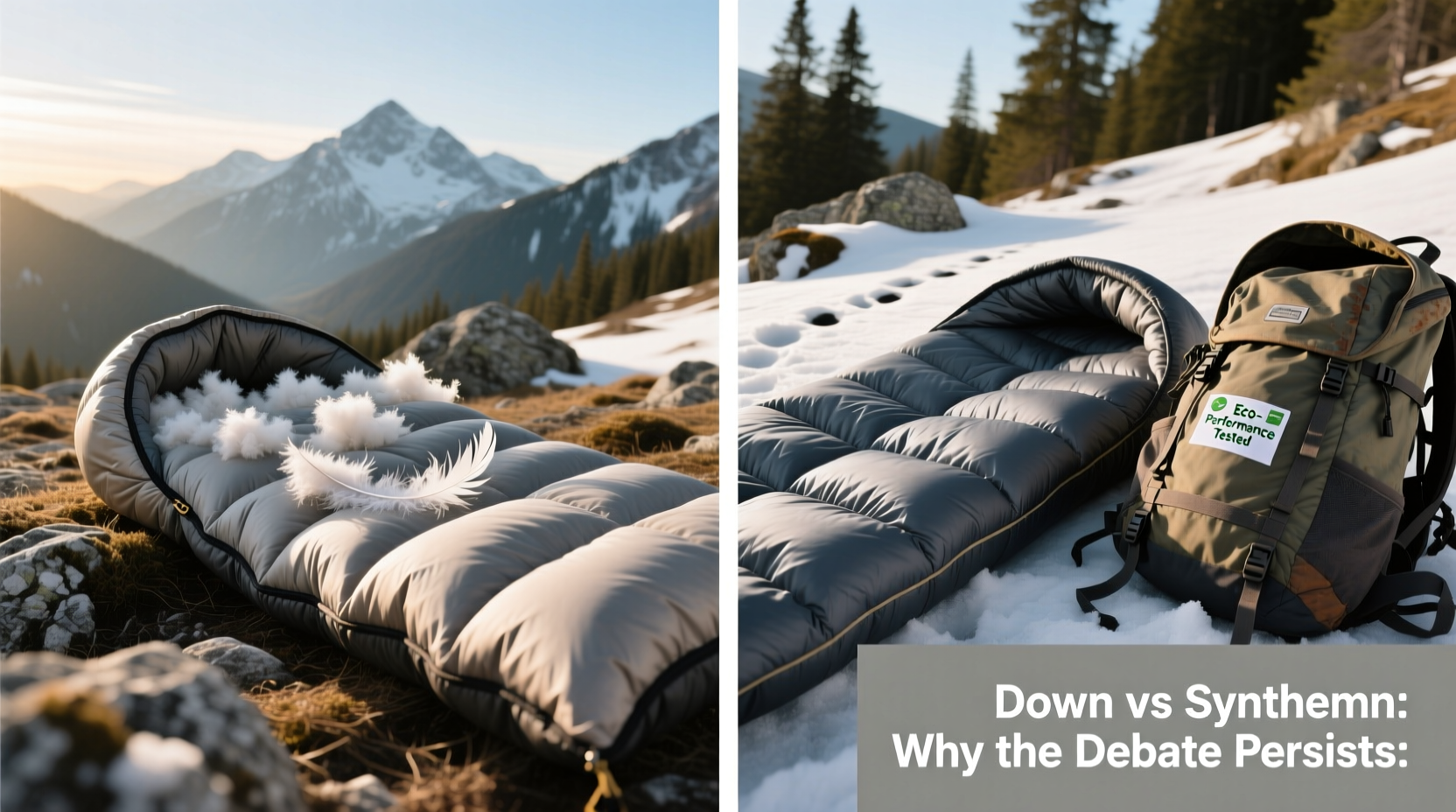
When comparing down and synthetic insulation, three core factors dominate: thermal efficiency per ounce (warmth-to-weight ratio), packability, and longevity under use.
Down feathers—typically from ducks or geese—are nature’s premier insulator. Their three-dimensional structure traps air exceptionally well, providing more warmth per gram than any synthetic alternative. High-quality down with a fill power of 800+ can be compressed into a fraction of its size, making it ideal for ultralight backpacking where every ounce counts.
Synthetic insulation, made from polyester fibers engineered to mimic down clusters, has improved dramatically over the past two decades. Modern versions like PrimaLoft, Thermolite, and Coreloft offer respectable warmth-to-weight ratios and maintain loft after repeated compression. However, they still lag behind premium down in terms of sheer efficiency and packability.
| Feature | Down (850 Fill) | Synthetic (PrimaLoft Gold) |
|---|---|---|
| Warmth-to-Weight Ratio | Excellent | Good |
| Packability | Superior – fits in a liter sack | Fair – requires larger storage |
| Durability (Lifespan) | 10–15 years with care | 5–7 years typical |
| Wet Performance | Poor – loses insulation when damp | Good – retains warmth when wet |
| Drying Time | Slow – hours to days | Faster – often under 6 hours |
Durability and Long-Term Value
While synthetic bags degrade faster due to fiber breakdown over time, high-fill-power down can last over a decade if properly stored and maintained. A well-cared-for down bag from 2010 might still outperform a brand-new mid-tier synthetic model.
However, durability isn’t just about time—it’s about usage context. In humid climates or on multi-day trips near water, down requires meticulous protection from moisture. Once soaked, it clumps, loses loft, and becomes nearly useless until fully dried—a process that can take days without industrial equipment.
Synthetic bags, while heavier and bulkier, handle rough treatment better. They resist mildew, recover from being stuffed in a pack, and don’t require special storage methods. For rental fleets, scout troops, or frequent car campers, synthetic often wins on total cost of ownership despite lower initial performance.
“Down lasts longer, but only if treated like a precision instrument. Synthetic is the workhorse—less glamorous, but dependable in chaos.” — Lena Torres, Gear Editor at *Trailline Journal*
Environmental and Ethical Considerations
The ethics of down sourcing remain controversial. While many brands now use certified responsible down (RDS – Responsible Down Standard), concerns persist about live-plucking and force-feeding practices in some supply chains. Even RDS certification relies on audits that aren’t always transparent.
Synthetic insulation sidesteps animal welfare issues but introduces environmental trade-offs. Polyester is derived from petroleum, sheds microplastics during washing, and isn’t biodegradable. However, recycled synthetics (like PrimaLoft Bio) are emerging as more sustainable alternatives, breaking down safely in landfills.
Vegans and eco-conscious travelers often lean toward synthetic not for performance, but for alignment with values. Yet, paradoxically, down is a natural, renewable material when ethically sourced—making the “green” choice less black and white than it seems.
Checklist: Choosing Based on Your Priorities
- Choose down if: You prioritize weight savings, camp in dry climates, and plan long-term use.
- Choose synthetic if: You expect wet conditions, need low maintenance, or prefer non-animal materials.
- Look for RDS-certified down if animal welfare is a concern.
- Opt for recycled synthetic insulation to reduce environmental impact.
- Always carry your bag in a large storage sack when not in use—never leave it compressed long-term.
Real-World Scenario: The Pacific Northwest Backpacking Trip
Consider Sarah, an experienced hiker planning a seven-day trek through Olympic National Park. Rain is forecasted for five of those days. Trails are muddy, river crossings are frequent, and campsites are damp.
She owns a premium 850-fill down bag rated to 20°F. It weighs just 28 oz and packs small—perfect for her ultralight setup. But on night three, condensation soaks into her tent floor. Her sleeping bag touches the damp ground. By morning, the footbox has lost loft and feels clammy. That night, she’s cold despite wearing extra layers.
Her friend Mark, using a slightly heavier synthetic bag, faces the same conditions. His bag gets damp too—but because synthetic retains 90% of its warmth when wet, he sleeps comfortably. He hangs the bag to dry the next day and it recovers quickly.
This isn’t a failure of down. It’s a mismatch of tool to environment. In drier alpine zones, Sarah’s bag would shine. Here, the synthetic was the smarter choice.
Maintaining Your Investment: Care Tips That Extend Lifespan
How you treat your sleeping bag affects its performance far more than most realize. Both down and synthetic benefit from proper care, but down is especially sensitive.
Never store either type compressed. Instead, keep them loosely stuffed in a large cotton or mesh sack. Wash only when necessary—overwashing degrades coatings and fibers. When cleaning, use specialized detergents (e.g., Nikwax Down Wash) and a front-loading machine to avoid damage.
Dry cleaning is not recommended for down, as solvents strip natural oils. For synthetic, line drying preserves fiber integrity better than machine drying, though low-heat tumble drying can help revive loft.
Step-by-Step: Reviving a Compressed Bag
- Remove the bag from its stuff sack and shake vigorously.
- Place it in a large, clean clothes dryer on no heat or lowest heat setting.
- Add two or three clean tennis balls to help break up clumps.
- Tumble for 30–60 minutes, checking periodically.
- Air out completely before storing in a breathable sack.
Frequently Asked Questions
Can I use a down sleeping bag in the rain?
You can, but with significant risk. Use a waterproof liner and pack liner to protect it. If it gets wet, dry it as soon as possible. Many thru-hikers use down successfully in rainy areas by managing exposure meticulously—but one major soak can compromise safety.
Is synthetic warmer than down?
No. Pound for pound, down provides more warmth. However, synthetic performs better in wet or humid conditions where down fails. So in practical terms, synthetic can feel \"warmer\" when dampness is present.
Are hybrid sleeping bags worth considering?
Yes. Hybrid designs place down in the top chamber (where it stays drier) and synthetic on the bottom (to resist ground moisture). These combine strengths and are gaining popularity among four-season users who want balance.
Conclusion: Why the Debate Still Matters
The persistence of the down vs. synthetic debate reflects a deeper truth: there is no universal best. There is only what’s best for you, your trip, and your values. The outdoors rewards thoughtful preparation, not blind loyalty to a material.
Instead of seeking a winner, focus on matching insulation to environment. Ask yourself: Will I face moisture? How critical is weight? What’s my tolerance for maintenance? Answer honestly, and the choice becomes clear.
🚀 Ready to make your next adventure more comfortable? Reassess your gear not by brand or bias, but by conditions. Share your own down or synthetic experience in the comments—your insight could help someone avoid a cold night out there.








