Weightlifting belts are a common sight in gyms, powerlifting meets, and CrossFit boxes. They’re worn tightly around the waist during heavy squats, deadlifts, and overhead presses. But their purpose—and impact—is often misunderstood. Are they protective gear that reduces injury risk, or do they create dependency, weaken core engagement, and promote poor lifting mechanics? The answer isn’t binary. It depends on how, when, and why you use them.
Scientific research, biomechanical principles, and decades of coaching experience reveal that weightlifting belts can be both beneficial and detrimental—depending on context. Used correctly, they enhance performance and safety. Misused, they can foster reliance and mask underlying weaknesses. This article breaks down the physiology behind belt use, examines real-world applications, and provides actionable guidance for lifters at all levels.
How Weightlifting Belts Work: The Science of Intra-Abdominal Pressure
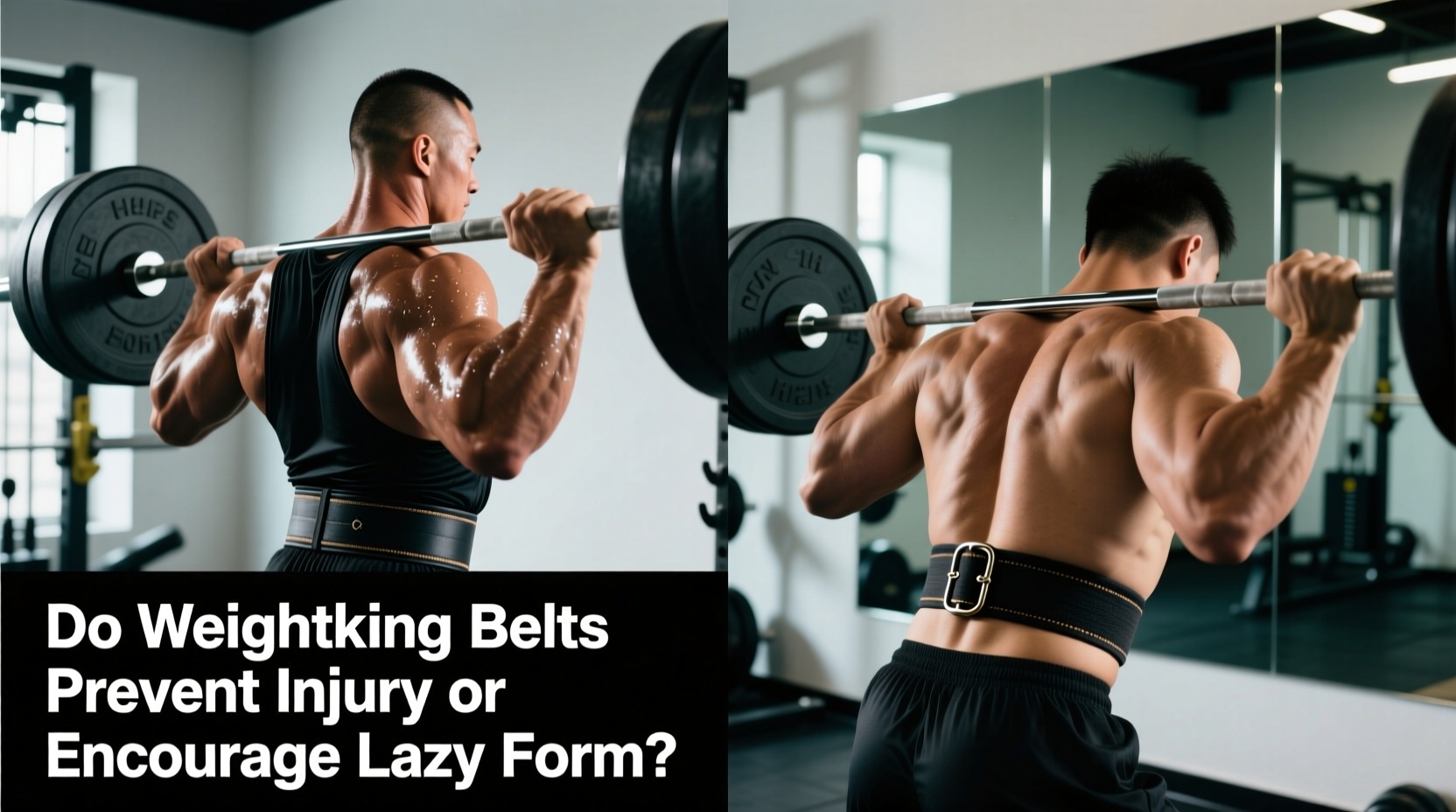
A weightlifting belt doesn’t support your spine like a back brace. Instead, it works by enhancing intra-abdominal pressure (IAP). When you take a deep breath into your belly and brace your core against the belt, the abdominal contents press outward against the belt, which pushes back. This creates a rigid cylinder around the lower torso, stabilizing the lumbar spine during heavy lifts.
Think of it like inflating a balloon inside a cardboard tube—the internal pressure stiffens the entire structure. This mechanism reduces shear forces on the spine and allows lifters to maintain a neutral posture under load.
“Belt use increases intra-abdominal pressure by up to 30–40%, which helps offload spinal compression forces during maximal lifts.” — Dr. Stuart McGill, Spine Biomechanics Researcher, University of Waterloo
Studies consistently show that wearing a belt leads to:
- Increased IAP during heavy resistance training
- Reduced electromyographic activity in erector spinae muscles (indicating less strain)
- Greater force production in compound movements like squats and deadlifts
- Improved lifting technique due to enhanced proprioceptive feedback
However, these benefits only occur when the lifter actively braces their core. A belt alone does nothing without proper bracing technique.
Tip: Practice diaphragmatic breathing and core bracing without a belt first. If you can't generate tension without external support, a belt will only mask the problem.The Injury Prevention Argument: What the Evidence Says
One of the most cited reasons for using a weightlifting belt is injury prevention. The logic is straightforward: more spinal stability = lower risk of disc herniation, muscle strains, or ligament damage. But is this supported by data?
A review published in the Journal of Strength and Conditioning Research found that belts reduce spinal compression forces by approximately 10–15% during maximal lifts. While not eliminating risk, this reduction may delay fatigue and help maintain form near failure—critical factors in preventing acute injuries.
Belts also provide tactile feedback. Feeling the belt against your abdomen reminds you to maintain core tension throughout the lift. This sensory cue improves motor control, especially during complex or fatigued sets.
Still, belts don’t protect against all types of injury. Poor technique, excessive loading, or repetitive submaximal stress with inadequate recovery remain primary culprits in overuse injuries. A belt won’t fix a flawed deadlift setup or compensate for weak glutes.
In elite strength sports, where loads regularly exceed bodyweight by multiples, belts are considered essential safety equipment. Powerlifters wear them during competition lifts not just for performance but because they allow safer execution of extreme weights.
The “Lazy Form” Critique: Dependency and Core Atrophy Concerns
Critics argue that belts encourage passive reliance—lifters stop engaging their core muscles because the belt “does the work.” Over time, this could lead to weakened deep stabilizers like the transverse abdominis and multifidus, increasing long-term injury risk.
Is this valid? Only if the belt is used improperly.
Research shows no evidence of core muscle atrophy from belt use when combined with regular unbraced training. In fact, many elite athletes rotate between belted and unbelted sessions to ensure balanced development. The issue arises when lifters use belts for every set—even light warm-ups—without ever training their body to stabilize independently.
Another concern is technique degradation. Some lifters develop an over-reliance on the belt’s feedback, failing to learn proper bracing mechanics. For example, they might hold their breath incorrectly (using the Valsalva maneuver excessively) or arch their lower back to press into the belt, creating lumbar hyperextension.
The key distinction lies in intent. A belt should amplify good form, not substitute for it. If you're using a belt to lift heavier weights while maintaining technique, it's a tool. If you're using it to compensate for instability or enable unsafe loads, it becomes a crutch.
When to Use a Belt: A Practical Decision Framework
Not every lifter needs a belt. Not every lift requires one. Here’s a structured approach to deciding when belt use makes sense.
✅ Do Use a Belt When:
- Lifting at or above 85% of your 1RM in compound movements
- Training close to muscular failure on heavy sets
- Recovering from a previous back injury (under professional guidance)
- Competing in powerlifting, strongman, or Olympic weightlifting
- Experiencing temporary fatigue but needing to complete a high-quality set
❌ Avoid Using a Belt When:
- Performing accessory or isolation exercises (e.g., bicep curls, leg extensions)
- Doing warm-up sets below 70% 1RM
- Trying to hide poor bracing or breathing mechanics
- New to lifting and still learning movement patterns
- Using it as a psychological prop rather than a performance aid
| Lifter Type | Belt Recommended? | Rationale |
|---|---|---|
| Beginner (less than 6 months training) | No | Focus should be on mastering bracing, breathing, and technique without external aids. |
| Intermediate (6+ months, lifting >80% 1RM) | Yes, selectively | Use only on heaviest sets to reinforce stability under load. |
| Advanced/Competitive Lifter | Yes, strategically | Essential for max-effort lifts; integrate with unbelted training cycles. |
| Rehabbing Back Injury | Only with medical approval | May assist early return to lifting but must not replace core retraining. |
Step-by-Step Guide: How to Use a Weightlifting Belt Correctly
Using a belt effectively requires more than just strapping it on. Follow this sequence to maximize benefit and minimize risk:
- Choose the right belt: Opt for a 10mm or 13mm leather belt, 4 inches tall in the back and 2–3 inches in the front. Neoprene or velcro belts offer little structural support.
- Position it properly: Place the belt just above the hip bones, covering the lower back and navel area. It should sit snug but not restrict breathing.
- Take a diaphragmatic breath: Inhale deeply into your belly, not your chest. Imagine expanding 360 degrees around your midsection.
- Brace your core: Tighten your abs as if preparing for a punch. Push your stomach out against the belt while simultaneously contracting your obliques and lower back.
- Lift with tension: Maintain this brace throughout the rep. Exhale only after completing the concentric phase (e.g., standing up from a squat).
- Repeat each rep: Reset your breath and brace before every repetition on heavy sets.
This process takes practice. Spend several weeks mastering bracing without a belt before introducing one. Record your lifts to ensure you’re not overarching or holding your breath too long.
Real-World Example: From Overuse to Balanced Integration
Consider Mark, a 28-year-old intermediate lifter who started using a belt six months into his training. He wore it on every working set—from 50% warm-ups to 90% triples. Initially, his squat jumped from 275 lbs to 315 lbs. But after three months, he noticed lower back soreness and struggled with bodyweight core exercises.
After consulting a strength coach, Mark eliminated belt use for all sets under 80% 1RM and added weekly unbelted squat variations (e.g., front squats, goblet squats). He practiced bracing drills daily and recorded his lifts. Within eight weeks, his core strength improved, his back pain resolved, and he hit a new personal record—335 lbs—with better form and less joint strain.
His mistake wasn’t using a belt—it was using it too soon and too often. His recovery came not from abandoning the belt, but from integrating it intelligently.
Expert Recommendations and Best Practices
Leading strength coaches and physical therapists agree: belts are tools, not solutions. Their effectiveness depends entirely on user competence.
“The best lifters use belts as amplifiers of tension, not replacements for it. If you can’t brace without a belt, wearing one is dangerous.” — Chad Wesley Smith, Founder of Juggernaut Training Systems
To get the most out of a weightlifting belt while avoiding pitfalls, follow this checklist:
Checklist: Smart Belt Use- ✅ Master diaphragmatic breathing and core bracing before using a belt
- ✅ Reserve belt use for heavy compound lifts (squats, deadlifts, cleans, presses)
- ✅ Limit belt use to sets above 80–85% 1RM
- ✅ Train regularly without a belt to build independent core strength
- ✅ Ensure proper fit: snug but not choking; positioned over the abdomen and lower back
- ✅ Never use a belt to attempt unsafe or ego-driven lifts
- ✅ Reassess need periodically—especially during deload or technique-focused phases
Frequently Asked Questions
Can weightlifting belts weaken your core over time?
No—not if used appropriately. Research shows no decline in core strength from moderate belt use. However, relying on a belt for every set, including light ones, may limit opportunities for your core to adapt. Balance belted and unbelted training to ensure comprehensive development.
Should beginners use lifting belts?
Generally, no. Beginners should focus on mastering movement patterns, breathing techniques, and core engagement without external support. Premature belt use can interfere with motor learning. Wait until you’re lifting heavy loads (above 80% 1RM) consistently and have solid technique.
Do belts help with lower back pain?
Sometimes—but cautiously. A belt may reduce discomfort during heavy lifting by increasing spinal stability. However, persistent back pain should be evaluated by a healthcare provider. Using a belt to push through pain without addressing the root cause (e.g., muscle imbalance, poor mobility) can worsen injuries.
Conclusion: Tools, Not Crutches
Weightlifting belts neither inherently prevent injury nor universally encourage lazy form. Their impact depends on the user. When employed as a performance-enhancing tool by knowledgeable lifters, they increase intra-abdominal pressure, improve spinal stability, and support safe execution of heavy lifts. When misused—as a substitute for skill, a psychological prop, or a shortcut—they can mask weaknesses and increase long-term risk.
The goal isn’t to avoid belts altogether, but to earn them through disciplined practice. Build your ability to breathe, brace, and stabilize without assistance. Then, use the belt sparingly to extend your capabilities at the outer edges of strength.
Treat the belt like any advanced tool: respect its power, understand its limits, and never let it replace the foundation of good lifting—your own body’s capacity to generate and control force.
🚀 Ready to optimize your lifting strategy? Assess your current belt use, practice bracing without support, and share your experience with others. Knowledge beats dogma—train smart, stay safe, and keep progressing.








