The jade roller has become a staple on skincare shelves and Instagram feeds alike—a cool, smooth stone gliding across glowing faces, promising de-puffing, toning, and even anti-aging benefits. But beneath the aesthetic appeal and ancient mystique lies a practical question: Are these effects real, or are we simply mistaking gentle facial massage for magic? To answer this, we need to look beyond marketing claims and examine the physiology of the skin, the mechanics of lymphatic drainage, and what clinical evidence—or lack thereof—says about jade rolling.
While rooted in traditional Chinese medicine, where cooling stones were believed to balance energy and promote circulation, today’s use of jade rollers is largely cosmetic. Their popularity surged in the 2010s as part of the K-beauty wave and self-care movement. Yet, despite widespread adoption, skepticism remains. Is the visible reduction in puffiness after a morning roll real, or merely temporary? And if it *is* effective, how much of that benefit comes from the tool itself versus the act of massaging the face?
The Science Behind Facial Puffiness
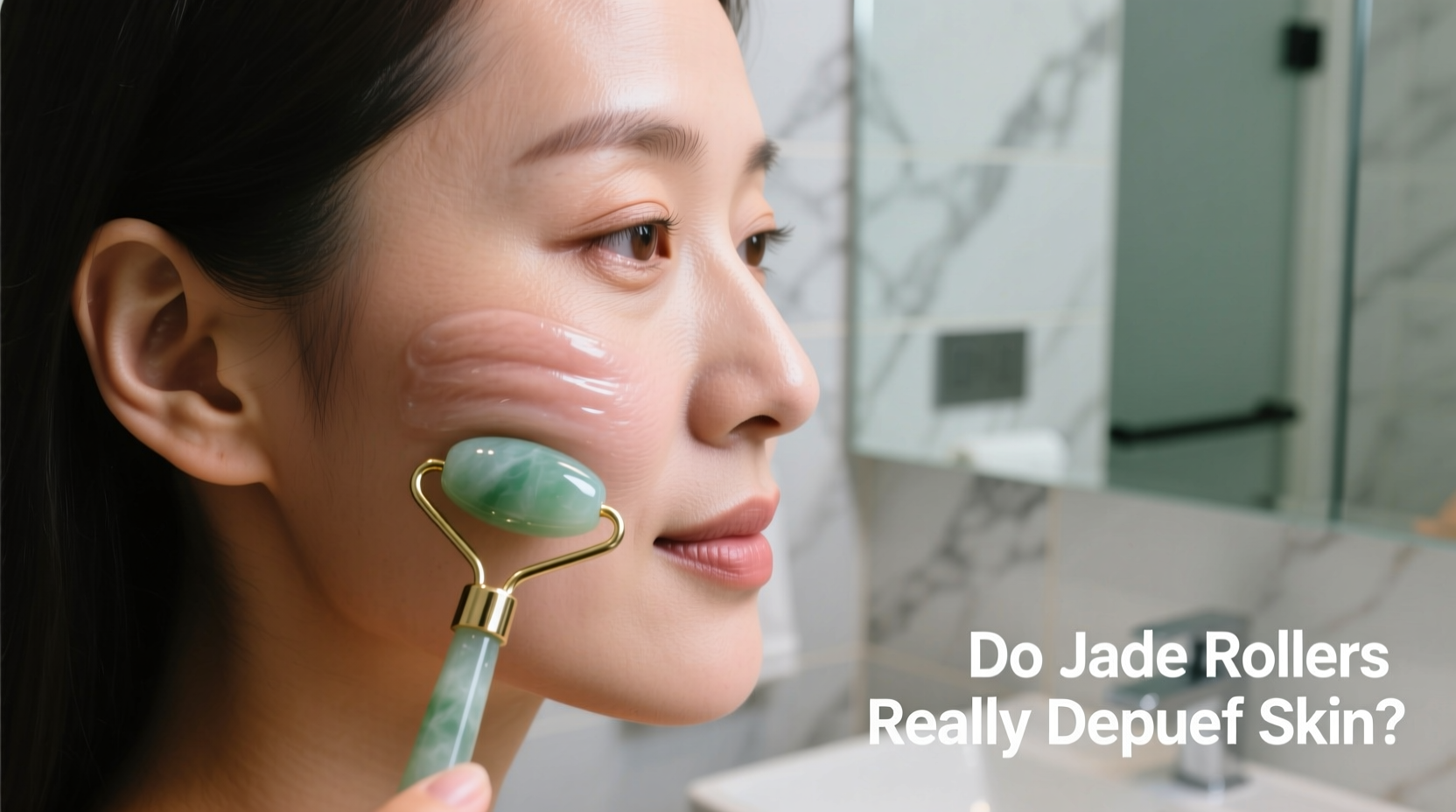
Puffiness, especially around the eyes and cheeks, often stems from fluid retention. Overnight, when lying flat, gravity redistributes fluids toward the upper body, leading to mild edema in facial tissues. Hormonal fluctuations, high sodium intake, dehydration, allergies, and poor sleep can exacerbate this. The key system involved here is the **lymphatic system**—a network responsible for removing excess interstitial fluid, waste, and toxins from tissues.
Unlike the circulatory system, which has the heart to pump blood, the lymphatic system relies on muscle contractions and external pressure to move fluid. This is where manual techniques like facial massage come into play. By applying light pressure in specific directions—typically outward and upward from the center of the face—users may encourage lymph to drain toward collection points near the ears and neck.
Tip: For maximum effect, use your jade roller immediately after waking, when facial puffiness is most noticeable due to overnight fluid accumulation.Jade Roller vs. Hands: What’s the Difference?
At its core, a jade roller is a tool for facial massage. So, does the material matter? Advocates claim that natural stones like jade or rose quartz retain coolness longer than fingers, which can warm up quickly and potentially dilate blood vessels. Cooling has vasoconstrictive properties, meaning it temporarily tightens blood vessels and reduces inflammation—this alone can make skin appear less puffy.
However, research shows that the mechanical action of massage—not the tool—is primarily responsible for stimulating lymphatic flow. A 2018 study published in *Lymphology* found that manual lymphatic drainage techniques significantly reduced facial edema in post-surgical patients. While the study didn’t involve jade rollers specifically, it supports the idea that directed pressure and rhythmic motion facilitate fluid movement.
In practice, the roller’s design offers advantages over fingertips. Its dual heads (large for cheeks/forehead, small for under-eyes/nose) allow precise targeting, while the rolling motion ensures even pressure distribution. Fingers, by contrast, may apply uneven force or tug at delicate skin, especially if not well-lubricated.
“Any form of consistent, gentle pressure applied in the direction of lymphatic drainage can reduce transient puffiness. The jade roller isn't unique in mechanism—but it can enhance compliance and technique.” — Dr. Lena Patel, Board-Certified Dermatologist
What Does the Evidence Say?
Clinical studies specifically on jade rollers are scarce. No peer-reviewed trials have isolated jade rolling as an intervention for long-term skin de-puffing or anti-aging. Most claims are anecdotal or based on extrapolation from broader massage research.
A 2020 review in *Clinical, Cosmetic and Investigational Dermatology* examined non-invasive facial toning tools and concluded that while devices promoting microcirculation and lymphatic flow showed short-term improvements in skin appearance, results were transient and highly dependent on continued use. In other words, any de-puffing effect is likely temporary—lasting a few hours at most—unless combined with lifestyle changes like improved hydration, reduced salt intake, and better sleep hygiene.
Furthermore, the placebo effect cannot be ignored. The ritual of jade rolling—often paired with serums, oils, and mindfulness—can create a perception of improvement. Cool sensation, pleasant texture, and dedicated self-care time contribute to subjective feelings of refreshed, tighter skin, even if measurable changes are minimal.
Benefits vs. Limitations: A Balanced View
| Claimed Benefit | Evidence Status | Notes |
|---|---|---|
| Reduces facial puffiness | Moderate (short-term) | Due to lymphatic stimulation and cooling; effects last hours |
| Improves product absorption | Anecdotal | No direct evidence; massage may enhance penetration slightly |
| Tones facial muscles | Limited | Rolling doesn’t build muscle; any lift is temporary via fluid shift |
| Reduces wrinkles | Unproven | No structural impact on collagen or elastin |
| Promotes relaxation | Well-supported | Tactile stimulation lowers cortisol; enhances routine adherence |
How to Use a Jade Roller Effectively
If you’re using a jade roller purely for relaxation or ritual, there’s no wrong way—so long as you avoid tugging or pressing too hard. But if your goal is to minimize puffiness through lymphatic support, technique matters. Follow this step-by-step guide for optimal results:
- Start with clean skin: Remove makeup and cleanse thoroughly to prevent pushing debris into pores.
- Apply a base layer: Use a facial oil, serum, or moisturizer to reduce friction. Avoid water-based products alone, as they may cause dragging.
- Chill the roller: Store it in the refrigerator for 10–15 minutes before use. Cold enhances vasoconstriction and soothing effects.
- Begin at the center of the face: Use the larger end for cheeks, forehead, and jawline. Roll outward and upward in slow, deliberate strokes.
- Use the smaller end for contours: Gently glide under the eyes, along the brow bone, and around the nose.
- Follow lymphatic pathways: Move fluid toward lymph nodes—down the sides of the neck, behind the ears, and along the jawline.
- Spend 3–5 minutes total: Overuse won’t increase benefits and may irritate sensitive skin.
- Clean after each use: Wipe with a soft cloth and mild soap to prevent bacterial buildup.
Realistic Expectations: A Mini Case Study
Sophia, a 32-year-old graphic designer, began using a jade roller every morning after struggling with persistent under-eye puffiness. She had tried cold spoons and eye creams with limited success. After researching lymphatic drainage, she incorporated a chilled jade roller into her routine, using it with a facial oil for five minutes daily.
Within two weeks, she noticed a consistent reduction in morning swelling. Her colleagues commented that she looked “more awake.” However, when she skipped days—especially after late nights or salty meals—the puffiness returned. Over time, she realized the roller wasn’t changing her skin structure but was effectively managing a recurring symptom. She also reported lower stress levels, attributing this to the mindful aspect of the ritual.
Sophia’s experience reflects a common pattern: jade rolling works best as a maintenance tool, not a cure. It addresses surface-level concerns through physiological mechanisms we understand—cooling and massage—but doesn’t replace foundational skincare or medical treatment for chronic conditions like allergies or thyroid-related swelling.
Expert Recommendations and Best Practices
Dermatologists generally agree that jade rolling is safe and may offer modest benefits when used correctly. However, they emphasize that expectations should be realistic. “It’s not going to replace a retinoid for aging or a prescription cream for acne,” says Dr. Patel. “But as a complementary habit, it can support skin health and user satisfaction.”
To maximize effectiveness, experts recommend combining jade rolling with other healthy practices:
- Elevate your head while sleeping to reduce overnight fluid pooling.
- Limit sodium intake and stay hydrated to minimize systemic puffiness.
- Use non-comedogenic products to avoid congestion that mimics swelling.
- Pair rolling with gua sha for deeper tension release—though both should not be done daily on sensitive skin.
“The power of tools like jade rollers lies in consistency and synergy. Alone, they do little. Integrated into a holistic routine, they become meaningful.” — Dr. Alicia Nguyen, Integrative Skincare Specialist
Frequently Asked Questions
Can I use a jade roller every day?
Yes, daily use is generally safe—especially with light pressure. Many users prefer morning sessions to combat puffiness. However, if you have rosacea, active breakouts, or sensitive skin, limit use to 3–4 times per week to avoid irritation.
Does the type of stone matter?
Jade, rose quartz, and amethyst are all marketed for different energetic properties, but from a dermatological standpoint, the physical characteristics matter more. Look for smooth, polished stones without rough edges. Jade retains cold well and is durable, making it a practical choice. The metaphysical claims lack scientific backing.
Is there a difference between cheap and expensive jade rollers?
Yes. Lower-cost rollers may be made from synthetic materials or low-grade stone with inconsistent density. Authentic nephrite jade or jadeite is denser, stays cooler longer, and resists cracking. Check for weight and finish—higher quality rollers feel substantial and glide smoothly.
Action Plan: Getting the Most Out of Your Jade Roller
If you're considering adding a jade roller to your routine—or already own one but aren’t seeing results—here’s a checklist to ensure you’re using it effectively:
- ✅ Cleanse skin before rolling
- ✅ Apply a slip-friendly product (oil, serum, balm)
- ✅ Chill the roller in the fridge (not freezer)
- ✅ Use upward and outward motions
- ✅ Focus on lymph node areas (jawline, neck, behind ears)
- ✅ Limit pressure—let the tool’s weight do the work
- ✅ Clean the roller weekly with mild soap
- ✅ Pair with healthy habits: hydration, sleep, low sodium
Conclusion: Ritual Meets Reality
The truth about jade rollers is nuanced. They don’t possess supernatural powers to depuff or tighten skin permanently. What they do offer is a simple, accessible method of facial massage enhanced by cooling and ritual. The de-puffing effect is real—but temporary, relying on the same principles as manual lymphatic drainage. When used consistently and correctly, a jade roller can complement a thoughtful skincare routine, providing subtle improvements in appearance and notable gains in well-being.
So, is it just facial massage? In essence, yes. But that doesn’t diminish its value. Massage itself is a time-honored therapeutic practice, and tools that encourage us to engage with our skin mindfully deserve a place in modern routines. Whether you believe in the energy of jade or simply enjoy the cool glide across your face, the real benefit may lie not in the stone, but in the moment of care it represents.
🚀 Ready to optimize your routine? Try a 7-day jade rolling challenge: use it every morning with a facial oil and track changes in puffiness, texture, and mood. Share your experience in the comments—your insights could help others separate myth from method.








