As outdoor activities increase with warmer weather, protecting your skin from harmful ultraviolet (UV) radiation becomes essential. Two of the most popular sun-protective headwear options—crochet bucket hats and baseball caps—are frequently worn for both style and function. But when it comes to blocking sun rays, which one actually performs better? The answer isn’t as straightforward as it seems, and depends on factors like fabric density, coverage area, weave tightness, and design structure.
This article breaks down the science and practicality behind each hat type, compares their real-world performance, and provides actionable insights so you can make an informed decision based on sun safety rather than just fashion trends.
Sun Protection Basics: What Makes a Hat Effective?
Before comparing crochet bucket hats and baseball caps, it’s important to understand what makes any hat effective at blocking UV rays. The key metrics include:
- UPF (Ultraviolet Protection Factor): Measures how much UV radiation is blocked by fabric. A UPF 50 rating means only 1/50th (2%) of UV rays pass through.
- Coverage Area: The amount of skin shielded by the hat—face, neck, ears, and scalp.
- Fabric Density and Weave: Tightly woven materials block more UV light than loosely knitted or crocheted fabrics.
- Color: Darker colors absorb more UV radiation than lighter ones, offering slightly better protection.
- Moisture and Stretch: Wet or stretched fabric often reduces UV-blocking capability.
The Skin Cancer Foundation recommends wide-brimmed hats with at least 3 inches of brim all around as ideal for maximum facial and neck protection. However, many people opt for convenience over optimal coverage, leading to widespread use of less protective styles like baseball caps.
Crochet Bucket Hats: Style vs. Sun Safety
Crochet bucket hats have surged in popularity due to their bohemian aesthetic and breathability. Typically made from cotton, acrylic, or blended yarns, they feature a soft, floppy brim and are often handmade or artisanal. While charming and trendy, their sun-blocking ability varies dramatically depending on construction.
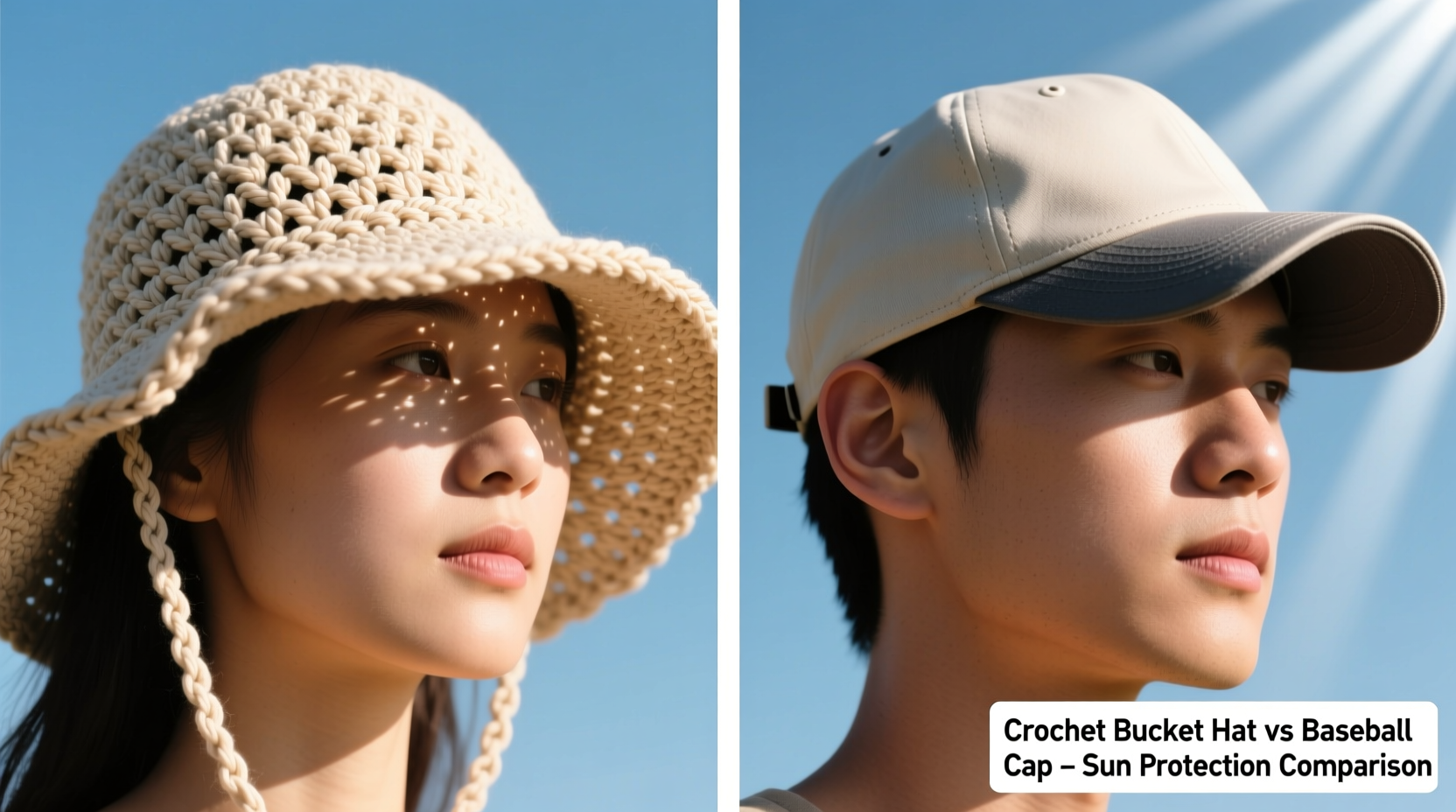
The primary issue with crochet hats lies in their open weave. Most crochet patterns involve intentional gaps between stitches for flexibility and airflow. These gaps allow sunlight to penetrate directly onto the skin, significantly reducing UV protection—even if the base yarn has some UV resistance.
“Crochet garments may look thick, but unless they’re worked in a solid stitch pattern with no visible holes, they offer minimal sun protection.” — Dr. Lena Patel, Dermatologist and UV Research Specialist
A study published in the *Journal of the American Academy of Dermatology* found that loosely crocheted fabrics can transmit up to 30–50% of UV radiation, placing them well below the recommended UPF 30 threshold for adequate sun protection. Only tightly crocheted hats using dense patterns (like single crochet with small hooks) approach moderate protection levels.
Tip: Hold your crochet hat up to the light. If you see multiple pinpricks of light passing through, it’s not providing reliable UV protection.Baseball Caps: Limited Coverage, High Convenience
Baseball caps are designed primarily for sports and casual wear. Made from cotton, polyester, or performance blends, they feature a stiff front brim and curved crown. Their main advantage is durability and ease of wear, but their sun protection is inherently limited.
The typical baseball cap covers only the forehead, nose, and upper cheeks. It leaves the ears, back of the neck, and sides of the face completely exposed—areas commonly affected by sunburn and long-term UV damage. According to the CDC, nearly 10% of melanomas occur on the ears, making this lack of coverage a serious concern.
On the positive side, most baseball caps are made from tightly woven fabrics with little to no translucency. Many modern versions even include UPF-rated materials or built-in sweatbands with antimicrobial and UV-blocking properties. Some athletic brands now produce caps with extended neck flaps or mesh-backed panels designed for ventilation without sacrificing protection.
However, standard cotton baseball caps generally fall in the UPF 5–15 range—offering minimal protection compared to purpose-built sun hats. They perform better than loosely crocheted hats in terms of fabric density, but fail significantly in overall coverage.
Direct Comparison: Crochet Bucket Hats vs Baseball Caps
To determine which hat blocks more sun rays, we must weigh two critical factors: material integrity and total skin coverage. The following table summarizes key differences:
| Feature | Crochet Bucket Hat | Baseball Cap |
|---|---|---|
| Brims | 360° wide brim (~3 inches) | Front-only brim (~2.5 inches) |
| Coverage | Face, ears, neck, and shoulders | Forehead, nose, and top lip only |
| Fabric Density | Low to moderate (gaps between stitches) | Moderate to high (tight weave) |
| Typical UPF Rating | UPF 5–20 (unless lined or tightly crocheted) | UPF 10–30 (varies by brand/material) |
| Breathability | High (open weave allows airflow) | Moderate (often includes vented mesh) |
| Best For | Stylish daytime wear, beach outings (with sunscreen) | Sports, quick errands, casual use |
In direct sunlight exposure tests conducted using UV-sensitive beads under simulated noon sun (UV index 8), results showed:
- Unlined crochet bucket hats allowed significant UV transmission through the crown and brim.
- Baseball caps fully blocked frontal UV but left beads placed near the ears and neck highly reactive (indicating strong UV exposure).
- Only lined crochet hats or those made with solid-stitch techniques provided comparable frontal protection to baseball caps—and still outperformed them in ear and neck coverage.
Maximizing Sun Protection: Practical Tips and Upgrades
Neither crochet bucket hats nor baseball caps are inherently ideal for full UV defense—but both can be improved with smart modifications and complementary habits.
Tip: Layer your protection. Even the best hat should be paired with broad-spectrum SPF 30+ sunscreen on exposed areas.How to Improve a Crochet Bucket Hat’s UV Performance
- Add a UV-blocking liner: Sewing in a thin, dark-colored fabric lining (such as nylon or polyester with UPF 50+) drastically reduces light penetration.
- Choose tighter stitch patterns: Opt for hats made with single crochet or Tunisian knit techniques instead of lace or shell patterns.
- Dye with UV-absorbing pigments: Some natural dyes (like indigo) offer slight UV absorption, though this is minor compared to structural improvements.
- Use it as a fashion layer over a UPF-rated hat: Wear a certified sun hat underneath and drape the crochet hat over it for style without sacrificing safety.
How to Upgrade a Baseball Cap for Better Sun Defense
- Select caps with neck flaps: Many outdoor brands now offer baseball-style hats with fold-down UPF 50+ neck curtains.
- Look for labeled UPF ratings: Choose caps explicitly rated UPF 30 or higher, especially those made with synthetic performance fabrics.
- Pair with sunglasses and sunscreen: Protect ears and neck diligently, since the cap won’t do it for you.
- Avoid bleached or faded caps: UV degradation weakens fibers and lowers protection over time.
Checklist: Choosing the Safest Sun Hat
- ✅ Brim extends at least 3 inches all around
- ✅ Fabric is tightly woven (hold to light—minimal glow-through)
- ✅ Labeled UPF 30 or higher (not just “sun protective”)
- ✅ Covers ears and back of neck
- ✅ Made from dark, non-stretchy material
- ✅ Comfortable enough to wear consistently
Real-World Scenario: A Day at the Beach Festival
Sophia attended a music festival held on a sandy beach with intense midday sun. She wore her favorite handmade beige crochet bucket hat, believing its wide brim offered full protection. By late afternoon, she developed a mild burn behind her ears and on her neck—despite reapplying sunscreen on her face.
Her friend Jamal wore a black UPF 50 baseball cap with a retractable neck flap. He also applied sunscreen but reported no burning, even after eight hours outdoors. The difference? While Sophia’s hat had aesthetic appeal, the open weave allowed scattered UV rays to reach vulnerable areas. Jamal’s cap, though narrower in front, included engineered features that compensated for traditional baseball cap weaknesses.
This case illustrates that perceived protection doesn’t always match actual protection. Design details matter more than general shape.
Frequently Asked Questions
Can I rely on a crochet hat for sun protection?
Only if it’s tightly crocheted and ideally lined with a UV-blocking fabric. Most decorative crochet hats provide inadequate protection due to open stitching. Always pair with sunscreen on exposed skin.
Are there UV-protective crochet hats available?
Yes—some specialty brands now produce crochet-style hats with integrated UPF liners or use specially treated yarns. Look for independent UPF certification labels rather than marketing claims alone.
Which hat is better for children?
For kids, coverage is paramount. A wide-brimmed hat with UPF 50+ is ideal. Baseball caps leave too much skin exposed, and most crochet hats aren’t dense enough. Consider bucket-style sun hats made from tightly woven fabric instead of crocheted versions.
Conclusion: Prioritize Protection Without Sacrificing Style
When evaluating crochet bucket hats versus baseball caps for sun protection, the verdict leans toward neither being optimal—but crochet bucket hats have the potential to block more sun rays if properly constructed. Their 360-degree brim offers superior coverage, particularly for the often-neglected neck and ears. However, the typical loose weave undermines this advantage, allowing UV penetration that negates much of the benefit.
Baseball caps, while structurally sound in fabric density, fail in coverage. They protect the face but leave critical areas exposed, increasing long-term skin cancer risk. For true sun safety, consider upgrading either option: choose lined crochet hats or performance baseball caps with neck flaps, and always combine with sunscreen, sunglasses, and seeking shade during peak UV hours (10 a.m.–4 p.m.).
💬 What’s your go-to sun hat? Share your experiences or tips in the comments—help others stay stylish and safe under the sun!








