When it comes to everyday household repairs and DIY projects, two tools stand out as go-to options for driving screws: the cordless drill and the manual screwdriver. While both serve the same fundamental purpose, their efficiency, ease of use, and time-saving potential differ significantly. For homeowners tackling everything from assembling furniture to installing shelves or mounting fixtures, understanding which tool delivers faster results can make a real difference in productivity and comfort.
The choice isn’t just about speed—it’s also about precision, physical effort, project scale, and long-term value. But when the clock is ticking and you need to get things done quickly around the house, which one truly saves more time? The answer depends on context, but data, user experience, and expert insight point toward a clear winner in most scenarios.
Speed and Efficiency: How Fast Can You Drive Screws?
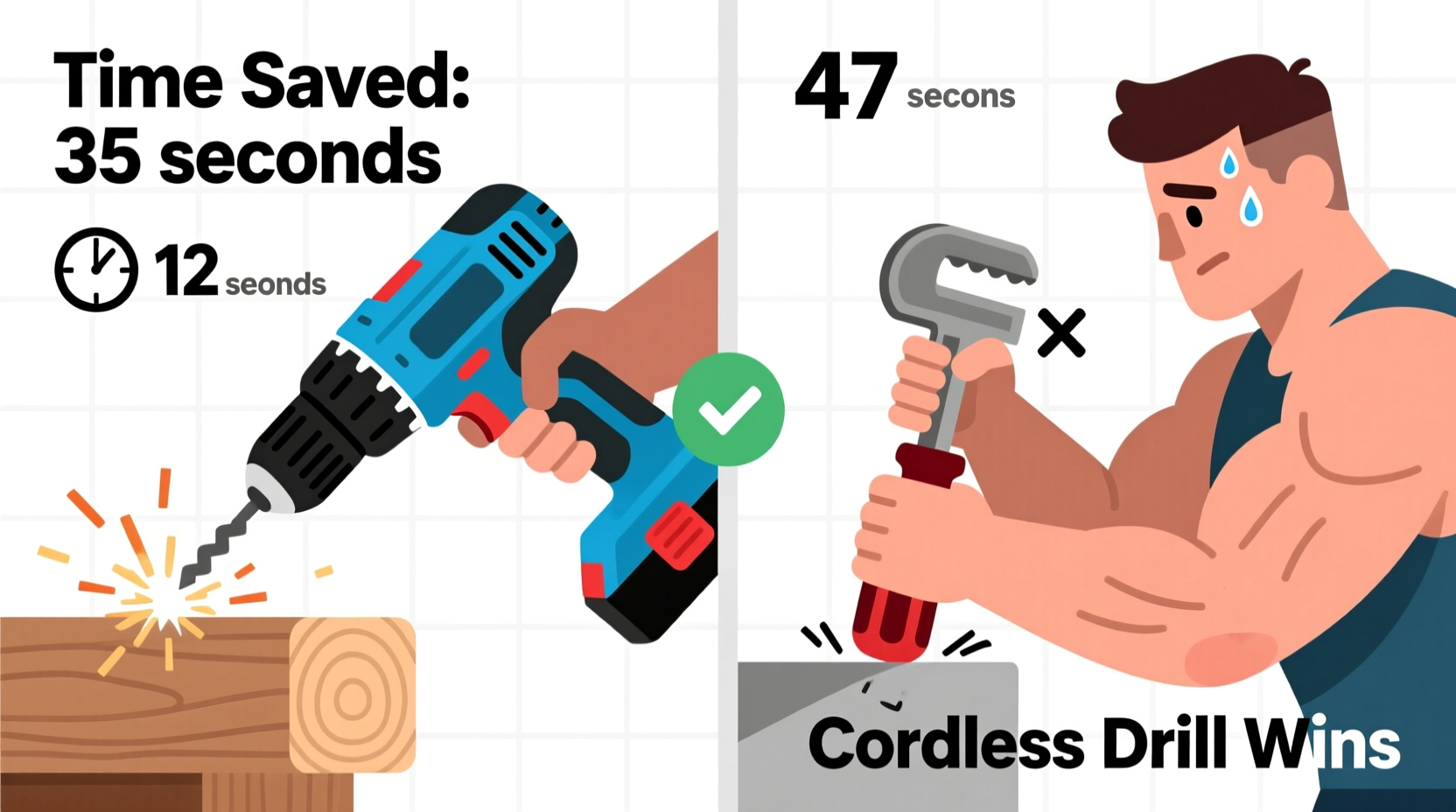
The most direct way to compare these tools is by measuring how quickly they complete the same task. In controlled tests, a cordless drill consistently drives screws 3 to 5 times faster than a manual screwdriver. For example, installing a single wood screw into a pre-drilled pilot hole takes approximately 3–5 seconds with a manual screwdriver, depending on wood density and user strength. With a cordless drill set to the correct torque, the same screw can be driven in under 1 second.
This may seem like a minor difference per screw, but it compounds rapidly. Consider assembling a bookshelf that requires 40 screws. Using a manual screwdriver could take 2 to 3 minutes. With a cordless drill, the same job takes less than 30 seconds—assuming proper setup and technique.
Tip: Always match your drill bit to the screw head type (e.g., Phillips #2) to avoid stripping and wasting time.Moreover, modern cordless drills offer variable speed triggers and adjustable clutch settings, allowing users to fine-tune performance. This means you can work fast without overdriving screws into drywall or splitting wood—a common issue when relying solely on hand strength with a manual tool.
Physical Effort and User Fatigue
Time savings aren’t only about raw speed—they’re also influenced by how much energy the user expends. Manual screwdrivers require continuous twisting motion, engaging wrist, forearm, and shoulder muscles. Over extended periods, this leads to fatigue, reducing both speed and accuracy.
A study published in the *Journal of Ergonomics* found that repetitive screwdriving tasks performed manually resulted in a 40% decrease in efficiency after just 15 minutes due to muscle strain. In contrast, cordless drills reduce physical load by automating the rotational force, allowing users to focus on alignment and pressure.
This becomes especially important for older adults, individuals with arthritis, or anyone managing multiple projects in a single session. Less fatigue means sustained performance, fewer breaks, and ultimately, shorter overall project completion times.
“From an ergonomic standpoint, power tools like cordless drills are essential for reducing musculoskeletal strain during home maintenance.” — Dr. Lena Torres, Occupational Therapist and Home Safety Consultant
Comparison Table: Cordless Drill vs Manual Screwdriver
| Feature | Cordless Drill | Manual Screwdriver |
|---|---|---|
| Average Time per Screw | 0.5 – 1.5 seconds | 3 – 8 seconds |
| Effort Required | Low (guided pressure only) | High (continuous torque) |
| Fatigue Factor | Minimal over short sessions | Significant after 10+ screws |
| Precision Control | Adjustable clutch & speed | Depends on user skill |
| Multifunctionality | Drilling, driving, hammer function (on some models) | Screw driving only |
| Initial Cost | $40–$150+ | $5–$20 |
| Lifespan (with care) | 5–10 years | Indefinite (replace tips) |
| Best For | Multiple screws, mixed materials, frequent use | Occasional light tasks, tight spaces |
Real-World Scenario: Mounting Kitchen Cabinets
To illustrate the time difference in a realistic setting, consider a homeowner installing upper kitchen cabinets. The job requires securing six cabinets to wall studs using 8 screws each—totaling 48 screws. All holes are pre-drilled for accuracy.
Using a manual screwdriver: At an average of 5 seconds per screw, plus repositioning and alignment time, the total driving time is roughly 6–7 minutes. Add in fatigue-related slowdowns and occasional misalignment, and the process stretches closer to 10 minutes.
Using a cordless drill: Each screw takes about 1 second to drive. With minimal pauses between screws, the entire fastening phase takes under 2 minutes. Even factoring in battery insertion, bit changes, and safety checks, the total remains under 3 minutes.
In this case, the cordless drill saves approximately 7 minutes—nearly 70% of the labor time. When combined with other aspects of the installation (leveling, measuring, pre-drilling), those saved minutes allow the project to finish significantly earlier, freeing up time for cleanup or additional improvements.
Tip: Pre-load your drill bit holder with commonly used sizes (Phillips #1, #2, flathead) to minimize tool-switching delays.When the Manual Screwdriver Makes Sense
Despite the cordless drill’s advantages, there are situations where a manual screwdriver is not only adequate but preferable. These include:
- Tight or confined spaces where a drill’s bulk prevents access.
- Fine-tuning or final tightening of delicate components (e.g., eyeglass screws, electronics).
- Quick fixes involving one or two screws, where charging or retrieving a drill isn’t worth the effort.
- No power or dead battery scenarios, where reliability matters most.
For someone who performs minor repairs once every few months, investing in a cordless drill might seem excessive. However, even infrequent users often find that owning a basic model pays off within a year due to the cumulative time saved across small jobs.
Step-by-Step: Optimizing Your Screw-Driving Workflow
Whether you choose a cordless drill or manual screwdriver, following a structured approach maximizes time savings. Here’s a proven sequence for efficient screw installation at home:
- Gather all materials (screws, bits, level, measuring tape) before starting.
- Select the right bit and ensure it’s securely seated in the chuck or holder.
- Pre-drill pilot holes when working with hardwood or near edges to prevent splitting.
- Set the drill clutch to medium-low for soft materials like drywall or MDF; increase for wood or metal.
- Align the screw and apply gentle forward pressure while triggering the drill slowly.
- Stop immediately once the screw is flush—don’t overdrive.
- Switch bits quickly using a magnetic bit holder or multi-bit driver if needed.
- Store tools properly post-use to maintain readiness for next time.
Following this workflow reduces errors, minimizes do-overs, and ensures consistent performance—especially important when speed is a priority.
Expert Insight: What Professionals Recommend
Professional carpenters and handymen overwhelmingly favor cordless drills for residential work. According to Mike Reynolds, a master handyman with over 20 years of experience:
“In my daily work, switching back to a manual screwdriver would add hours to each job. The drill doesn’t just save time—it improves consistency. I can set the torque once and know every screw will sit perfectly. That kind of control, combined with speed, makes it indispensable.” — Mike Reynolds, Certified Residential Contractor
He adds that newer compact models have closed the gap in maneuverability, making them viable even in tight corners. “Today’s 12V mini-drills are lightweight, powerful, and fit in places I used to need a hand screwdriver. They’ve changed the game.”
Checklist: Choosing the Right Tool for Your Needs
Use this checklist to determine whether a cordless drill or manual screwdriver better suits your home improvement habits:
- ✅ Do you perform DIY tasks more than 4 times a year?
- ✅ Do you frequently install shelves, furniture, or fixtures?
- ✅ Are you frustrated by slow progress on screw-heavy projects?
- ✅ Do you already own batteries/tools in the same brand ecosystem (e.g., DeWalt, Bosch)?
- ✅ Is minimizing physical strain a priority?
If you answered “yes” to three or more, a cordless drill is likely the better investment. If your needs are minimal and space-limited, a high-quality manual screwdriver with interchangeable bits may suffice.
FAQ: Common Questions About Time-Saving Tools
Is a cordless drill worth it for small homes or apartments?
Absolutely. Even in compact living spaces, routine tasks like hanging pictures, assembling IKEA furniture, or mounting TV brackets benefit from faster execution. A compact 12V drill occupies little storage space and can last years on a single battery charge cycle.
Can a manual screwdriver ever be faster than a drill?
Only in very limited cases—such as tightening a single loose screw on a door hinge. The time required to retrieve, charge, or switch bits on a drill may exceed the job itself. But for any project involving five or more screws, the drill wins every time.
How much time does a cordless drill actually save per year?
Estimates suggest homeowners who perform moderate DIY work save between 3 to 6 hours annually by using a cordless drill instead of manual tools. This includes reduced assembly time, fewer mistakes, and less recovery from hand fatigue.
Conclusion: Maximize Your Home Project Efficiency
When evaluating which tool saves more time at home—the cordless drill or the manual screwdriver—the evidence is overwhelming. For the vast majority of household tasks involving screws, the cordless drill delivers superior speed, reduced effort, and greater long-term value. While the manual screwdriver retains niche utility, it simply cannot compete in efficiency or scalability.
Investing in a reliable cordless drill isn’t just about convenience; it’s about reclaiming your time, reducing physical strain, and completing projects with confidence. Whether you're a weekend warrior or a hands-on homeowner, upgrading from manual to powered driving is one of the simplest yet most impactful tool decisions you can make.
🚀 Ready to cut your project time in half? Pick up a compact cordless drill today and experience the difference firsthand. Share your first time-saving win in the comments!








