When working with wood, choosing the right power tool can mean the difference between a clean, precise joint and a splintered mess. Two of the most common tools in any DIYer’s or carpenter’s arsenal are the cordless drill and the impact driver. While they may look similar and both drive screws, their performance on wood varies significantly depending on the task. Understanding their mechanics, torque delivery, and application strengths is essential to making the right choice for your woodworking projects.
How Cordless Drills Work on Wood
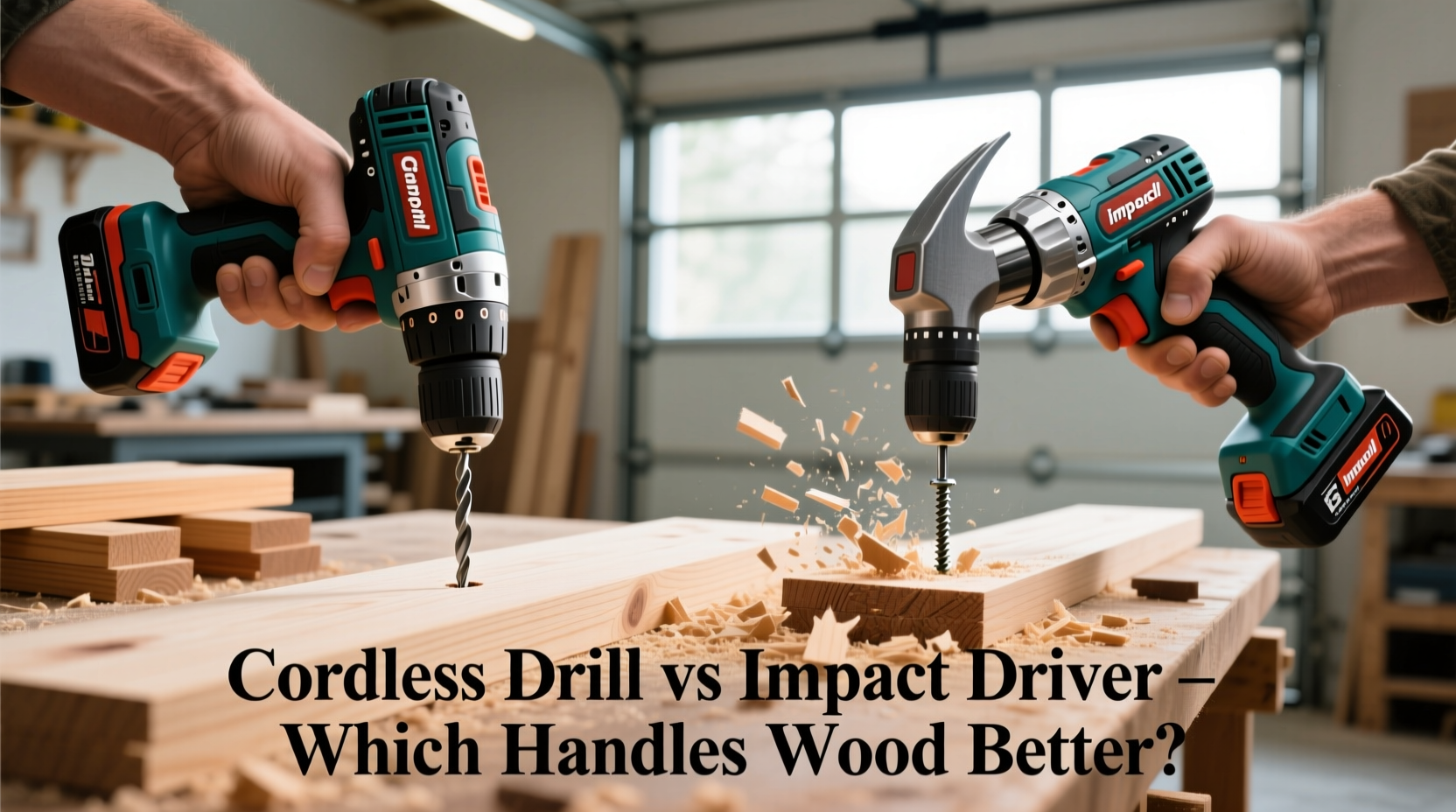
A cordless drill is designed primarily for drilling holes and driving screws with consistent rotational force. It operates using a clutch mechanism that regulates torque, preventing over-tightening and material damage—especially important when working with softwoods like pine or cedar. Most drills offer variable speed control via trigger pressure, allowing fine adjustments during delicate operations.
In woodworking, cordless drills excel at tasks such as:
- Drilling pilot holes to prevent splitting
- Driving screws into cabinetry or trim work
- Installing hinges, drawer slides, and other hardware
- Mixing wood filler or paint when fitted with an attachment
The controlled torque settings help avoid stripping screw heads or crushing wood fibers. For precision joinery where depth and consistency matter, a cordless drill provides superior control compared to more aggressive tools.
Tip: Always pre-drill pilot holes in hardwoods like oak or maple to reduce resistance and prevent cracking.How Impact Drivers Perform on Wooden Materials
An impact driver delivers high torque through a combination of rotational force and sudden, concussive blows—up to 50 impacts per second. This design allows it to drive long lag bolts or structural screws with minimal user effort. However, this raw power comes at a cost when applied to wood: increased risk of splitting, overdriving, and damaging fastener heads.
Impact drivers are best suited for heavy-duty applications involving wood, such as:
- Framing with large deck screws or lag bolts
- Attaching joist hangers or metal brackets
- Building outdoor structures like pergolas or sheds
- Working with pressure-treated lumber, which resists screw penetration
Because impact drivers lack a clutch, they rely solely on user technique to avoid sinking screws too deep. In softer woods, this often leads to countersunk fasteners or surface damage unless a depth stop or careful hand control is used.
“While impact drivers save time on framing, they’re overkill for finish carpentry. You’ll sacrifice finesse for speed.” — Mark Reynolds, Professional Cabinetmaker
Key Differences: Torque, Control, and Application
The core distinction lies in how each tool applies force. A cordless drill uses steady rotation; an impact driver combines rotation with hammering action. This affects not only performance but also compatibility with different types of wood and fasteners.
| Feature | Cordless Drill | Impact Driver |
|---|---|---|
| Torque Type | Constant rotational torque | Rotational + percussive impact |
| Max Torque (in-lbs) | 300–600 | 1,000–1,800+ |
| Clutch? | Yes – adjustable settings | No – continuous drive |
| Chuck Type | Keyed or keyless (¼” to ½”) | Hex shank (¼” quick-release) |
| Best Wood Tasks | Precision screwdriving, drilling, cabinetry | Framing, decking, structural assembly |
| Risk of Splitting Wood | Low (with proper pilot holes) | High (especially in end grain or dry wood) |
| User Control | High – speed and depth manageable | Moderate – requires experience to modulate |
This table highlights why selecting the right tool depends on the specific job, not just personal preference. For example, while an impact driver might seem ideal for driving long screws into dense plywood, its lack of clutch increases the chance of breaking thin veneers or blowing out the backside of a panel.
Real-World Scenario: Building a Wooden Deck
Consider a homeowner constructing a backyard deck using pressure-treated pine. The project involves hundreds of exterior-grade screws, some up to 3 inches long, securing joists and decking boards. Using a cordless drill alone would be exhausting and inefficient—each screw takes longer to seat fully due to the wood’s density and moisture content.
In contrast, switching to an impact driver reduces physical strain and cuts installation time by nearly half. However, caution is required: without adjusting technique, many screws end up driven too deeply, requiring patching or sanding. To mitigate this, the builder starts using a rubber mallet to slightly back out overdriven screws and invests in a screw guide attachment that limits depth.
For attaching railings and installing trim pieces—tasks demanding accuracy—the builder reverts to the cordless drill. The ability to set torque ensures clean finishes without damaging the wood surface. This hybrid approach demonstrates how both tools have roles, but context determines effectiveness.
Step-by-Step Guide: Choosing the Right Tool for Your Wood Project
Follow this decision-making process to determine whether a cordless drill or impact driver is better suited for your current woodworking task:
- Assess the Fastener Size: Are you using short screws (under 2\") or long structural bolts? Small screws favor drills; large fasteners benefit from impact drivers.
- Evaluate Material Density: Softwood may tolerate either tool with care. Hardwood or engineered wood (like MDF) demands precision—use a drill.
- Determine Finish Requirements: Is this visible, finished work (e.g., furniture)? Opt for a drill to maintain clean lines. Hidden framing? An impact driver saves labor.
- Check Access and Ergonomics: Tight spaces may favor compact impact drivers, though drills often offer better forward visibility.
- Test on Scrap Wood: Before committing, try both tools on a scrap piece of the same material to observe behavior and adjust settings accordingly.
Common Mistakes When Using These Tools on Wood
Even experienced users make errors when applying these tools to wood. Avoid these pitfalls:
- Using an impact driver for cabinet door installation: High torque strips recessed hinge screws easily, especially in particleboard.
- Skipping pilot holes in hardwood: Both tools can split oak or walnut if entry points aren’t pre-drilled.
- Assuming all screw types are interchangeable: Bugle-head drywall screws may snap under impact force—use deck or structural screws instead.
- Ignoring bit quality: Cheap bits wear quickly and cam out, damaging screw heads and wood surfaces.
“The biggest mistake I see is treating impact drivers like universal tools. They’re powerful, yes—but power isn’t always progress in woodworking.” — Lena Patel, Carpentry Instructor at Northwest Trades Academy
When to Use Both Tools Together
Many professionals keep both tools on hand and switch between them based on phase and purpose. Here’s a practical workflow for a typical woodworking job:
- Use the cordless drill to create pilot holes and install delicate components (shelving supports, face frames).
- Switch to the impact driver for securing subflooring, wall bracing, or outdoor structures.
- Return to the drill for final hardware installation (handles, knobs, decorative brackets).
This dual-tool strategy maximizes efficiency without sacrificing quality. Battery platform compatibility (e.g., DeWalt 20V MAX, Milwaukee M18) makes carrying both convenient, as one charger serves multiple tools.
FAQ
Can I use an impact driver for all my woodworking projects?
Not advisable. While effective for heavy assembly, impact drivers lack the finesse needed for finish work. Overuse can lead to damaged materials, stripped fasteners, and inconsistent results—especially on thinner or more brittle woods.
Is a cordless drill enough for building wooden furniture?
Yes, in most cases. Furniture construction prioritizes precision, alignment, and clean finishes—all areas where cordless drills shine. Pair it with a countersink bit and depth stop for professional results.
Do I need special bits for impact drivers when working with wood?
Absolutely. Standard hex bits can fracture under repeated impact. Use impact-rated driver bits made from tougher alloys (such as S2 steel), which resist shearing and extend tool life.
Checklist: Selecting the Right Tool for Woodwork
- ☐ Identify the type of wood: softwood, hardwood, composite?
- ☐ Measure screw length and diameter
- ☐ Decide if the joint is structural or cosmetic
- ☐ Choose a tool with appropriate torque control
- ☐ Prepare pilot holes where necessary
- ☐ Use correct bit type and ensure it's securely seated
- ☐ Test drive on scrap material before starting
- ☐ Adjust speed/torque settings based on feedback
Final Recommendation
For most woodworking tasks involving wood, the cordless drill is the better choice. Its precision, adjustable clutch, and versatility make it ideal for everything from cabinetry to fine joinery. The impact driver has its place—particularly in framing, decking, and outdoor builds—but should be used selectively to avoid compromising wood integrity.
If you're outfitting a workshop or upgrading tools, consider owning both. Think of the cordless drill as your scalpel: accurate, controlled, and detail-oriented. The impact driver is your sledgehammer: powerful, fast, and built for brute-force jobs. Knowing when to reach for each is what separates functional results from truly excellent craftsmanship.
💬 What’s your go-to tool for woodworking? Share your experiences with cordless drills and impact drivers in the comments below—we’d love to hear your tips and lessons learned!








