Hanging shelves may seem like a simple weekend project, but doing it right requires more than just picking up any power tool from the garage. The choice between a cordless drill and an impact driver can significantly affect how securely your shelves stay mounted, especially under load. While both tools look similar and are often used interchangeably by casual DIYers, they serve different mechanical purposes and perform uniquely when driving fasteners into wall materials like wood, drywall, or masonry.
Understanding these differences isn’t about technical jargon—it’s about making sure your favorite bookshelf doesn’t come crashing down after a month. Whether you're mounting floating shelves in a modern living room or installing heavy-duty storage in a workshop, choosing the correct tool ensures durability, safety, and clean results.
How Cordless Drills Work: Precision Over Power
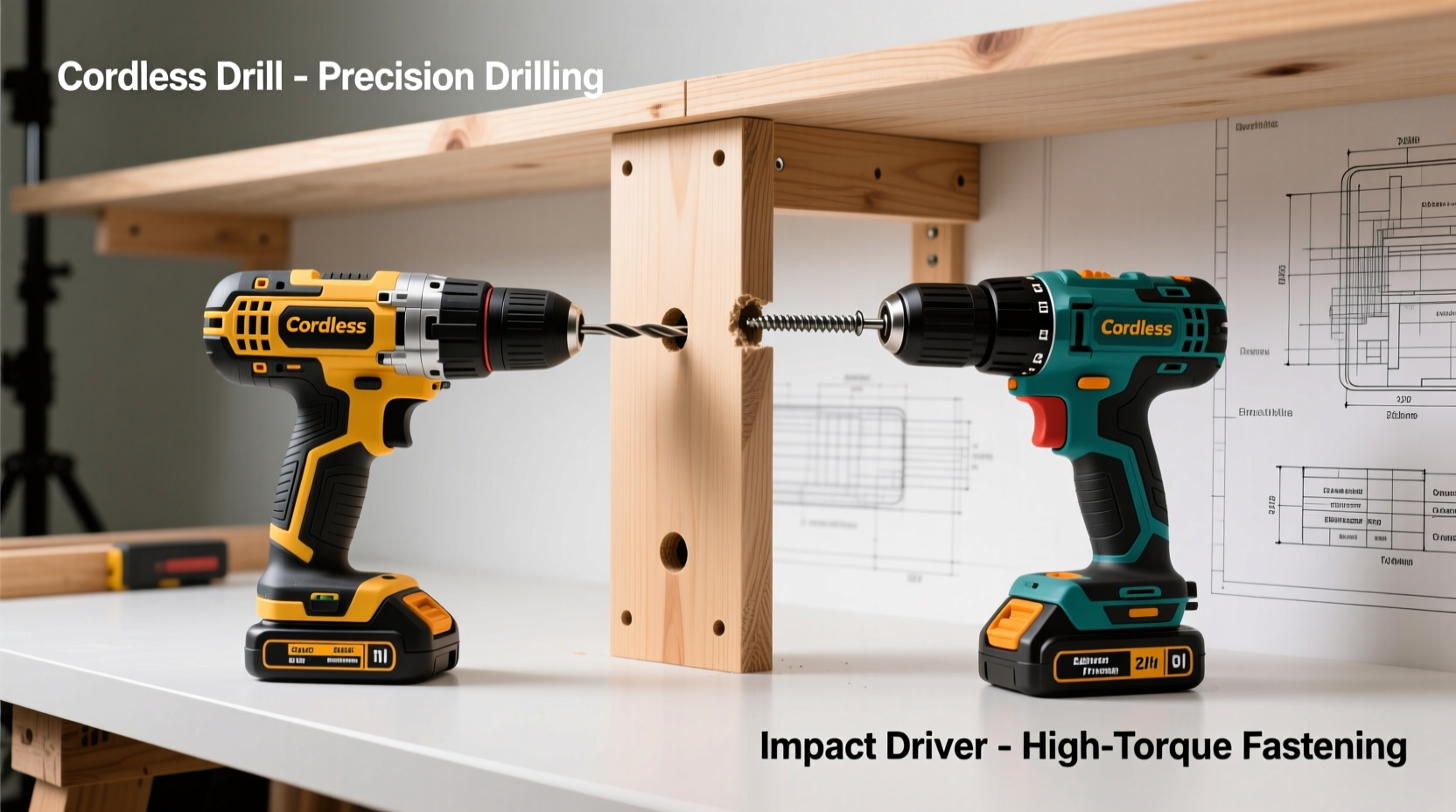
A cordless drill is designed primarily for drilling holes and driving screws with controlled torque. It delivers consistent rotational force (measured in RPMs) and typically includes a clutch mechanism that disengages once a preset torque level is reached. This prevents over-tightening and damaging screw heads or surrounding material—a crucial feature when working with delicate surfaces like drywall or thin wood.
Most standard cordless drills offer two-speed settings: low speed for high-torque tasks like driving large screws, and high speed for drilling through softer materials. They’re versatile, user-friendly, and ideal for light to medium-duty shelving projects where precision matters more than brute force.
Tip: Use a drill with adjustable clutch settings when hanging shelves on drywall anchors to avoid crushing the drywall or stripping screws.However, their limitation becomes apparent when dealing with long lag bolts, dense hardwoods, or masonry anchors. In such cases, the motor may stall or generate excessive heat due to sustained resistance, reducing efficiency and battery life.
Impact Drivers: Torque Meets Efficiency
An impact driver operates differently. Instead of relying solely on continuous rotation, it combines rotational force with rapid, concussive blows—up to 3,000 to 5,000 impacts per minute (IPM). This hammering action allows the tool to drive fasteners deeper with less effort from the user while maintaining grip, even under high resistance.
Because of this design, impact drivers excel at driving long screws, lag bolts, or structural fasteners into tough substrates. When mounting heavy shelves into wall studs or using toggle bolts in hollow walls, an impact driver can seat fasteners flush without camming out or stripping heads. Its compact size and high torque-to-weight ratio also reduce wrist strain during extended use.
But there's a trade-off: impact drivers lack the fine control needed for delicate tasks. Without a clutch system, they can easily overdrive screws if not carefully managed. Additionally, their aggressive force makes them unsuitable for drilling unless paired with specialized bits, which limits versatility compared to a standard drill.
“Using an impact driver for shelf installation gives you superior holding power, especially when securing into wooden studs. But always pair it with pilot holes to prevent splitting.” — James Rutherford, Master Carpenter & Tool Instructor
Comparing Performance: Key Factors for Shelf Installation
Selecting between a cordless drill and an impact driver depends on several factors related to your specific shelving job. Below is a detailed comparison across critical performance metrics:
| Factor | Cordless Drill | Impact Driver |
|---|---|---|
| Torque Output | 200–600 in-lbs (standard models) | 1,000–1,800+ in-lbs |
| Speed Control | Adjustable clutch; precise depth control | No clutch; harder to regulate depth |
| Best For | Lightweight shelves, drywall anchors, softwoods | Heavy shelves, hardwoods, metal framing, lag bolts |
| Drilling Capability | Yes, with chuck compatibility | Limited; requires hex-shank bits only |
| User Fatigue | Moderate (requires more pressure) | Low (tool does most work) |
| Risk of Damage | Low (clutch prevents overdriving) | High (can split wood or strip threads) |
This table highlights a clear divide: drills offer finesse, while impact drivers deliver raw power. If your shelves are decorative and weigh under 20 pounds, a cordless drill suffices. But for kitchen pantries, garage racks, or built-in units holding books or tools, an impact driver provides the necessary clamping force for long-term stability.
Step-by-Step Guide: Installing Shelves Securely Based on Tool Choice
The method you follow should align with your chosen tool. Here’s a practical sequence tailored to each:
Using a Cordless Drill (Recommended for Light to Medium Loads)
- Mark shelf bracket positions using a level and pencil. Double-check spacing matches your shelf hardware.
- Pre-drill pilot holes slightly smaller than your screws to prevent wood splitting. <3> Select the correct bit (usually Phillips or square drive) and set the clutch to medium torque (around 10–12 on most drills).
- Drive screws slowly, letting the clutch disengage as the screw seats flush. Avoid forcing beyond this point.
- Attach the shelf and test stability by applying gentle downward pressure.
Using an Impact Driver (Ideal for Heavy-Duty Installations)
- Locate wall studs using a stud finder. Mark centers clearly.
- Drill pilot holes with a cordless drill or dedicated drill bit—this step is non-negotiable with impact drivers to avoid splitting wood.
- Insert appropriate hex-shank bit (e.g., #2 square for lag screws).
- Begin driving at low speed or use short trigger pulls to start the screw straight.
- Apply steady pressure as the impact driver engages its hammering action to fully seat the fastener.
- Check alignment frequently to ensure brackets remain level.
Real Example: Mounting Floating Shelves in a Modern Bathroom
Consider Sarah, a homeowner installing floating oak shelves in her newly renovated bathroom. Each shelf measures 36 inches long and is expected to hold towels, glass jars, and ceramic decor—totaling about 25 pounds per unit. She plans to anchor them into wall studs behind tile-covered drywall.
Initially, she reaches for her trusty cordless drill. After pre-drilling pilot holes, she struggles to fully seat the 3-inch lag screws provided in the mounting kit. Despite maximum torque setting, the drill stalls halfway. Fearing stripped threads, she pauses and consults a contractor friend.
He recommends switching to an impact driver. With fresh batteries and the same pilot holes, the impact driver drives each screw smoothly in under 10 seconds. The result? Flush-mounted brackets with zero wobble. Six months later, the shelves remain perfectly secure despite daily use.
Sarah’s experience illustrates a common oversight: assuming all screw-driving tasks are equal. Her project demanded high torque in a dense substrate—exactly where impact drivers shine.
Checklist: Choosing the Right Tool for Your Shelf Project
- ✅ Determine shelf weight: Under 20 lbs → drill; over 20 lbs → consider impact driver.
- ✅ Identify wall type: Studs allow either tool; hollow walls need anchors compatible with your choice.
- ✅ Check fastener type: Long lag bolts or coarse-threaded screws favor impact drivers.
- ✅ Assess skill level: Beginners benefit from drill’s clutch control; experienced users leverage impact efficiency.
- ✅ Verify bit compatibility: Impact drivers require 1/4\" hex bits, not standard round shanks.
- ✅ Prioritize safety: Wear eye protection and clamp workpieces if possible.
Frequently Asked Questions
Can I use an impact driver for all shelf installations?
While technically possible, it’s not always advisable. On lightweight shelves or fragile materials like MDF or thin plywood, the high torque can crack or split the surface. Use an impact driver only when fastening into solid wood or metal framing with appropriately sized pilot holes.
Do I need both tools in my toolkit?
Yes, ideally. A cordless drill handles 80% of general household tasks—from assembling furniture to hanging pictures—with precision. An impact driver complements it by tackling demanding jobs like deck building, cabinetry, or heavy shelving. Together, they cover nearly every fastening scenario.
Why do my screws keep stripping when using an impact driver?
Stripping often occurs due to misalignment, dull bits, or incorrect bit fit. Ensure the bit is fully seated in the driver and screw head. Use high-quality S2 steel bits designed for impact use, and apply firm forward pressure during driving to maintain engagement.
Final Recommendations and Best Practices
The decision between a cordless drill and an impact driver ultimately hinges on what kind of shelves you're installing and where. For picture frames, spice racks, or small decorative ledges, a cordless drill offers ample power with excellent control. But when mounting anything substantial—especially items anchored into studs or supporting dynamic loads—an impact driver provides unmatched reliability.
That said, never underestimate preparation. Regardless of tool choice, success comes down to proper planning: locating studs accurately, using correctly sized fasteners, pre-drilling pilot holes, and verifying level placement. Even the most powerful impact driver can’t compensate for poor technique.
If you're still building your toolkit, start with a quality 18V cordless drill/driver combo kit. Many brands now include both a standard drill and a compact impact driver, giving you flexibility across projects. Look for brushless motors, LED work lights, and ergonomic grips for better performance and comfort.
“The right tool doesn’t just make the job easier—it makes it last longer. A securely hung shelf reflects not just strength, but smart execution.” — Lena Torres, Residential Construction Consultant
Take Action Today: Build Smarter, Not Harder
Your home deserves installations that stand the test of time. Whether you choose a cordless drill or an impact driver for hanging shelves, commit to doing it right: measure twice, drill pilot holes, and match your tool to the task. Don’t let convenience compromise security. Invest in understanding your tools, and they’ll return the favor with years of reliable service.
💬 Have a shelving success story—or a cautionary tale? Share your experience below. Your insights could help others choose wisely and build with confidence.








