When it comes to home improvement projects, choosing the right tool can mean the difference between a clean, efficient job and one that leaves you frustrated—and possibly with stripped screws or cracked wood. Two of the most commonly confused tools in a homeowner’s arsenal are the corded drill and the impact driver. While they may look similar and both drive screws and drill holes, their mechanics, torque delivery, and ideal applications differ significantly. Understanding these differences ensures you're not just using a tool, but using the *right* tool for the task at hand.
Whether you’re assembling furniture, building a deck, or installing shelves, knowing when to reach for a corded drill versus an impact driver will save time, reduce wear on materials, and improve results. Let’s break down how each tool works, where they excel, and how to match them to everyday household jobs.
How Corded Drills Work: Precision and Control
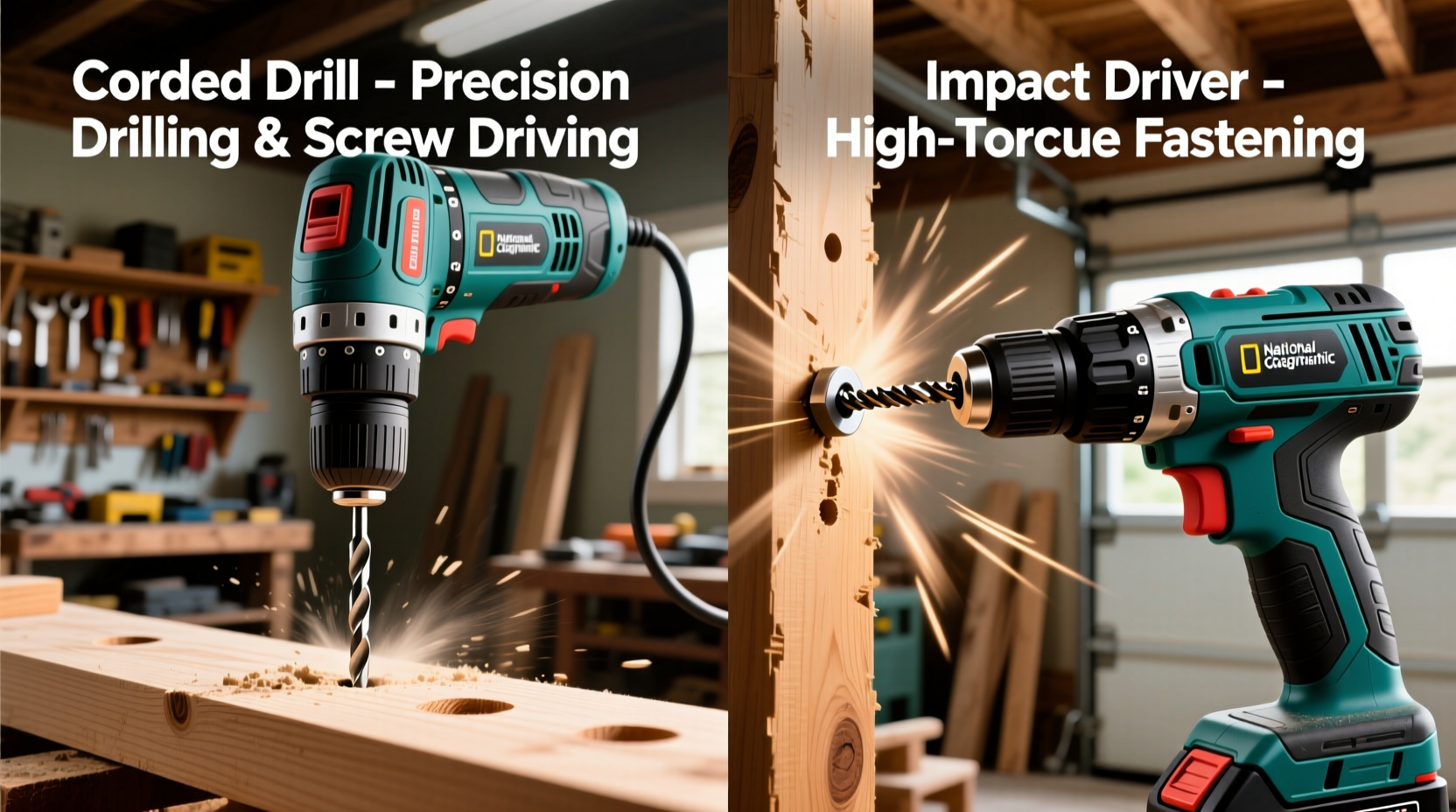
A corded drill is a versatile power tool designed primarily for drilling holes and driving screws with consistent rotational force. It operates with a chuck that holds drill bits and screwdriver bits, typically in 3/8-inch or 1/2-inch sizes. Because it’s corded, it draws continuous power from an outlet, eliminating concerns about battery life and delivering steady performance over long periods.
The key feature of a corded drill is its adjustable clutch—a mechanism that controls torque output. This allows users to set how much force is applied before the drill stops spinning. For example, when driving screws into drywall or softwood, you can set a low torque setting to prevent the screw from sinking too deep or splitting the material.
Corded drills also offer variable speed control via the trigger. Light pressure delivers slow speeds for delicate work; firm pressure increases RPMs for faster drilling through wood, metal, or plastic. Most models include a forward/reverse switch, essential for removing screws or backing out stuck drill bits.
Tip: Use lower speeds and higher torque settings when working with hardwoods or large-diameter drill bits to maintain control and prevent bit slippage.Impact Drivers: Power and Torque for Tough Jobs
An impact driver is built for high-torque applications where raw power matters more than finesse. Unlike a drill, which applies continuous rotational force, an impact driver delivers sudden bursts of rotational energy—thousands of tiny “impacts” per minute—when resistance is detected. This hammering action allows it to drive long screws, lag bolts, or hex-shank fasteners into dense materials without straining the motor or the user’s wrist.
Impact drivers use a quick-change collet system that accepts 1/4-inch hex shank bits directly, eliminating the need for a chuck. This design enables faster bit changes and better grip under high torque. The tool itself is compact and lightweight compared to many corded drills, making it easier to maneuver in tight spaces like inside cabinets or overhead installations.
While some impact drivers offer variable speed triggers, they lack a clutch mechanism. That means there’s no automatic shut-off based on torque—users must rely on feel and experience to avoid overdriving fasteners. This makes impact drivers less suitable for precision tasks involving delicate materials.
“An impact driver isn’t just a stronger drill—it’s a different beast altogether. Its pulsing force excels where sustained rotation fails, especially in framing or outdoor construction.” — Mark Reynolds, Residential Contractor with 20+ years of field experience
Key Differences: A Side-by-Side Comparison
| Feature | Corded Drill | Impact Driver |
|---|---|---|
| Primary Function | Drilling holes, driving screws with precision | Driving high-torque fasteners into tough materials |
| Power Source | AC outlet (continuous power) | Typically cordless, though corded versions exist |
| Torque Delivery | Constant rotation with adjustable clutch | Pulsating impacts (up to 5,000 IPM) |
| Bit Holding System | Chuck (holds round shanks) | Hex collet (accepts 1/4\" hex bits) |
| Speed Control | Variable speed trigger + clutch settings | Variable speed, no clutch |
| Best For | General-purpose drilling, light fastening, DIY repairs | Framing, decking, heavy-duty fastening |
| Misuse Risk | Over-driving screws if clutch is misadjusted | Stripping screw heads or damaging materials due to excessive force |
Which Tool Should You Use? Real-World Scenarios
Understanding theory is useful, but practical application determines real value. Here’s how these tools perform across common household tasks:
Furniture Assembly
Most flat-pack furniture requires numerous small-to-medium screws driven into particleboard or MDF. These materials are prone to splitting and stripping. A corded drill with a properly adjusted clutch is ideal here. The controlled torque prevents damage, and the ability to switch between low and medium speeds helps manage different screw depths.
Tip: Use a magnetic bit holder to keep screws in place during one-handed operation—especially helpful when assembling shelves overhead.Installing Decking or Fencing
Outdoor projects often involve pressure-treated lumber, composite decking, or cedar—all dense materials requiring long structural screws. An impact driver shines here. Its hammering action drives 3-inch deck screws quickly and consistently without bogging down. Attempting this with a standard drill risks overheating the motor or snapping screw heads due to binding.
Hanging Drywall
While specialized drywall screw guns exist, a corded drill with a depth stop guide can handle this task efficiently. Set the clutch to low torque to ensure screws sink just below the surface without breaking the paper layer. An impact driver would be overkill and likely cause dimpling or tearing.
Building Shelves or Cabinetry
For fine woodworking or mounting heavy floating shelves into wall studs, consider using both tools strategically. Start with the corded drill to pilot holes and lightly seat screws. Then, finish tightening with the impact driver only if necessary—for instance, when driving lag bolts into studs. This hybrid approach combines precision with power.
Repairing Gutters or Siding
Aluminum gutters and vinyl siding require care to avoid denting or cracking. Screws used here are short and thin. A corded drill on low speed provides enough force without damaging fragile materials. Using an impact driver risks deforming gutter sections or pulling through soft siding.
Mini Case Study: Installing a Heavy Mantel Shelf
John, a homeowner in Portland, decided to mount a 75-pound wooden mantel above his fireplace. He planned to secure it with four 3-inch lag bolts into ceiling joists. Initially, he tried using his corded drill. After struggling for 20 minutes—overheating the motor and stripping one bolt head—he switched to his impact driver.
With the impact driver, all four bolts were seated flush in under five minutes. The pulsing torque cut through the resistance effortlessly. However, he noticed slight overdrive on the last bolt because he didn’t ease off the trigger early enough. In hindsight, John realized he could have used the drill to start the pilot holes and begin threading, then finished with the impact driver for final tightening. This balanced method would have maximized control and efficiency.
This example illustrates that even experienced DIYers benefit from understanding tool limitations and combining strengths appropriately.
Step-by-Step Guide: Choosing & Using the Right Tool
- Assess the Material: Is it softwood, hardwood, metal, drywall, or composite? Softer materials favor the corded drill; denser ones lean toward impact drivers. <
- Determine Fastener Type: Long lag bolts or structural screws? Use an impact driver. Short, fine-thread screws? Stick with a corded drill.
- Check Bit Compatibility: Ensure your bits fit the tool. Hex shank bits won’t work in a chuck; round shanks won’t lock into a collet.
- Adjust Settings Accordingly: On a corded drill, set the clutch to match screw size and material hardness. With an impact driver, modulate trigger pressure carefully.
- Test on Scrap First: Always trial-run your setup on a scrap piece to verify depth, speed, and torque before working on the actual project.
- Switch Tools Mid-Job If Needed: There’s no rule against using both. Start precise, finish powerful.
Checklist: Tool Selection Decision Aid
- ☐ Need to drill holes regularly? → Choose a corded drill
- ☐ Working mostly with screws longer than 2 inches? → Lean toward impact driver
- ☐ Handling delicate materials (drywall, trim, cabinetry)? → Use corded drill with clutch control
- ☐ Building decks, fences, or framing walls? → Impact driver is superior
- ☐ Want one tool for general upkeep? → Corded drill offers broader versatility
- ☐ Frequently install heavy fixtures or structural hardware? → Add an impact driver to your kit
Frequently Asked Questions
Can I use an impact driver to drill holes?
Only in limited cases. Impact drivers lack the precision and chuck compatibility needed for accurate drilling. They can handle small pilot holes in soft materials with hex-shank bits, but for any serious drilling—especially in masonry, metal, or large diameters—a corded drill is required.
Is a corded drill obsolete if I have an impact driver?
No. Despite the impact driver’s strength, it cannot replace the corded drill’s versatility. Drilling holes, using a wide range of bit sizes, and applying controlled torque are functions exclusive to drills. For most households, both tools serve distinct roles.
Do I need both tools in my garage?
If you tackle a variety of projects—from hanging pictures to building backyard structures—owning both is ideal. The corded drill handles 80% of routine tasks safely and effectively, while the impact driver takes on the remaining 20% that demand brute force. Together, they cover nearly every fastening scenario.
Final Thoughts: Match the Tool to the Task
The debate between corded drill and impact driver isn’t about superiority—it’s about suitability. Each has a clear niche in the home toolkit. The corded drill remains the go-to for accuracy, adaptability, and everyday reliability. The impact driver earns its place when power, speed, and durability matter most.
Investing in both tools may seem redundant at first, but over time, their complementary strengths become obvious. You’ll spend less time fighting equipment limitations and more time completing projects cleanly and confidently. Whether you're a weekend warrior or a seasoned DIY enthusiast, mastering the distinction between these two tools elevates your craftsmanship and protects your materials from avoidable damage.
💬 What’s your go-to tool for tough fastening jobs? Share your experiences or ask questions in the comments—your insights could help others choose wisely!








