Arrowroot starch, though often overshadowed by cornstarch or flour, is a powerful, underutilized ingredient in both home and professional kitchens. Sourced from the rhizomes of tropical plants, this fine, flavorless powder excels as a thickener, binder, and gluten-free alternative across a wide range of culinary applications. Unlike many starches, arrowroot maintains clarity when cooked, resists freezing and thawing without breaking down, and requires no high heat to activate—making it ideal for delicate sauces, fruit fillings, and baby foods. As dietary preferences shift toward clean-label, allergen-free ingredients, arrowroot starch has reemerged as a go-to solution for cooks seeking natural, effective thickeners that don’t compromise texture or taste.
Definition & Overview
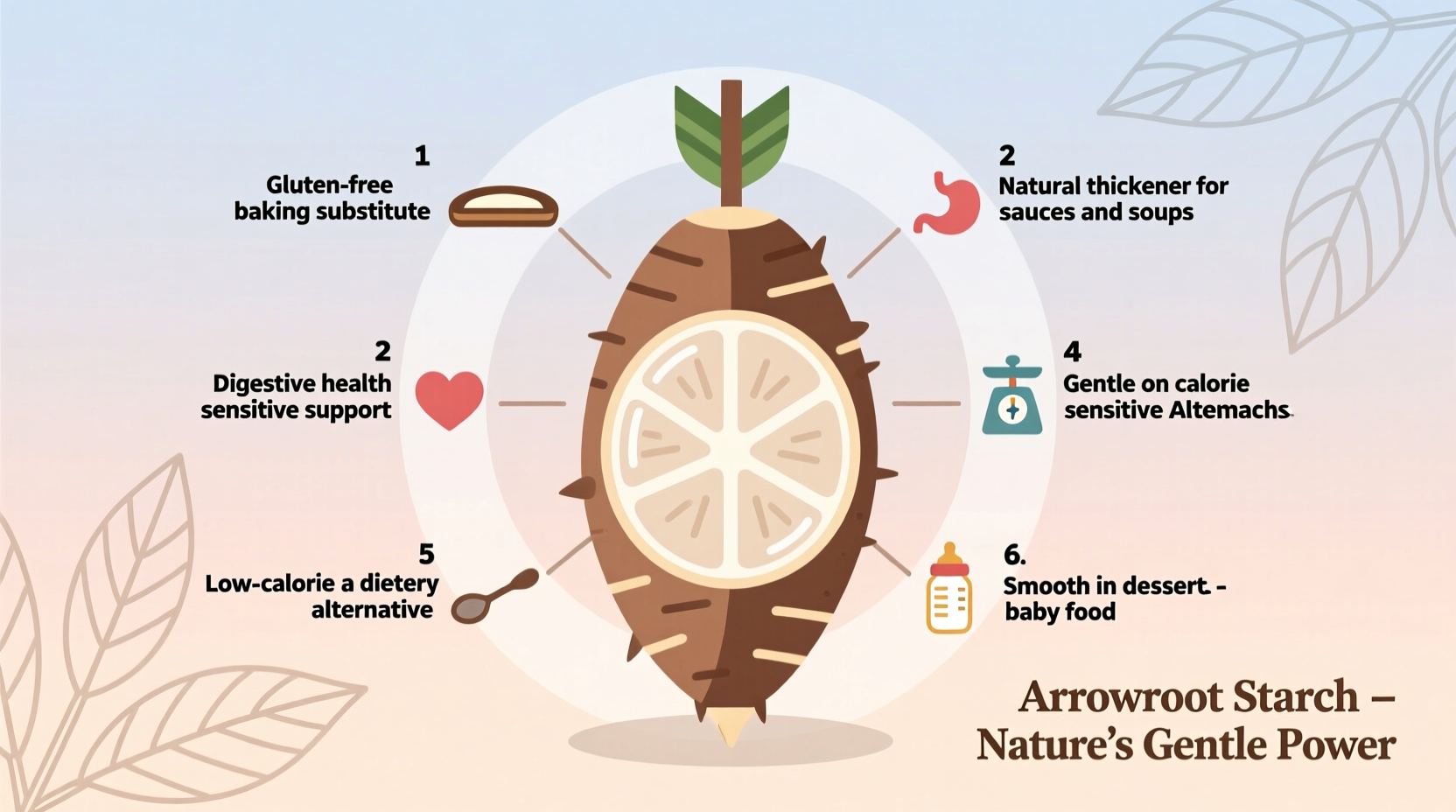
Arrowroot starch (also known as arrowroot powder or arrowroot flour) is a refined carbohydrate extracted from the tuberous roots of *Maranta arundinacea*, a perennial plant native to the Caribbean and tropical Americas. Despite its name, it contains no actual \"flour\" and is not derived from wheat or grain. Instead, it's a pure starch composed primarily of amylopectin, which gives it unique gelling and thickening properties. Historically used by Indigenous Caribbean peoples, arrowroot was later commercialized in the 19th century as a digestive aid and culinary thickener. Today, it’s valued not only for its functional performance but also for its hypoallergenic nature, making it suitable for paleo, keto, vegan, and gluten-free diets.
The extraction process involves washing, peeling, grinding, and then separating the starch from fibrous material through sedimentation. The resulting powder is odorless, nearly tasteless, and bright white in color. Because it undergoes minimal processing compared to chemically modified starches, arrowroot is considered a whole-food ingredient in clean-label cooking.
Key Characteristics
| Property | Description |
|---|---|
| Flavor | Nearly neutral; does not alter the taste of food. |
| Aroma | Odorless when raw and cooked. |
| Color/Form | Fine, silky white powder. |
| Thickening Power | Strong; more efficient than flour, slightly less than cornstarch by volume. |
| Gel Clarity | Produces crystal-clear gels—ideal for glossy sauces and pie fillings. |
| Heat Sensitivity | Activates at lower temperatures (~85°C/185°F); breaks down if boiled too long. |
| Freeze-Thaw Stability | Excellent; does not weep or separate after freezing. |
| Dietary Properties | Gluten-free, grain-free, vegan, non-GMO, paleo-friendly. |
| Shelf Life | Up to 3–4 years when stored in a cool, dry place away from moisture. |
Practical Usage: How to Use Arrowroot Starch in Cooking
Arrowroot starch shines in recipes where clarity, smooth texture, and mild flavor are essential. Its ability to thicken quickly at moderate heat makes it superior to flour or cornstarch in many applications, particularly those involving acidic ingredients or dairy-free preparations.
Thickening Sauces and Gravies
To thicken a sauce, first create a slurry by mixing arrowroot powder with an equal amount of cold liquid (water, broth, or plant-based milk). A typical ratio is 1 tablespoon of arrowroot per 1 cup of liquid for medium thickness. Whisk the slurry into the hot mixture near the end of cooking, stirring constantly. Heat gently until the sauce turns translucent and thickens—usually within 1–2 minutes. Avoid boiling, as prolonged high heat can degrade its viscosity.
“Arrowroot is my secret weapon for glossy, restaurant-quality pan sauces. It doesn’t cloud the liquid like flour, and it works beautifully with lemon juice or wine reductions.” — Chef Elena Torres, Plant-Based Culinary Instructor
Fruit Pie Fillings and Desserts
One of arrowroot’s standout uses is in fruit pies, cobblers, and compotes. Unlike cornstarch, which can turn cloudy or gritty, arrowroot creates a clear, gel-like consistency that enhances the natural brightness of berries, stone fruits, and citrus. For a standard 9-inch pie, use 2 to 3 tablespoons of arrowroot mixed with sugar and fruit before baking. Note: arrowroot-thickened fillings may soften slightly upon standing, so serve within 24 hours for optimal firmness.
Gluten-Free Baking
In gluten-free flour blends, arrowroot adds lightness, moisture retention, and structure. It helps mimic the soft crumb of wheat-based baked goods in cakes, muffins, and cookies. Common ratios range from 10% to 20% of the total flour blend. For example, in a 1-cup gluten-free mix, include 2–4 tablespoons of arrowroot alongside rice flour, tapioca starch, or almond flour.
Pro Tip: Always sift arrowroot with dry ingredients to prevent clumping. When combined with xanthan gum or psyllium husk, it improves elasticity in gluten-free doughs.
Coating for Crispy Frying
Arrowroot can be used as a coating for frying fish, tofu, or vegetables. Dredged items develop a crisp, delicate crust that stays crunchy even when sauced. Mix arrowroot with spices or nutritional yeast for added flavor. Because it browns quickly, monitor frying time closely to avoid overcooking.
Infant and Sensitive-Diet Foods
Due to its digestibility and lack of allergens, arrowroot is commonly used in homemade baby foods and recovery diets. It can thicken pureed fruits, cereals, or broths without introducing common irritants. Historically, it was prescribed for gastrointestinal distress because it coats the stomach lining gently and absorbs excess fluid.
Non-Culinary Uses in the Kitchen
Beyond food, arrowroot starch serves as a natural anti-caking agent. Dust it on mozzarella cheese balls to prevent sticking, or mix with cocoa powder to keep truffles from clumping. Some bakers use it as a dusting agent instead of flour when rolling out sticky doughs, especially gluten-free varieties.
Variants & Types
While true arrowroot comes exclusively from *Maranta arundinacea*, several other starches are marketed under similar names. Understanding these variants ensures you select the right product for your needs.
- Pure Arrowroot Starch: Extracted solely from Maranta root. Most authentic and effective for culinary use.
- Bilbi or Bermuda Arrowroot: Derived from *Canna indica*. Less refined, sometimes coarser texture.
- East Indian Arrowroot: From *Curcuma angustifolia*, related to turmeric. Lower viscosity and distinct earthy note.
- Portland or Jamaican Arrowroot: Often refers to cassava-based starches; technically not true arrowroot.
When purchasing, look for labels specifying “100% Maranta arundinacea” to ensure purity. Organic and non-GMO certifications add assurance for health-conscious consumers.
Buying Guide: Choose brands that list only “arrowroot starch” in the ingredients. Avoid blends labeled “vegetable starch,” which may contain potato or tapioca.
Comparison with Similar Ingredients
Arrowroot is frequently substituted with other starches, but key differences affect performance and outcome.
| Starch Type | Texture/Gloss | Acid Tolerance | Freeze-Stable? | Best Used For |
|---|---|---|---|---|
| Arrowroot | Clear, glossy | High – excellent with citrus, vinegar | Yes | Fruit fillings, clear sauces, dairy-free dishes |
| Cornstarch | Slightly opaque, less glossy | Moderate – breaks down in high acid | No – weeps when frozen | Gravies, puddings, fried coatings |
| Tapioca Starch | Translucent, chewy texture | High | Yes | Pie fillings, bubble tea, chewy breads |
| Potato Starch | Clear but heavy mouthfeel | Low – sensitive to heat and acid | Limited | Gluten-free baking, soups (not boiling) |
| Wheat Flour | Opaque, matte finish | High | Yes | Roux-based sauces, stews, gravies |
Notably, arrowroot should never be used with dairy products that will be heated, as it can produce a slimy texture. In contrast, cornstarch integrates well with milk and cream, making it preferable for custards and puddings.
Practical Tips & FAQs
Can I substitute arrowroot for cornstarch?
Yes, in most cases—but use slightly more arrowroot (about 1.5x) to match cornstarch’s thickening power. Also, remember that arrowroot performs better in acidic environments and freezes well, whereas cornstarch does not.
Why did my arrowroot-thickened sauce thin out?
This usually occurs due to overheating. Arrowroot begins to break down above 95°C (203°F). To prevent this, remove the dish from heat immediately once thickened and avoid simmering for extended periods.
Is arrowroot safe for babies?
Yes. Pure arrowroot is widely regarded as safe for infants and is often found in teething biscuits and baby cereals. However, always consult a pediatrician before introducing new foods to infants under six months.
How should I store arrowroot starch?
Keep in an airtight container in a cool, dark, dry cupboard. Moisture causes clumping and promotes mold. Do not refrigerate unless in a humid climate, and ensure the container is sealed tightly.
Does arrowroot have nutritional value?
Nutritionally, arrowroot is low in protein, fat, and fiber. It provides about 70 calories per quarter cup and is primarily a source of carbohydrates. While not nutrient-dense, it is easily digested and rarely causes allergic reactions, making it useful during digestive recovery.
Can I use arrowroot in deep frying?
Absolutely. Coatings made with arrowroot yield a lighter, crispier crust than flour and brown faster. Combine with rice flour for extra crunch or season directly with herbs and spices.
What happens if I use too much arrowroot?
Excess arrowroot can result in a rubbery or overly gelatinous texture, especially in baked goods or pie fillings. Stick to recommended amounts and test small batches when experimenting.
Storage Checklist:
✔ Store in glass or BPA-free plastic container
✔ Label with purchase date
✔ Keep away from stove or dishwasher (humidity)
✔ Use within 3 years for best performance
Summary & Key Takeaways
Arrowroot starch is a versatile, natural thickener with distinct advantages over conventional options. Its clarity, acid resistance, freeze stability, and neutral flavor make it ideal for fruit desserts, sauces, and gluten-free formulations. Unlike cornstarch or flour, it activates quickly at lower temperatures and maintains integrity in plant-based and sensitive-diet recipes.
Chefs and home cooks alike benefit from understanding when and how to use arrowroot effectively. Key points to remember:
- Use a slurry to prevent lumps and ensure even dispersion.
- Avoid boiling; add near the end of cooking and remove from heat promptly.
- Do not pair with dairy under high heat—opt for cornstarch instead.
- Store properly to extend shelf life and maintain functionality.
- Choose pure Maranta-based products for authentic results.
Whether crafting a shimmering berry tart, thickening a tangy barbecue sauce, or formulating a hypoallergenic baby food, arrowroot starch offers a clean, reliable solution. As interest in minimally processed, functional ingredients grows, this ancient starch continues to prove its relevance in modern cuisine.
Try This at Home: Make a simple vanilla pudding using coconut milk, arrowroot, maple syrup, and vanilla bean. Mix 2 tbsp arrowroot with 1/4 cup cold coconut milk, then whisk into 1 cup warm coconut milk. Sweeten and flavor, cook on low until thickened (do not boil), then chill. Result: a silky, dairy-free dessert with no off-notes.









