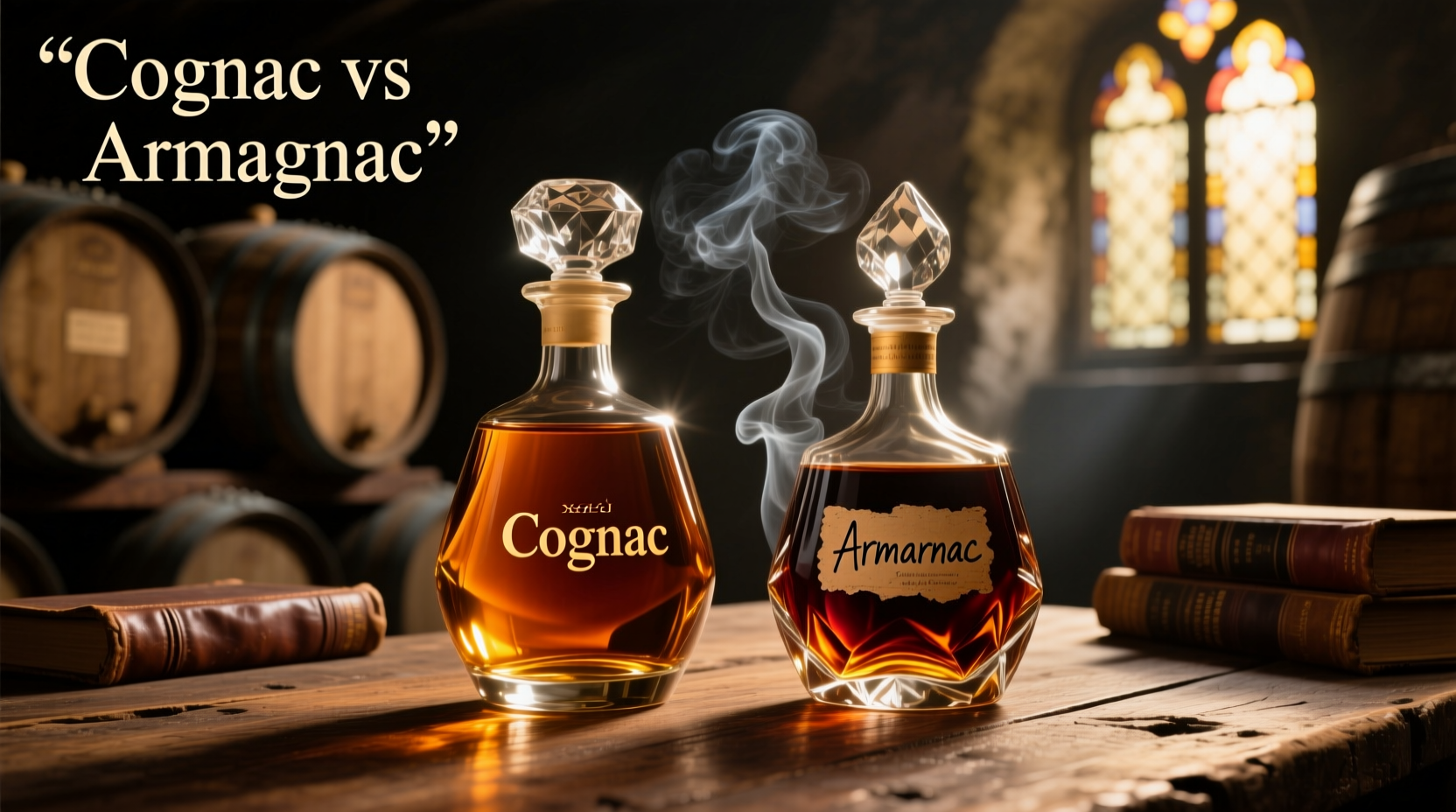
For decades, Cognac has reigned unchallenged as the global ambassador of French brandy—its name synonymous with luxury, prestige, and polished refinement. Armagnac, by contrast, remains quietly rooted in Gascony’s rolling hills, often described as “Cognac’s rustic cousin” or “the world’s oldest brandy.” But this shorthand obscures a profound truth: when it comes to raw flavor depth, textural complexity, and terroir expression, Armagnac doesn’t merely compete—it frequently surpasses its better-known counterpart. The disparity isn’t about quality; it’s about philosophy, process, and patience. Where Cognac prioritizes consistency, blending, and market-ready elegance, Armagnac embraces singularity, vintage transparency, and unfiltered regional voice. This article dissects that distinction—not as a rivalry, but as a revelation.
The Terroir Divide: Soil, Climate, and Grape Identity
Cognac and Armagnac both originate in France’s southwest, yet their growing regions are geographically and geologically distinct. Cognac spans two departments (Charente and Charente-Maritime) across 75,000 hectares of largely uniform limestone-rich soil—ideal for the Ugni Blanc grape, which dominates over 98% of plantings. Its maritime-influenced climate ensures reliable, if modest, ripening. Armagnac occupies three departments (Gers, Landes, Lot-et-Garonne) across just 15,000 hectares—but with dramatically varied soils: sandy, clay-limestone, and iron-rich “ferruginous” deposits known locally as *boulbènes*. These differences shape not only grape selection but aromatic potential.
While Ugni Blanc prevails in Cognac for its high acidity and low alcohol—ideal for distillation stability—Armagnac growers cultivate a mosaic of varieties: Folle Blanche (bright, floral, volatile), Colombard (zesty, citrus-driven), and especially Baco 22A (a hybrid born in Armagnac in 1902, now banned in most AOCs but legally preserved here). Baco contributes dense structure, roasted almond notes, and remarkable aging resilience—traits rarely found in Ugni Blanc-based spirits. As winemaker and Armagnac historian Jean-Michel Fortuné observes:
“Cognac is built on uniformity—Ugni Blanc, double distillation, precise blending. Armagnac is built on diversity: four main grapes, single-distillation copper pot stills, and vintages declared like fine wine. You taste the land first, the year second, the cellar third.” — Jean-Michel Fortuné, Domaine Tariquet, 35 years in Armagnac production
This varietal breadth alone grants Armagnac a wider aromatic palette—from violet and white peach in young Folle Blanche to dried fig, leather, and black truffle in mature Baco. Cognac’s flavor architecture tends toward polished citrus peel, toasted brioche, and vanilla, refined through meticulous blending. Armagnac’s is more visceral: earthier, spicier, and less mediated by intervention.
Distillation: Double Precision vs. Single Soul
The technical divergence begins at distillation—a step that defines aromatic concentration and texture. Cognac mandates continuous double distillation in traditional Charentais copper pot stills. Each run lasts roughly 12 hours; the second distillation yields a spirit at 70–72% ABV, highly refined and stripped of heavier congeners. This process delivers purity and repeatability but sacrifices some of the grape’s volatile top notes and fatty esters that contribute mouthfeel.
Armagnac uses a single, continuous distillation in column stills (often called *alambics armagnacais*), typically operating at lower temperatures and lower final ABV (52–60%). This method retains more of the original wine’s character—more fruity esters, more phenolic grip, more texture. The resulting spirit is oilier, richer, and more immediately expressive. It arrives in cask with greater inherent complexity—and demands longer, more thoughtful aging to integrate.
Tip: When tasting blind, look for telltale signs of single distillation: a waxy mouthfeel, pronounced dried-fruit density, and subtle farmyard or mushroom notes—these almost always point to Armagnac.Aging & Maturation: Blending Logic vs. Vintage Truth
Cognac’s aging system revolves around categories defined by minimum time in oak: VS (2 years), VSOP (4 years), XO (10 years, raised from 6 in 2018). Crucially, these designations apply to the *youngest* eau-de-vie in the blend. A $200 XO may contain 30-year-old components—but also 10-year-old ones, carefully balanced for harmony. This is masterful craftsmanship, but it inherently dilutes individuality.
Armagnac offers both age statements and vintage-dated bottlings—legally required to be 100% from a single harvest. A 1995 vintage Armagnac isn’t blended with any other year. It expresses one growing season, one parcel, one cooperage choice. Because Armagnac ages slower (lower ABV entering cask + different oak management), its evolution is more gradual and layered. Early notes of candied orange and cinnamon give way—over 15–25 years—to tobacco leaf, damp forest floor, salted caramel, and polished walnut. Cognac’s trajectory is more linear: bright → honeyed → leathery → woody.
| Characteristic | Cognac | Armagnac |
|---|---|---|
| Primary Grape | Ugni Blanc (>98%) | Folle Blanche, Colombard, Baco 22A, Ugni Blanc |
| Distillation | Double, pot still, ~72% ABV | Single, column still, 52–60% ABV |
| Aging Minimum (XO) | 10 years (youngest component) | No legal XO category; vintage bottlings common |
| Typical Oak Source | Limousin & Tronçais (medium toast) | Local Monlezun oak (lighter toast, higher tannin) |
| Flavor Signature | Citrus zest, baked apple, vanilla, toasted almond | Dried fig, black truffle, cured meat, beeswax, iron-rich earth |
A Mini Case Study: The 1989 Vintage at Domaine de Pellehaut
In 1989, Armagnac experienced an unusually warm, dry autumn—resulting in deeply concentrated Baco 22A and Folle Blanche. At Domaine de Pellehaut in Bas-Armagnac, winemaker Claire Dubois chose not to blend the harvest. Instead, she filled 42 casks of pure Baco and set them aside in her coolest, dampest cellar—the *chai humide*. For 28 years, those casks breathed slowly. In 2017, she bottled 1,200 bottles at natural cask strength (43.2% ABV), unfiltered, uncolored.
Tasters noted immediate contrasts with contemporary Cognac XOs: less overt sweetness, more savory depth, and a finish that lingered over two minutes with notes of smoked paprika, burnt sugar, and wet stone. Critics praised its “uncompromising honesty”—a term rarely applied to Cognac, whose excellence lies in its diplomacy. That bottle retailed for €145—not a fraction of the price of a comparable Cognac, yet offering a more singular, memorable experience. It wasn’t “better” than Cognac; it was *different* in a way that challenged assumptions about what brandy could express.
Why Armagnac Deserves More Attention—And How to Start
Armagnac isn’t underappreciated because it’s inferior. It’s overlooked because it resists commodification. Its producers are overwhelmingly family-owned estates—not multinational corporations. Its marketing budget is measured in euros, not millions. Its bottles bear vintage dates, not abstract age categories. Its flavors demand attention, not passive sipping. In an era increasingly valuing authenticity, traceability, and craft integrity, Armagnac aligns with deeper cultural currents.
That said, approaching Armagnac requires intention. Unlike Cognac, which is often served neat at room temperature in a tulip glass, Armagnac benefits from thoughtful serving:
- Choose the right glass: A wide-bowled brandy snifter or, preferably, a large white wine glass (like a Burgundy bowl) to allow full aromatic release.
- Serve slightly cooler: 16–18°C (60–65°F)—not chilled, but not warm. Heat amplifies alcohol and masks nuance.
- Let it breathe: Pour 30–60 minutes before tasting. Older Armagnacs especially need air to shed reduction and reveal tertiary layers.
- Add a drop of water (optional): Only for younger expressions (under 15 years). It softens alcohol burn and lifts esters without flattening structure.
- Taste with food: Try with aged Comté, duck confit, or dark chocolate (75%+ cacao). Its savory richness bridges beautifully with umami and fat.
FAQ
Is Armagnac healthier than Cognac?
No spirit is “healthy,” but Armagnac’s traditional production yields higher levels of ellagic acid—a polyphenol linked to antioxidant activity—due to longer skin contact during fermentation and gentler distillation. That said, moderation remains essential, and health claims should never justify increased consumption.
Why is Armagnac less expensive than Cognac at similar ages?
Three reasons: lower global demand (and thus lower marketing costs), smaller scale of production (no economies of scale), and absence of premium-tier branding campaigns. A 25-year-old Armagnac often costs 40–60% less than a comparably aged Cognac—not because it’s lesser, but because it hasn’t been positioned as “luxury” in the same way.
Can I use Armagnac in cocktails like Cognac?
Yes—but choose wisely. Younger, fruit-forward Armagnacs (10–15 years) work beautifully in stirred classics like the Vieux Carré or the Between the Sheets. Avoid using rare vintages or older expressions—they’re meant for contemplative sipping, where their complexity can unfold without dilution or competition.
Conclusion: Taste Beyond the Trophy
Cognac earned its stature through centuries of trade, diplomacy, and refinement. It is a masterpiece of consistency—engineered for broad appeal, global distribution, and ceremonial occasion. Armagnac is something else entirely: a living archive of Gascon terroir, a testament to small-scale stewardship, and a sensory experience rooted in time, place, and personality. Its depth of flavor isn’t louder—it’s deeper. Not sweeter—it’s more resonant. Not flashier—it’s truer.
If you’ve spent years exploring Cognac’s elegant contours, now is the moment to turn your attention south—to the mist-shrouded vineyards of Gers, to cellars where casks bear handwritten vintage dates, to bottles that don’t just reflect a year’s weather but a family’s memory. Armagnac doesn’t ask for attention. It simply waits—patient, profound, and profoundly underrated. Pick up a 1998 Bas-Armagnac. Pour it slowly. Breathe it deeply. Let it linger. Then decide for yourself: which brandy truly commands your attention—not as a status symbol, but as a story worth savoring.
💬 Have you discovered an Armagnac that changed your perspective? Share your favorite bottle, vintage, or tasting insight in the comments—we’ll curate a reader’s guide to standout independents next month.








