Energy levels fluctuate throughout the day, influenced by everything from sleep quality to meal timing. In recent years, fasting has emerged as a powerful tool not just for weight management, but for enhancing mental clarity and physical stamina. Two prominent approaches—intermittent fasting (IF) and circadian rhythm fasting (CRF)—have gained traction, each claiming to boost energy through metabolic optimization. But when it comes to sustainable, high-quality energy, which method truly delivers? The answer lies in understanding how each strategy aligns with—or disrupts—your body’s internal clock and energy metabolism.
Understanding Intermittent Fasting and Circadian Rhythm Fasting
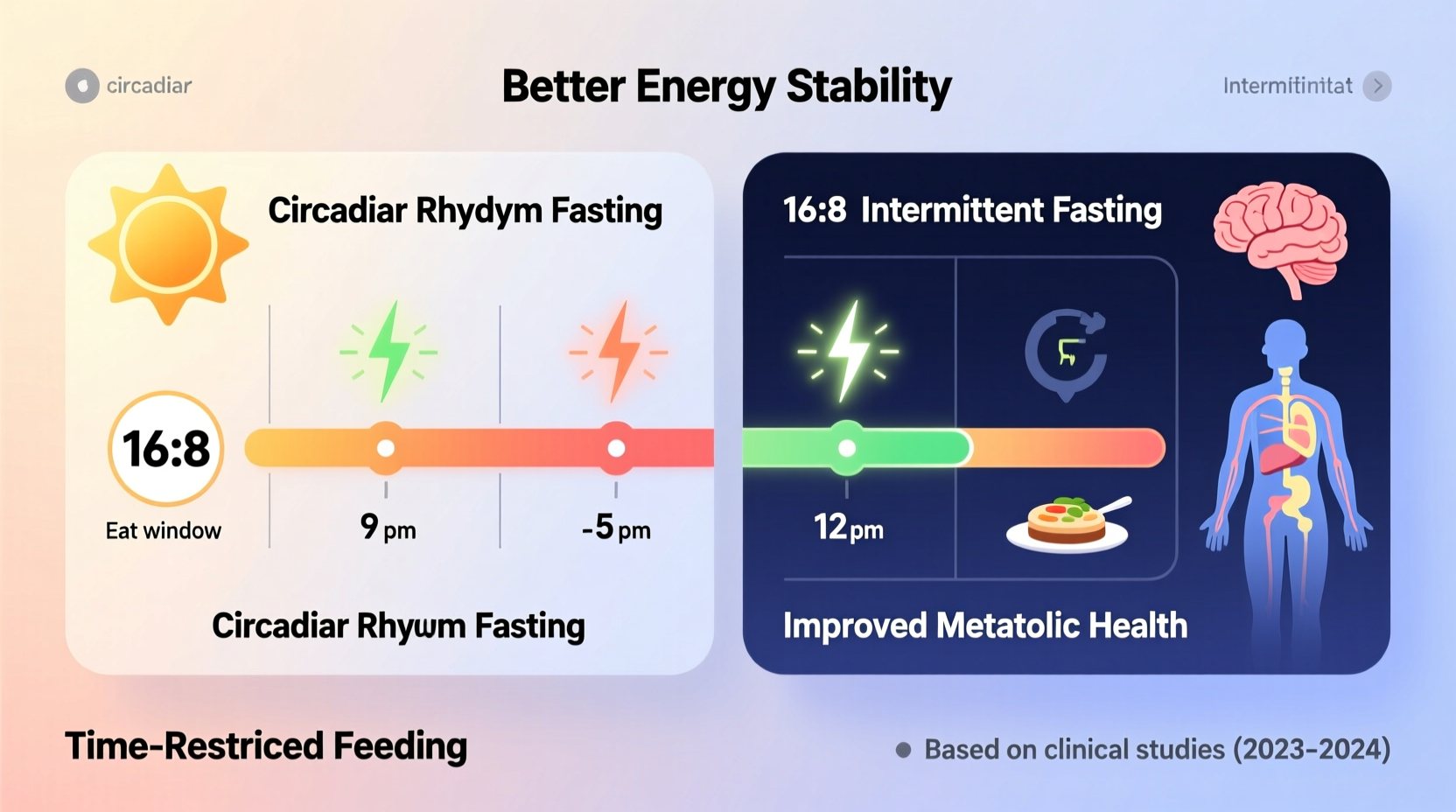
Intermittent fasting refers to an eating pattern that cycles between periods of eating and fasting. Common methods include the 16:8 protocol (16 hours of fasting, 8-hour eating window), the 5:2 diet (eating normally five days, restricting calories two non-consecutive days), and alternate-day fasting. IF works primarily by extending the time your body spends in a fasted state, allowing insulin levels to drop and fat-burning mechanisms to activate.
Circadian rhythm fasting, on the other hand, is rooted in chronobiology—the study of your body's internal clock. This approach emphasizes *when* you eat rather than just *how long* you fast. It encourages consuming meals during daylight hours, typically within a 10–12 hour window aligned with natural light exposure, and fasting during the night and early morning. The goal is to synchronize eating patterns with circadian rhythms that regulate hormones like cortisol, melatonin, insulin, and ghrelin—all of which influence energy production and fatigue.
While both strategies involve time-restricted eating, their philosophical foundations differ. Intermittent fasting prioritizes metabolic flexibility; circadian fasting prioritizes biological harmony.
How Each Method Impacts Energy Levels
Energy isn’t just about calories—it’s about hormonal balance, mitochondrial efficiency, and brain chemistry. Let’s break down how each fasting style influences these systems.
Metabolic Effects of Intermittent Fasting
During extended fasting windows, insulin sensitivity improves, and the body shifts from glucose-based to fat-based fuel. This transition leads to increased ketone production, which many report provides more stable, focused energy compared to the spikes and crashes associated with frequent carbohydrate intake.
However, this shift isn’t always smooth. Some individuals experience low energy, irritability, or brain fog during adaptation—especially if they break their fast late in the day or consume poor-quality foods during eating windows. Additionally, skipping breakfast may conflict with natural cortisol peaks in the morning, potentially leading to sluggishness.
Tip: If practicing intermittent fasting, avoid breaking your fast with high-sugar meals. Opt for protein, healthy fats, and fiber to maintain steady energy.Circadian Rhythm Fasting and Hormonal Harmony
The human body evolved to be active during daylight and rest at night. Core metabolic processes—including digestion, glucose regulation, and detoxification—are optimized during the day. Eating late at night disrupts this rhythm, impairing insulin response and reducing overnight fat oxidation.
Circadian fasting supports energy by reinforcing this natural cycle. By front-loading calories earlier in the day, you provide fuel when your metabolic rate is highest and allow the body to enter repair mode at night. Studies show that people who consume most of their daily calories before 3 PM report higher alertness and less fatigue than those who eat later—even when total caloric intake is identical.
“Aligning food intake with circadian biology enhances mitochondrial function and reduces oxidative stress, both of which are critical for sustained energy.” — Dr. Satchin Panda, Professor and Circadian Biology Researcher, Salk Institute
Comparative Analysis: Key Differences That Affect Energy
| Factor | Intermittent Fasting | Circadian Rhythm Fasting |
|---|---|---|
| Primary Focus | Duration of fasting window | Timing of meals relative to light/dark cycle |
| Typical Eating Window | 12 PM – 8 PM (e.g., 16:8) | 8 AM – 6 PM (daylight-aligned) |
| Impact on Cortisol | Potential misalignment with morning peak; may increase stress if fast extends too long | Supports natural cortisol awakening response; promotes morning energy surge |
| Evening Energy Quality | May decline due to late eating or poor meal composition | Improved due to earlier digestion and reduced metabolic load at night |
| Sleep Influence | Late eating can impair sleep; poor sleep reduces next-day energy | Earlier fasting onset supports melatonin release and deeper sleep |
| Mitochondrial Efficiency | Improves over time via autophagy | Optimized daily through alignment with circadian gene expression |
Real-World Example: Sarah’s Shift from IF to CRF
Sarah, a 38-year-old project manager, had been following a 16:8 intermittent fasting plan for six months. She skipped breakfast, ate lunch at 1 PM, and finished dinner around 9 PM. While she lost some weight, she noticed persistent afternoon crashes, difficulty concentrating, and trouble falling asleep.
After consulting a functional medicine practitioner, she switched to circadian rhythm fasting. She began eating at 8 AM, had her largest meal at noon, and finished dinner by 7 PM. Within two weeks, her energy improved significantly. She no longer needed afternoon coffee, felt more alert in meetings, and reported waking up refreshed. Her sleep duration didn’t change—but its quality did.
“I thought fasting was just about skipping meals,” Sarah said. “But learning that *when* I eat matters just as much was a game-changer.”
Step-by-Step Guide to Optimizing Energy Through Fasting
If you're looking to enhance energy using fasting principles, follow this practical timeline to integrate science-backed habits:
- Week 1: Assess Your Current Pattern
Track all meals and snacks, noting times and how you feel 30–60 minutes after eating. Identify energy dips and late-night eating habits. - Week 2: Align Eating with Daylight
Begin meals no later than 9 AM. Finish dinner at least three hours before bedtime. Avoid snacks after 8 PM. - Week 3: Compress Eating Window to 10 Hours
Try an 8 AM to 6 PM window. Prioritize protein and complex carbs at breakfast and lunch; keep dinner lighter. - Week 4: Monitor Energy and Sleep
Rate your energy on a scale of 1–10 each afternoon and evening. Note changes in sleep onset and morning alertness. - Ongoing: Refine Based on Feedback
If energy lags mid-morning, consider adjusting breakfast macronutrients. If hunger strikes early, slightly widen the window while preserving early timing.
Checklist: Is Your Fasting Strategy Supporting Energy?
- ✅ Do you eat within a 10–12 hour window during daylight hours?
- ✅ Is your largest meal consumed before 3 PM?
- ✅ Do you avoid eating within three hours of bedtime?
- ✅ Are you getting bright light exposure in the morning?
- ✅ Do you limit caffeine after 2 PM?
- ✅ Are your meals rich in protein, fiber, and healthy fats?
- ✅ Have you ruled out nutrient deficiencies (e.g., B12, iron, magnesium)?
Frequently Asked Questions
Can I combine intermittent fasting with circadian rhythm fasting?
Yes—and many experts recommend it. A 14:10 or 16:8 fasting window that begins at sunset and ends at sunrise (e.g., 7 PM to 9 AM) combines the metabolic benefits of intermittent fasting with circadian alignment. This hybrid approach often yields the best results for energy and metabolic health.
What if my job requires late dinners or night shifts?
Night workers face unique challenges. When possible, try to cluster meals during your “biological day”—even if it’s nighttime externally. Use bright light therapy during work hours and wear blue-light-blocking glasses before sleep. Consider shorter, more frequent eating windows during active periods, and avoid large meals right before resting.
Why do I feel tired when starting either fasting method?
Initial fatigue is common as your body adapts to using fat for fuel and recalibrating hormone levels. This usually resolves within 2–3 weeks. Ensure adequate electrolyte intake (sodium, potassium, magnesium), stay hydrated, and don’t drastically reduce calorie intake too quickly.
Which Approach Is Better for Energy? The Verdict
When comparing circadian rhythm fasting and intermittent fasting for energy, the evidence leans strongly toward circadian alignment as the superior long-term strategy. While intermittent fasting can improve metabolic health and offer short-term energy boosts through ketosis, it risks disrupting circadian signals if meals are delayed too late into the day.
Circadian rhythm fasting, by contrast, works *with* your biology rather than against it. It supports natural cortisol rhythms, enhances sleep quality, reduces inflammation, and optimizes mitochondrial function—all of which contribute to consistent, jitter-free energy throughout the day.
That said, rigid adherence isn’t necessary. The most effective fasting routine is one that fits your lifestyle and leaves you feeling energized, not deprived. For most people, a time-restricted eating window of 10–12 hours centered around daylight—such as 8 AM to 6 PM—is ideal. It offers many benefits of intermittent fasting while honoring circadian biology.
“The best diet is the one that aligns with your physiology, not just your goals.” — Dr. Emily Manoogian, Chronobiologist, Oregon State University
Conclusion: Take Action to Fuel Your Days
Energy isn’t something you chase with stimulants or crash diets. It’s a product of rhythm, timing, and metabolic harmony. Whether you’re new to fasting or refining an existing routine, shifting your focus from mere calorie restriction to circadian alignment can transform how you feel every day.
Start small: move your first meal earlier, finish dinner before 7 PM, and observe how your energy responds. Track changes over two weeks. You might find that the key to lasting vitality wasn’t skipping meals—but eating them at the right time.
💬 Ready to optimize your energy? Try a 10-hour daylight eating window for one week and share your results in the comments below. Your journey to sustainable energy starts with one intentional meal.








