Selecting the right fishing rod is one of the most impactful decisions an angler can make—especially when targeting largemouth and smallmouth bass. Among the many specifications to consider, rod power (the amount of force required to bend the rod) plays a crucial role in casting accuracy, hook-setting efficiency, and overall control during a fight. Yet, many anglers, especially newcomers, overlook this factor or confuse it with rod action. Understanding rod power helps match your gear to the techniques you use, the lures you cast, and the cover you fish.
Understanding Rod Power: What It Really Means
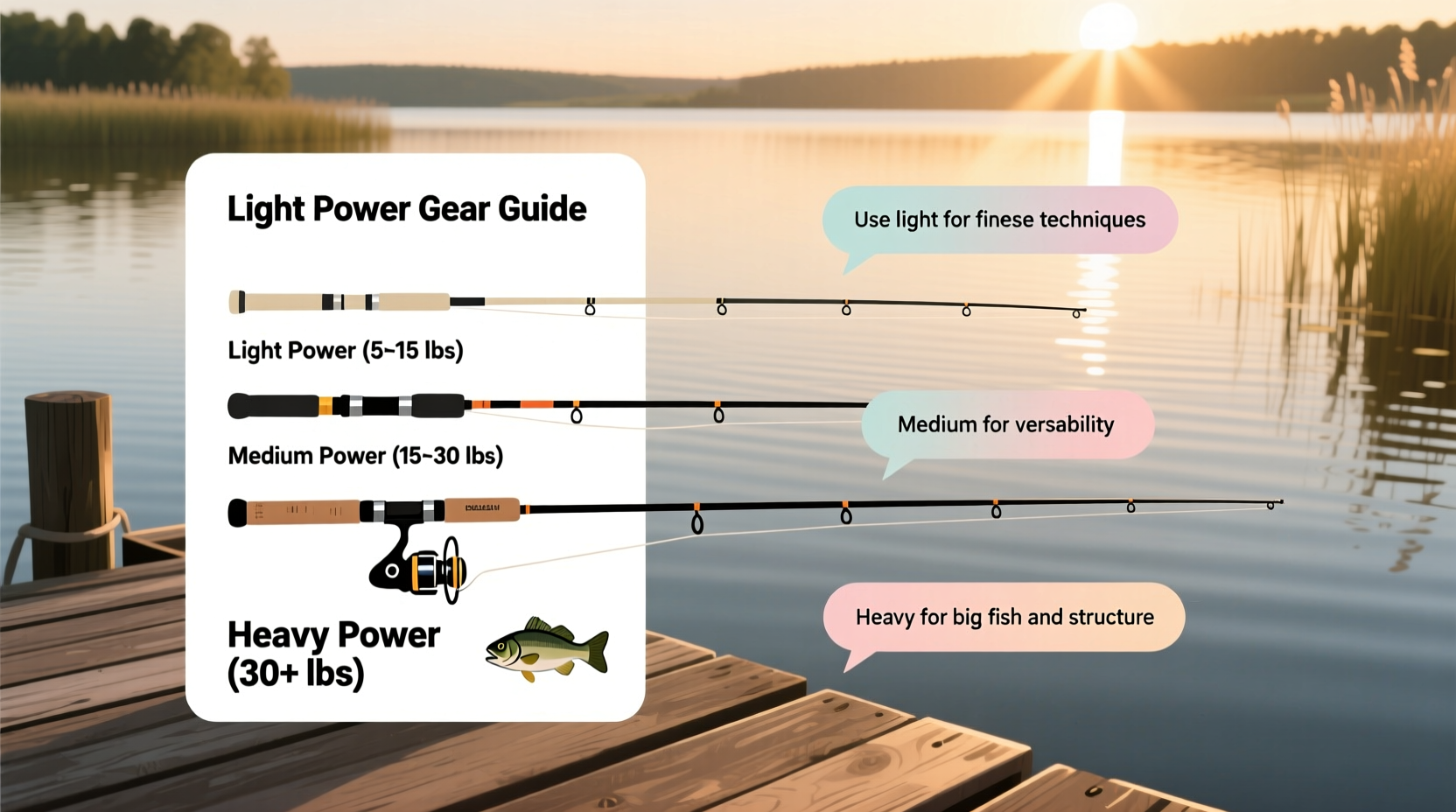
Rod power refers to how much pressure is needed to flex the rod tip. It’s typically categorized as ultra-light, light, medium-light, medium, medium-heavy, and heavy. This is different from rod action, which describes where along the blank the rod bends (e.g., fast, moderate, slow). While both influence performance, power determines how well a rod handles resistance—from lure weight to fish fights.
Bass fishing often involves heavy cover like weeds, docks, and timber. A rod with insufficient power may struggle to pull a fish free, increasing the chance of break-offs. Conversely, too much power can reduce sensitivity and make finesse techniques difficult.
“Rod power isn’t just about strength—it’s about matching energy transfer from your hand to the lure and then to the fish.” — Mark Daniels, Professional Bass Guide and Tackle Designer
Best Rod Power for Common Bass Fishing Techniques
Different techniques demand different rod powers. Using the wrong power can result in poor casting, missed hooksets, or lost fish. Below is a breakdown of popular bass methods and their ideal rod power matches.
| Technique | Ideal Rod Power | Why It Works |
|---|---|---|
| Finesse Worms / Ned Rig | Medium-Light to Medium | Provides enough backbone to set the hook on light wire hooks while maintaining sensitivity for subtle bites. |
| Topwater Lures (Poppers, Walk-the-Dog) | Medium to Medium-Heavy | Allows strong hooksets with treble hooks and better control when working lures aggressively. |
| Crankbaits (Shallow to Deep Diving) | Medium to Medium-Heavy | Handles the resistance of diving baits and provides leverage when pulling fish from structure. |
| Jigs (Football, Flipping) | Heavy to Extra-Heavy | Necessary for driving hooks into thick cover and extracting large bass from heavy brush or laydowns. |
| Drop Shotting | Medium-Light | Maximizes feel for light bites and allows precise lure manipulation at depth. |
| Spinnerbaits & Buzzbaits | Medium-Heavy | Supports quick, powerful hooksets and manages line twist common with these fast-moving lures. |
Key Factors That Influence Your Choice
Beyond technique, several environmental and equipment-related factors affect the ideal rod power for your situation.
- Lure Weight: Lighter lures (1/16–1/8 oz) perform best with medium-light rods. Heavier jigs (3/4–1 oz) require medium-heavy to heavy power for proper casting and control.
- Line Strength: Pair heavier braid (30–50 lb) with heavy-power rods for flipping. Use lighter fluorocarbon (6–10 lb) with medium-light rods for finesse.
- Water Clarity and Cover: In clear water with sparse cover, finesse approaches dominate—favoring lighter powers. In stained water with thick vegetation, heavy power rods help winch fish out quickly.
- Target Size: If you’re after trophy-sized bass in heavy structure, go heavy. For smaller ponds or community lakes with average-sized fish, medium power suffices.
Real-World Example: Choosing the Right Rod for a Summer Lake Trip
Consider a weekend angler named Jake who plans to fish a 400-acre reservoir known for its lily pads and submerged timber. His goal is to catch bass over 4 pounds using soft plastics and chatterbaits.
He starts with a medium-light spinning rod but struggles to set the hook through the thick weed mats. His 1/2 oz chatterbait feels sluggish, and he loses two good fish to short-striking. After consulting a local guide, he switches to a 7'3\" medium-heavy casting rod with a fast tip. Immediately, his casting improves, and he gains confidence setting the hook through the mat. By day two, he lands three bass over 5 pounds using the same soft plastic worm—this time rigged Texas-style and flipped into pockets.
The difference? The right rod power gave him the leverage and responsiveness needed for that environment.
Step-by-Step Guide to Picking Your Ideal Rod Power
Follow this sequence to narrow down the best rod power for your next bass outing:
- Identify Your Primary Technique: Are you drop-shotting in open water or flipping into heavy cover? Match the method first.
- Check Lure Weights: Look at the packaging or specs. Lures under 1/8 oz suggest lighter power; above 3/4 oz lean toward heavy.
- Assess the Environment: Is the water full of grass, wood, or rocks? Heavy cover demands more backbone.
- Review Your Line Setup: Braid over 20 lb typically pairs with medium-heavy or heavy rods. Light fluorocarbon works best with medium or lighter powers.
- Test and Adjust: Borrow or rent rods if possible. There’s no substitute for real-world feedback.
Common Mistakes Anglers Make With Rod Power
- Using a heavy rod for finesse fishing: Kills sensitivity and makes light bites harder to detect.
- Choosing ultra-light for flipping: Results in poor hook penetration and frequent lost fish.
- Ignoring rod length: A 7’6” heavy rod may be overkill in tight spaces. Balance power with length and intended use.
- One-rod-for-everything thinking: No single rod excels at both drop shotting and punching heavy mats. Specialization pays off.
Quick Checklist: Selecting the Best Rod Power
Before buying or packing your next rod, ask yourself:
- ☑ What lures will I use most?
- ☑ What kind of cover or structure am I fishing?
- ☑ What line test am I running?
- ☑ Do I need long casts or precision placement?
- ☑ Am I targeting average-size fish or trophies?
- ☑ Have I tested this setup before, or am I guessing?
Frequently Asked Questions
Can I use a medium-heavy rod for drop shotting?
It's not ideal. A medium-heavy rod lacks the sensitivity needed to detect light bites and may tear the hook out of a bass’s mouth due to excessive stiffness. Stick with medium-light or medium power for best results.
What’s the most versatile rod power for beginners?
A medium or medium-heavy power rod with a fast action is the best all-around choice. It handles everything from crankbaits to jigs and works well in both open water and light cover.
Does rod material affect power?
Not directly. Power is determined by the design and taper of the blank. However, graphite rods tend to be more sensitive and lighter, making them better for finesse applications, while composite blends offer durability for heavy power models.
Final Thoughts and Action Steps
Choosing the best rod power for bass fishing doesn’t have to be complicated. Start by aligning your rod with your primary technique and environment. Understand that power affects casting, hook-setting, and fish-fighting ability—not just raw strength. The right match increases your catch rate, reduces frustration, and enhances the overall experience.
If you're building your first serious bass setup, invest in two rods: a medium-light for finesse work and a medium-heavy for versatility. As you gain experience, expand into specialized powers like heavy for flipping or ultra-light for micro-jigging.
💬 Ready to upgrade your tackle? Evaluate your current rod collection today—does each one match your go-to technique? Share your favorite rod power combo in the comments and help fellow anglers make smarter choices!








