Understanding the carbohydrate content of common ingredients is essential for anyone managing their diet—whether for weight control, blood sugar regulation, or adherence to low-carb or ketogenic lifestyles. Onions, a foundational ingredient in cuisines worldwide, are often assumed to be low in carbohydrates due to their non-starchy appearance. However, the reality is more nuanced. The amount of carbohydrates in a single onion varies significantly depending on its size, variety, and preparation method. This detailed analysis provides accurate nutritional data, culinary context, and practical guidance for using onions without unintended carb overload.
Definition & Overview
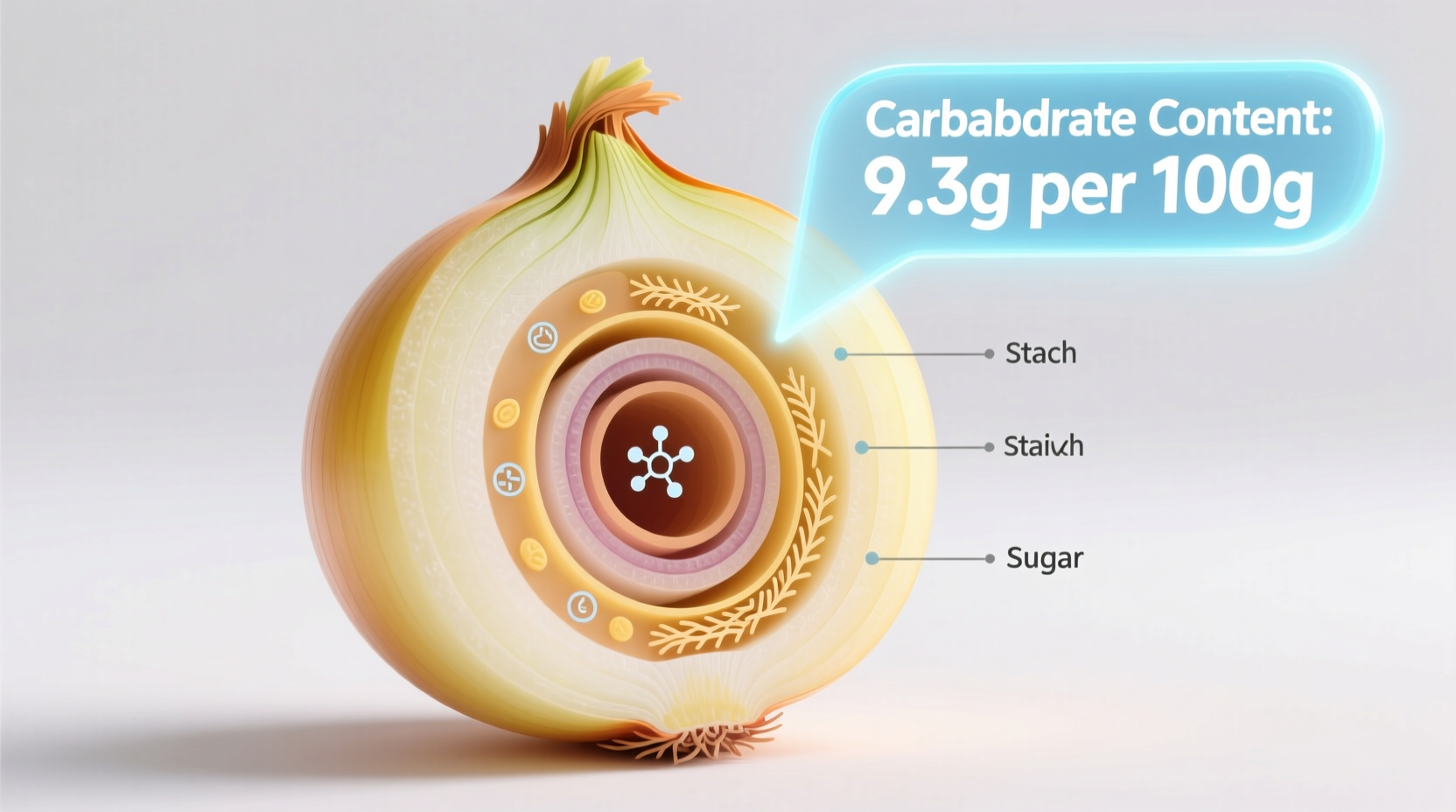
An onion (Allium cepa) is a bulbous vegetable belonging to the Alliaceae family, which includes garlic, leeks, and shallots. It is one of the oldest cultivated vegetables, with historical use dating back over 5,000 years to ancient India and the Middle East. Onions are grown globally and serve as a flavor base in countless savory dishes—from soups and stews to stir-fries and roasted meats.
The edible portion of the onion consists of layered fleshy scales that store energy in the form of carbohydrates, primarily sugars and dietary fiber. While onions contribute minimal fat and protein, they are notable for their water content, sulfur-containing compounds (responsible for pungency and tear-inducing effects), and modest levels of vitamin C, B6, and antioxidants like quercetin.
From a nutritional standpoint, onions are categorized as a vegetable with moderate carbohydrate density. Unlike leafy greens or cucumbers, which are ultra-low in carbs, onions contain enough natural sugars to influence blood glucose when consumed in large quantities—especially in raw or caramelized forms.
Key Characteristics
Onions vary by type, but share several core characteristics that define their culinary and nutritional profile:
| Characteristic | Description |
|---|---|
| Flavor Profile | Sharp, pungent when raw; sweetens dramatically when cooked. Raw heat comes from allicin and other sulfur compounds. |
| Aroma | Pungent, sulfurous when cut; becomes warm, nutty, and sweet when sautéed or roasted. |
| Color & Form | Available in white, yellow, red/purple, and green (scallion) varieties. Grows as a rounded bulb with concentric layers. |
| Carbohydrate Density | Moderate: ~9 grams of carbs per 100 grams raw. Higher than most non-starchy vegetables. |
| Fiber Content | ~1.7–2.0 grams per 100 grams, contributing to digestive health and moderated glycemic impact. |
| Shelf Life | Whole bulbs last 1–3 months in cool, dry storage. Cut onions should be refrigerated and used within 7 days. |
| Culinary Function | Aromatics base (soffritto, mirepoix, holy trinity); adds depth, sweetness, texture, and umami when browned. |
Carbohydrate Breakdown by Onion Size and Type
The total carbohydrate content in a single onion depends on both variety and physical size. Below is a detailed breakdown based on USDA FoodData Central values for raw onions:
Yellow Onion (Most Common)
- Small (2-inch diameter, ~110g): 9.4 grams total carbohydrates, 1.9 grams dietary fiber → 7.5 grams net carbs
- Medium (2.5-inch diameter, ~148g): 12.7 grams total carbs, 2.6 grams fiber → 10.1 grams net carbs
- Large (3-inch diameter, ~200g): 17.2 grams total carbs, 3.5 grams fiber → 13.7 grams net carbs
White Onion
- Slightly milder and juicier than yellow onions.
- Medium (150g): 13.0 grams total carbs, 2.7 grams fiber → 10.3 grams net carbs
Red (Purple) Onion
- Known for crisp texture and mild bite; often used raw in salads and salsas.
- Medium (150g): 12.8 grams total carbs, 2.6 grams fiber → 10.2 grams net carbs
Green Onions (Scallions)
- Harvested young; include long green tops and small white bulbs.
- One bunch (~100g): 7.3 grams total carbs, 2.6 grams fiber → 4.7 grams net carbs
Tip: For low-carb or keto diets (typically under 20–50g net carbs/day), a medium onion can account for up to half of your daily allowance. Use smaller portions or substitute with lower-carb aromatics like leeks (green parts only) or celery when possible.
Variants & Types: Choosing Based on Carbohydrate Load
Different onion types offer distinct textures, flavors, and carbohydrate profiles. Understanding these differences allows for smarter culinary and dietary choices:
1. Yellow Onions
The workhorse of the kitchen. High in sugars, making them ideal for caramelization. Their higher carb content means they should be used judiciously in strict low-carb regimens. Best for long-cooked dishes where flavor development is key—such as French onion soup, braises, and sauces.
2. White Onions
Slightly less sweet than yellow onions, with a crisper bite. Common in Mexican cuisine (salsas, guacamole). Carb content is nearly identical to yellow onions, so substitution does not reduce carbohydrate load.
3. Red Onions
Contain anthocyanins (antioxidants that give them color). Mildly sweeter when raw but similar in total carbs. Excellent for pickling, grilling, or adding color to salads. Not significantly lower in carbs than yellow or white varieties.
4. Sweet Onions (Vidalia, Walla Walla, Maui)
Grown in low-sulfur soil, resulting in higher water and sugar content. A single medium Vidalia (about 150g) contains approximately 14.5 grams total carbs and only 2.4 grams fiber → 12.1 grams net carbs. Despite their appeal, they are the highest in digestible carbohydrates among common onions.
5. Shallots
Belong to the same species but grow in clusters. More delicate, garlicky flavor. Nutritionally, shallots have about 16.8 grams total carbs per 100g, slightly higher than regular onions. However, because they’re typically used in smaller quantities (e.g., minced for dressings), their overall carb contribution per serving is often lower.
6. Onion Powder
Dehydrated and ground onion. Extremely concentrated: 1 tablespoon (7g) contains ~4.8 grams total carbs and 1.1 grams fiber → 3.7 grams net carbs. Useful for seasoning without moisture, but easy to overuse. Measure carefully in low-carb recipes.
Comparison with Similar Ingredients
Onions are often compared to other alliums and aromatic vegetables. Here's how they stack up nutritionally per 100g raw:
| Ingredient | Total Carbs (g) | Dietary Fiber (g) | Net Carbs (g) | Best Use Case |
|---|---|---|---|---|
| Yellow Onion | 9.3 | 1.7 | 7.6 | General cooking, browning, flavor base |
| Garlic | 33.1 | 2.1 | 31.0 | Flavor accent, not bulk ingredient |
| Leek (white part) | 14.2 | 1.8 | 12.4 | Creamed soups, stocks |
| Leek (green part) | 6.5 | 2.0 | 4.5 | Stocks, infusions (not eaten) |
| Celery | 3.0 | 1.6 | 1.4 | Mirepoix alternative, low-carb base |
| Fennel Bulb | 7.0 | 3.1 | 3.9 | Roasting, slaws, Mediterranean dishes |
\"Many people don’t realize that while onions are vegetables, they behave more like fruits in terms of sugar content. A whole caramelized onion can contain as much sugar as an apple. That’s fine for most people—but critical to know if you're counting carbs.\" — Dr. Lena Torres, Registered Dietitian and Culinary Nutrition Specialist
Practical Usage: How to Use Onions Without Exceeding Carb Limits
Onions are irreplaceable in building flavor, but their carbohydrate content requires mindful usage in specific diets. Here’s how to balance taste and nutrition:
1. Reduce Portion Size
Instead of using a full medium onion, try ¼ or ½. Sauté finely diced onion in olive oil until translucent—it still delivers robust flavor even in smaller amounts.
2. Combine with Lower-Carb Aromatics
Create a hybrid base using equal parts onion and celery or fennel. This cuts net carbs while maintaining complexity. For example:
- ½ cup diced onion (3.8g net carbs)
- ½ cup diced celery (0.7g net carbs)
- Total: ~4.5g net carbs vs. 7.6g from onion alone
3. Use Frozen Diced Onion
Frozen onions are pre-diced and blanched. They release more water when cooked, so sauté longer to evaporate moisture. Nutritional content remains similar, but convenience encourages measured use.
4. Leverage Onion Flavor Without the Bulk
- Onion powder: ½ tsp adds flavor to spice rubs or dressings with just ~0.6g net carbs.
- Onion broth: Simmer onion scraps (peels, ends) in water for 20 minutes. Strain and use the liquid in soups or grains—minimal carbs transferred.
- Grilled onion slices: Thicker cuts mean fewer layers consumed. One grilled slice (~20g) has ~1.5g net carbs.
5. Substitute Strategically
In very low-carb or diabetic meal planning, consider partial substitutes:
- Jicama: Crisp, neutral root vegetable (low FODMAP). Can mimic raw onion crunch in salads when shredded.
- Radishes: When cooked, lose sharpness and add texture without significant carbs (3.4g total per 100g).
- Asafoetida (hing): An Indian resin used in tiny amounts to mimic onion-garlic flavor. Zero carbs in typical doses (pinch = ~0g).
Pro Tip: To caramelize onions without excessive sugar concentration, cook slowly over low heat with a splash of water or broth. Avoid browning too quickly, which concentrates natural sugars. Add a pinch of baking soda (⅛ tsp per pound) to speed breakdown and enhance sweetness—though this increases sodium slightly.
Impact of Cooking on Carbohydrate Content
Cooking does not reduce the total carbohydrate count in onions, but it alters their form and glycemic effect:
- Raw Onions: Contain resistant starches and intact fiber. Slower digestion may lead to gentler blood sugar rise despite moderate carb load.
- Sautéed/Fried: Cell walls break down, releasing sugars. Water loss concentrates carbohydrates per volume—meaning ½ cup cooked onions has more carbs than ½ cup raw.
- Caramelized: Extended cooking converts polysaccharides into simple sugars (glucose, fructose). While delicious, this form has the highest glycemic impact.
- Roasted: Similar to caramelized but with deeper Maillard reaction. Net carbs remain unchanged, but perceived sweetness increases.
Freezing or pickling also preserves carbohydrate content. A pickle brine may add sugar, increasing net carbs further—check labels on commercial versions.
Practical Tips & FAQs
Can I eat onions on a keto diet?
Yes, but in strict moderation. Limit to 2–4 tablespoons of finely diced raw or cooked onion per serving. Track every gram: one medium onion exceeds many daily keto limits. Use onion powder sparingly or opt for asafoetida as a flavor substitute.
Are onions safe for diabetics?
Generally yes. Onions have a low glycemic index (around 10–15) due to fiber and sulfur compounds that slow glucose absorption. However, portion control matters—especially with sweet or caramelized onions. Pair with protein and healthy fats to stabilize blood sugar.
Do different colors of onions have different carb counts?
No significant difference. Red, yellow, and white onions all fall within 8.8–9.5g total carbs per 100g. Choose based on flavor and culinary need, not carbohydrate avoidance.
How should I store cut onions?
Place in an airtight container in the refrigerator. Use within 5–7 days. Exposure to air accelerates spoilage and flavor degradation. Do not freeze whole raw onions—they become mushy. Blanch first if freezing for cooked applications.
Is there a truly low-carb onion alternative?
Not perfectly. Celery, cucumber, jicama, and radish offer crunch with fewer carbs but lack the sulfur-based depth of onions. Asafoetida is the closest flavor mimic for those avoiding onions entirely (e.g., on low-FODMAP or Jain diets).
Summary & Key Takeaways
The carbohydrate content found in a single onion ranges from 7 to 14 grams of net carbs depending on size and variety. A medium yellow onion contains approximately 10 grams of net carbohydrates—significant in low-carb, ketogenic, or diabetic meal planning. While onions are nutrient-rich and beneficial for flavor and gut health, their natural sugar content demands awareness and portion control.
Key facts to remember:
- Onions are higher in carbohydrates than most non-starchy vegetables.
- Sweet onions (like Vidalia) are the highest in digestible sugars.
- Cooking concentrates carbohydrates by removing water.
- Substitutes like celery, fennel, or asafoetida can reduce carb load while preserving taste.
- Even small amounts of onion powder contribute meaningful carbs.
Take Action: Next time you cook, weigh your onions instead of estimating. You might be surprised at how quickly the carbs add up. For precision, keep a kitchen scale and refer to this guide when planning meals around carbohydrate goals.









