
In cities across the world, a quiet but noticeable shift is underway. Look closely at someone’s belt loop, backpack strap, or even their handbag clasp, and you’ll likely spot a small metal clip holding their keys—often a sleek, lightweight carabiner. Gone are the days when keys dangled from ornate pendants or novelty charms. Today’s trend favors function, accessibility, and minimalist design. But what’s behind this sudden pivot from decorative pendants to utilitarian carabiners? The answer lies at the intersection of practicality, urban lifestyle evolution, and subtle shifts in consumer values.
The Rise of Functional Minimalism
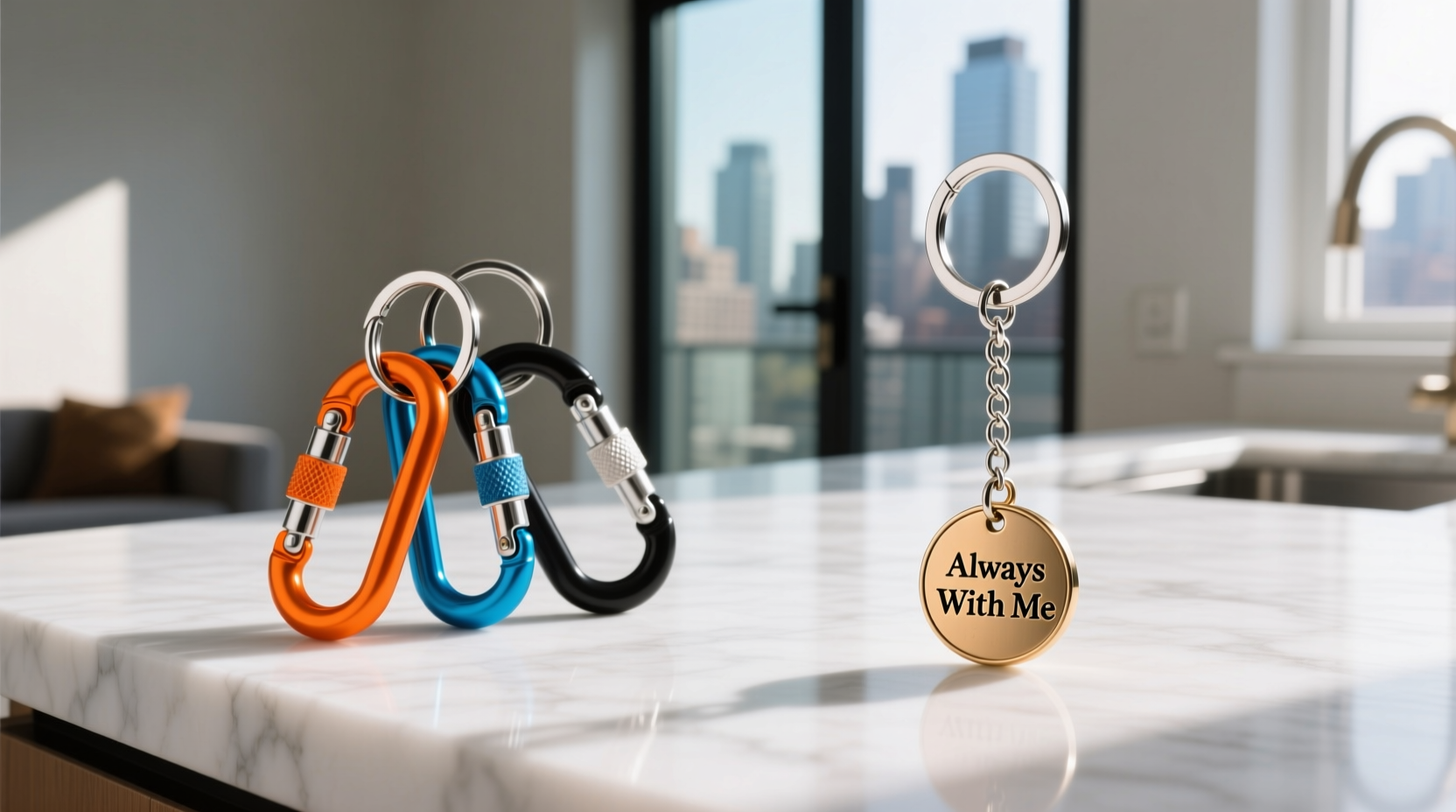
For decades, keychains were treated as accessories—an extension of personal expression. People attached everything from cartoon figurines to engraved lockets, turning their keys into a curated collection of memories and aesthetics. But over the past five years, that mindset has shifted. Urban professionals, outdoor enthusiasts, and everyday commuters increasingly prioritize efficiency and reliability over ornamentation.
This movement mirrors broader cultural trends toward minimalism and intentional living. People are auditing their belongings, asking: *Does this serve a purpose? Is it durable? Can I access it quickly when needed?* Carabiners pass every test. Originally designed for climbers, these robust clips offer secure locking mechanisms, one-handed operation, and resistance to wear. Pendant keychains, while charming, often lack structural integrity and can break under strain or snag on fabric.
Tip: If your keychain regularly tangles or breaks, it’s not just inconvenient—it could be a safety risk. Upgrade to a locking carabiner for peace of mind.Carabiner Keychains: Built for Real Life
Carabiners weren’t designed for keys—they were engineered for life-or-death situations in rock climbing and rescue operations. Their transition into daily carry items speaks volumes about changing expectations. Modern users don’t just want something that holds keys; they want a tool that performs reliably under stress.
Key advantages of carabiner keychains include:
- Quick attachment/detachment: Clip keys onto bags, belts, or gear in seconds.
- Durability: Made from aerospace-grade aluminum or stainless steel, most resist corrosion and impact.
- Security: Locking gates prevent accidental unclipping—a critical feature when carrying valuable sets.
- Versatility: Double as emergency tools, bottle openers, or gear organizers.
Many brands now produce micro-carabiners specifically for EDC (everyday carry), weighing under 15 grams while maintaining full functionality. These models integrate seamlessly into modern lifestyles where mobility and preparedness matter.
Pendant Keychains: Nostalgia vs. Practicality
Pendant-style keychains still have emotional appeal. They’re often gifted, commemorative, or tied to brand loyalty (think logoed merchandise). However, their weaknesses become apparent with regular use:
- Frequent tangling of keys
- Bulkiness in pockets
- Weak split rings prone to bending
- Lack of secure closure
While some high-end pendants use quality materials, most mass-market versions prioritize appearance over engineering. A dropped pendant keychain can snap its chain or lose keys mid-fall—something rarely seen with properly rated carabiners.
“People used to treat keychains like jewelry. Now they expect them to perform like tools.” — Jordan Lee, Product Designer at Trailform Gear
Comparative Breakdown: Carabiner vs. Pendant Keychains
| Feature | Carabiner Keychain | Pendant Keychain |
|---|---|---|
| Durability | High – built for load-bearing | Low to moderate – decorative focus |
| Access Speed | Instant – clip and go | Slow – requires unthreading or unhooking |
| Tangle Resistance | Excellent – keys stay organized | Poor – prone to knotting |
| Safety | Locking mechanism prevents loss | No fail-safe; relies on ring tension |
| Weight | Light (5–20g) | Variable, often heavier due to design elements |
| Use Case Flexibility | Multi-functional (gear, bags, emergency) | Limited to key storage |
Real-World Shift: A Mini Case Study
Take Sarah Kim, a software engineer in Seattle who commutes by bike and ferry. Two years ago, she carried her keys on a leather-wrapped pendant given to her at a tech conference. Within months, the stitching frayed, the split ring bent, and she lost her house key during a rainy morning transfer. After replacing her set, she switched to a titanium micro-carabiner.
“It changed everything,” she said. “I clip it to my jacket zipper when biking, attach it directly to my laptop bag during meetings, and never worry about losing anything. Plus, it survived being run through the washing machine—unlike my old pendant.”
Sarah’s experience reflects a growing number of urban dwellers who value resilience over ornamentation. When your time, security, and convenience are at stake, minor conveniences become major priorities.
How to Make the Switch: Step-by-Step Guide
Moving from pendant to carabiner doesn’t require a complete overhaul. Follow these steps for a smooth transition:
- Evaluate your current key setup: Count how many keys you carry and assess their weight.
- Choose the right size: For 3–5 keys, a 25–30mm carabiner is ideal. Larger sets may need 35mm+.
- Select material: Aluminum for lightness, stainless steel for maximum strength.
- Opt for a locking gate: Screw-lock or twist-lock mechanisms prevent accidental opening.
- Attach and test: Clip to different points (belt loop, backpack, purse) and simulate real-world movement.
- Organize keys: Use O-rings or key keepers to prevent sliding and noise.
Common Myths Debunked
Despite growing popularity, misconceptions persist:
- Myth: Carabiners are only for outdoorsy types.
Reality: Their utility spans offices, gyms, travel, and home use. - Myth: They look too technical or rugged.
Reality: Modern designs come in brushed finishes, muted colors, and compact forms suitable for formal settings. - Myth: All carabiners are created equal.
Reality: Only use those rated for load-bearing (look for CE/UIAA certification, even if not climbing).
FAQ
Can I use any carabiner for my keys?
No. Avoid cheap, uncertified clips sold as “novelty” items. Stick to reputable brands that specify strength ratings (e.g., 2–5 kN minimum for key use). True climbing-grade carabiners are over-engineered but extremely safe.
Won’t a metal clip scratch my phone or devices?
Potentially, if loose. To prevent this, choose carabiners with smooth edges and consider using a silicone sleeve or keeping it clipped away from sensitive surfaces. Many users report no issues after months of daily carry.
Are carabiner keychains TSA-friendly?
Yes. Unlike knives or multitools, carabiners are permitted in carry-on luggage. However, oversized or sharp-edged models may raise questions—opt for rounded, compact designs when traveling.
Final Thoughts: Why This Trend Is Here to Stay
The move from pendant to carabiner keychains isn’t a fleeting fad—it’s a reflection of deeper changes in how we interact with our belongings. As cities grow denser, schedules tighten, and personal responsibility increases, people demand more from even the smallest objects they carry. Keys represent access, security, and independence. How we manage them matters.
Carabiners offer a rare combination: simplicity, strength, and adaptability. They reduce friction in daily routines, lower the risk of loss, and quietly empower users to move faster and safer through their environments. Meanwhile, pendant keychains remain nostalgic—but increasingly impractical.
If you’ve been hesitating to make the switch, consider this: upgrading your keychain isn’t about following a trend. It’s about respecting your time, your tools, and your peace of mind.
🚀 Ready to upgrade your everyday carry? Swap out that flimsy pendant for a reliable carabiner today—and feel the difference in your pocket, bag, or belt loop.








