For many outdoor enthusiasts, the decision between car camping and tent camping isn’t just about preference—it’s a balance of comfort, convenience, safety, and immersion in nature. While both offer access to scenic landscapes and fresh air, they differ significantly in setup, equipment, physical demands, and overall experience. Understanding these differences helps campers make informed choices based on their lifestyle, skill level, and goals.
Car camping typically involves driving to a designated campground and setting up near your vehicle, while traditional tent camping—especially in backcountry settings—requires hiking into remote areas with all gear carried on foot. This distinction shapes every aspect of the trip, from sleep quality to emergency preparedness.
Comfort: Sleep Quality, Temperature, and Convenience
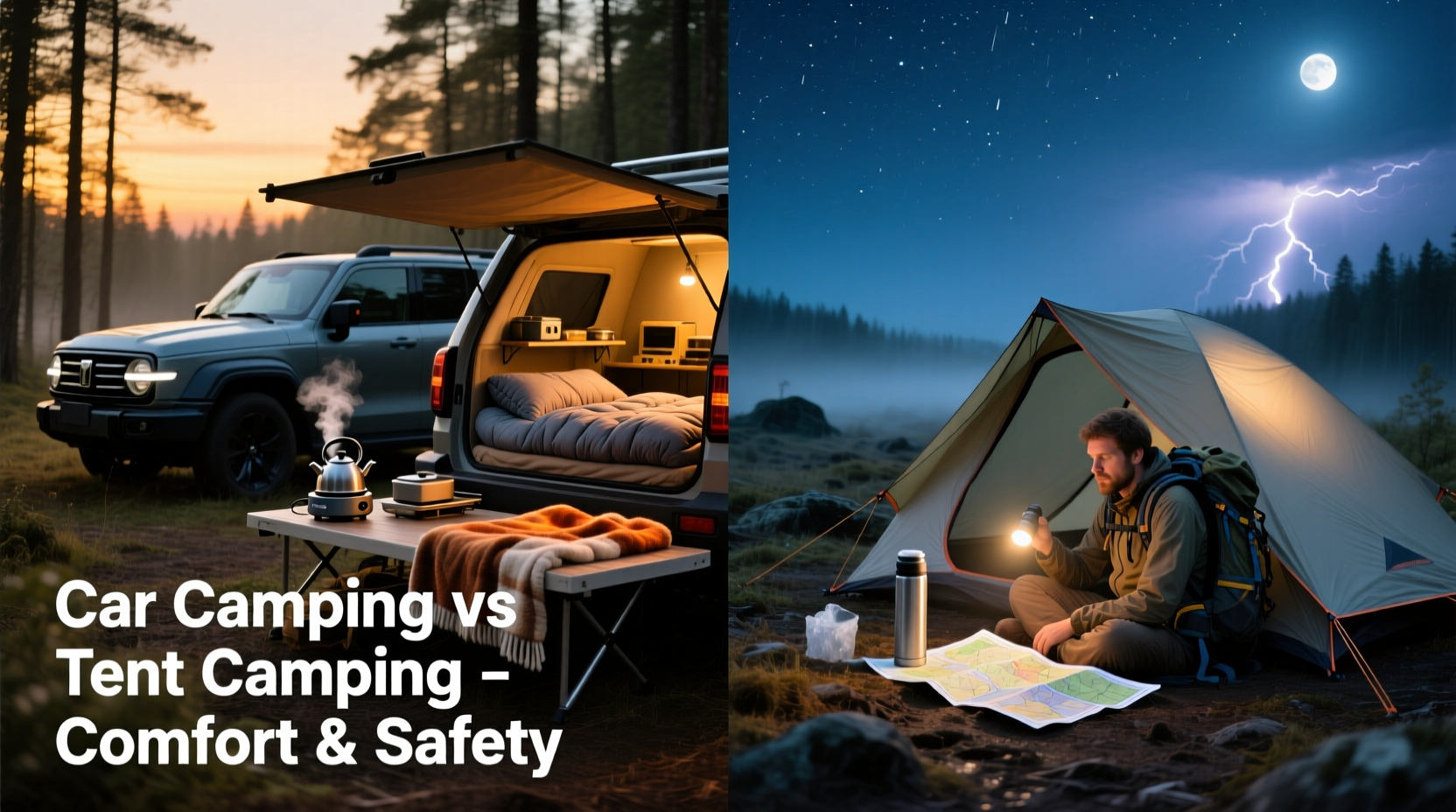
When it comes to comfort, few factors matter more than a good night’s sleep. Car camping generally provides a higher degree of physical ease due to greater access to gear and amenities.
In car camping setups, individuals often bring larger tents, thick sleeping pads or even air mattresses, portable heaters, and extra blankets. Because weight and space aren’t as constrained, campers can pack bulky but cozy items like camp chairs, full kitchens, and insulated sleeping bags rated for colder conditions. Some even install rooftop tents or convert their SUVs into sleeper cabins, eliminating ground-level exposure entirely.
Tent camping, particularly backpacking-style, requires minimizing gear weight. This often means thinner sleeping pads, lighter (and less warm) sleeping bags, and smaller shelters. Sleeping on uneven or rocky terrain is common, and temperature regulation becomes more challenging without supplemental heating sources. The lack of windbreaks and proximity to damp ground can increase discomfort, especially during cold or rainy nights.
Tip: Use a closed-cell foam pad under your inflatable sleeping pad when tent camping—it adds insulation and protects against punctures.Convenience also plays a major role. Car campers can store food, clothing, and electronics nearby, reducing repeated trips to retrieve essentials. They’re more likely to have access to restrooms, potable water, and even electricity. In contrast, tent campers must plan meticulously, packing only what fits in their packs and carrying everything they need—including water purification tools and waste disposal supplies.
Safety Considerations: Risks and Preparedness
Safety differs substantially between the two styles, influenced by accessibility, environmental exposure, and response time in emergencies.
Car camping offers quicker evacuation options. If someone falls ill or gets injured, help is usually reachable within minutes. Cell phone reception tends to be better at established campgrounds, and rangers patrol many sites regularly. Wildlife encounters still occur, but food storage regulations (like bear boxes) and proximity to other people reduce risk. Campfires are often permitted under controlled conditions, providing warmth and psychological comfort.
Tent camping in remote zones increases isolation. A sprained ankle miles from the trailhead can become life-threatening if communication fails. Weather changes pose greater danger; sudden storms may catch hikers off guard with limited shelter. Proper navigation tools, first aid training, and satellite communication devices (e.g., Garmin inReach) are strongly recommended.
“Backcountry travelers should assume no rescue will arrive for 24–72 hours. Self-reliance isn’t optional—it’s essential.” — Dr. Lena Torres, Wilderness Medicine Instructor at NOLS
Bear safety is another critical factor. In grizzly country, car campers must use provided bear lockers, while backpackers rely on bear canisters hung properly from trees (though this isn't always effective). Improper food storage in either scenario invites dangerous animal interactions.
Comparison Table: Key Differences at a Glance
| Factor | Car Camping | Tent Camping (Backpacking) |
|---|---|---|
| Sleep Comfort | Air mattresses, thicker insulation, roomier tents | Lightweight sleeping pads, compact shelters, minimal padding |
| Gear Capacity | High – large coolers, stoves, chairs, extra clothing | Limited – strict weight limits (~20–35 lbs typical) |
| Setup Time | 15–30 minutes (often simpler due to pre-packed gear) | 20–40 minutes (terrain-dependent, may require site leveling) |
| Emergency Access | Fast – vehicle enables quick exit or call for help | Slow – dependent on hike-out time or satellite device |
| Wildlife Risk | Moderate – managed via bear boxes and proximity to others | Higher – reliant on personal discipline and remote protocols |
| Weather Vulnerability | Lower – easier to add layers, retreat to vehicle | Higher – exposed to elements with limited backup shelter |
| Nature Immersion | Lower – noise from nearby campers, roads, generators | Higher – quiet, secluded, deeper connection with surroundings |
Real-World Example: A Weekend in the Sierra Nevada
Consider two friends, Maya and Jordan, planning a weekend trip to the eastern Sierra.
Maya opts for car camping at Whitney Portal, a developed site at 8,300 feet. She drives her SUV equipped with a rooftop tent, brings a propane heater, a cooler stocked with perishables, and a foldable table with lanterns. Her setup takes 20 minutes. When temperatures drop below freezing at night, she climbs into her heated sleeping bag with a hot water bottle. She walks to shared pit toilets and washes her hands at a hand-pump station. On Saturday morning, she drives to a nearby trail for a short hike, returning to a warm breakfast cooked on her two-burner stove.
Jordan chooses to backpack 6 miles into Cottonwood Lakes, carrying a 30-pound pack. He sets up a lightweight dome tent on a sloped granite shelf. His sleeping system includes a down quilt and a thin foam pad. At dusk, winds pick up, flapping the tent walls. He eats dehydrated meals rehydrated with boiled stream water. There’s no restroom; he digs a cathole 200 feet from water sources. When a thunderstorm rolls in Saturday evening, he stays put, listening to rain pelt the fly. Despite the challenge, he feels deeply connected to the alpine silence and star-filled sky.
Both had safe, memorable experiences—but with vastly different comfort thresholds and logistical demands.
Essential Checklist for Choosing Your Style
Use this checklist to determine which form of camping suits your needs:
- ✅ Do you prioritize a comfortable bed and easy access to gear?
- ✅ Are you camping with children, elderly companions, or pets?
- ✅ Is vehicle access available near your destination?
- ✅ Can you tolerate some noise and proximity to other campers?
- ✅ Do you want to cook full meals and bring luxury items (coffee makers, speakers, etc.)?
If most answers are “yes,” car camping is likely the better fit.
- ✅ Are you physically able to hike 5+ miles with a loaded backpack?
- ✅ Do you value solitude and pristine natural environments?
- ✅ Are you trained in wilderness first aid or navigation?
- ✅ Can you manage waste responsibly (pack out trash, human waste)?
- ✅ Are you prepared for unpredictable weather and no immediate help?
If these align with your capabilities and goals, tent camping offers unmatched rewards.
Step-by-Step: Transitioning from Car to Tent Camping
Many car campers eventually seek deeper wilderness experiences. Here’s how to transition safely and comfortably:
- Start with overnight hikes near established trails – Choose routes under 5 miles round-trip with reliable water sources.
- Rent backpacking gear first – Test sleeping bags, packs, and tents before investing.
- Practice setting up your tent at home – Ensure you can do it quickly, even in low light.
- Simulate a multi-day pack – Walk around your neighborhood with a loaded backpack to assess comfort.
- Take a wilderness safety course – Learn navigation, emergency signaling, and basic survival skills.
- Camp near a road-accessible point initially – So you can abort the trip if needed without penalty.
- Gradually increase distance and elevation – Build endurance over multiple trips.
This progression builds confidence while minimizing risk.
Frequently Asked Questions
Is car camping safer than tent camping?
Generally, yes—due to faster access to medical help, better communication options, and reduced physical strain. However, safety depends more on preparation than location. A well-equipped backpacker with strong skills faces fewer risks than an unprepared car camper ignoring fire bans or wildlife warnings.
Can I combine both styles?
Absolutely. Many campers use a \"basecamp\" approach: drive to a trailhead, set up a car camp, then take day hikes into the backcountry with lightweight overnight packs. This blends comfort with exploration and is ideal for families or mixed-skill groups.
What’s the biggest mistake new tent campers make?
Underestimating moisture management. Newcomers often fail to account for condensation inside tents, wet ground seepage, or damp sleeping bags. Using a footprint under the tent, choosing elevated sites, and packing spare dry layers prevent hypothermia and discomfort.
Final Thoughts and Recommendations
The choice between car camping and tent camping ultimately reflects personal values: convenience versus challenge, comfort versus connection. Neither is inherently superior. Car camping lowers barriers to entry, making the outdoors accessible to more people, including those with mobility concerns or limited time. It’s ideal for weekend getaways, family trips, or relaxing escapes.
Tent camping, especially in remote areas, fosters resilience, self-reliance, and a profound sense of place. It demands more but rewards with solitude, stunning vistas, and unforgettable moments under open skies.
Whichever path you choose, preparation is key. Pack appropriately, respect local regulations, and leave no trace. Whether you're zipping up a rooftop tent after grilling dinner or rolling out a sleeping pad beside a mountain lake, the goal remains the same—to find peace, adventure, and renewal in the natural world.
🚀 Ready to plan your next trip? Assess your priorities using the checklist above, gather the right gear, and take your first step toward a more fulfilling outdoor experience. Share your favorite camping story in the comments below!








