Many households operate on convenience and improvisation—especially when one personal care product runs out and another seems like a suitable substitute. One common question that arises in such moments is whether hand soap can be safely used in a body wash dispenser. At first glance, both products serve similar purposes: cleaning the skin. However, their formulations, intended use, and chemical composition differ significantly. Using hand soap in a body wash dispenser may seem harmless, but doing so introduces several potential risks that affect skin health, dispenser functionality, and long-term hygiene.
This article explores the science behind hand soap and body wash, explains why substituting one for the other isn't as simple as it sounds, and outlines practical alternatives to avoid compromising your skincare routine or damaging bathroom fixtures.
Understanding the Key Differences Between Hand Soap and Body Wash
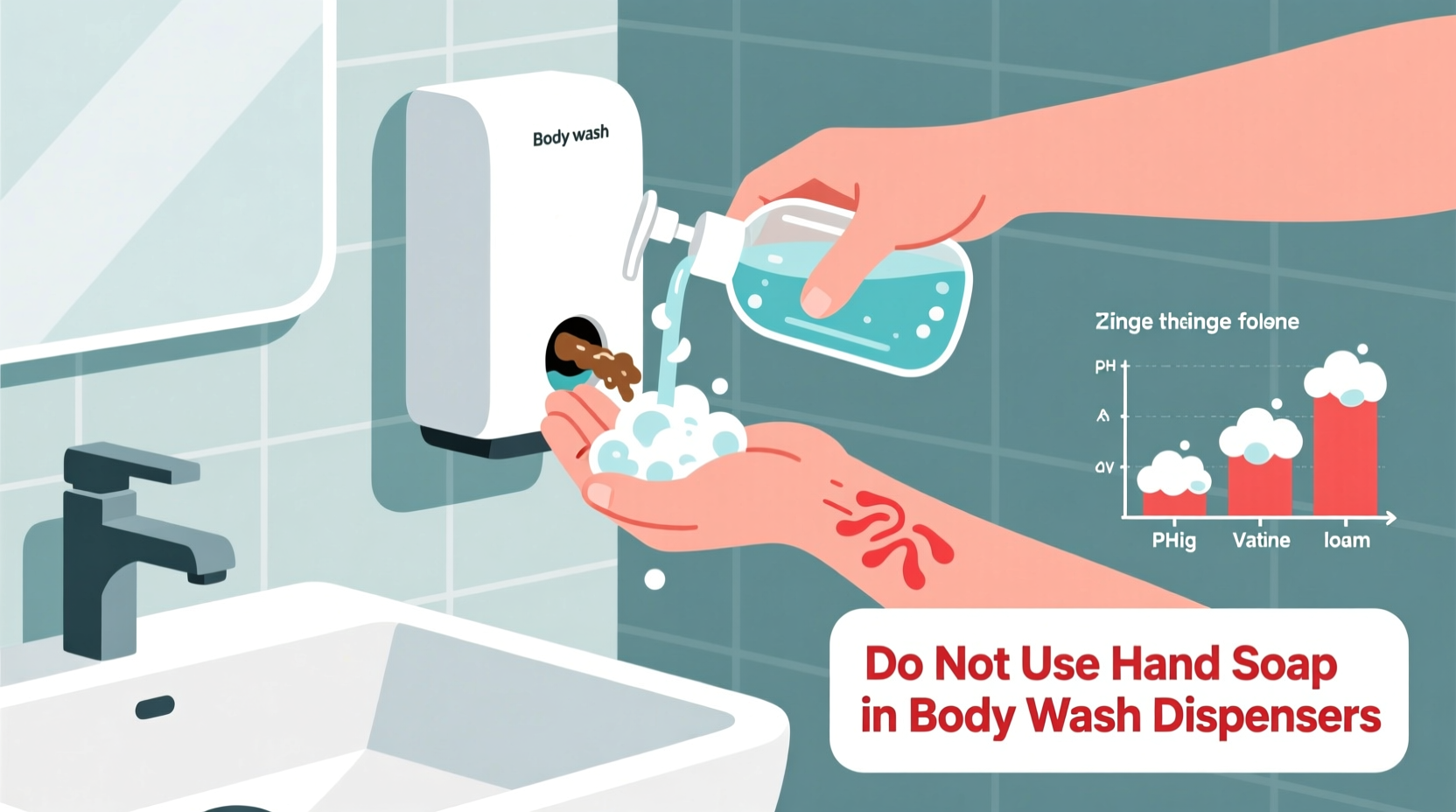
Though hand soap and body wash are both liquid cleansers designed for external use, they are formulated with different priorities in mind. Recognizing these distinctions is essential before considering any substitution.
Hand soap is engineered for frequent use in high-touch areas like sinks. It typically contains stronger surfactants and antimicrobial agents (such as triclosan or benzalkonium chloride) to remove germs, grease, and environmental contaminants from hands. Because hands are exposed to dirt more often and have thicker skin, hand soaps can afford to be more aggressive in cleansing action. Many also include alcohol or drying agents to enhance germ-killing power.
In contrast, body wash is designed for larger surface areas of more sensitive skin. It emphasizes moisturization, pH balance, and gentle lathering. Body washes often contain emollients like glycerin, shea butter, or aloe vera to prevent dryness and irritation. Their pH levels are usually closer to the natural acidity of human skin (around 5.5), which helps maintain the skin’s protective barrier.
Tip: Never assume that two foamy, fragrant liquids meant for skin are interchangeable—formulation matters more than appearance.Potential Risks of Using Hand Soap in a Body Wash Dispenser
While pouring hand soap into a body wash dispenser might solve an immediate shortage, it can lead to unintended consequences across three main areas: skin health, dispenser integrity, and overall hygiene.
Skin Irritation and Dryness
The most immediate risk involves your skin. Hand soaps often strip away natural oils due to their higher alkalinity and harsh surfactants. When applied over large portions of the body—especially on delicate areas like the chest, back, or legs—this can cause dryness, tightness, flaking, or even dermatitis in sensitive individuals.
Dermatologists warn that repeated exposure to alkaline cleansers disrupts the acid mantle—a thin, slightly acidic film on the skin’s surface that acts as a barrier against bacteria, pollutants, and moisture loss. Once compromised, the skin becomes more vulnerable to infections, rashes, and accelerated aging.
“Using hand soap on the body regularly is like using dish detergent on your face—it gets things clean, but at the cost of your skin’s natural defenses.” — Dr. Lena Patel, Board-Certified Dermatologist
Dispenser Clogging and Mechanical Failure
Body wash dispensers—particularly pump-style models—are calibrated for specific viscosities and chemical compositions. Hand soaps vary widely in thickness and ingredient profiles. Some contain abrasives, exfoliants, or insoluble additives that aren’t present in standard body washes. Over time, these particles can accumulate inside the pump mechanism, leading to clogs, inconsistent dispensing, or complete failure.
Foaming dispensers are especially sensitive. They rely on precise air-to-liquid ratios to create lather. Hand soap, which isn’t formulated for foaming systems, may either fail to foam properly or leave residue buildup that degrades internal components.
Unintended Chemical Reactions and Residue Buildup
If the hand soap contains antibacterial agents or alcohol, mixing it with residual body wash inside the dispenser could trigger mild chemical reactions. While not typically dangerous, this may alter scent, consistency, or efficacy. Additionally, leftover deposits from incompatible formulas can encourage bacterial growth within the dispenser if not cleaned thoroughly.
When Substitution Might Be Acceptable (With Caution)
In rare, emergency situations—such as running out of body wash during travel or unexpected guests—using hand soap temporarily may be unavoidable. However, certain conditions must be met to minimize harm.
- Limited Use: Apply only once or twice; do not make it a habit.
- Sensitive Skin Avoidance: If you have eczema, psoriasis, or reactive skin, skip this entirely.
- Mild Formulas Only: Choose fragrance-free, dye-free, non-antibacterial hand soap labeled “gentle” or “moisturizing.”
- Rinse Thoroughly: Ensure all soap is washed off completely to reduce residue and irritation risk.
Even under these conditions, monitor your skin closely for signs of redness, itching, or dryness after use.
Step-by-Step Guide: Safely Cleaning and Repurposing a Dispenser
If you’ve already used hand soap in a body wash dispenser—or want to prepare one for future multi-use flexibility—follow this cleaning protocol to restore function and hygiene.
- Empty the Dispenser: Squeeze or pump out all remaining liquid. Dispose of it safely.
- Disassemble Components: Remove the pump, nozzle, and dip tube if possible.
- Soak in Warm Soapy Water: Use mild dish soap and warm water. Let parts soak for 15–20 minutes.
- Scrub Gently: Use a small brush (like a clean toothbrush) to clean narrow tubing and crevices where residue collects.
- Rinse Thoroughly: Flush all parts with clean water until no suds remain.
- Sanitize (Optional): Soak components in a 1:10 vinegar-water solution or diluted hydrogen peroxide for 10 minutes to kill microbes.
- Air Dry Completely: Allow all pieces to dry on a clean towel overnight before reassembling.
- Refill Appropriately: Only refill with recommended body wash or a compatible liquid soap designed for full-body use.
Do’s and Don’ts: Quick Reference Table
| Do’s | Don’ts |
|---|---|
| Use gentle, moisturizing hand soap only in emergencies | Never use antibacterial or heavily fragranced hand soaps on the body |
| Clean the dispenser thoroughly after switching products | Assume all liquid soaps have the same viscosity or compatibility |
| Check ingredient lists for alcohol, sulfates, and preservatives | Use hand soap daily as a body wash replacement |
| Opt for pH-balanced, sulfate-free body washes for sensitive skin | Ignore signs of skin irritation after substitution |
| Test a small patch of skin first if trying a new product | Leave old residue buildup in pumps or bottles |
Real-World Example: A Traveler’s Mistake
Consider Sarah, a frequent traveler who packed a reusable silicone body wash bottle for her hotel stay. Running low on her usual shower gel, she filled the container with the complimentary hotel hand soap to finish her trip. After two showers, she noticed her lower back and shoulders felt unusually tight and itchy. By day four, faint red patches appeared on her arms.
Upon returning home, she consulted a dermatologist who identified early-stage irritant contact dermatitis caused by prolonged exposure to alkali-based cleansers on sensitive skin. The doctor advised her to discontinue use immediately and switch to a hypoallergenic body wash. She also learned that the pump mechanism in her travel bottle had begun to stick—likely due to calcium deposits from hard water interacting with the hand soap’s mineral content.
This case illustrates how seemingly minor substitutions can cascade into both health and equipment issues when not approached carefully.
Expert Recommendations and Safer Alternatives
Rather than risking skin damage or appliance malfunction, experts recommend proactive solutions:
- Keep Backup Supplies: Store a spare bottle of body wash under the sink or in your travel kit.
- Use Multi-Purpose Cleansers: Some brands offer “all-over” washes safe for hands and body, formulated with balanced pH and mild ingredients.
- DIY Dilution (Advanced): In controlled cases, diluting mild liquid hand soap with distilled water and adding a teaspoon of glycerin *may* reduce harshness—but patch-test first and never use on children or broken skin.
- Switch to Bar Soap Temporarily: A plain glycerin or oatmeal-based bar soap is often gentler than liquid hand soap and compatible with most skin types.
“The safest approach is prevention. Stock up on essentials before you run out, rather than improvising with mismatched products.” — Dr. Marcus Tran, Clinical Skincare Advisor
Frequently Asked Questions
Can I use liquid hand soap in a foaming body wash dispenser?
No, standard liquid hand soap is too thick and chemically incompatible with foaming dispensers. It will likely clog the system and produce poor lather. Foaming dispensers require specially formulated or significantly diluted solutions.
Is antibacterial hand soap safe for my body?
Occasional use may not cause harm, but regular application of antibacterial agents like triclosan on large skin areas is discouraged. The FDA has restricted triclosan in consumer soaps due to concerns about hormone disruption and antibiotic resistance. For general hygiene, plain soap and water are just as effective.
What should I do if my dispenser stops working after using hand soap?
Disassemble and clean all parts following the step-by-step guide above. If the pump remains faulty, consider replacing the pump unit or switching to a wide-mouth bottle that allows easier cleaning and refilling.
Final Thoughts: Prioritize Skin Health and Product Longevity
The convenience of refilling a body wash dispenser with hand soap comes at a hidden cost—one that affects both your skin and the longevity of your bathroom fixtures. While the two products share superficial similarities, their intended functions and chemical designs are fundamentally different. Substituting hand soap for body wash risks irritation, disrupts your skin’s natural balance, and may damage sensitive dispensing mechanisms.
Instead of improvising, plan ahead. Maintain a small stock of reliable body wash, opt for versatile cleansers when appropriate, and always clean dispensers thoroughly between refills. Your skin deserves consistent care based on its needs, not temporary fixes that compromise comfort and safety.
🚀 Take control of your skincare routine today. Audit your bathroom dispensers, check labels, and replace risky substitutes with purpose-designed products. Share this guide with others who might overlook the dangers of everyday swaps.








