Many dog owners assume that once a dog reaches a certain age, their behavior is set in stone. This belief becomes especially frustrating when dealing with persistent barking—particularly at delivery drivers who appear daily, triggering loud, reactive episodes. The good news? Age is not a barrier to change. With the right approach, consistency, and understanding of canine psychology, it is absolutely possible to train an older dog to stop barking at delivery personnel. While it may take more time and patience than training a puppy, the results are often just as effective, if not more meaningful due to the deeper bond already established between owner and pet.
Barking at strangers, especially those approaching the front door, is a natural instinct for many dogs. It stems from territoriality, alertness, and sometimes fear. Delivery drivers, with their sudden appearances, unfamiliar uniforms, and brief visits, represent unpredictable stimuli that can easily trigger a dog’s alarm system. For older dogs, these behaviors may have been reinforced over years, making them deeply ingrained. But reinforcement works both ways: just as bad habits can be strengthened, so too can new, calm responses be taught—even later in life.
Understanding Why Older Dogs Bark at Delivery Drivers
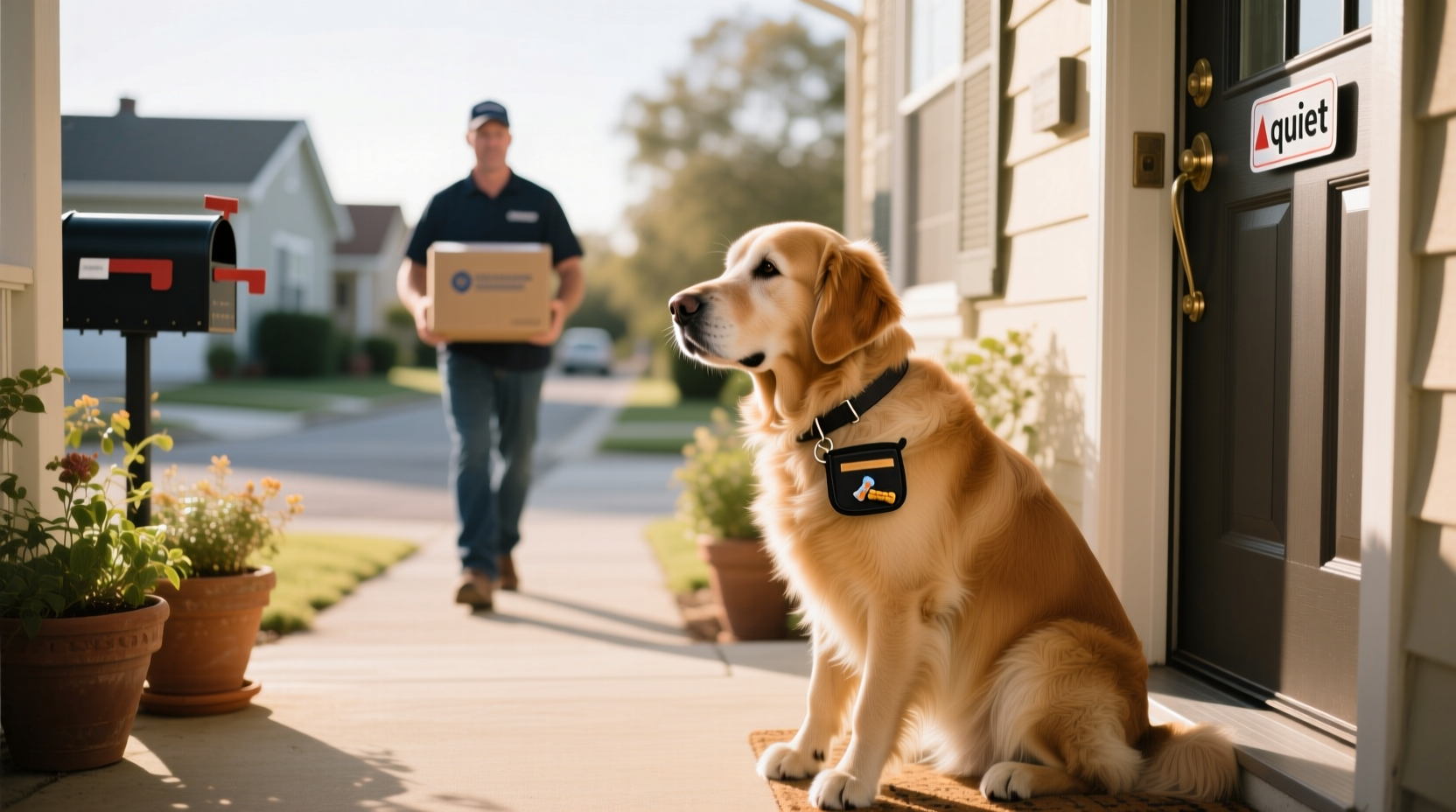
To effectively address barking, it's essential to understand its root causes. In older dogs, barking at delivery personnel isn't usually about aggression; it's typically a combination of instinct, habit, and environmental conditioning.
- Guarding Instinct: Dogs are naturally protective of their home and family. A person approaching the door is seen as a potential threat, prompting the dog to “alert” their human.
- Learned Behavior: If a dog has barked in the past and the visitor left shortly after, the dog may associate barking with successfully driving away intruders.
- Lack of Exposure: Older dogs that weren’t socialized to frequent visitors or uniformed workers may perceive them as unusual or threatening.
- Hearing or Vision Loss: As dogs age, sensory decline can make them more anxious. They may bark preemptively because they can’t clearly see or hear what’s happening until someone is very close.
Recognizing these motivations allows owners to shift from punishment-based corrections to teaching alternative behaviors. Punishing an older dog for barking often increases anxiety and worsens the problem. Instead, the focus should be on building confidence and reinforcing calmness.
Tip: Never yell at your dog to stop barking—it mimics their vocal behavior and can be interpreted as joining in, not correcting.Effective Training Techniques for Older Dogs
Training an older dog requires methods that respect their cognitive patterns, physical comfort, and emotional state. The key is consistency, positive reinforcement, and gradual exposure. Here are several proven techniques:
1. Desensitization and Counter-Conditioning
This two-part method is widely recommended by veterinary behaviorists. Desensitization involves gradually exposing the dog to the trigger (delivery drivers) at a low intensity, while counter-conditioning changes the dog’s emotional response from fear or excitement to calmness.
- Start by playing recorded videos or audio of doorbells and people approaching.
- Present the sound at a volume low enough that your dog notices but doesn’t react.
- Pair the sound with high-value treats—chicken, cheese, or commercial soft treats.
- Gradually increase the stimulus intensity over days or weeks as your dog remains relaxed.
The goal is to create a positive association: “When I hear the doorbell, good things happen.”
2. Teach an Incompatible Behavior
You can’t expect a dog to be quiet without giving them something else to do. Teaching a behavior like “go to your mat” or “sit and focus” provides a clear alternative to barking.
Begin in a quiet environment:
- Use a verbal cue (“Go to place”) and guide your dog to a designated spot with a treat.
- Reinforce staying there for increasing durations.
- Once mastered, practice during low-stress moments when someone approaches the door.
Over time, this becomes a default behavior when the doorbell rings.
3. Manage the Environment First
Before expecting behavioral change, reduce opportunities for rehearsal. Every time your dog barks at a delivery person, the behavior is reinforced. Use management tools such as:
- Closing blinds or curtains to block sightlines.
- Using baby gates to keep the dog in a back room during deliveries.
- Playing white noise or calming music to muffle outside sounds.
Management isn’t a long-term solution, but it creates space for training to succeed.
“Older dogs are fully capable of learning new behaviors. The myth that ‘you can’t teach an old dog new tricks’ is not supported by science. What matters most is consistency and understanding the dog’s motivation.” — Dr. Karen Overall, Veterinary Behavioral Medicine Specialist
Step-by-Step Training Timeline
Below is a realistic 6-week plan to reduce and eventually eliminate barking at delivery drivers. Adjust pacing based on your dog’s progress.
| Week | Focus | Key Actions |
|---|---|---|
| 1 | Baseline & Management | Record barking frequency. Block visual access to the door. Begin feeding meals in a quiet room to build focus. |
| 2 | Sound Conditioning | Play low-volume doorbell recordings. Reward calmness with treats. Limit sessions to 3–5 minutes, 2x/day. |
| 3 | Introduce Alternative Behavior | Teach “go to mat” command in distraction-free setting. Practice 5x daily. |
| 4 | Combine Cues with Simulated Triggers | Ring doorbell lightly while cueing “go to mat.” Reward compliance. Increase sound level gradually. |
| 5 | Real-World Practice | Ask a friend to approach the door. Cue desired behavior. Reinforce heavily for calmness. |
| 6 | Generalization & Maintenance | Practice with different people, times, and delivery types. Continue reinforcement even after success. |
Progress may not be linear. Some days will be better than others. The critical factor is persistence. Even partial improvements—like barking less intensely or stopping faster—are signs of forward movement.
Mini Case Study: Max, the 9-Year-Old Beagle
Max, a nine-year-old beagle from Columbus, Ohio, had spent three years barking wildly every time a package arrived. His owner, Sarah, feared neighbors would complain and worried Max was stressed. After consulting a certified dog trainer, she began a structured program combining desensitization and redirection.
She started by closing the blinds and feeding Max peanut butter-filled Kongs whenever the doorbell rang. Over two weeks, she introduced recorded Amazon delivery chimes at low volume, pairing each with treats. She then taught Max to go to his bed when she said “settle,” rewarding him with small bits of chicken.
By week five, Max ran to his bed when he heard the doorbell—even without a treat offered. When a real delivery came, he glanced toward the door but stayed on his mat. Within eight weeks, Max no longer barked at delivery drivers. Sarah noted not only reduced noise but also calmer overall behavior.
“I thought he was just set in his ways,” Sarah said. “But he learned faster than I expected. It just took breaking the habit loop and giving him a better job to do.”
Common Mistakes That Hinder Progress
Even well-intentioned owners can sabotage training efforts. Avoid these pitfalls:
- Inconsistency: One day ignoring barking, the next yelling—confuses the dog.
- Expecting Immediate Results: Behavioral change takes time, especially for long-standing habits.
- Using Negative Reinforcement: Yelling, spraying water, or shock collars increase fear and damage trust.
- Practicing Only During Real Deliveries: This offers poor control over intensity and timing. Controlled simulations are far more effective.
- Skipping Management: Allowing repeated barking rehearsals undermines training gains.
Checklist: How to Train Your Older Dog to Stop Barking at Delivery Drivers
Follow this actionable checklist to ensure comprehensive, effective training:
- ✅ Assess your dog’s current barking pattern and triggers.
- ✅ Block visual access to the front door using curtains or barriers.
- ✅ Choose a high-value treat your dog loves exclusively for training.
- ✅ Teach a replacement behavior (e.g., “go to mat” or “sit and focus”).
- ✅ Begin desensitization with low-volume recordings of doorbells and footsteps.
- ✅ Pair calm behavior with immediate rewards—timing is crucial.
- ✅ Gradually increase stimulus intensity as your dog remains relaxed.
- ✅ Practice with friends simulating deliveries before real-world testing.
- ✅ Maintain consistency across all household members—everyone must follow the same rules.
- ✅ Continue reinforcement even after success to prevent relapse.
FAQ: Common Questions About Training Older Dogs
Can an 8-year-old dog still learn new behaviors?
Absolutely. Cognitive ability in healthy senior dogs remains strong. While learning may be slightly slower than in puppies, older dogs often have better focus and less impulsivity, making training more efficient in some cases.
What if my dog has hearing loss? Will training still work?
Yes, but adjustments are needed. Use visual cues (hand signals) and vibrations (tapping the floor) to get attention. Focus on tactile rewards like gentle petting combined with treats. Ensure the dog sees you clearly during training sessions.
How long does it usually take to stop barking at delivery drivers?
Results vary, but most dogs show improvement within 4–8 weeks of consistent daily practice. Complete cessation may take longer, especially if the behavior has been ongoing for years. Patience and routine are key.
Conclusion: Yes, You Can Make a Difference
Training an older dog to stop barking at delivery drivers isn’t just possible—it’s a testament to the adaptability and emotional intelligence of dogs at any age. The process strengthens the bond between pet and owner, builds the dog’s confidence, and creates a more peaceful home environment. Success doesn’t require perfection, just commitment. By understanding the why behind the barking, applying science-backed techniques, and avoiding common mistakes, you give your dog the tools they need to respond differently.
Every dog deserves the chance to learn, regardless of age. Start today with one small step: close the blinds, play a recording, and offer a treat when your dog stays calm. Over time, those moments add up to lasting change. Your older dog hasn’t stopped learning—they’ve just been waiting for the right guidance.
💬 Have you successfully trained an older dog to stop barking? Share your story in the comments—your experience could inspire another pet owner to keep trying!








