
For generations, Campbell's creamy soups have occupied a central place in American pantries—not just as standalone meals, but as essential culinary tools. Their convenience, consistency, and rich textures make them go-to ingredients for everything from casseroles to sauces. While often associated with comfort food classics like green bean casserole, the true value of Campbell's creamy soups lies in their versatility, reliability, and ability to enhance flavor and texture with minimal effort. Understanding the full range of creamy soup offerings—from iconic staples to seasonal innovations—allows home cooks to use them more intentionally, transforming simple ingredients into satisfying dishes.
Definition & Overview
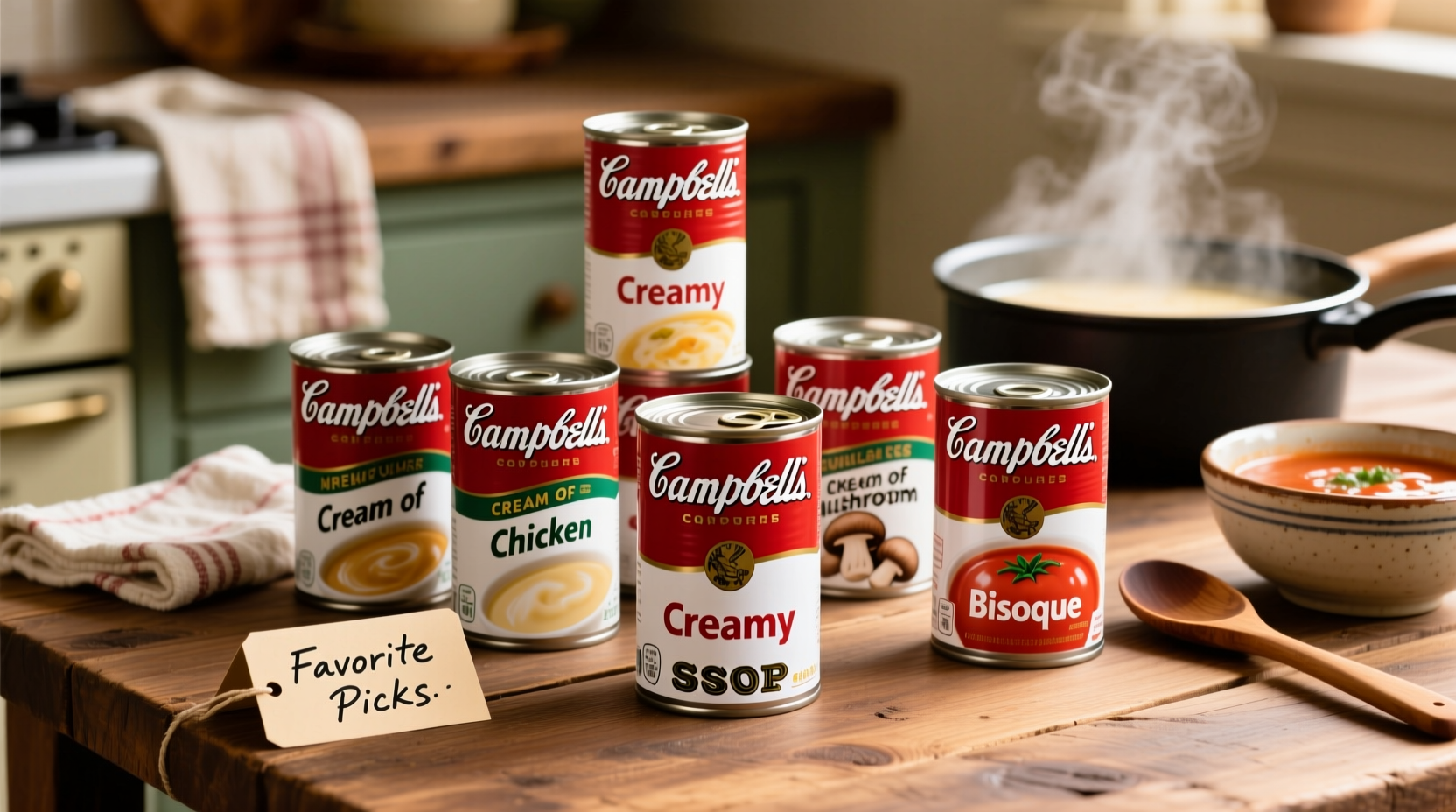
Campbell's creamy soups are shelf-stable, condensed canned soups designed for both direct consumption and use as cooking ingredients. Unlike ready-to-eat soups, these require dilution with water or another liquid before serving. The \"creamy\" designation refers not only to texture but also to formulation: they contain dairy or dairy-like components (such as milk, cream, or non-dairy thickeners), starches, and emulsifiers that create a smooth, velvety mouthfeel without requiring roux-based preparation.
Introduced in the 1930s, Campbell's condensed creamy soups revolutionized home cooking by offering restaurant-quality consistency at an accessible price point. The most famous example, Cream of Mushroom, became a cultural staple after being featured in a 1955 recipe for green bean casserole—a dish now synonymous with American holiday tables. Today, the lineup includes over a dozen varieties, each tailored to complement specific proteins, vegetables, and cuisines.
These soups are categorized under Campbell’s “Condensed” line and differ significantly from their broth-based counterparts (like chicken noodle or tomato). They function less as soups and more as sauce bases, gravies, or moisture regulators in baked dishes. This dual-purpose nature—edible on their own yet engineered for integration—sets them apart in the world of processed foods.
Key Characteristics
| Characteristic | Description |
|---|---|
| Flavor Profile | Balanced savory base with subtle seasoning; varies by variety (e.g., mushroom umami, cheddar sharpness) |
| Aroma | Mildly aromatic when heated; intensified by added ingredients during cooking |
| Texture | Thick, smooth, and cohesive; designed to cling to ingredients without separating |
| Color | Varies: ivory (Classic), golden (Cheddar), tan (Mushroom), pale green (Celery) |
| Culinary Function | Sauce thickener, binder in casseroles, moisture retainer in slow-cooked dishes |
| Shelf Life | 2–3 years unopened; refrigerate within 2 hours if opened and unused |
| Heat Sensitivity | Stable under baking and simmering; may separate if boiled vigorously |
Variants & Types
Campbell’s offers a diverse selection of creamy soups, each formulated to serve distinct culinary roles. While some are universally useful, others cater to niche applications or regional tastes. Below is a breakdown of the most widely available varieties, including their best uses and distinguishing features.
1. Cream of Mushroom
The most iconic of the lineup, this variety delivers earthy depth and body. It contains small pieces of real mushrooms and is fortified with MSG for enhanced umami. Ideal for casseroles, meatloaf mixtures, and mushroom-based sauces. A standard in green bean casserole and beef stroganoff-style dishes.
2. Cream of Chicken
A neutral, poultry-forward base with mild seasoning. Often used as a substitute for homemade chicken gravy. Excellent in rice bakes, stuffing binders, and creamy pasta dishes where a light protein accent is desired.
3. Cream of Celery
Features a clean, vegetal note with subtle saltiness. Frequently used in tuna or chicken salads bound with mayo, as well as vegetable gratins. Its clarity makes it suitable for lighter casseroles without overpowering other ingredients.
4. Cheddar Cheese
Bright orange in color and sharply flavored, this version adds richness and tang. Best paired with potatoes, broccoli, or macaroni. Works well in layered baked dishes or stirred into hot pasta for instant cheese sauce.
5. Golden Mushroom
A richer, darker cousin to Cream of Mushroom, made with sautéed onions and deeper browning for a caramelized profile. Preferred in gourmet-style recipes where complexity is key. Often used in upscale versions of classic casseroles.
6. Roasted Garlic
Infused with roasted garlic essence, offering sweet pungency without raw bite. Adds depth to mashed potatoes, cauliflower bakes, or as a spread base when mixed with sour cream. Less common but increasingly popular in modernized recipes.
7. French Onion
Modeled after the classic soup, this creamy variant includes onion bits and beef stock notes. Used creatively in shepherd’s pie toppings, burger blends, or as a dip enhancer. Pairs well with Gruyère or Swiss cheese finishes.
8. Broccoli Cheese
Combines creamy texture with visible specks of broccoli and cheddar flavor. Functions as both vegetable and sauce component. Common in low-effort side dishes or as a filling for stuffed potatoes.
9. Tomato with Basil & Mozzarella (Limited Edition)
A seasonal offering mimicking Caprese flavors. More acidic than other creamy soups, making it suitable for layering with pasta and fresh herbs. Not a year-round product, so availability varies.
TIP: When a specific creamy soup is unavailable, combine a neutral base (like Cream of Chicken) with complementary seasonings. For example, add dried thyme and Worcestershire to approximate Cream of Mushroom, or stir in grated cheddar to boost Cream of Celery into a cheese sauce.
Practical Usage: How to Use Campbell's Creamy Soups in Cooking
The true power of Campbell’s creamy soups emerges not when eaten straight from the can—but when integrated into broader recipes. Their primary functions include binding, enriching, and moistening, which makes them indispensable in time-sensitive or resource-limited kitchens.
In Casseroles
This is the classic application. One can (10.5 oz) of condensed soup typically replaces one cup of homemade sauce. Combine with cooked starch (rice, pasta, potatoes), protein (chicken, tuna, ground beef), and vegetables. Bake at 350°F (175°C) for 25–35 minutes until bubbly.
Example: Tuna noodle casserole using Cream of Celery, mixed with egg noodles, canned tuna, frozen peas, and topped with buttered breadcrumbs.
As a Sauce Base
Dilute one can with 1 cup of milk or half-and-half instead of water for a richer sauce. Simmer gently with herbs, garlic, or Parmesan to build flavor. Use over grilled chicken, steamed vegetables, or fish fillets.
Ratio: 1 can soup + 1 cup liquid = ~1.75 cups finished sauce.
In Meat Mixtures
Add ½ to 1 can per pound of ground meat in meatloaf, meatballs, or stuffed peppers. The soup retains moisture during baking and prevents dryness while contributing subtle flavor.
With Slow Cookers
Use as a self-contained liquid and thickener in crockpot meals. Combine with chicken breasts, frozen vegetables, and spices for a hands-off stew. Avoid boiling; cook on low for 6–8 hours.
As a Dip or Spread
Mix one can with 16 oz of sour cream or cream cheese for a quick party dip. Add bacon bits, shredded cheese, or jalapeños for variation. Serve warm with tortilla chips or bread.
Enhancing Store-Bought Meals
Stir a few tablespoons into frozen skillet meals, boxed mac and cheese, or instant mashed potatoes to improve texture and depth. Even premium frozen entrées benefit from a spoonful stirred in post-heating.
\"Campbell’s creamy soups are the ultimate kitchen hack—they do the work of a roux, stock reduction, and emulsification in one can.\" — Chef Maria Thompson, Culinary Instructor, Institute of American Home Cooking
Comparison with Similar Ingredients
Campbell’s creamy soups are frequently compared to other canned soups, jarred sauces, and homemade alternatives. Understanding the distinctions ensures proper usage and avoids substitution errors.
| Product | Texture | Flavor Control | Best Use Case | Substitution Feasibility |
|---|---|---|---|---|
| Campbell’s Creamy Soups | Thick, uniform, pre-thickened | Low (fixed seasoning) | Casseroles, binders, quick sauces | N/A (baseline) |
| Homemade Béchamel | Smooth but requires technique | High (customizable) | Lasagna, gratins, soufflés | Possible, but labor-intensive |
| Jarred Alfredo Sauce | Rich, oily, sometimes grainy | Medium (can be adjusted) | Pasta dishes, pizza base | Limited—higher fat, different consistency |
| Broth-Based Canned Soups | Thin, watery | Medium | Soups, stews, poaching liquids | No—lacks thickening agents |
| Dry Soup Mixes (e.g., Lipton) | Requires addition of dairy | High (add your own cream) | Custom sauces, marinades | Yes—with milk and thickener |
The key advantage of Campbell’s creamy soups is their built-in balance of fat, starch, and seasoning. Unlike dry mixes, they require no additional thickeners. Unlike jarred sauces, they integrate seamlessly into composite dishes without dominating. And unlike homemade sauces, they deliver consistent results every time—critical for novice cooks or high-volume meal prep.
Practical Tips & FAQs
Can I use Campbell’s creamy soups without adding water?
No. Using undiluted soup will result in an overly thick, gummy texture. Always follow label instructions: mix one can with approximately one can of water or milk unless the recipe specifies otherwise.
Can I freeze dishes made with creamy soups?
Yes, but with caveats. Dishes containing creamy soups may separate upon thawing due to starch retrogradation and fat migration. To minimize this, cool quickly, store airtight, and reheat gently with a splash of milk. Stir frequently to re-emulsify.
Are there low-sodium versions available?
Yes. Campbell’s produces lower-sodium variants of Cream of Mushroom, Cream of Chicken, and Cream of Celery. These contain roughly 50% less sodium than original versions and are labeled clearly on the can.
How can I make creamy soups taste less processed?
- Stir in fresh herbs (parsley, thyme, chives) after heating.
- Add a splash of lemon juice or vinegar to brighten flavors.
- Top with toasted nuts, crispy onions, or grated hard cheese before serving.
- Sauté aromatics (garlic, shallots, mushrooms) first, then blend in the soup.
What are the best cheeses to pair with each variety?
- Cream of Mushroom: Gruyère, Fontina, or Parmesan
- Cream of Chicken: Asiago or mild provolone
- Cream of Celery: Blue cheese or feta (in salads)
- Cheddar Cheese: Extra-sharp cheddar or smoked Gouda
- Golden Mushroom: Wild mushroom powder + Parmesan
Can I use plant-based milk as a diluent?
Yes. Unsweetened almond, oat, or soy milk can replace water or dairy milk. Avoid sweetened or flavored versions, as they alter taste. Note that coconut milk may add noticeable sweetness and aroma, best reserved for tropical-inspired dishes.
Are Campbell’s creamy soups gluten-free?
Most are not. The standard condensed creamy soups contain wheat-derived flour as a thickener. However, Campbell’s offers a limited selection of gluten-free soups under its “Well Yes!” line, though these are not condensed and differ in function. Always check labels if preparing for gluten-sensitive individuals.
PRO TIP: For a restaurant-style finish, deglaze your pan with a splash of white wine or sherry after sautéing vegetables, then stir in the diluted creamy soup. This builds layers of flavor while maintaining convenience.
Summary & Key Takeaways
Campbell’s creamy soups are more than nostalgic pantry relics—they are functional culinary tools with enduring relevance in modern kitchens. Their ability to deliver consistent texture, flavor enhancement, and moisture control makes them invaluable for weeknight dinners, holiday feasts, and everything in between.
- Versatility: Function as sauce bases, binders, and enrichers across proteins, grains, and vegetables.
- Consistency: Eliminate the guesswork of roux-making or sauce reduction.
- Accessibility: Affordable, shelf-stable, and widely available—ideal for emergency meals or budget-conscious cooking.
- Upgradability: Easily elevated with fresh ingredients, herbs, and quality add-ins.
- Limited Customization: Pre-seasoned nature means flavor adjustments must occur post-mixing.
While not substitutes for scratch-made sauces in fine dining, Campbell’s creamy soups excel in practicality. They empower home cooks to produce satisfying, cohesive meals with minimal time and skill investment. Whether reviving a classic green bean casserole or inventing a new family favorite, understanding the nuances of each variety allows for smarter, more creative use.
Next time you reach for a can, consider not just what the soup is—but what it can become. Experiment with one new application this week: swirl it into mashed potatoes, layer it into a breakfast strata, or blend it into a quick pot pie filling. The pantry staple you’ve overlooked might just be your most reliable kitchen ally.









