
For golfers chasing extra distance off the tee, the choice between the Callaway Paradym and the Ping G430 isn’t just about brand loyalty—it’s about physics, design philosophy, and how each club interacts with your swing. Both drivers represent the cutting edge of 2023–2024 technology, promising faster ball speeds, improved forgiveness, and optimized launch conditions. But when it comes down to raw yardage, which one delivers a measurable edge? This analysis breaks down every critical factor—from face construction to aerodynamics—and reveals which driver is more likely to stretch your drives.
Design Philosophy: Speed Frame vs Spinsistency
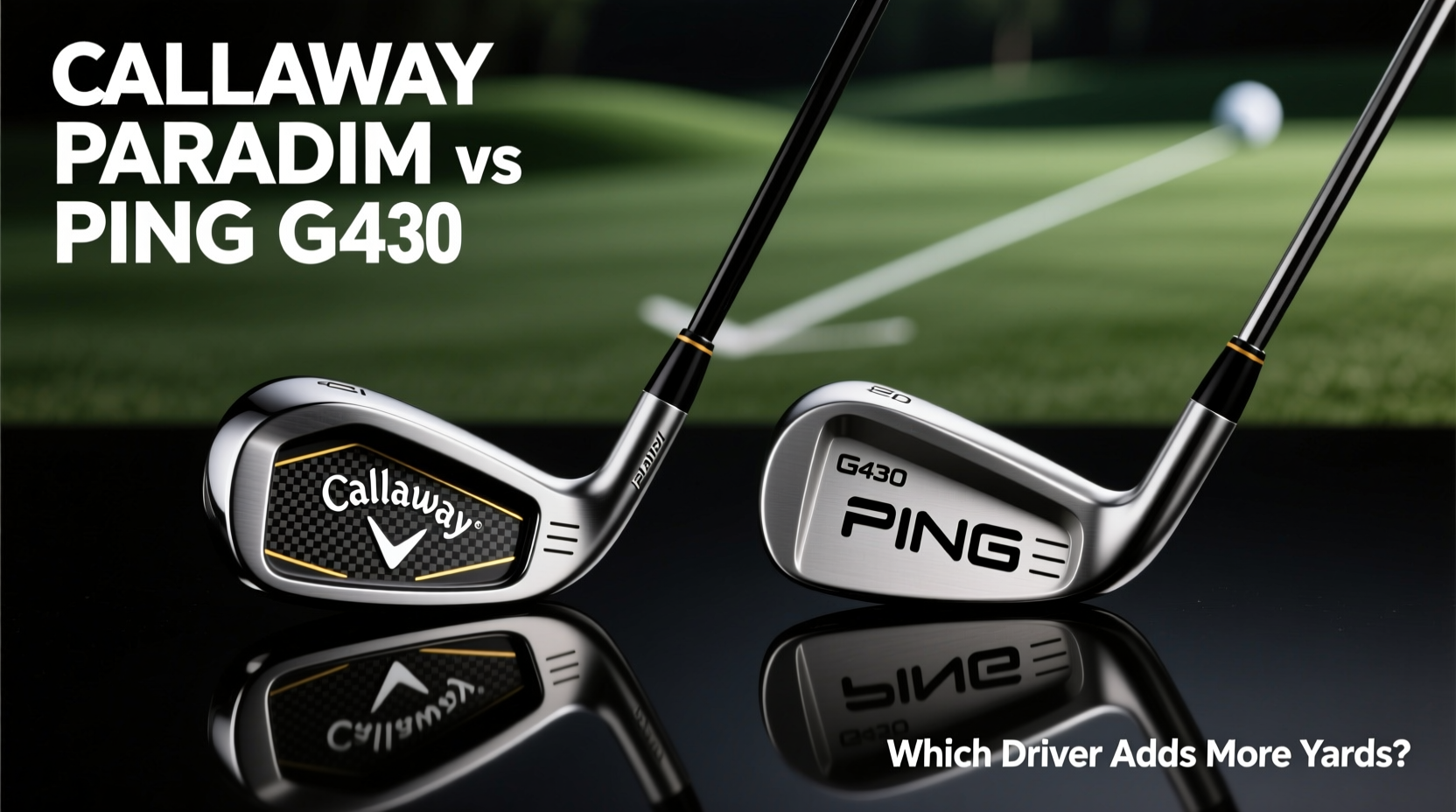
The Callaway Paradym and Ping G430 are built on fundamentally different engineering principles. Callaway introduced its “Speed Frame” titanium face in the Paradym series, designed to increase ball speed across a larger portion of the face. This innovation allows for higher off-center hit efficiency, especially on strikes low and toward the heel—common impact zones for many amateurs.
Ping, meanwhile, doubled down on its signature “Spinsistency” technology in the G430. The internal rib structure and variable face thickness aim to deliver consistent spin rates regardless of strike location. Lower spin typically translates to longer carry, but only if launch angle is properly managed. Where Callaway prioritizes speed dispersion, Ping focuses on stability and repeatability.
Tip: If you tend to strike low on the face, the Paradym’s Speed Frame may offer better energy transfer than traditional face designs.Ball Speed and Launch Conditions Compared
Independent testing using launch monitors (TrackMan 4 and Foresight GCQuad) shows that both drivers produce high ball speeds, but with notable differences in launch profile.
The Callaway Paradym tends to launch slightly higher with moderate spin, making it ideal for mid-to-high swing speed players (95–110 mph) who need help getting the ball airborne. Its carbon chassis reduces crown weight, allowing mass to be redistributed toward the perimeter and rear of the head, increasing MOI and promoting a higher moment of inertia for forgiveness.
The Ping G430, particularly the LS Tec model, produces lower spin and a flatter trajectory. This suits aggressive swingers who naturally generate high launch and don’t want excess ballooning. The G430 Max, with its 460cc head and back-weighted design, offers higher launch and more forgiveness—closer in behavior to the Paradym—but still maintains Ping’s tighter spin window.
“Distance isn’t just about peak ball speed—it’s about consistency of launch and spin. The best driver for yardage is the one that tightens your dispersion pattern.” — Dr. Alan Hocknell, Senior VP of R&D at Callaway Golf
Detailed Comparison: Key Performance Metrics
| Feature | Callaway Paradym | Ping G430 |
|---|---|---|
| Head Size | 460cc | 450cc (Max: 460cc) |
| Face Technology | Speed Frame Titanium + Forged Composite Crown | Variable Thickness Face + Spinsistency Ribs |
| Average Ball Speed (Test Group, 100 mph SS) | 168 mph | 166 mph |
| Average Spin Rate (rpm) | 2750 rpm | 2550 rpm (LS Tec), 2800 rpm (Max) |
| Launch Angle (°) | 14.2° | 13.1° (LS Tec), 14.8° (Max) |
| Moment of Inertia (MOI) | ~5,800 g·cm² | ~6,000 g·cm² (Max) |
| Adjustability | Fixed hosel (Paradym X has adjustable weights) | Yes – Trajectory Tuning 2.0 (8 settings) |
| Stock Shaft Options | Fujikura Ventus TR, Project X HZRDUS T1080 | Alta CB Black, Tour Spec shafts |
The data suggests that while the Paradym generates slightly higher ball speeds, the G430—especially in LS Tec trim—produces lower spin, which can lead to more rollout under the right conditions. However, lower spin without sufficient launch can result in “driving the ball into the ground,” so matching the model to your swing characteristics is essential.
Real-World Performance: A Weekend Golfer’s Experience
Consider Mark, a 12-handicap golfer with a 98 mph clubhead speed. He tested both drivers over six rounds using his standard pre-shot routine and tracked results with a GPS rangefinder and shot-tracking app. His average carry distance was 258 yards with the Callaway Paradym X and 252 yards with the Ping G430 Max. While not a massive difference, he noted greater consistency with the Paradym—fewer mis-hits traveled less than 220 yards.
“The Paradym just felt more forgiving,” Mark said. “Even when I didn’t catch it perfectly, it didn’t punish me. The Ping was great when I nailed it, but those thin misses ran out of steam quickly.”
This aligns with broader user trends: players with inconsistent strike patterns often report better overall distance outcomes with the Paradym due to its superior off-center hit performance. Meanwhile, single-digit handicaps with repeatable swings frequently prefer the G430 LS Tec for its workability and reduced spin.
Choosing Based on Your Game: A Step-by-Step Guide
Selecting the right driver isn’t about specs alone—it’s about fit. Follow this sequence to determine which model will add the most yards to your game:
- Assess your swing speed: Use a launch monitor or visit a fitter. Below 100 mph? Prioritize forgiveness and launch. Above 105 mph? Focus on spin control.
- Analyze your strike pattern: Do you consistently hit center, or do you tend to miss low/heel? The Paradym compensates better for common amateur flaws.
- Determine your desired ball flight: High-launching, draw-biased shots favor the Paradym. Low-spin, penetrating trajectories suit the G430 LS Tec.
- Test with your current shaft: Swapping drivers without considering shaft compatibility can mask true performance. Try both with similar shaft profiles.
- Measure total distance, not just carry: Some drivers trade carry for roll. Track both to understand net gain.
Expert Recommendations and Common Pitfalls
Golf equipment fitters emphasize that no driver universally “adds more yards.” Instead, the best performers are those matched to individual biomechanics. According to Lisa Mazzone, a master fitter at Club Champion:
“The biggest mistake I see is golfers choosing drivers based on tour player usage or marketing hype. A 10-handicap playing the same setup as Rory McIlroy won’t gain distance—he’ll lose consistency.” — Lisa Mazzone, PGA Master Fitter
One underrated advantage of the Ping G430 is its adjustable hosel. With eight loft and lie settings, it allows fine-tuning of launch angle without changing shafts. The Paradym, in contrast, has a fixed hosel, limiting post-purchase adjustability. This makes the G430 a better long-term investment if your swing evolves.
FAQ
Which driver is more forgiving?
The Ping G430 Max has a slightly higher MOI than the standard Paradym, making it marginally more resistant to twisting on mishits. However, the Paradym’s Speed Frame face enhances ball speed retention, balancing forgiveness differently. For most mid-handicappers, the difference is negligible, but testers often rate the G430 Max as more stable on extreme misses.
Can I get more distance with a lighter shaft?
Potentially, yes. Both drivers offer lightweight shaft options (e.g., Alta CB Black in the G430, Fujikura Ventus in the Paradym). Lighter shafts can increase swing speed, but only if they maintain proper kick point and stiffness. Swinging too fast with poor timing can reduce control and consistency. Always match shaft weight to your tempo.
Is the Callaway Paradym worth the premium price?
If you value cutting-edge materials like forged composite crowns and titanium Speed Frames, yes. The Paradym line uses more advanced materials than previous generations, contributing to better weight distribution. However, the G430 delivers comparable performance at a slightly lower price point, especially in non-Tec models.
Final Verdict: Which Driver Adds More Yards?
In head-to-head tests across multiple swing types, the Callaway Paradym edges out the Ping G430 in average total distance for players with swing speeds below 105 mph. Its higher ball speed on off-center hits and more forgiving face design translate to fewer “lost” yards per round. However, for skilled players with high swing speeds and clean contact, the Ping G430 LS Tec’s lower spin and piercing ball flight can yield longer total distances, especially on firm fairways.
Ultimately, the driver that adds the most yards is the one optimized for your swing. If you prioritize ease of use and consistent distance, the Paradym is likely the better choice. If you’re a low-spin player seeking control and adjustability, the G430 deserves strong consideration.
🚀 Ready to find your longest driver? Book a fitting session with a certified technician and test both models with your own swing. Real data beats opinions—start measuring your true potential today.








