
When it comes to balancing sun safety and personal style, headwear plays a critical role—especially for those who value both UV protection and maintaining their hairstyle. The bucket hat and the baseball cap are two of the most popular choices, each with loyal followings across fashion, outdoor recreation, and urban culture. But when you're trying to protect your skin from harmful rays while preserving your hair’s natural volume, which one truly wins?
This isn’t just about aesthetics. Prolonged sun exposure increases the risk of skin cancer, premature aging, and scalp damage. At the same time, no one wants to remove their hat only to reveal a flattened crown or sweaty, matted strands. The ideal sun hat should shield the face, neck, ears, and scalp without compromising on comfort or hairstyle integrity.
To make an informed choice, we’ll dissect both options based on sun coverage, material breathability, fit dynamics, and real-world wearability—all while keeping hair volume in mind.
Sun Protection: Coverage Matters Most
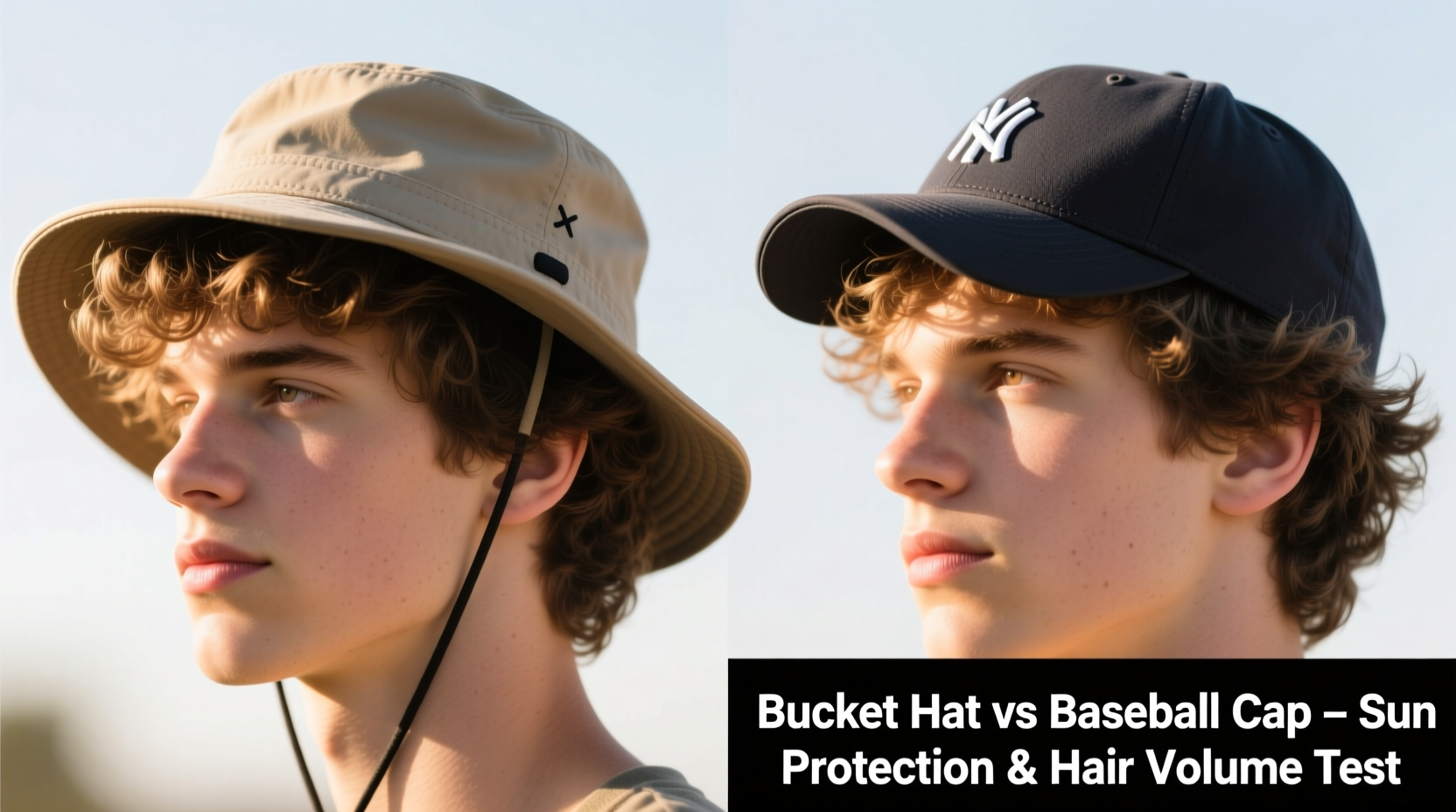
The primary purpose of wearing a sun hat is to reduce UV exposure. How well each hat performs depends largely on its design and brim size.
Baseball caps are designed with sport in mind—they offer excellent frontal protection for the face, nose, and forehead. However, they leave the ears, back of the neck, and sides of the face exposed. This limited coverage creates significant blind spots in UV defense, especially during peak sun hours (10 a.m. to 4 p.m.). According to the Skin Cancer Foundation, up to 80% of facial sun damage occurs on the front of the face, but the back of the neck and ears are also high-risk areas for skin cancers.
In contrast, bucket hats typically feature a 360-degree brim that extends evenly around the head. This wraparound design provides consistent shade for the cheeks, jawline, ears, and nape of the neck—areas often neglected by traditional caps. A study published in *Photodermatology, Photoimmunology & Photomedicine* found that wide-brimmed hats reduced overall UV exposure to the head and neck by up to 75% compared to baseball-style caps.
Tip: For maximum sun protection, choose a hat with a brim of at least 3 inches all around. Bucket hats often meet this standard; baseball caps rarely do.Hair Volume Preservation: Fit and Interior Design
One of the biggest complaints about baseball caps is how they flatten hair after extended wear. The structured crown and tight inner band press down on even the fullest styles—afros, waves, curls, or voluminous blowouts. After 30 minutes under a snug cap, many find themselves needing to “fluff” or restyle once it's removed.
Bucket hats, traditionally made from soft, unstructured fabrics like cotton, nylon, or polyester blends, tend to sit more loosely on the head. Their open crown allows hair to maintain its shape underneath, minimizing compression. Because there’s no stiff internal frame, the fabric drapes gently rather than pressing down.
Additionally, many modern bucket hats include moisture-wicking sweatbands and ventilation eyelets, reducing interior humidity that contributes to limpness. Baseball caps, while sometimes equipped with breathable mesh panels at the rear, still create a microclimate of heat and sweat along the top and sides of the scalp—conditions that degrade volume over time.
A key factor often overlooked is the interior lining. Some premium bucket hats use anti-static, low-friction linings that prevent tangling and static buildup, especially beneficial for curly or textured hair. Most baseball caps rely on simple terry cloth or foam sweatbands, which absorb moisture but don’t address friction-related flattening.
“Hats that minimize direct pressure and allow airflow help preserve natural lift and texture,” says Dr. Lena Patel, trichologist and hair wellness consultant. “Loose-fitting styles like the bucket hat are generally gentler on hair structure.”
Material and Breathability Comparison
Beyond cut and coverage, the fabric composition directly affects both sun protection and hair comfort. Not all materials block UV rays equally, nor do they manage heat the same way.
Many baseball caps are made from cotton twill or polyester blends. While durable, untreated cotton offers a UPF (Ultraviolet Protection Factor) of only about 5–10, meaning it blocks less than 90% of UV radiation. In contrast, performance-grade bucket hats often use tightly woven synthetic fabrics treated with UV-inhibiting coatings, achieving UPF ratings of 50+, which block over 98% of UV rays.
Breathability is another differentiator. Baseball caps with mesh backs improve airflow but only partially. The solid front panel traps heat over the crown—the exact area where volume collapses. Bucket hats, particularly those made from lightweight nylon or ripstop fabric, promote full-head ventilation due to their unstructured silhouette and frequent inclusion of grommets or perforated bands.
| Feature | Baseball Cap | Bucket Hat |
|---|---|---|
| Front Brim Coverage | Excellent | Good |
| Sides & Ears Protection | Poor | Very Good |
| Back of Neck Coverage | Poor | Excellent |
| Hair Volume Impact | High (flattens) | Low (preserves) |
| Typical UPF Rating | 5–15 | 30–50+ |
| Ventilation | Moderate (mesh versions) | High (full-wrap design) |
| Fit Adjustability | High (snapback/strap) | Low to Moderate |
Real-World Wearability: A Case Study
Consider Maya, a landscape photographer based in Arizona, where summer UV indexes regularly exceed 10. She spends six to eight hours daily outdoors, often under relentless sun. For years, she relied on her favorite baseball cap—stylish, adjustable, and part of her brand identity. But she noticed recurring sunburn behind her ears and on her neck, despite reapplying sunscreen every two hours.
More frustratingly, her wavy shoulder-length hair would lose all body by midday, clinging to her scalp from sweat and compression. She experimented with tying her hair up under the cap, but that led to creases and breakage along the crown.
Last spring, she switched to a UPF 50+ bucket hat made from quick-dry nylon with a wide, downward-sloping brim. Within weeks, she reported no further sunburns—even on long shoots. Her hair stayed fuller throughout the day, requiring minimal touch-ups. “I was skeptical about the look at first,” she admits, “but now I get compliments on both my photos and my hair.”
Maya’s experience reflects a growing trend among outdoor professionals—from hikers to gardeners—who prioritize functional design over tradition when sun exposure is unavoidable.
Choosing the Right Hat: A Step-by-Step Guide
Selecting between a bucket hat and a baseball cap shouldn’t be arbitrary. Follow this decision framework to match your needs with the best option:
- Assess Your Sun Exposure Level
If you spend more than 30 minutes outside during peak UV hours, prioritize full-coverage protection. Bucket hats are superior for prolonged outdoor activity. - Evaluate Your Hair Type and Style Goals
Thick, curly, or voluminous hair benefits from the loose fit of a bucket hat. Fine or straight hair may tolerate a baseball cap better but will still suffer from heat-induced flatness over time. - Check the UPF Rating
Look for labels indicating UPF 30 or higher. Many outdoor brands now certify their hats. If no rating is listed, assume minimal UV protection—especially with light-colored cotton. - Test the Fit and Interior Space
Try the hat on with your typical hairstyle. Can you run fingers between the crown and your scalp? Does it press down immediately? Bucket hats should hover slightly above the head; baseball caps should not dig into the forehead. - Consider Activity Context
For sports like baseball or casual streetwear, a cap fits naturally. For hiking, fishing, gardening, or beach outings, the bucket hat’s utility outweighs stylistic concerns.
Common Myths Debunked
Myth 1: “All hats provide equal sun protection.”
No. A baseball cap protects only about 40% of the head and neck area. The rest remains vulnerable.
Myth 2: “Dark colors always protect better.”
While darker fabrics absorb more UV rays, tightly woven light-colored synthetics with UV treatment can outperform dark cotton. Color alone isn’t decisive.
Myth 3: “Bucket hats are just a fashion trend.”
Though popularized in streetwear, their origins lie in functional angling and farming gear. Modern versions are engineered for performance, not just looks.
FAQ
Can I wear a baseball cap if I have thinning hair?
Possibly, but with caution. Frequent pressure on the scalp may exacerbate sensitivity or irritation. Opt for looser fits and limit continuous wear to under two hours. Consider rotating with a soft bucket hat to reduce strain.
Do bucket hats work for people with large heads?
Yes. Because many bucket hats are made from flexible materials without rigid internal structures, they accommodate a wider range of head sizes. Look for models labeled “one size fits most” with stretchable inner bands.
Are there stylish options that still offer high sun protection?
Absolutely. Brands like Sunday Afternoons, Coolibar, and Outdoor Research blend UPF 50+ performance with minimalist, modern designs. You don’t have to sacrifice aesthetics for safety.
Final Verdict: Function Meets Form
When comparing bucket hats and baseball caps for sun protection without sacrificing hair volume, the bucket hat emerges as the clear winner in most practical scenarios. Its 360-degree brim delivers comprehensive UV shielding, while its soft, unstructured crown preserves hairstyle integrity far better than the compressive fit of a baseball cap.
That said, personal context matters. If you’re attending a ballgame or aiming for a classic American aesthetic, a baseball cap remains a valid choice—just pair it with sunscreen on your neck and ears, and avoid wearing it for more than an hour continuously if hair volume is a concern.
For everyday sun safety, outdoor work, or travel to high-exposure environments, upgrading to a performance-oriented bucket hat is a small change with measurable benefits for both skin health and hair appearance.
💬 Ready to protect your skin and your style? Try a UPF-rated bucket hat on your next sunny outing and notice the difference in comfort, coverage, and confidence. Share your experience or ask questions in the comments below!








