Streetwear isn’t just about oversized hoodies or limited-edition sneakers—it’s a layered language of self-expression. And few accessories speak as loudly as headwear. The bucket hat and the baseball cap have both carved deep niches in urban fashion, but they carry distinct identities, origins, and styling potentials. Choosing between them isn’t just about personal taste; it’s about aligning with an aesthetic philosophy.
In recent years, both hats have seen a resurgence, championed by rappers, skaters, and high-fashion designers alike. Yet their roles within streetwear culture differ significantly. One emerged from rural utility, the other from athletic tradition—both evolved into symbols of rebellion, identity, and cool. Understanding their strengths helps not only in making smarter style choices but also in navigating the subtle codes of contemporary street fashion.
The Origins: Function That Turned Into Fashion
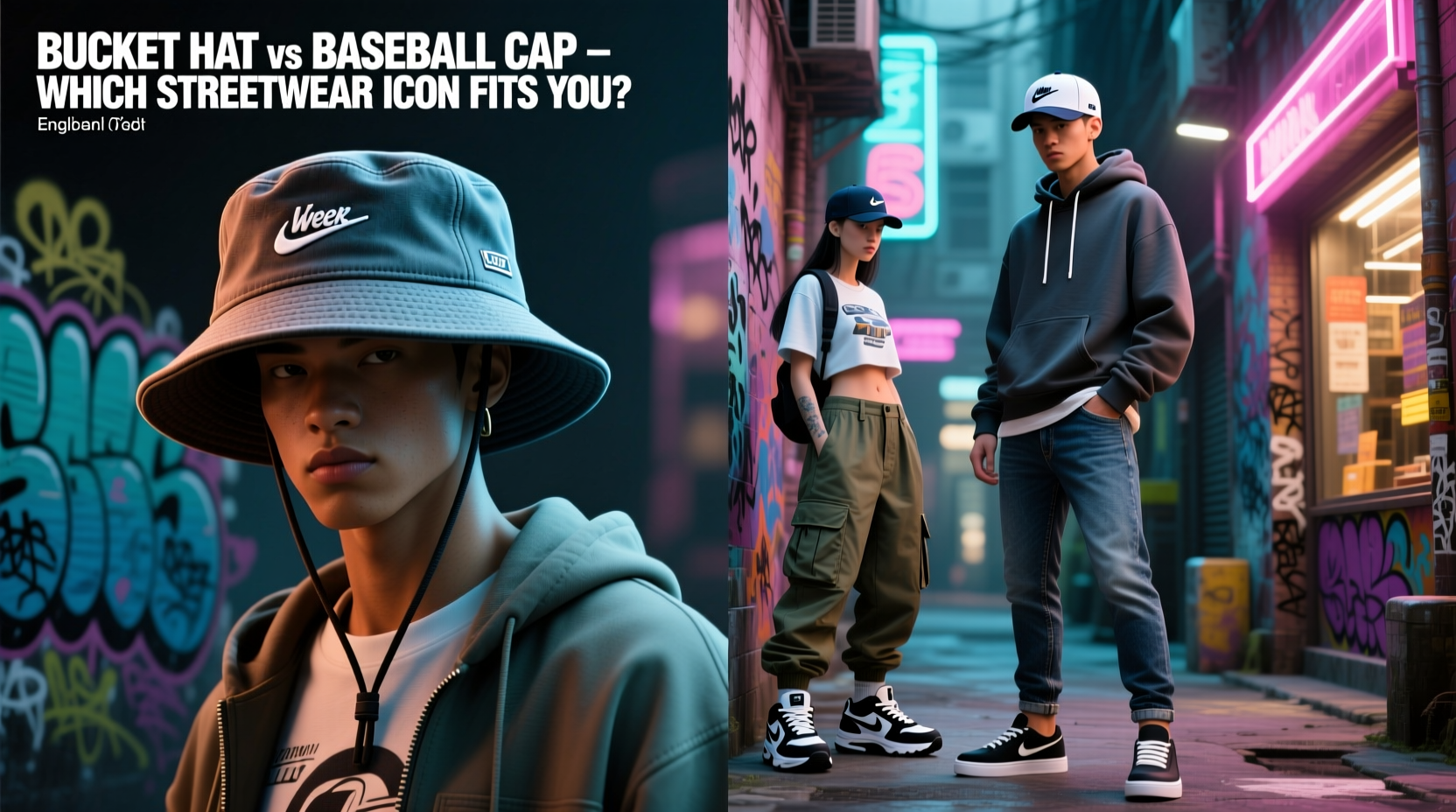
The bucket hat traces its roots to 1900s England, originally designed for fishermen and farmers needing protection from rain and sun. Made from wool felt or cotton, it was practical first, stylish second. By the 1960s, it entered Jamaican ska and reggae scenes, then migrated through British mod culture before being adopted by hip-hop artists in the 1980s and '90s—think LL Cool J or TLC.
In contrast, the baseball cap was born on American ball fields in the late 1800s. Designed to shield players’ eyes from sunlight, its structured crown and curved brim made it ideal for sport. Over time, fans began wearing team caps as badges of loyalty. By the 1990s, thanks to icons like Tupac, Notorious B.I.G., and skateboarders in California, the baseball cap became a staple beyond the diamond—worn backward, sideways, or slightly tilted forward as a signal of attitude.
“Headwear tells a story before you even speak. A bucket hat says you’re intentional about your look. A baseball cap says you belong to something.” — Darius Moore, Streetwear Curator & Founder of Urban Threads Archive
Design & Structure: How They Shape Your Look
Visually, these two hats operate on different principles. The bucket hat features a wide, downward-sloping brim and soft, unstructured fabric—often cotton, nylon, or corduroy. It drapes around the head rather than sitting rigidly atop it. This gives it a relaxed, lived-in feel that complements loose silhouettes, cargo pants, and graphic tees.
The baseball cap, by comparison, has a stiff front panel (or multiple panels), a curved or flat brim, and an adjustable strap or fitted sizing. Its structure creates clean lines and a more defined profile. Whether worn with the brim curved just right or snapped flat for a minimalist edge, it adds precision to an otherwise casual outfit.
These structural differences influence how each interacts with facial features and hairstyles. Bucket hats tend to soften angular jawlines and elongate the face, making them flattering for most head shapes. Baseball caps can emphasize forehead height and work especially well with fades, undercuts, or longer top styles that peek out from beneath.
Tip: If you wear glasses, try adjusting the angle of your baseball cap to avoid lens glare. For bucket hats, ensure the brim doesn’t press against your frames.Styling With Streetwear: Context Matters
When building a streetwear ensemble, context is everything—the season, setting, and cultural message all matter. Here's where each hat shines:
- Bucket Hat: Ideal for summer festivals, downtown strolls, or pairing with tropical prints, denim jackets, or techwear-inspired pieces. Its association with 90s nostalgia and music festivals makes it perfect for looks that lean artistic, eclectic, or globally influenced.
- Baseball Cap: Suits everyday wear, gym-to-street transitions, skate culture, or when replying team pride or brand allegiance. It integrates seamlessly with bomber jackets, hoodie combos, or monochrome fits where minimalism speaks louder than pattern.
Consider fabric choice too. A camo-print bucket hat nods to military surplus aesthetics, while a plain black five-panel baseball cap echoes early 2000s skate brands like Supreme or Thrasher. Limited-edition collaborations often appear in both forms—but baseball caps dominate sneaker release lines, whereas bucket hats feature heavily in capsule collections tied to music events or seasonal drops.
Real Example: Festival Fit vs City Commute
Take Marcus, a 27-year-old creative based in Brooklyn. For a weekend music festival in upstate New York, he layers a vintage tie-dye tee under a mesh overshirt, pairs wide-leg cargos with chunky boots, and finishes with a khaki bucket hat. The look feels cohesive, free-spirited, and rooted in 90s festival vibes. The hat enhances the carefree energy without overpowering it.
On Monday morning, same guy, different world. He swaps the bucket hat for a black New Era 59Fifty with a subtle embroidered logo. Paired with a cropped hoodie, tailored sweatpants, and fresh AF1s, the cap grounds the outfit, adding polish and purpose. It signals readiness—not relaxation.
This shift illustrates how headwear recalibrates tone. Same person, same wardrobe DNA, but different emotional frequency.
Comparative Breakdown: Bucket Hat vs Baseball Cap
| Feature | Bucket Hat | Baseball Cap |
|---|---|---|
| Branding Visibility | Lower – logos usually centered or on side | High – front panel dominates visual space |
| Weather Suitability | Better for sun/rain due to wider brim | Moderate – brim shields eyes but less coverage |
| Hair Friendliness | Accommodates afros, braids, ponytails easily | Limited unless worn back or with cutouts |
| Cultural Associations | Festival culture, hip-hop, retro revival | Sports fandom, skateboarding, urban grit |
| Versatility in Styling | Best with bold patterns and relaxed fits | Works across minimal, sporty, or branded looks |
| Durability & Storage | Folds easily, prone to creasing | Holds shape well, harder to pack flat |
When to Choose Which: A Practical Guide
Selecting the right hat depends less on trends and more on intention. Use this step-by-step framework to make confident decisions:
- Assess the occasion. Are you heading to a rooftop party, park hangout, or daily commute? Bucket hats thrive in leisure settings; baseball caps excel in active or urban environments.
- Evaluate your outfit’s silhouette. Loose, layered pieces pair naturally with bucket hats. Streamlined, athletic-leaning fits benefit from the sharpness of a cap.
- Consider your hair and accessories. Long hair or glasses may clash with tight crowns. Bucket hats offer more flexibility here.
- Think about branding. Want to showcase a designer logo or team pride? A baseball cap puts it front and center. Prefer subtlety? A patterned or solid bucket hat keeps attention balanced.
- Check the weather forecast. Rain or intense sun? The bucket hat’s extended brim provides superior protection.
Checklist: Picking Your Perfect Streetwear Hat
- ☐ Define the primary use: fashion statement, sun protection, or brand display?
- ☐ Match material to climate: breathable cotton/nylon for heat, wool for cold.
- ☐ Ensure proper fit—no pinching or sliding.
- ☐ Coordinate colors with at least one other item in your outfit (shoes, jacket, socks).
- ☐ Test wearability with common accessories (glasses, headphones).
- ☐ Consider washability—machine-washable fabrics simplify maintenance.
Expert Insight: Why the Debate Still Matters
Despite the rise of beanie dominance in colder months and trucker hats in ironic fashion circles, the bucket vs. baseball cap debate remains relevant because it reflects deeper shifts in youth culture.
“The resurgence of the bucket hat isn’t just nostalgia—it’s a pushback against uniformity. People want personality back in their wardrobes,” says Lena Park, senior editor at *Urban Style Report*. “But the baseball cap endures because it’s democratic. Anyone can wear one, from a CEO to a skater kid, and feel connected to a legacy.”
She notes that luxury brands like Louis Vuitton and Off-White have elevated both styles, blurring the line between sportswear and high fashion. However, the symbolism persists: the bucket hat invites interpretation; the baseball cap declares affiliation.
Frequently Asked Questions
Can I wear a bucket hat if I have a round face?
Absolutely. Opt for a slightly deeper crown and avoid overly wide brims that might accentuate width. Neutral tones or vertical patterns help elongate the appearance. Wear it slightly above the ears to maintain balance.
Is it okay to wear a baseball cap indoors?
Traditionally, removing hats indoors was a sign of respect. In modern streetwear culture, however, keeping it on is part of the aesthetic—especially in creative spaces, concerts, or informal settings. Use discretion: remove it during meals, meetings, or religious venues.
Which hat holds value better over time?
Limited-edition baseball caps—especially official MLB x streetwear collabs—tend to appreciate due to collectibility and durability. Bucket hats, while trendy, are often seasonal and made from softer materials, which reduces long-term resale viability unless they’re archival pieces from iconic brands.
Conclusion: It’s Not Either/Or—It’s About Alignment
The question isn’t whether the bucket hat or baseball cap is objectively better for streetwear. It’s about alignment—with your lifestyle, your aesthetic, and the image you want to project. The bucket hat offers whimsy, texture, and a nod to counterculture flair. The baseball cap delivers consistency, heritage, and effortless integration into nearly any urban wardrobe.
Many seasoned stylists keep both in rotation, treating them like tools in a kit. A faded denim bucket hat for Sunday markets. A crisp black cap for weekday errands. Each serves a role, each carries meaning.
Rather than chasing what’s trending on Instagram, ask yourself: What do I want my style to say today? Let that guide your choice. Because in streetwear, authenticity always wins.
🚀 Ready to refine your headwear game? Audit your current collection, identify gaps, and invest in one versatile piece from each category. Then share your go-to combo in the comments—we’d love to see how you wear yours.








