
When it comes to protecting your face, neck, and ears from harmful UV rays, headwear is one of the most accessible tools. But not all hats are created equal. The debate between the bucket hat and the baseball cap isn’t just about style—it’s about function. Which one offers superior sun protection? While both have loyal followings, the answer depends on design, material, fit, and how you use them in real conditions.
The choice might seem trivial, but with skin cancer rates rising and dermatologists consistently recommending physical sun barriers, understanding the practical differences can make a meaningful difference in your daily sun safety habits.
Sun Exposure: What You’re Actually Protecting Against
Ultraviolet (UV) radiation—specifically UVA and UVB rays—can cause premature aging, sunburn, and increase the risk of skin cancer. The nose, cheeks, ears, and back of the neck are especially vulnerable because they're frequently exposed and often missed by sunscreen.
A hat works as a physical barrier, reducing direct exposure. However, effectiveness depends on three factors:
- Coverage area: How much skin is shaded?
- Material density: Does the fabric block UV rays or allow them to penetrate?
- Fit and wearability: Will you keep it on during extended outdoor activity?
Dermatologists emphasize that broad-spectrum protection means shielding not just the face, but also the ears and neck—areas where many people develop sun damage without realizing it.
“Hats with wide brims offer the best defense against cumulative sun damage. A baseball cap leaves critical areas like the ears and neck exposed.” — Dr. Lena Patel, Board-Certified Dermatologist
Design Comparison: Bucket Hat vs Baseball Cap
The fundamental difference lies in structure. Understanding this helps explain why one may outperform the other under sun exposure.
Baseball Cap: Focused Front Protection
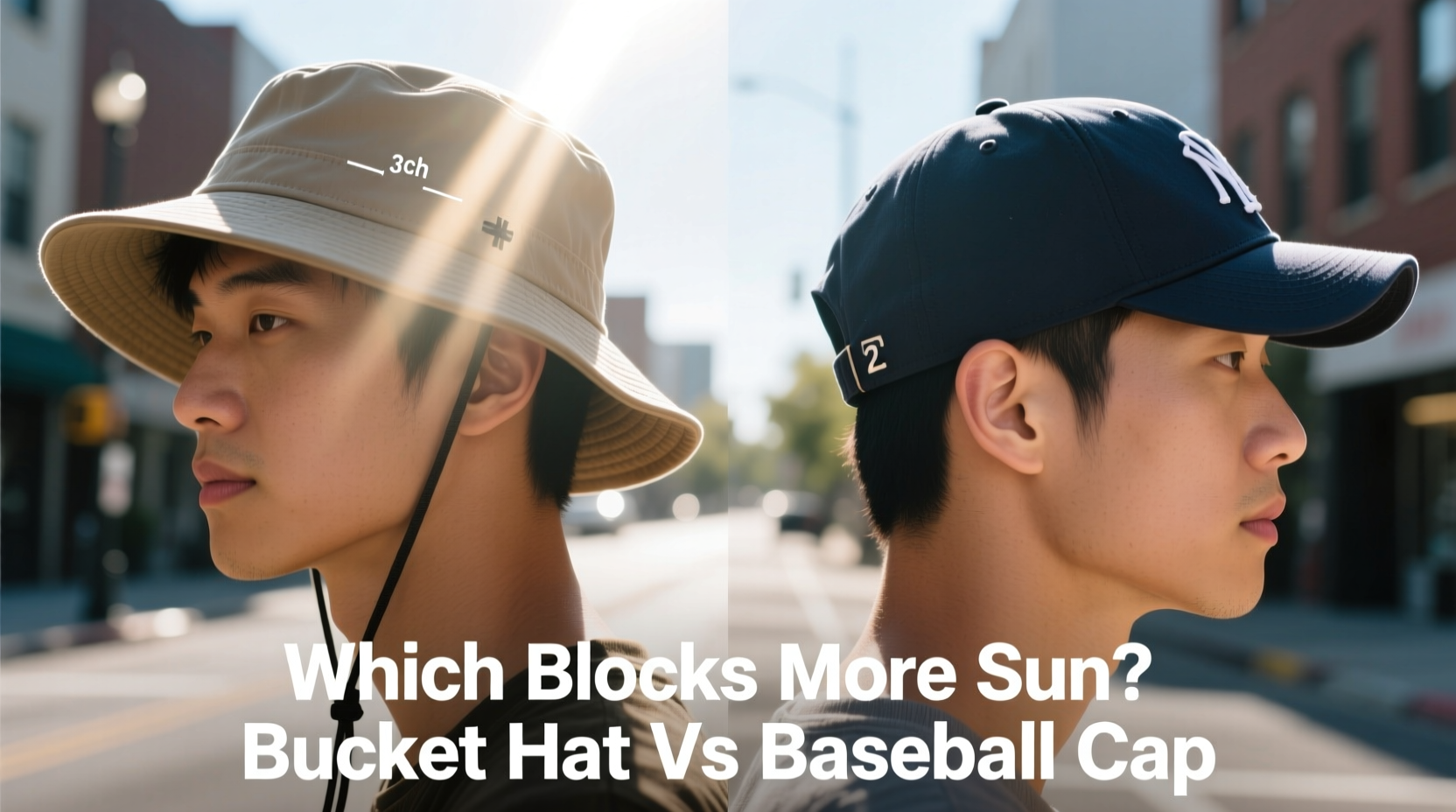
Designed for sports, the baseball cap features a stiff, curved front bill and a snug fit around the crown. It effectively shades the forehead, eyes, and upper cheeks. However, its rear and side protection is minimal. The back of the neck, ears, and sides of the face remain fully exposed—especially problematic during midday sun when rays strike at multiple angles.
Bucket Hat: 360-Degree Coverage
Characterized by a soft, downward-sloping brim (typically 2.5 to 3.5 inches), the bucket hat encircles the entire head. This design naturally casts shade over the temples, ears, and upper neck. When properly worn, it provides significantly more uniform coverage than a cap with only frontal shielding.
Tip: For maximum protection, choose a bucket hat with a brim wider than 3 inches and ensure it sits low enough to cover your ears without obstructing vision.Material and UPF: Not All Fabrics Are Equal
Even if a hat has good coverage, the fabric matters. Ultraviolet Protection Factor (UPF) measures how effectively a textile blocks UV radiation. A UPF 50 fabric blocks over 98% of UV rays.
Many modern bucket hats are made from tightly woven cotton, nylon, or polyester blends specifically engineered for sun protection. Some even carry UPF 50+ ratings, making them ideal for prolonged outdoor use.
In contrast, traditional baseball caps—especially those made from cotton twill or mesh panels—often lack certified UV protection. Mesh backs improve ventilation but create weak spots where UV rays penetrate directly onto the scalp and neck.
| Hat Type | Brim Width | Neck/Ears Covered? | Common Materials | Typical UPF |
|---|---|---|---|---|
| Baseball Cap | 2–3 inches (front only) | No | Cotton, Polyester, Mesh | UPF 5–20 (varies widely) |
| Bucket Hat | 2.5–4 inches (full circle) | Yes | Nylon, Cotton, UPF-treated fabrics | UPF 30–50+ |
Note: Some performance-oriented baseball caps now feature extended neck flaps or UPF-rated fabrics, narrowing the gap. But these are exceptions rather than the norm.
Real-World Performance: Who Wears What—and Why?
Consider Sarah, a landscape photographer who spends 6–8 hours outdoors weekly. She used to rely on a baseball cap paired with sunscreen. Over two summers, she developed persistent dryness and mild burning behind her ears and along her hairline—areas the cap didn’t cover.
After consulting a dermatologist, she switched to a UPF 50 bucket hat with a 3.2-inch brim. Within months, she noticed less irritation and no further sunburns—even during long shoots under open sky. Her experience reflects a broader trend: functional sun protection wins over fashion convenience when health is prioritized.
Likewise, outdoor workers, hikers, and beachgoers increasingly opt for bucket hats not just for their coverage, but for comfort during extended wear. The lightweight construction and breathable materials make them suitable for hot climates without sacrificing protection.
Choosing the Right Hat: A Practical Checklist
Whether you lean toward style or substance, use this checklist to select a sun-smart hat:
- ✅ Brim encircles the entire head (minimum 2.75 inches)
- ✅ Fabric has a certified UPF 30+ rating
- ✅ Covers ears and upper neck when worn
- ✅ Lightweight and breathable for all-day wear
- ✅ Fits securely without slipping in wind
- ✅ Darker colors preferred (absorb more UV than white or pastels)
If you prefer the look of a baseball cap, consider upgraded versions with added features:
- Neck capes or fold-down flaps
- Solid back panel instead of mesh
- Integrated UPF fabric lining
When Style Meets Safety: Hybrid Options
The market now offers hybrid designs that blend the silhouette of a baseball cap with extended coverage. Some brands produce “sun sport” caps with flip-down neck shields made of UPF fabric. Others offer bucket-style hats with structured crowns for a more tailored appearance.
These hybrids attempt to bridge the gap between fashion and function. However, many still fall short in consistent coverage. Retractable flaps are often forgotten or left unused, and the narrow brim still limits side protection compared to a full-circumference bucket hat.
For those committed to both aesthetics and safety, a well-designed bucket hat in a neutral tone (olive, black, navy) pairs easily with casual and activewear—proving that protection doesn’t require sacrificing personal style.
Frequently Asked Questions
Can a baseball cap be made sun-safe?
Yes, but only with modifications. Choose models with solid backs (no mesh), UPF-rated fabric, and consider adding a removable neck flap. Pair it with sunscreen on exposed areas for complete protection.
Do bucket hats work for people with thinning hair or sensitive scalps?
Absolutely. In fact, they’re ideal. The full brim reduces direct scalp exposure, and many are lined with moisture-wicking, cooling fabrics that reduce heat buildup—critical for comfort and protection.
Are straw or fabric bucket hats equally protective?
No. Tightly woven fabrics like nylon or canvas offer better UV blocking. Straw hats vary widely; loosely woven Panama-style weaves may allow significant UV penetration. Look for labels indicating UPF certification regardless of material.
Final Verdict: Which Blocks More Sun?
The bucket hat is objectively superior in blocking more sun. Its full-circle brim provides consistent shade to the face, ears, and neck—key zones often neglected. Combined with high-UPF materials, it delivers comprehensive protection unmatched by the baseball cap’s limited frontal shield.
That said, the best hat is the one you’ll actually wear. If you’re active in sports or prefer a low-profile look, a baseball cap is better than nothing—but it should be supplemented with sunscreen on ears and neck.
For extended outdoor exposure—gardening, hiking, beach days, or travel—a bucket hat is the smarter, safer choice. Advances in design mean today’s versions are stylish, packable, and comfortable enough for daily wear.
💬 Ready to upgrade your sun protection? Try a UPF-rated bucket hat on your next outing and notice the difference in comfort and coverage. Share your favorite sun-safe styles in the comments below.








