Toning the body isn’t just about losing fat—it’s about building lean muscle, improving definition, and enhancing overall physical conditioning. Among combat-inspired workouts, boxing and kickboxing have surged in popularity not just for self-defense but as high-intensity fitness regimens. Both disciplines offer full-body engagement, but they differ significantly in movement patterns, muscle recruitment, and metabolic demand. For someone aiming to tone their physique efficiently, understanding these differences is crucial. This article breaks down how each style impacts muscle development, fat loss, and body composition to determine which one delivers faster toning results.
Muscle Engagement: Where Each Workout Hits
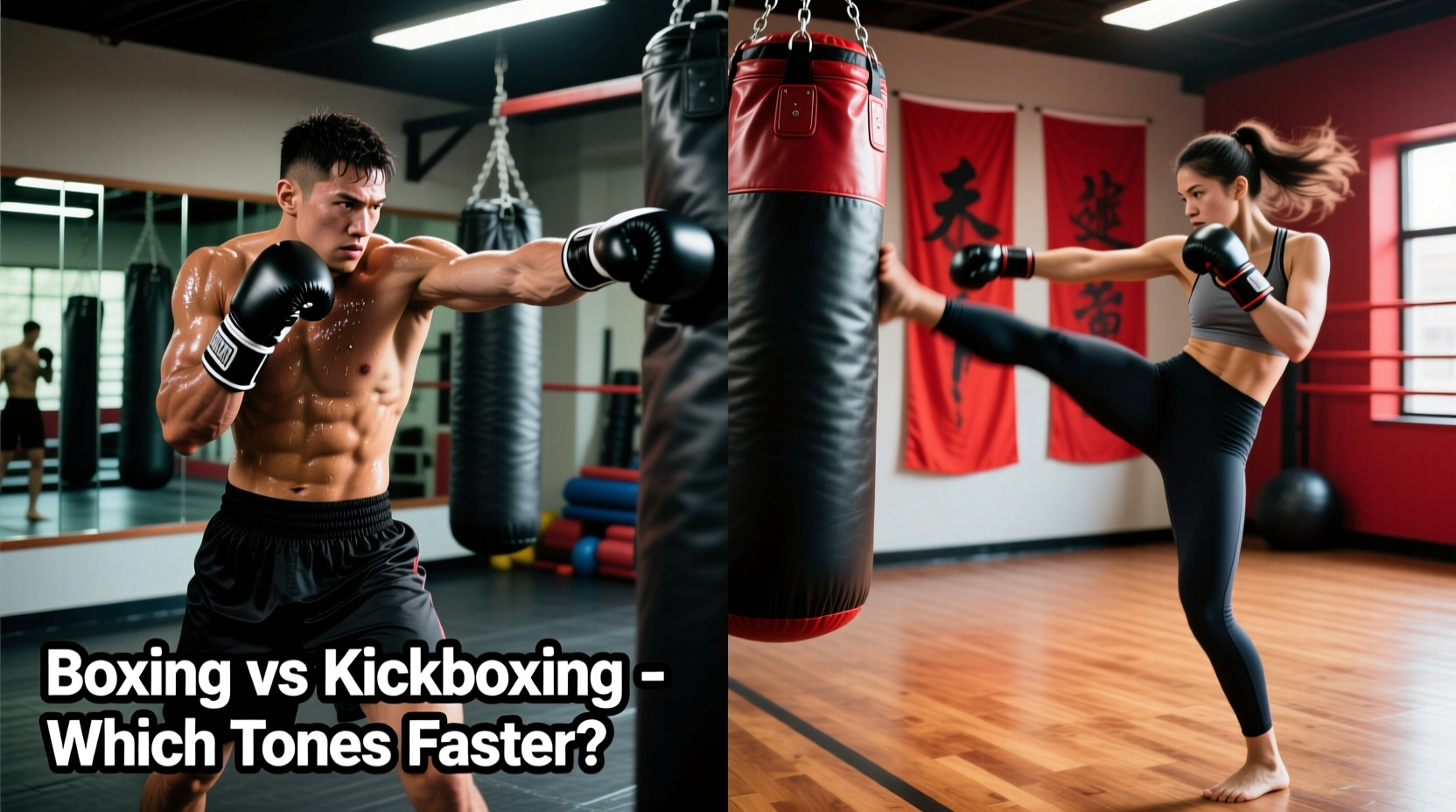
One of the most critical factors in body toning is how effectively a workout activates major muscle groups. Toned muscles emerge from a combination of resistance (via bodyweight or impact) and repetition, leading to improved muscular endurance and definition.
Boxing primarily emphasizes the upper body and core. Every jab, cross, hook, and uppercut engages the shoulders, chest, triceps, and back. The constant rotation during punches works the obliques and transverse abdominals, while footwork and defensive movements activate the glutes and quadriceps. However, leg involvement remains moderate—mainly for stability and mobility rather than dynamic power.
In contrast, kickboxing incorporates kicks, knee strikes, and roundhouse techniques that dramatically increase lower-body engagement. Movements like front kicks, side kicks, and spinning back kicks target the glutes, hamstrings, quads, and hip flexors with greater intensity. This broader range of motion forces more muscle fibers into action, increasing total-body activation.
Tip: To maximize toning, focus on controlled movements and proper form—especially during kicks—to fully engage targeted muscles.Calorie Burn and Fat Loss Comparison
Toning becomes visible when body fat decreases enough to reveal underlying muscle definition. Therefore, the rate at which a workout burns calories directly influences how quickly results appear.
A 155-pound person can expect to burn approximately 375–450 calories per hour during moderate boxing training. Intensified sparring or heavy bag work can push this to 500–600 calories. These numbers reflect rapid arm movement, constant foot shuffling, and sustained cardio effort.
Kickboxing typically exceeds this. Due to the inclusion of explosive lower-body movements, a similar individual may burn 500–700 calories per hour, depending on intensity. High-knee combinations, jump kicks, and fast transitions elevate heart rate more consistently than boxing alone, making kickboxing slightly superior in caloric expenditure over time.
This increased energy output means kickboxing has a slight edge in accelerating fat loss, especially around the midsection and lower body—areas where many people seek toning improvements.
Full-Body Toning Potential: A Comparative Breakdown
To assess which discipline tones the body faster, consider how evenly each workout develops muscle across key zones.
| Muscle Group | Boxing Impact | Kickboxing Impact |
|---|---|---|
| Chest & Shoulders | High – constant punching mechanics | Moderate-High – less dominant due to kick emphasis |
| Arms (Triceps/Biceps) | Very High – repeated extension and retraction | High – still active but secondary to legs |
| Back & Lats | High – rotational force in hooks/uppercuts | Moderate – some rotation, less consistent load |
| Core (Abs, Obliques) | Very High – essential for balance and power transfer | Very High – required for both punch and kick stability |
| Glutes & Hamstrings | Moderate – used in stance shifts and pivoting | Very High – engaged in every kick and lunge |
| Quadriceps & Calves | Moderate – footwork dependent | Very High – explosive kicks and rapid directional changes |
The table shows that while boxing excels in upper-body sculpting, kickboxing provides a more balanced, symmetrical approach to toning. If your goal is an evenly defined physique—with noticeable shaping in arms, core, and legs—kickboxing offers a more comprehensive stimulus.
“Kickboxing combines cardiovascular intensity with multi-planar movement, making it one of the most effective functional toning systems available.” — Dr. Lena Torres, Exercise Physiologist and Combat Fitness Researcher
Real-World Example: Sarah’s 8-Week Transformation
Sarah, a 32-year-old office worker, wanted to tone her arms and reduce lower-body fat after gaining weight during remote work. She began attending three weekly boxing classes, focusing on speed bags and pad drills. After four weeks, she noticed improved shoulder definition and stamina but saw minimal change in her thighs and hips.
She switched to a hybrid kickboxing program that included Muay Thai-style clinch work and high-intensity interval rounds with kicks. Within another four weeks, her jeans fit looser around the waist and thighs, and her trainer noted visible tightening in her glutes and obliques. Despite logging the same weekly hours, her body composition shifted more dramatically under kickboxing’s integrated approach.
Her experience reflects a common trend: those seeking holistic toning often progress faster with kickboxing due to its compound, full-body nature.
Training Frequency and Sustainability
No workout delivers results without consistency. While kickboxing may offer greater toning potential per session, it also demands higher coordination and joint resilience—particularly in the knees and hips. Beginners may find the learning curve steeper, potentially affecting adherence.
Boxing, with its simpler footwork and upper-body focus, is often easier to pick up quickly. Newcomers can achieve satisfying rhythm and power within a few sessions, boosting motivation. Additionally, shadowboxing or home-based routines require minimal space, making boxing more accessible for daily practice.
For long-term toning, sustainability matters. A person who trains four times a week with moderate kickboxing will likely see better results than someone attempting intense kickboxing twice a month and quitting due to fatigue or injury. Therefore, the “faster” method depends not only on biomechanics but also on individual capacity and routine integration.
Tip: Start with 2–3 sessions per week, alternating between boxing and kickboxing to build endurance and prevent overuse injuries.Step-by-Step Guide to Maximizing Toning Results
Regardless of which discipline you choose, follow this structured plan to accelerate visible toning:
- Assess Your Starting Point – Take measurements (waist, arms, hips), note clothing fit, and take progress photos before beginning.
- Choose Your Style Based on Goals – Prioritize boxing for arm and shoulder definition; opt for kickboxing if you want balanced lower-body shaping.
- Train Consistently – Commit to at least 3 sessions per week, each lasting 45–60 minutes.
- Incorporate Strength Elements – Add bodyweight circuits (planks, push-ups, lunges) post-session to enhance muscle development.
- Monitor Nutrition – Maintain a slight caloric deficit with adequate protein (0.8–1g per pound of body weight) to support muscle retention and fat loss.
- Track Progress Monthly – Re-measure and compare photos. Adjust intensity or frequency if results plateau.
- Recover Actively – Include stretching, foam rolling, or yoga to maintain flexibility and reduce soreness.
Frequently Asked Questions
Can I tone my abs just by doing boxing or kickboxing?
Yes, both workouts engage the core intensely through rotational movements and stabilization. However, visible abs require low body fat, so combine training with proper nutrition for best results.
Is kickboxing harder on the joints than boxing?
It can be, especially for the knees and hips due to deep lunges and twisting kicks. Proper warm-up, technique, and gradual progression minimize risk. Those with joint concerns should consult a trainer or physical therapist.
Do I need prior experience to start either workout?
No. Most gyms offer beginner-friendly classes with modified drills. Instructors typically break down techniques step by step, allowing safe skill acquisition regardless of fitness level.
Final Verdict: Which Tones Faster?
If the goal is speed in achieving a visibly toned body, **kickboxing holds a clear advantage**. Its integration of upper and lower-body strikes leads to greater total muscle activation, higher calorie expenditure, and more uniform fat loss. Over time, this translates into faster emergence of muscle definition across the arms, core, glutes, and legs.
That said, boxing remains highly effective—especially for upper-body sculpting—and may be more sustainable for individuals new to fitness or those with mobility limitations. The ideal path might even involve combining both: using boxing for precision and speed, and kickboxing for power and full-body engagement.
Ultimately, the fastest toning comes not from choosing one over the other, but from selecting the style that aligns with your physical capabilities, preferences, and ability to stay consistent. When enjoyment meets effort, transformation follows.
💬 Ready to transform your physique? Try a kickboxing class this week—or revisit boxing with fresh focus. Share your journey or ask questions in the comments below.








