For active individuals, the right lower-body gear isn’t just about comfort—it can influence performance, recovery, and injury prevention. Two of the most common athletic wear choices—bike shorts and running tights—are often mistaken for interchangeable items. While both are form-fitting and designed for movement, they serve different purposes and offer varying degrees of muscle support. Understanding their structural differences, material composition, and biomechanical impact is essential when deciding which provides superior muscle stabilization during activity.
Muscle support in athletic apparel primarily comes from compression, targeted seam placement, fabric elasticity, and anatomical design. The goal is to reduce muscle oscillation, improve blood circulation, and enhance proprioception—your body’s awareness of movement and position. Whether you're logging miles on a trail or powering through a long-distance ride, choosing the right garment can make a tangible difference in endurance and post-exercise soreness.
Anatomy of Muscle Support in Activewear
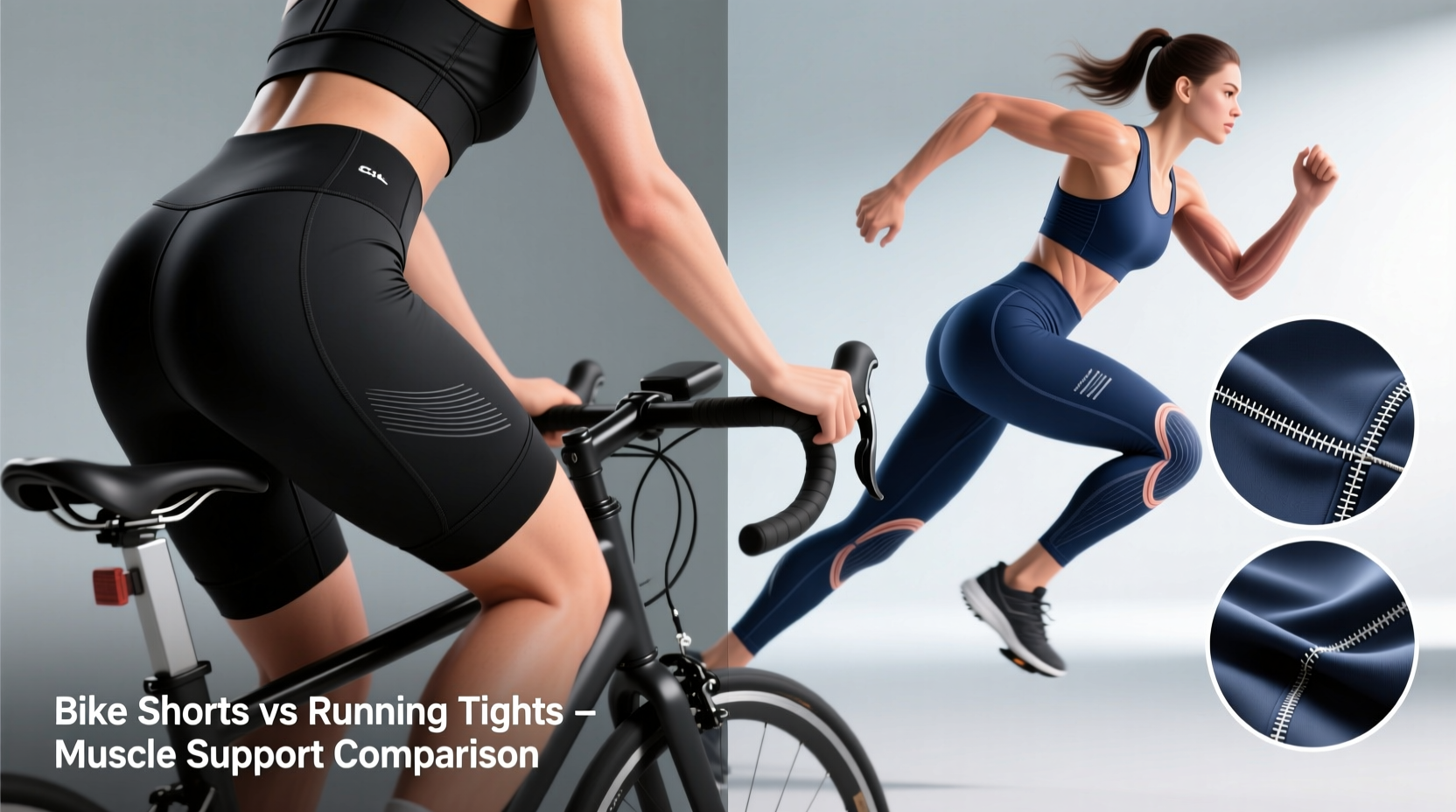
Muscle support in performance wear is not just marketing jargon. It stems from engineered compression that applies graduated pressure to specific muscle groups. This pressure helps minimize micro-tears caused by repetitive motion, supports venous return (blood flow back to the heart), and may reduce delayed onset muscle soreness (DOMS).
The effectiveness of this support depends on several factors:
- Compression level: Measured in mmHg, higher compression generally means more support—but must be balanced with comfort.
- Fabric blend: Nylon, spandex, polyester, and elastane ratios affect stretch, breathability, and durability.
- Seam construction: Flatlock or bonded seams prevent chafing and maintain consistent pressure.
- Zoned support: Some garments use differential knitting to apply more pressure to quads, hamstrings, or calves.
Both bike shorts and running tights incorporate these principles, but their execution varies based on intended use.
Design & Function: How Bike Shorts Work
Bike shorts are built for sustained seated positions, repetitive leg extension, and high-intensity pedaling. Their primary focus is on protecting soft tissue, reducing friction, and stabilizing major leg muscles over extended periods.
Key features include:
- Padded chamois: Located in the seat, it reduces pressure on the perineum and coccyx during long rides. While not directly related to muscle support, it allows riders to maintain proper posture, indirectly aiding muscular efficiency.
- Shorter length: Typically ending mid-thigh, bike shorts prioritize freedom of movement around the hip flexors and glutes without restricting knee articulation.
- High-compression panels: Many premium models feature reinforced zones across the quadriceps and hamstrings to limit vibration and fatigue during climbs or sprints.
- Silicone grippers: Prevent slippage at the thigh ends, ensuring consistent compression stays in place.
From a muscle support perspective, bike shorts excel in minimizing lateral muscle movement. Cyclists generate power in a narrow range of motion—primarily concentric contractions in the quads and glutes—so targeted stabilization in these areas enhances pedal stroke efficiency.
Tip: For maximum muscle support during long rides, choose bike shorts with dual-density compression fabric and ergonomic paneling aligned with major muscle groups.Running Tights: Built for Dynamic Motion
Running involves constant ground impact, eccentric loading (muscle lengthening under tension), and multidirectional forces. Running tights are engineered to handle this dynamic stress with full-length coverage and adaptive compression.
Distinguishing characteristics include:
- Full-leg coverage: Extends from waist to ankle, offering continuous support from core to calves. This promotes alignment and reduces strain on tendons like the Achilles and patellar.
- Moisture-wicking fabric: Often lighter than bike short materials, optimized for temperature regulation during aerobic exertion.
- Waistband support: Higher waist options engage the lower abdomen and obliques, contributing to pelvic stability and reduced lower back fatigue.
- Reflective detailing and pockets: Functional additions for safety and convenience, though not directly related to muscle support.
Where running tights outperform bike shorts in muscle support is in holistic stabilization. The extended coverage allows for graduated compression that increases from ankle to thigh—a design proven to enhance circulation and reduce swelling after prolonged runs.
“Compression tights can reduce muscle oscillation by up to 33% during running, which translates to less perceived fatigue and faster recovery.” — Dr. Lena Torres, Sports Biomechanist, University of Colorado Boulder
Comparative Analysis: Support Features Side-by-Side
| Feature | Bike Shorts | Running Tights |
|---|---|---|
| Compression Level | High in quads/glutes, moderate elsewhere | Graduated (ankle to thigh), full-leg consistency |
| Coverage Area | Waist to mid-thigh | Waist to ankle |
| Targeted Muscle Groups | Quadriceps, hamstrings, glutes | Calves, quads, hamstrings, core (with high-waisted styles) |
| Fabric Thickness | Medium to thick, abrasion-resistant | Light to medium, highly breathable |
| Motion Type Supported | Concentric, repetitive cycling motion | Eccentric and concentric, high-impact strides |
| Recovery Benefits | Moderate—mainly reduced quad fatigue | High—improved circulation, reduced DOMS |
This table illustrates a critical distinction: while bike shorts offer intense localized support where cyclists need it most, running tights provide broader, systemic stabilization suited to the unpredictable demands of running.
Real-World Application: A Runner’s Experience
Consider Sarah M., a marathon runner who began cross-training with indoor cycling to reduce joint impact during injury recovery. She initially wore her favorite running tights for spin classes, expecting similar muscle support. After two weeks, she noticed increased discomfort in her inner thighs and chafing near the sit bones.
Upon switching to dedicated bike shorts, she immediately felt improved saddle comfort and reported less post-ride tightness in her glutes. However, she missed the calf compression she was accustomed to during runs. Eventually, she adopted a hybrid strategy: using bike shorts for rides and reserving running tights for track and road sessions.
Her experience highlights an important truth—specialized gear performs best within its intended domain. While some brands offer \"multi-sport\" tights, they often compromise in padding or breathability, diluting functional effectiveness.
When Support Matters Most: Choosing Based on Activity
Selecting between bike shorts and running tights should hinge on your primary activity and physiological goals. Here’s a step-by-step guide to help decide:
- Identify your main sport: If cycling dominates your routine, prioritize bike shorts. For runners, tights are non-negotiable for serious training.
- Evaluate duration and intensity: Long rides (>90 minutes) benefit from chamois padding and quad stabilization. Long runs demand full-leg circulation support.
- Assess recovery needs: Post-exercise soreness in calves and shins suggests running tights with graduated compression could aid recovery.
- Consider weather and layering: In cold conditions, thermal running tights offer muscle warmth and protection. Bike-specific thermal liners exist but are less common.
- Test for fit and feel: Compression should be firm but not restrictive. You should be able to perform deep squats and lunges without binding.
Expert Recommendations and Common Misconceptions
A widespread myth is that tighter clothing automatically means better muscle support. In reality, improper fit can restrict blood flow, increase fatigue, and even contribute to nerve compression. True support comes from intelligent design—not sheer tightness.
Dr. Aaron Lin, a sports medicine physician, emphasizes precision in gear selection:
“The difference between supportive apparel and restrictive clothing lies in biomechanical alignment. A well-designed tight enhances natural movement; a poorly fitted one fights against it.” — Dr. Aaron Lin, Sports Medicine Director, Pacific Performance Clinic
Another misconception is that all “compression” labels are equal. Look for brands that specify compression levels (e.g., 20–30 mmHg) and use medical-grade testing standards. Independent reviews and third-party lab results are more reliable than marketing claims.
Checklist: Choosing the Right Gear for Muscle Support
Use this checklist before purchasing:
- ✅ Determine primary activity: cycling or running?
- ✅ Check for zoned compression (not uniform tightness)
- ✅ Ensure moisture-wicking and breathable fabric
- ✅ Confirm secure fit without pinching or rolling
- ✅ Verify presence of flatlock seams to prevent chafing
- ✅ For cycling: confirm chamois quality and leg gripper effectiveness
- ✅ For running: assess waistband height and ankle taper
- ✅ Review care instructions to maintain compression longevity
Frequently Asked Questions
Can I wear running tights for cycling?
You can, but it's not ideal. Running tights lack a chamois, leading to discomfort on the saddle. Additionally, the fabric may not withstand friction from the bike seat, increasing wear and tear. Without targeted quad support, muscle fatigue may set in faster during long rides.
Do compression bike shorts really reduce muscle damage?
Yes, studies show that moderate compression (around 20–25 mmHg) applied to the thighs during cycling reduces markers of muscle damage like creatine kinase (CK) levels post-exercise. This correlates with quicker recovery and less soreness, especially after high-resistance intervals.
Are there hybrid options that work for both activities?
Some brands offer minimalist bike shorts with light compression and no pad, suitable for short runs. Conversely, “training tights” with moderate compression and minimal padding blur the line. However, for optimal muscle support in either discipline, dedicated gear remains superior.
Final Verdict: Which Offers Better Muscle Support?
The answer depends on context. For **localized, high-output muscle stabilization during cycling**, bike shorts win due to concentrated compression in power-generating muscles and structural reinforcement tailored to seated dynamics. The integration of padding also allows for longer sessions without compensatory muscle tension from poor posture.
However, if the goal is **overall muscle support, circulation enhancement, and post-activity recovery**, running tights are unmatched. Their full-length, graduated compression system addresses the cumulative impact forces of running and supports multiple muscle groups simultaneously—from calves absorbing shock to quads managing downhill deceleration.
In terms of pure biomechanical support across diverse muscle groups, **running tights provide more comprehensive benefits**. But for sport-specific efficacy, neither should be used interchangeably without trade-offs.
💬 Ready to optimize your performance? Reassess your activewear collection: ensure you’re wearing the right gear for your primary sport. Share your experience with muscle-support clothing in the comments—your insights could help others train smarter and recover faster.








