
Choosing the right lock for your bicycle isn't just about convenience—it's a critical decision that determines whether your bike stays where you left it or disappears in minutes. With thefts rising in urban areas and opportunistic criminals using bolt cutters, angle grinders, and brute force, not all locks offer equal protection. The debate between traditional U-locks (also known as D-locks) and lightweight cable locks is ongoing, but one fact remains: some locks are far better at deterring thieves than others. Understanding the strengths and weaknesses of each type can save you from costly losses and endless frustration.
The Reality of Bike Theft
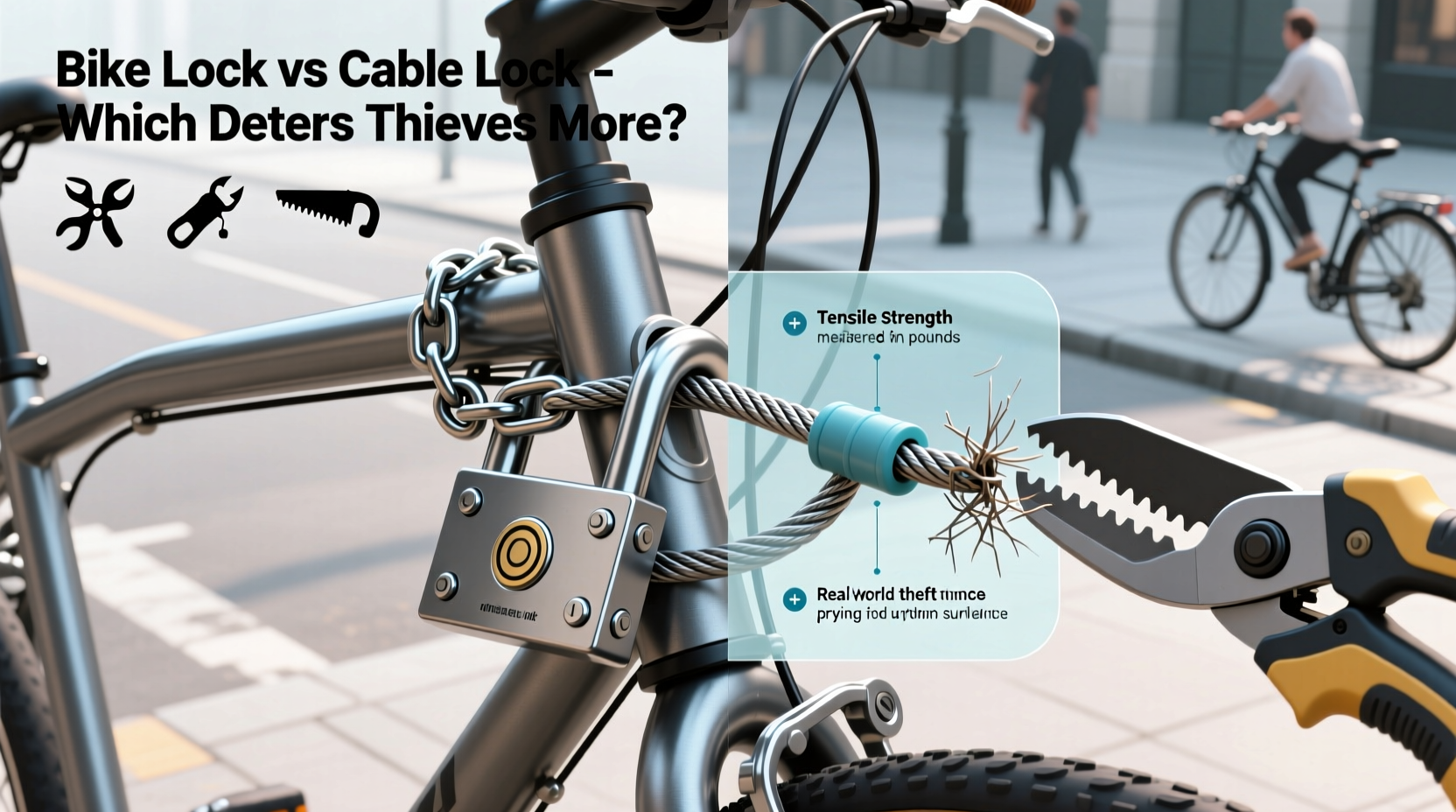
Bicycle theft is alarmingly common. According to the National Bike Registry, over 1.5 million bikes are stolen annually in the United States alone. Most thefts occur within seconds—often under 60 seconds—using simple tools like bolt cutters or angle grinders. Thieves don’t typically target bikes out of passion; they’re motivated by speed, portability, and resale value. This means they prefer quick, low-effort targets. Your best defense? A lock that makes stealing your bike more trouble than it’s worth.
Criminals often follow a simple rule: if a lock takes longer than three minutes to defeat, they’ll move on. That’s why understanding lock strength, material quality, and proper usage matters far more than simply owning \"a lock.\" Not all locking mechanisms provide meaningful resistance.
U-Locks (D-Locks): Strength and Security
U-locks, named for their rigid, U-shaped shackle, are widely considered the gold standard in anti-theft protection. Made from hardened steel, these locks resist cutting, prying, and leverage attacks far better than flexible alternatives. Their compact design limits access for tools, making it difficult for thieves to insert crowbars or spread the shackle open.
The core advantage of a U-lock lies in its structural integrity. High-end models use boron steel shackles up to 16mm thick, which can withstand sustained attacks from bolt cutters and even short bursts from angle grinders. Brands like Kryptonite, Abus, and OnGuard have developed models with double deadbolts and protective sleeves that further increase resistance.
Tip: Always position your U-lock so the crossbar (the curved part) faces downward. This reduces leverage points and makes it harder for thieves to use jacks or pry bars.However, U-locks come with trade-offs. They are heavier—typically weighing between 2 to 4 pounds—and less versatile when securing multiple objects or threading through irregular spaces. Their rigidity also means they require careful planning when choosing where to lock your bike.
Cable Locks: Convenience Over Protection
Cable locks are popular due to their light weight, flexibility, and low cost. Typically made from braided steel wires coated in plastic, they allow users to loop around complex structures like trees, signs, or multi-bike racks. Many cyclists carry them as secondary locks or for quick stops.
But here’s the hard truth: most cable locks offer minimal theft deterrence. Even high-quality cables can be cut through in seconds with handheld bolt cutters. In controlled tests, basic cable locks have been defeated in under 10 seconds. Their internal wires, no matter how tightly braided, lack the density and hardness needed to resist cutting tools.
While some premium cable locks include features like Kevlar wrapping or thicker gauge wires, these improvements marginally delay—not prevent—defeat. As one locksmith put it, “A cable lock might stop a casual thief, but it won’t stop anyone with a $20 tool from a hardware store.”
“Cable locks are better than nothing, but calling them ‘security devices’ is generous. They’re really just tether straps with delusions of grandeur.” — Mark Reynolds, Urban Bicycle Security Consultant
Comparative Breakdown: U-Lock vs Cable Lock
| Feature | U-Lock (Hardened Steel) | Cable Lock (Standard Braided) |
|---|---|---|
| Theft Resistance | High – Resists bolt cutters, leverage, and grinding (with premium models) | Low – Easily cut with basic tools in under 30 seconds |
| Weight | 2–4 lbs (heavier, less portable) | 0.5–1.5 lbs (lightweight, easy to carry) |
| Flexibility | Low – Rigid shape limits attachment options | High – Can wrap around poles, trees, and complex fixtures |
| Durability | Excellent – Resistant to weather, corrosion, and wear | Fair – Cables fray over time; coating cracks and exposes wires |
| Best Use Case | Primary lock for city riding, long-term parking, high-risk areas | Secondary lock, quick errands, low-risk zones |
| Average Price | $30–$100+ | $10–$30 |
Real-World Example: The Parked Commuter Bike
Consider two cyclists who park their bikes outside a downtown coffee shop for 20 minutes:
- Jamal uses a Kryptonite New York Fahgettaboudit U-lock to secure his rear wheel and frame to a street rack.
- Lena loops a thin cable lock through her front wheel and frame, attaching it loosely to the same rack.
A thief walks by with bolt cutters. Lena’s cable offers almost no resistance—the front wheel is gone in 12 seconds. The thief then tries Jamal’s U-lock. After failing to cut or pry it, he abandons the attempt and moves on. Jamal returns to find his bike untouched.
This scenario plays out daily in cities worldwide. The difference wasn’t luck—it was equipment choice. While Lena saved weight and money, she paid for it with vulnerability. Jamal invested in real security.
Expert Recommendation: Layered Security Approach
No single lock is foolproof, but combining types dramatically increases protection. Security experts advocate a layered approach:
- Use a high-quality U-lock as your primary lock. Secure the bike frame and rear wheel to an immovable object.
- Add a secondary cable or chain lock. Use it to secure the front wheel, especially if it has a quick-release hub.
- Lock to a fixed, anchored structure. Avoid flimsy signs, fences, or removable posts.
- Minimize exposure time. Don’t leave your bike unattended overnight or for extended periods in public.
- Register your bike. Services like Project 529 or Bike Index help recover stolen bikes if they’re ever found.
When a Cable Lock Makes Sense
Despite their weaknesses, cable locks aren’t useless. They serve specific purposes:
- Supplementing a primary lock – Adding a cable through the front wheel increases the effort required to steal the entire bike.
- Short errands in low-crime areas – If you're stepping into a store for five minutes in a well-lit, busy location, a cable may suffice.
- Travel or touring – Lightweight cables are easier to pack and useful when space is limited.
- Children’s bikes or low-value cycles – For inexpensive bikes, a cable may be proportionate to the risk.
But never rely solely on a cable lock in urban environments or anywhere your bike could be resold quickly. It’s akin to locking your front door with a rubber band.
What About Chain Locks?
Though not part of the original comparison, heavy-duty chain locks deserve mention. Made from hardened steel links encased in fabric or plastic sleeves, chains offer both strength and flexibility. High-end models (like the Kryptonite Evolution or Abus Granit X-Plus 540) rival U-locks in security while allowing greater versatility in routing.
However, they are heavier and bulkier, making them less ideal for commuters who prioritize portability. Chains also require more maintenance to prevent rust. Still, for maximum protection with moderate flexibility, a quality chain lock is often the top recommendation among serious cyclists.
Step-by-Step Guide to Securing Your Bike Properly
Follow this sequence to maximize protection regardless of lock type:
- Choose a solid anchor point. Look for a dedicated bike rack bolted into concrete, not movable objects.
- Position the lock correctly. For U-locks, keep the shackle as small as possible and avoid gaps where tools can fit.
- Secure the frame first. Lock the bike frame to the rack using the U-lock through the rear triangle.
- Add the secondary lock. Use a cable or second lock to secure the front wheel and any detachable parts. <5> Double-check tightness. Ensure there’s no slack that would allow wiggling or leveraging.
- Remove valuables. Take lights, GPS units, saddlebags, or anything easily swiped.
- Take a photo. Document the serial number and condition in case of theft.
Frequently Asked Questions
Can a cable lock stop any kind of thief?
It may deter a completely unprepared opportunist, but anyone carrying basic hand tools can defeat a standard cable lock in seconds. It should never be your only line of defense in high-risk areas.
Are all U-locks equally secure?
No. Security varies significantly by brand, materials, and design. Look for locks with high ratings from independent testers (e.g., Sold Secure Gold or ART 7+). Avoid cheap, no-name U-locks—they often use softer metal that can be cut or bent easily.
Is it worth spending over $80 on a lock?
If your bike costs more than $300, absolutely. A $100 lock protecting a $2,000 e-bike is a smart investment. Think of it as insurance: cheaper than replacement, deductible-free, and always effective when used correctly.
Final Verdict: Which Deters Thieves More Effectively?
There’s no contest: a high-quality U-lock deters thieves far more effectively than any standard cable lock. Its hardened steel construction, limited tool access, and resistance to leverage make it the preferred choice for experienced cyclists and law enforcement alike. Cable locks, while convenient, fail the basic test of meaningful deterrence—they are too easily defeated to be trusted as primary security.
That said, the best strategy isn’t choosing one over the other—it’s using both wisely. Let the U-lock bear the brunt of protection, and use the cable as a supplementary measure. Combine that with smart locking habits, proper anchoring, and bike registration, and you drastically reduce your odds of becoming a statistic.
💬 Your bike is only as safe as the weakest link in your locking system. Upgrade your security today—because peace of mind is worth more than a few extra ounces in your backpack.








