Many lifters dedicate significant time to arm training, only to find their biceps stubbornly refusing to grow. Despite consistent curls and focused workouts, progress halts—sometimes for months. Bicep development is influenced by more than just volume or frequency; it's a complex interplay of training mechanics, recovery, genetics, and consistency. When growth stalls, the issue often lies not in effort but in execution. Understanding the root causes behind stagnant bicep development is the first step toward breaking through the plateau.
Common Training Mistakes Limiting Bicep Growth
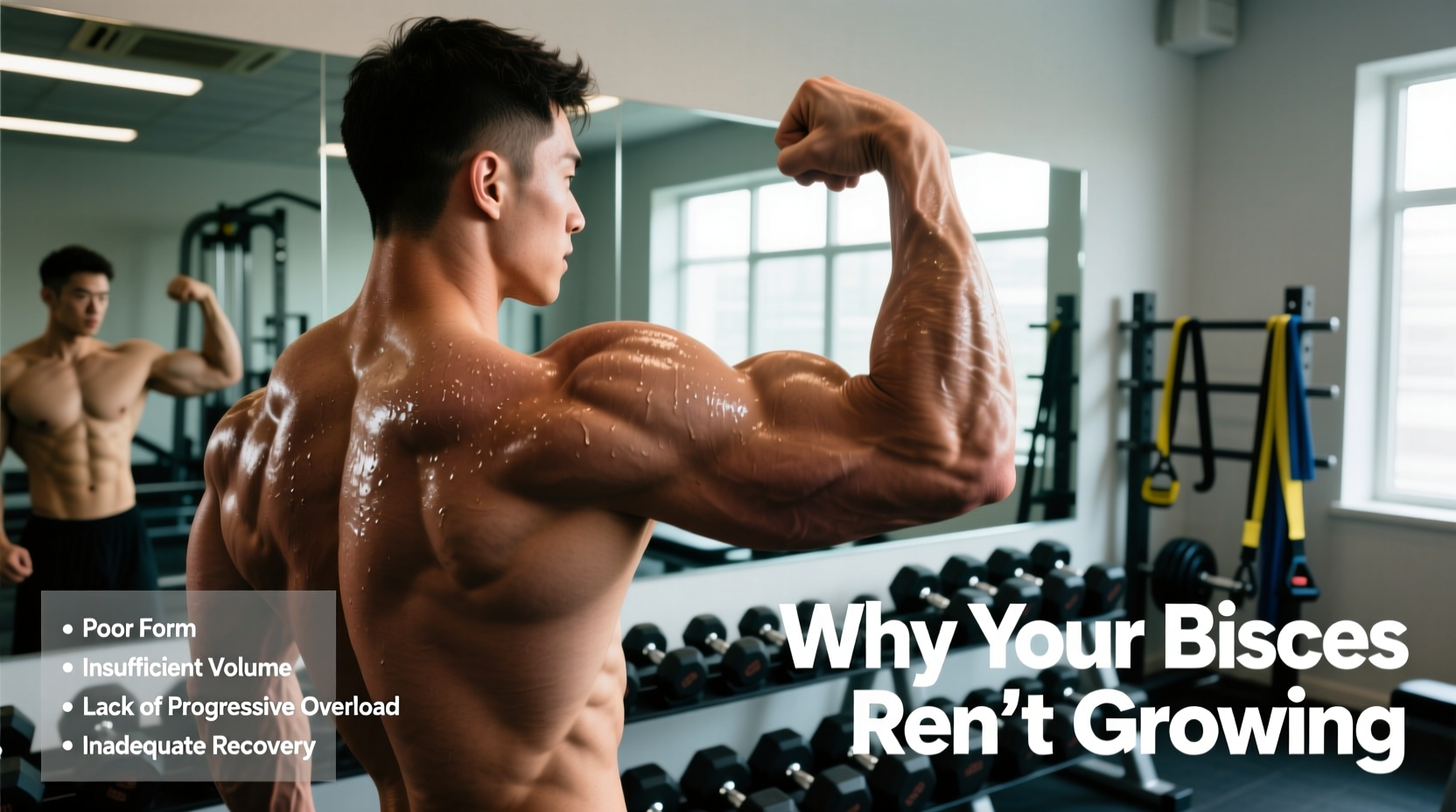
One of the most frequent reasons biceps fail to grow is poor exercise selection and technique. Many lifters rely solely on barbell or dumbbell curls without varying angles or grips, leading to under-stimulated muscle fibers. The biceps brachii consists of two heads—the long head (outer) and the short head (inner)—each responding differently to movement variations. Neglecting one over the other results in imbalanced development.
Another common error is prioritizing weight over form. Swinging the dumbbells or using momentum reduces time under tension and shifts stress away from the biceps. This compromises muscle activation and diminishes hypertrophy stimulus. Additionally, insufficient volume or excessive volume can both hinder growth. Too little doesn't provide enough stimulus; too much leads to overtraining and impaired recovery.
Tip: Perform curls with a strict tempo—2 seconds concentric, 1-second squeeze at the top, 3 seconds eccentric—to maximize muscle tension.Nutrition and Recovery: The Hidden Factors
Muscle growth occurs outside the gym, during recovery. If your diet lacks sufficient protein or overall calories, your body cannot repair and build new muscle tissue. Biceps, like any other muscle group, require amino acids to recover and grow. A daily intake of 1.6–2.2 grams of protein per kilogram of body weight is recommended for optimal hypertrophy.
Sleep is equally critical. During deep sleep, growth hormone release peaks, facilitating tissue repair. Chronic sleep deprivation—less than 7 hours per night—can impair recovery and blunt muscle gains. Overtraining without adequate rest creates a catabolic state, where muscle breakdown exceeds synthesis, especially in smaller muscles like the biceps that are worked indirectly during back exercises.
“Hypertrophy isn’t built in the gym—it’s built at the dinner table and in bed.” — Dr. Stuart Phillips, McMaster University, muscle physiology researcher
Exercise Selection and Muscle Activation
Not all curl variations are created equal. Each variation targets different regions of the biceps due to changes in shoulder and elbow joint angles. For example, incline dumbbell curls stretch the long head under load, promoting greater muscle fiber recruitment. Conversely, concentration curls isolate the short head and improve mind-muscle connection.
Using only standing curls limits developmental potential. Incorporating a variety of movements ensures comprehensive stimulation across both heads of the biceps and the brachialis (a hidden muscle that contributes to arm thickness).
| Exercise | Primary Target | Key Benefit |
|---|---|---|
| Incline Dumbbell Curl | Biceps Long Head | Maximizes stretch and peak contraction |
| Concentration Curl | Biceps Short Head | Enhances isolation and mind-muscle link |
| Hammer Curl | Brachialis & Brachioradialis | Adds forearm and arm thickness |
| Preacher Curl | Full Biceps | Eliminates cheating, increases time under tension |
Progressive Overload and Program Design
Without progressive overload—gradually increasing demand on the muscle—growth eventually stops. Many lifters perform the same reps, sets, and weights week after week, expecting change. But muscles adapt quickly. To stimulate further growth, you must challenge them beyond their current capacity.
A structured approach includes tracking key variables: weight used, reps completed, rest periods, and tempo. Adjust one variable every 2–3 weeks. For example, increase weight while maintaining reps, or add a rep per set at the same load. Periodization—cycling between higher-rep hypertrophy phases and lower-rep strength blocks—can prevent stagnation.
Step-by-Step Guide to Restart Bicep Growth
- Evaluate current routine: Are you doing 8–12 sets per week for biceps? Less may be insufficient; more could be counterproductive.
- Vary exercises: Rotate between 3–4 curl types every 4–6 weeks to avoid adaptation.
- Improve form: Eliminate momentum. Focus on slow negatives and full range of motion.
- Incorporate drop sets or supersets: Add intensity techniques once weekly to shock the muscle.
- Track progress: Log every workout to ensure consistent progression.
Genetics and Realistic Expectations
Genetics play a significant role in muscle shape, insertion points, and growth potential. Some individuals naturally have longer biceps tendons or lower muscle bellies, making peak development appear less pronounced regardless of training. While you can’t change your DNA, you can optimize what you have.
A mini case study illustrates this: Jake, a dedicated lifter for three years, trained arms twice weekly with heavy curls but saw minimal improvement. After assessment, it was found he was overtraining biceps (working them indirectly on back day and directly twice more). He also consumed only 1.2g protein/kg and slept 5–6 hours nightly. By reducing direct bicep volume to once weekly, improving protein intake, and sleeping 7.5+ hours, his arms grew 0.75 inches over four months—despite lifting slightly less.
Tip: Train biceps directly once per week, but allow indirect work (rows, pull-ups) to contribute to overall volume.Checklist: Fix Your Stalled Bicep Growth
- ✅ Assess total weekly bicep volume (direct + indirect)
- ✅ Include at least 3 different curl variations
- ✅ Use strict form with controlled eccentrics
- ✅ Consume 1.6–2.2g protein per kg of body weight
- ✅ Sleep 7–9 hours nightly
- ✅ Track workouts and aim for small weekly improvements
- ✅ Deload every 6–8 weeks to prevent overuse
Frequently Asked Questions
How many times per week should I train biceps?
Once per week of direct work is sufficient for most lifters. Biceps are also activated during back exercises like rows and pull-downs, so total weekly volume (including indirect work) should stay between 12–20 hard sets.
Why do my biceps respond better to higher reps?
The biceps contain a higher proportion of slow-twitch muscle fibers compared to other upper-body muscles. This makes them more responsive to moderate-to-high rep ranges (8–15), especially when combined with time-under-tension techniques.
Can I grow biceps without lifting heavy?
Yes. While heavy loads build strength, hypertrophy is best achieved through mechanical tension, metabolic stress, and muscle damage—all possible with moderate weights if taken close to failure. Focus on quality over absolute load.
Conclusion: Break the Plateau with Precision
Stalled bicep growth is rarely about lack of effort—it’s usually about lack of strategy. Reassess your training variables, prioritize recovery, and fine-tune your nutrition. Small, consistent adjustments compound into visible change over time. Stop chasing pump and start building purposeful stimulus. Whether you're a beginner or intermediate lifter, the path to bigger biceps isn't more work—it's smarter work.
🚀 Ready to transform your arm development? Audit your current routine using the checklist above, make one change this week, and track your progress. Share your breakthroughs in the comments below.








