Vintage band t-shirts are more than just clothing—they’re wearable history. Whether you own a rare Grateful Dead tour tee from the '70s or a Nirvana shirt from the early '90s, preserving these garments properly is essential. Over time, improper storage can lead to irreversible damage: yellowing from oxidation and light exposure, stretching from poor folding techniques, and weakening of fabric due to moisture or pests. The good news is that with the right approach, your vintage tees can remain vibrant, soft, and structurally sound for decades. This guide breaks down the science-backed, collector-tested methods for storing vintage band tees so they retain their authenticity, color, and shape.
Understanding Why Vintage Tees Deteriorate
Cotton, the primary fabric in most vintage band tees, is a natural fiber that reacts strongly to environmental factors. Over time, exposure to oxygen causes oxidation, which manifests as yellowing—especially in white or light-colored areas. UV light accelerates this process, breaking down dyes and weakening fibers. Meanwhile, improper folding or hanging can distort shoulder seams and necklines, leading to permanent stretching. Humidity invites mold and mildew, while dry conditions make cotton brittle. Even the acids in human skin can transfer during handling and degrade fabric over time.
Preservation isn’t just about aesthetics; it’s about maintaining historical and monetary value. A well-preserved 1980s Metallica shirt can be worth hundreds or even thousands of dollars at auction—if it hasn’t yellowed or stretched.
“Textile preservation hinges on controlling three key elements: light, air, and physical stress. Minimize all three, and your vintage tees will age gracefully.” — Dr. Lena Patel, Textile Conservator, Smithsonian Institution
Step-by-Step Guide to Preparing Tees for Storage
Storing a vintage band tee correctly begins long before it hits the shelf or drawer. Preparation is critical to prevent future damage. Follow this timeline to ensure each garment is stored in optimal condition.
- Wash gently (if needed): Only wash if visibly soiled or musty. Use cold water and a pH-neutral detergent designed for delicates. Avoid bleach, fabric softeners, and enzymes. Hand-washing is ideal.
- Air-dry flat: Never use a dryer. Lay the tee face-down on a clean towel, reshaping the collar and sleeves to avoid warping. Dry away from direct sunlight.
- Inspect for damage: Check for stains, moth holes, or fraying. Address minor issues now—spot-clean stains with distilled water and a soft cloth. For significant repairs, consult a textile conservator.
- Deodorize naturally: If there's lingering odor, place the tee in a sealed container with activated charcoal or baking soda for 24–48 hours.
- Let it rest: Allow the fully dry tee to sit in a clean area for a few hours to stabilize before packing.
Best Storage Methods: Folding vs. Hanging vs. Rolling
How you store your vintage band tees determines whether they’ll maintain their shape. Each method has pros and cons depending on fabric weight, graphic placement, and frequency of access.
| Method | Best For | Risks | Expert Recommendation |
|---|---|---|---|
| Folding | Regular rotation, lightweight cotton tees | Creasing over time, pressure on folded edges | Use acid-free tissue paper between folds; rotate position every 6 months |
| Hanging | Heavy tees with large graphics or embellishments | Shoulder stretching, neckline distortion | Only use padded, non-slip hangers; avoid wire or plastic |
| Rolling | Long-term archival storage, fragile fabrics | Requires more space, less accessible | Roll around acid-free cardboard tubes; store horizontally |
Folding remains the most widely recommended method for everyday collectors. To fold correctly, lay the tee flat, smooth out wrinkles, fold sleeves inward, then fold bottom up to chest level, and finally fold in half vertically. Place acid-free tissue paper between layers to prevent dye transfer and reduce friction.
If hanging, choose wide, contoured wooden or padded hangers that mimic shoulder shape. Never use thin plastic hangers—they create “hanger bumps” and stretch fabric permanently.
Optimal Storage Environment: Light, Temperature & Humidity
The location where you store your vintage tees matters as much as how you store them. Environmental control is the cornerstone of long-term preservation.
- Light: Keep tees in complete darkness. UV and even fluorescent light cause fading and yellowing. Use opaque containers or dark closets.
- Temperature: Maintain a stable temperature between 65°F and 70°F (18°C–21°C). Avoid attics, basements, and garages, which experience extreme fluctuations.
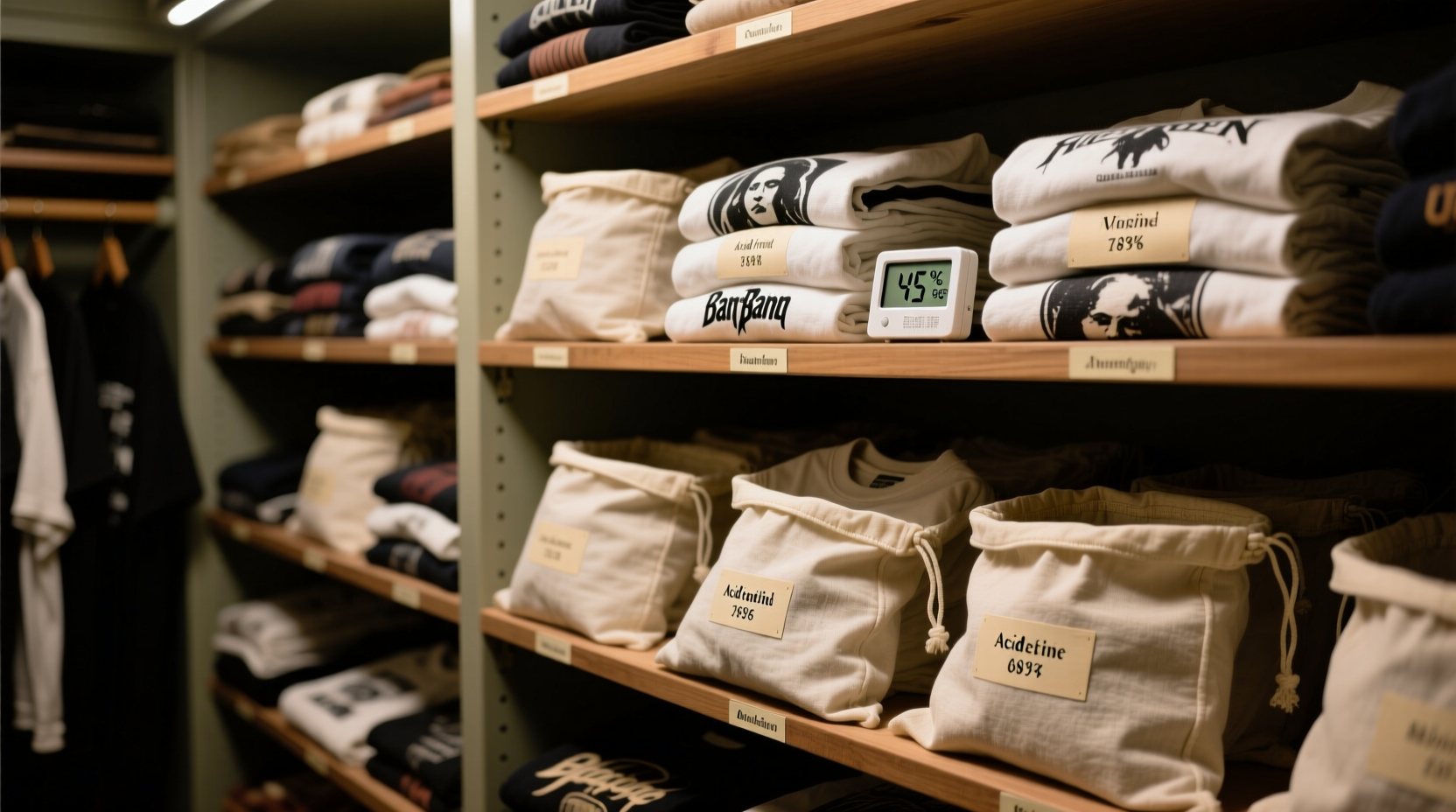
- Humidity: Ideal relative humidity is 45–55%. Below 30% dries cotton; above 60% encourages mold and silverfish. Use a hygrometer to monitor levels.
- Air Quality: Store away from pollutants like cigarette smoke, cleaning fumes, or cooking oils, which accelerate yellowing.
For maximum protection, consider using breathable garment bags made of cotton or muslin. Avoid plastic bags—they trap moisture and promote yellowing through trapped ozone and off-gassing.
Tip: Rotate your collection every 3–4 months. Unfold, re-fold in a different direction, and inspect for changes. This prevents permanent creases and lets you catch issues early.Storage Containers That Protect: What to Use and What to Avoid
The container you choose plays a vital role in shielding your vintage band tees from environmental threats. Not all storage solutions are created equal.
- Recommended:
- Acid-free archival boxes: Designed for long-term textile preservation. Labeled “buffered” or “neutral pH,” they resist deterioration and protect against pollutants.
- Muslin or cotton garment bags: Allow airflow while blocking dust and light.
- Wooden chests with cedar lining: Naturally repel moths and regulate humidity when properly sealed.
- Avoid:
- Plastic bins with tight seals: Trap moisture and encourage mildew unless desiccants are used.
- PVC or vinyl bags: Emit harmful gases that yellow fabric over time.
- Cardboard boxes from retail stores: Often contain acidic adhesives and break down easily.
When using archival boxes, place one tee per layer with acid-free tissue paper between them. Label boxes externally with contents and date—never write directly on the box or garment.
Mini Case Study: How One Collector Saved a Faded 1978 Rolling Stones Tee
Mark T., a vintage apparel dealer from Portland, inherited a box of concert tees from his uncle, including a 1978 Rolling Stones “Some Girls” tour shirt. When unpacked after 15 years in a basement plastic bin, the shirts were stiff, yellowed, and smelled of mildew. Mark consulted a local textile conservator, who advised immediate action.
He removed the tees from plastic, washed them gently in cold water with a conservation-grade detergent, and air-dried them flat in the shade. He then stored them in an acid-free box lined with tissue paper, placed inside a climate-controlled closet. Over two years, he rotated the shirts quarterly and monitored humidity with a digital sensor.
Today, the Rolling Stones tee shows minimal further yellowing and retains its original print clarity. While it didn’t regain its original brightness, its deterioration was halted. “I learned the hard way,” Mark says. “Plastic is the enemy. Now every tee lives in a breathable, dark, cool space.”
Essential Preservation Checklist
Follow this checklist to ensure every vintage band tee in your collection is stored correctly:
- ✅ Wash only when necessary, using cold water and gentle detergent
- ✅ Air-dry flat, away from sunlight
- ✅ Inspect for stains, holes, or odors before storage
- ✅ Fold with acid-free tissue paper between layers (or roll)
- ✅ Store in acid-free box or breathable cotton bag
- ✅ Keep in a dark, cool, dry place with stable humidity
- ✅ Avoid plastic containers and hangers with sharp edges
- ✅ Rotate garments every 3–6 months
- ✅ Monitor storage environment with a hygrometer
- ✅ Handle with clean hands or cotton gloves
Frequently Asked Questions
Can I store vintage band tees in vacuum-sealed bags?
No. Vacuum sealing compresses fibers and traps residual moisture, increasing the risk of yellowing and mold. It also creates deep creases that may become permanent. These bags are designed for space-saving, not preservation.
Why do white vintage tees turn yellow even when stored in drawers?
Yellowing occurs due to oxidation—a reaction between cotton fibers and oxygen in the air. Even in drawers, ambient oxygen and trace light exposure contribute to this process. Using oxygen-absorbing packets (like Ageless) in sealed archival containers can slow this down significantly.
Is it safe to display vintage band tees on walls?
Display is possible but risky. UV exposure from sunlight or indoor lighting fades colors and weakens fabric within months. If you must display, use UV-filtering glass, rotate shirts every 3–6 months, and keep them away from direct light. Never display a one-of-a-kind piece permanently.
Final Thoughts: Preserve the Past, Wear the Legacy
Vintage band tees carry stories—of concerts attended, eras defined, and music loved. They deserve more than being tossed into a drawer or hung carelessly in a closet. By understanding the science of fabric degradation and applying thoughtful storage practices, you honor both the garment and the culture it represents.
Whether you're a casual fan or a serious collector, the habits you adopt today will determine what survives for future generations. Start by removing your tees from plastic, investing in acid-free supplies, and finding a stable, dark storage spot. Small changes yield dramatic results over time.
💬 Have a vintage band tee storage success story or tip? Share your experience in the comments and help build a community of informed collectors preserving music history—one tee at a time.








